Egypt schedules mid-2027 start for CATL-backed battery pack plant
BME funds the 2 billion Egyptian pound venture to supply heavy commercial vehicles while qualifying for tariff-free regional exports.
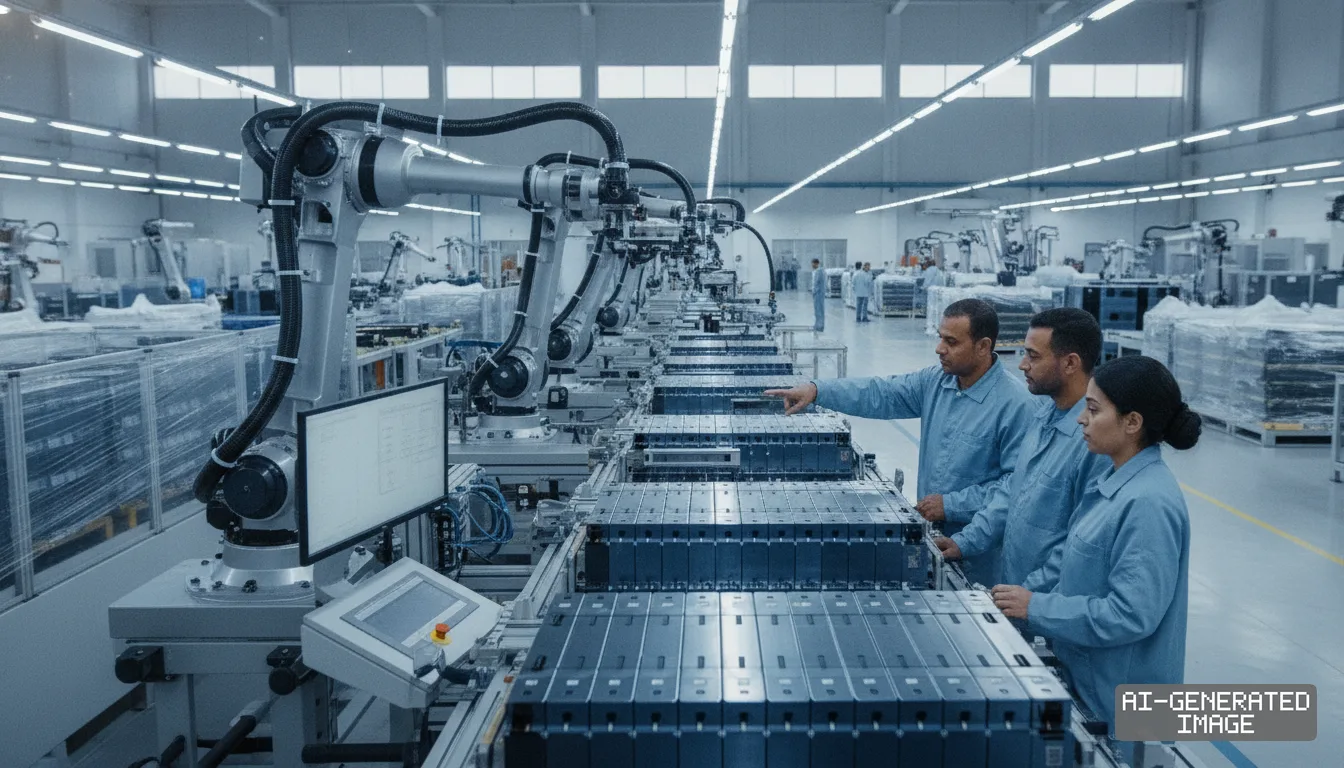
Egyptian Minister of Industry Khaled Hashem said Nov. 22 that a battery pack manufacturing plant developed with China's Contemporary Amperex Technology will begin commercial production between May and June 2027.
The operational timeline follows an industrial partnership signed Sept. 13 in Cairo under Prime Minister Mostafa Madbouly. The project pairs the Chinese battery supplier with BME, an Egyptian manufacturing consortium.
BME is financing the project with an initial investment exceeding 2 billion Egyptian pounds ($39 million). The first phase will establish 1 gigawatt-hour of annual capacity focused entirely on heavy commercial vehicles.
A planned second phase will expand annual facility capacity to 5 gigawatt-hours. That phase will introduce battery packs for passenger electric cars and stationary storage units for solar and wind power installations.
The project targets a 40% domestic content rate for finished battery packs. Meeting that local manufacturing threshold allows vehicles assembled in Egypt to qualify for duty-free access across Europe and the Middle East.
CATL is structuring the venture as a technology licensing partnership rather than taking direct equity. The Chinese supplier will deliver assembly machinery, proprietary engineering designs and technician training to the Cairo venture.
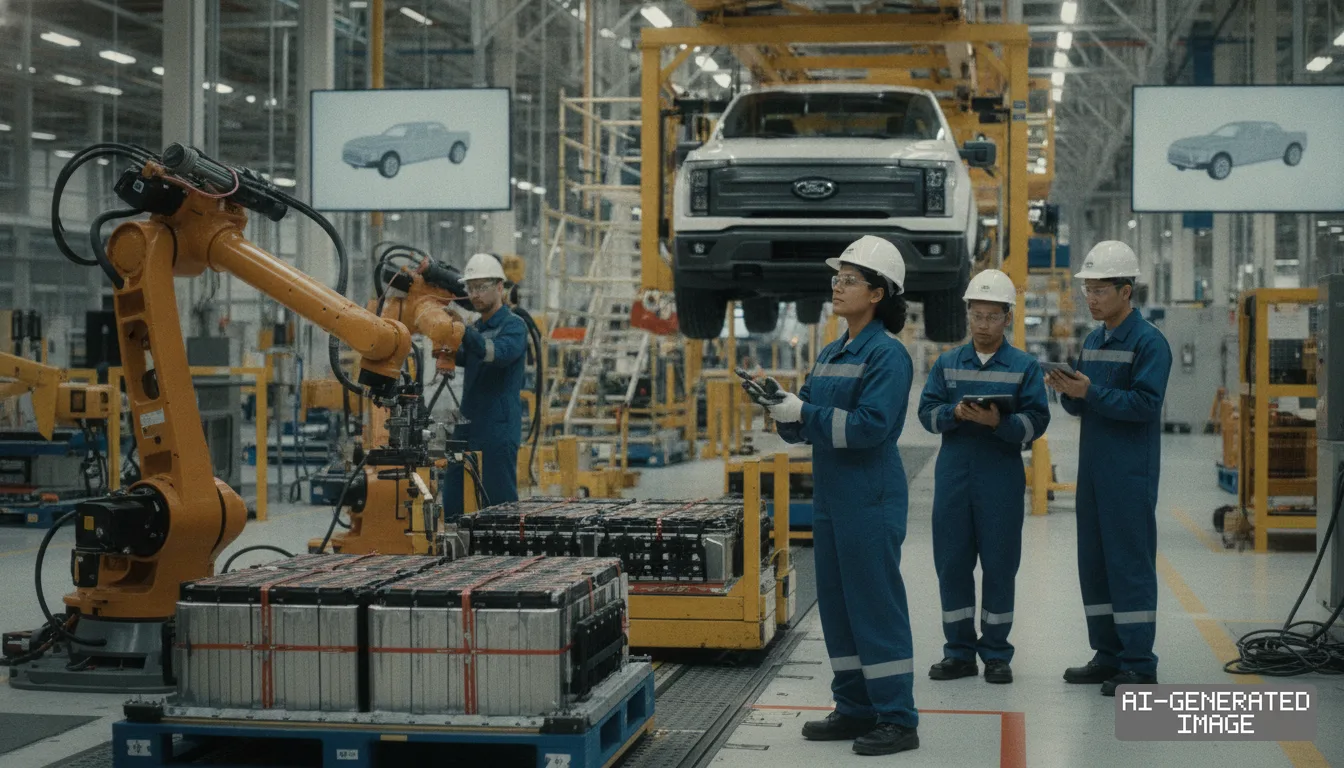
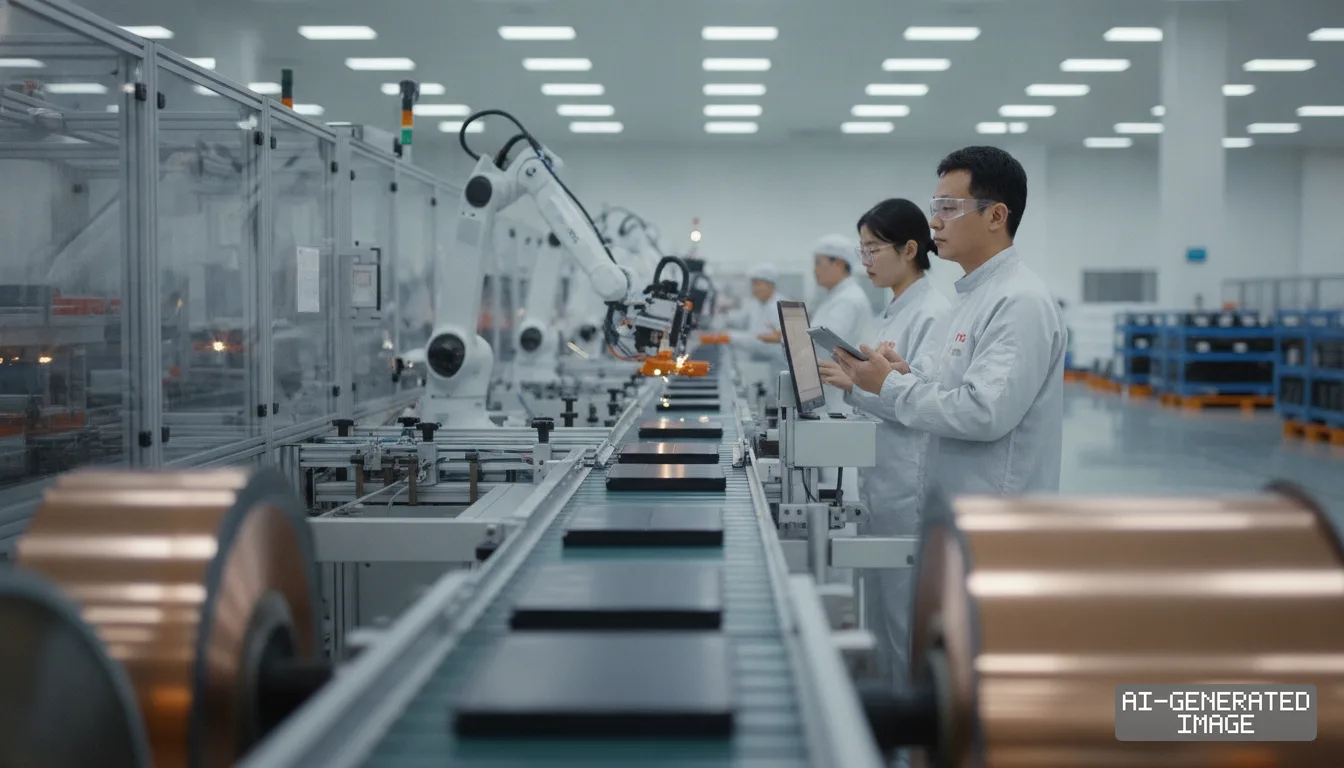
BME will procure raw lithium iron phosphate battery cells directly from CATL's production network in China. The Egyptian facility will then integrate those cells into structural packs and battery management systems.
Commercial vehicle maker MCV and automotive supplier Auto D for Industry, Trade and Supplies formed BME as an operating joint venture. BME will supply completed battery modules directly to local automotive manufacturing plants.
The facility is intended to cut import expenditures as foreign vehicle shipments climb. Automotive sales in Egypt expanded 26.3% during the first nine months of 2026 to reach 155,300 vehicles, industry tracking data show.
Imports accounted for 74,400 of those vehicles, jumping 42.6% from the previous year. Domestically assembled vehicles grew by only 14.3% to 80,900 units, widening foreign currency outflows across Egyptian trading accounts.
Commercial transport showed the steepest volume gains in the domestic market. Bus sales jumped 78.4% to 13,900 units through September, while truck sales rose 25.9% to reach 25,300 units, the data show.
Egypt currently hosts more than 25 automotive assembly plants, including active factory lines for Nissan, General Motors and Hyundai. None of those existing facilities currently purchase domestically produced electric vehicle battery packs.
CATL held a 39.9% share of global electric vehicle battery installations through the first seven months of 2026. The Egyptian licensing contract extends its overseas commercial footprint without committing direct Chinese balance-sheet capital.
The project reflects CATL's strategy to expand heavy vehicle electrification across international trade corridors. The company introduced its Tectrans commercial battery architecture in September, designed specifically for long-haul trucks and fleet bus operators.
The Cairo development leaves Morocco ahead in North African cell manufacturing. China's Gotion High-Tech is constructing a $1.3 billion, 20-gigawatt-hour cell factory in Kenitra scheduled to supply European assembly plants in 2026.
Egypt is focusing on pack assembly rather than upstream electrochemical cell production. Assembling imported cells allows domestic coachbuilders to electrify local municipal transit fleets before the country develops expensive chemical refining infrastructure.
The government plans to publish updated manufacturing incentives under the Automotive Industry Development Program before Dec. 31, Hashem said. Those rules will offer financial support for precision industrial molds and production dies.
The ministry is also reviewing customs tariffs on intermediate vehicle components. The proposed legislative revisions aim to correct tariff discrepancies that penalize domestic component builders relative to fully built imported vehicles, Hashem said.
A national transit initiative will soon mandate replacing aging diesel commercial vehicles with electric models, Hashem said. The procurement plan guarantees initial baseline volume for BME once the factory opens in mid-2027.
The industrial notice does not disclose the specific site for the factory, and the ministry has not published whether the facility will operate inside the Suez Canal Economic Zone.
BME and ministry engineers will review final site selection blueprints and industrial utility hookups during a joint technical steering session in Cairo on Dec. 15.
Impact map
How this development propagates across the region and out to global buyers.
| Event | Korea | China | Japan | Global impact |
|---|---|---|---|---|
| Egypt CATL battery pack facility | no direct pack contracts, Hyundai Cairo assembly lines gain domestic battery sourcing option | CATL books cell export off-take without committing equity capital to Egyptian plant | Nissan assembly lines gain 40% local content sourcing route to preserve duty-free export status | Mediterranean commercial fleet supply chains gain regional pack hub connecting China and Europe |
In this story
- Companies
- Contemporary Amperex TechnologyManufacturing Commercial VehiclesAuto D for Industry Trade and Supplies
- Tickers
- 300750.SZ
- Exposed
- Gotion High-Tech
- Policy
- SubsidiesLocal Content Rules
- Impact
- Supply ChainCapexCompliance
Track every Subsidies development → Track every Local Content Rules development →
Related briefings
- CATL Backs Egypt Battery Factory for Commercial Vehicles Also on Auto D for Industry Trade and Supplies, Manufacturing Commercial Vehicles, Contemporary Amperex Technology
- CATL backs Egypt battery plant under EGP 2bn licensing deal Also on Manufacturing Commercial Vehicles
- Korea Cuts EV Subsidies on Low Energy Density Cells, Squeezing LFP Imports Also on Gotion High-Tech, Contemporary Amperex Technology, Compliance
- China battery exports jump 36% as makers build plants abroad Also on Gotion High-tech, Contemporary Amperex Technology, Subsidies
Sources
Reporting
Confidence: medium — how we grade this
The documents behind this briefing are linked above. East Asia Brief produces its English text with AI assistance under human editorial review, and does not translate or republish other outlets' articles. See our methodology and AI policy. Spotted an error? Tell us.
The Morning Brief
What changed in Korean, Chinese and Japanese industry overnight — and what it means for your supply chain. One email, weekday mornings, US time. Free.
The Morning Brief is in preparation. Leave your address and we will write to you once — when the first issue is ready. Nothing before that.