BYD rolls out nine-minute EV charging on 1,500 kW architecture
The 1,500-kilowatt direct-current platform charges a 115-kilowatt-hour battery pack to 97% in nine minutes, requiring bilateral liquid cooling to handle peak thermal loads.
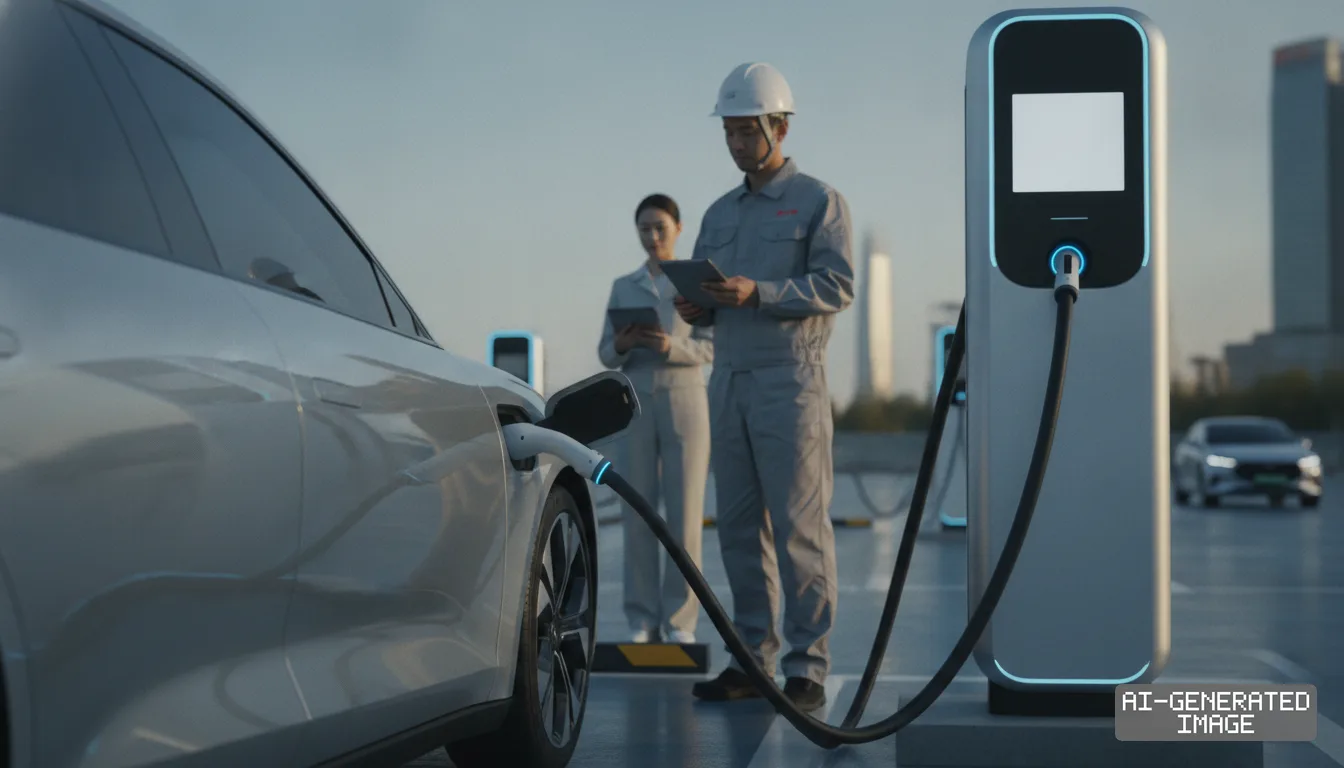
BYD widened the deployment of its nine-minute electric vehicle charging architecture on Nov. 22, 2026, as automakers accelerated high-power thermal management upgrades to address sluggish consumer adoption across major markets.
The system delivers peak electrical throughput of 1,500 kilowatts through a single liquid-cooled connector, raising battery capacity from 10% to 97% in nine minutes. That charging rate delivers 4.3 times the power of standard 350-kilowatt direct-current chargers.
Thermal dissipation dictates the operational limits of such high-rate electrical delivery. Pumping 1,500 kilowatts into an automotive battery pack generates extreme internal heat that can trigger active material degradation and thermal runaway without dedicated cell cooling.
BYD, which sold more than three million electrified passenger vehicles last year, introduced the underlying second-generation Blade Battery to remove charging bottlenecks. The pack uses lithium iron phosphate chemistry engineered with low-resistance internal current channels.
Internal cell resistance drops through what the company designates as high-speed lithium-ion transport pathways. Lower internal impedance curbs heat generation during peak current delivery by roughly 25% compared to first-generation blade cells.
The chemistry transition shifts the positive electrode toward lithium manganese iron phosphate, lifting nominal cell voltage from 3.2 volts to 3.8 volts. The voltage lift yields system energy density between 190 and 210 watt-hours per kilogram.
At the pack level, engineers abandoned traditional bottom-chilled cold plates in favor of bilateral liquid-cooling jackets. These dual-sided channels make direct contact with both large flat faces of the prismatic cells to accelerate heat extraction.
The thermal system maintains cell temperatures below 45 degrees Celsius during peak charging cycles, according to company technical filings. That threshold prevents rapid breakdown of the solid electrolyte interphase layer on the negative electrode.
The structural overhaul targets the consumer adoption slowdown known as the electric vehicle chasm. Mainstream buyers cite protracted road-trip charging intervals and unreliable public plugs as primary deterrents against switching from internal combustion engines.
Commercial passenger vehicles serve as the initial platforms for the nine-minute recharge capability. BYD packaged the technology inside a 115-kilowatt-hour battery pack on the seven-seat Atto 8 sport utility vehicle ahead of European distribution.
The company also expanded the 1,500-kilowatt charging architecture across its Denza D9 multi-purpose vehicle and Fang Cheng Bao Ti 9 sport utility vehicle. Both platforms replenish their packs from 10% to 70% in five minutes.
Low-temperature performance addresses a second persistent consumer grievance regarding cold-weather range loss. BYD claims the integrated thermal management system enables a 20% to 97% recharge in 12 minutes at minus 30 degrees Celsius.
Rival battery manufacturers in East Asia are engineering alternative material chemistries to match nine-minute charging benchmarks. South Korea's Samsung SDI is preparing commercial production of high-rate prismatic cells using proprietary silicon-carbon nanocomposite anode materials.
Silicon anodes absorb lithium ions faster than conventional graphite, shortening recharge windows. However, silicon particles swell up to 300% during lithiation — the charging step where lithium enters the anode — threatening mechanical disintegration.
Samsung SDI pairs its silicon anode chemistry with tabless electrode construction to suppress localized heat buildup. The tabless architecture replaces narrow current tabs with continuous conductive borders, spreading thermal dissipation evenly across the cell body.
The South Korean manufacturer also incorporates directional safety vents on its prismatic cans. The mechanical vents vent hot gases away from adjacent modules during thermal events, halting cell-to-cell thermal propagation.
Grid integration presents the steepest capital obstacle to deploying megawatt-scale charging corridors. A single station supporting four concurrent 1,500-kilowatt sessions draws six megawatts of instantaneous capacity, matching the peak demand of a mid-sized factory.
To bypass grid connection delays, operators are installing localized battery energy storage systems beside the charging bays. These stationary batteries recharge slowly from municipal utility lines during off-peak periods, then discharge concentrated power when vehicles plug in.
Public regulatory dockets and corporate releases do not confirm an unannounced production vehicle launched on Nov. 22, indicating recent market attention reflects the commercial expansion of BYD's existing battery architecture.
Automakers have not published certified cell degradation rates under continuous daily 1,500-kilowatt charging stress, leaving multi-year battery pack longevity unverified in independent commercial fleet testing.
European customer deliveries of the Atto 8 begin in the first quarter of 2027, the company said. BYD's domestic infrastructure schedule calls for completing 20,000 megawatt-class charging points across China by Dec. 31, 2026.
Impact map
How this development propagates across the region and out to global buyers.
| Event | Korea | China | Japan | Global impact |
|---|---|---|---|---|
| Nine-minute ultra-fast charging rollout | Samsung SDI scales tabless silicon-carbon cells to match 9-minute 80% recharge thresholds | BYD deploys 1,500-kilowatt Flash Charging network targeting 20,000 stations by Dec. 31, 2026 | Japanese cell makers maintain focus on all-solid-state lines, trailing commercial megawatt-charging deployment | Megawatt-class charging plazas demand stationary battery energy storage to buffer local electric grids |
In this story
- Companies
- BYDSamsung SDI
- Tickers
- 002594.SZ006400.KS
- Impact
- Supply ChainCost Structure
Related briefings
- BYD wins China nod for 875 km Han sedan with 88.7 kWh LFP pack Also on BYD, Samsung SDI, Cost Structure
- BYD Yangwang U9 electric supercar tops 503 km/h on Abu Dhabi highway Also on BYD, Samsung SDI, Cost Structure
- BYD cuts entry EV price below $10,000 with new five-seat Seagull Also on BYD, Samsung SDI, Cost Structure
- BYD lifts overseas EV battery volume 66.5% to take 11% share Also on BYD, Samsung SDI, Cost Structure
Sources
Primary documents
Reporting
Confidence: high — how we grade this
The documents behind this briefing are linked above. East Asia Brief produces its English text with AI assistance under human editorial review, and does not translate or republish other outlets' articles. See our methodology and AI policy. Spotted an error? Tell us.
The Morning Brief
What changed in Korean, Chinese and Japanese industry overnight — and what it means for your supply chain. One email, weekday mornings, US time. Free.
The Morning Brief is in preparation. Leave your address and we will write to you once — when the first issue is ready. Nothing before that.