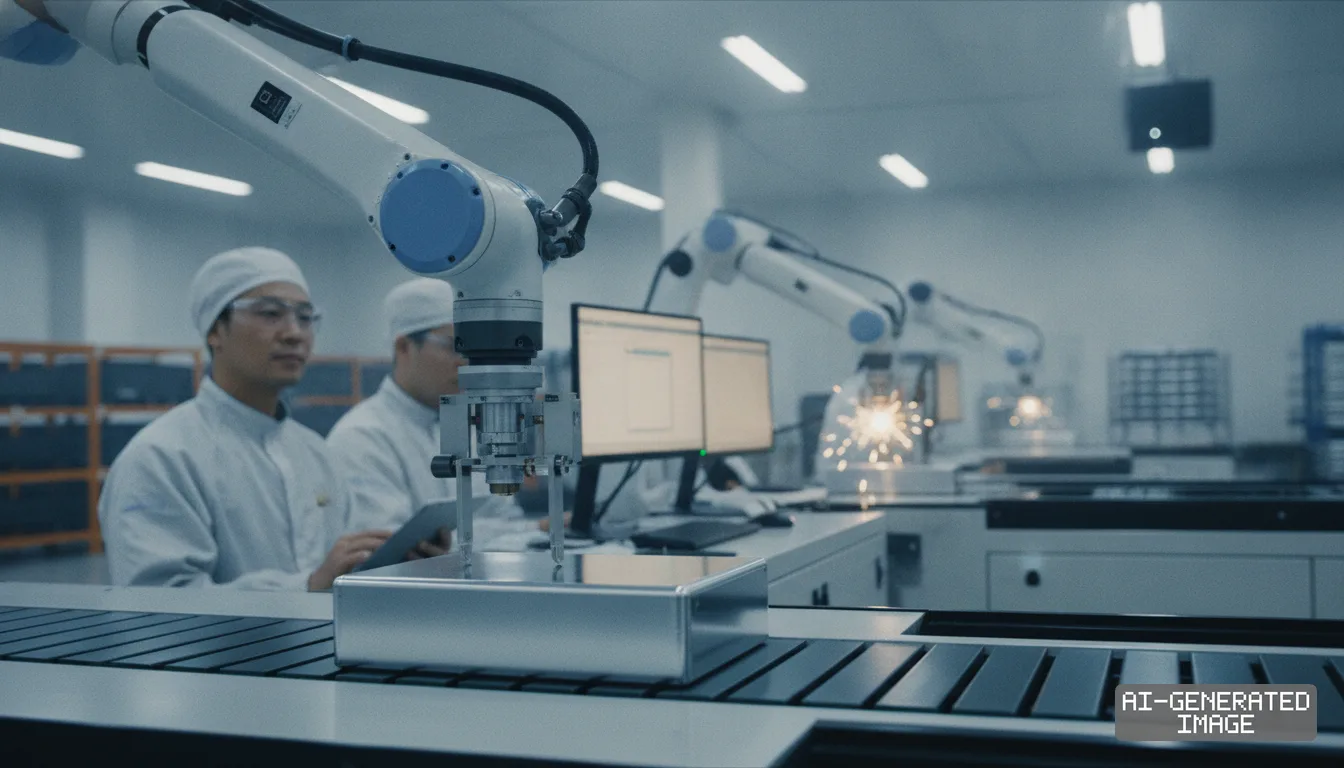
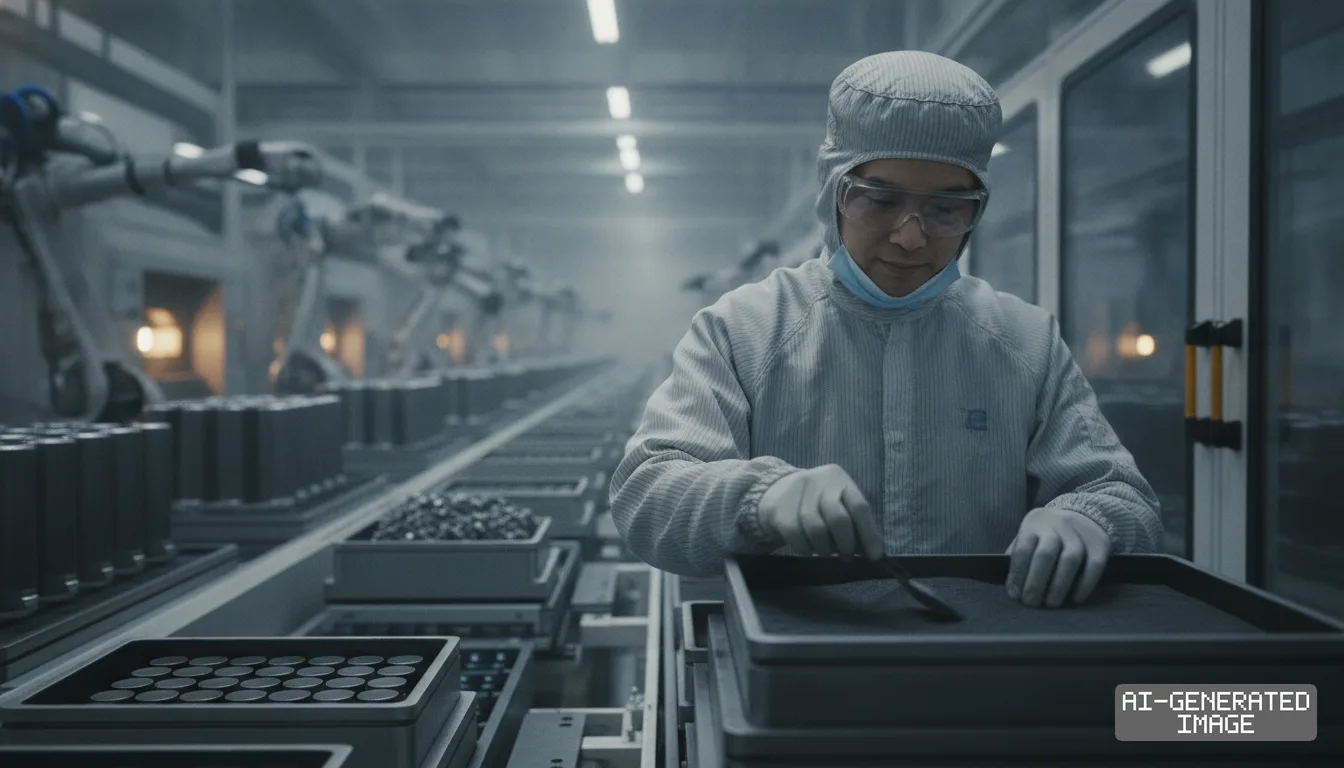
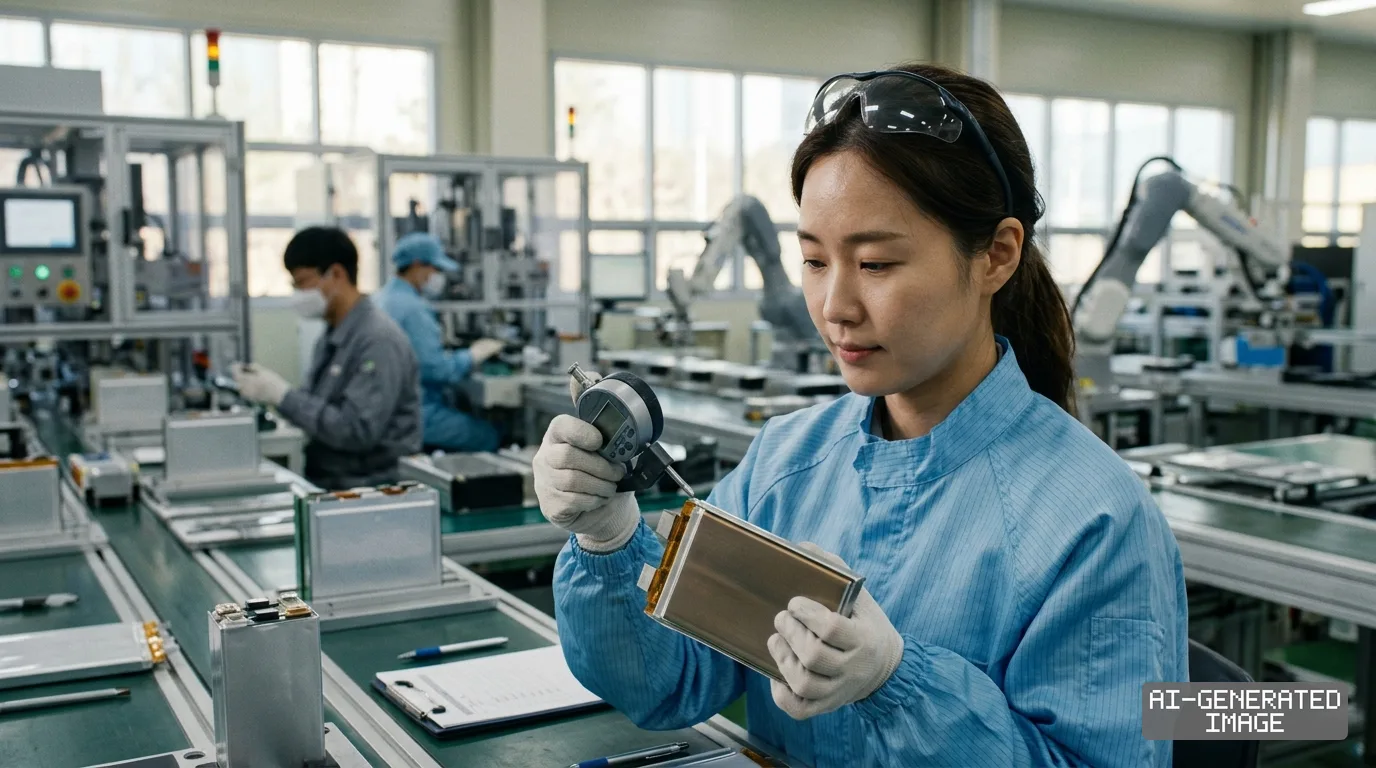
China battery exports jump 36% as makers build plants abroad
Customs data show non-U.S. deliveries offset tariffs as Gotion and CATL anchor capital in European factories and long-term service contracts.
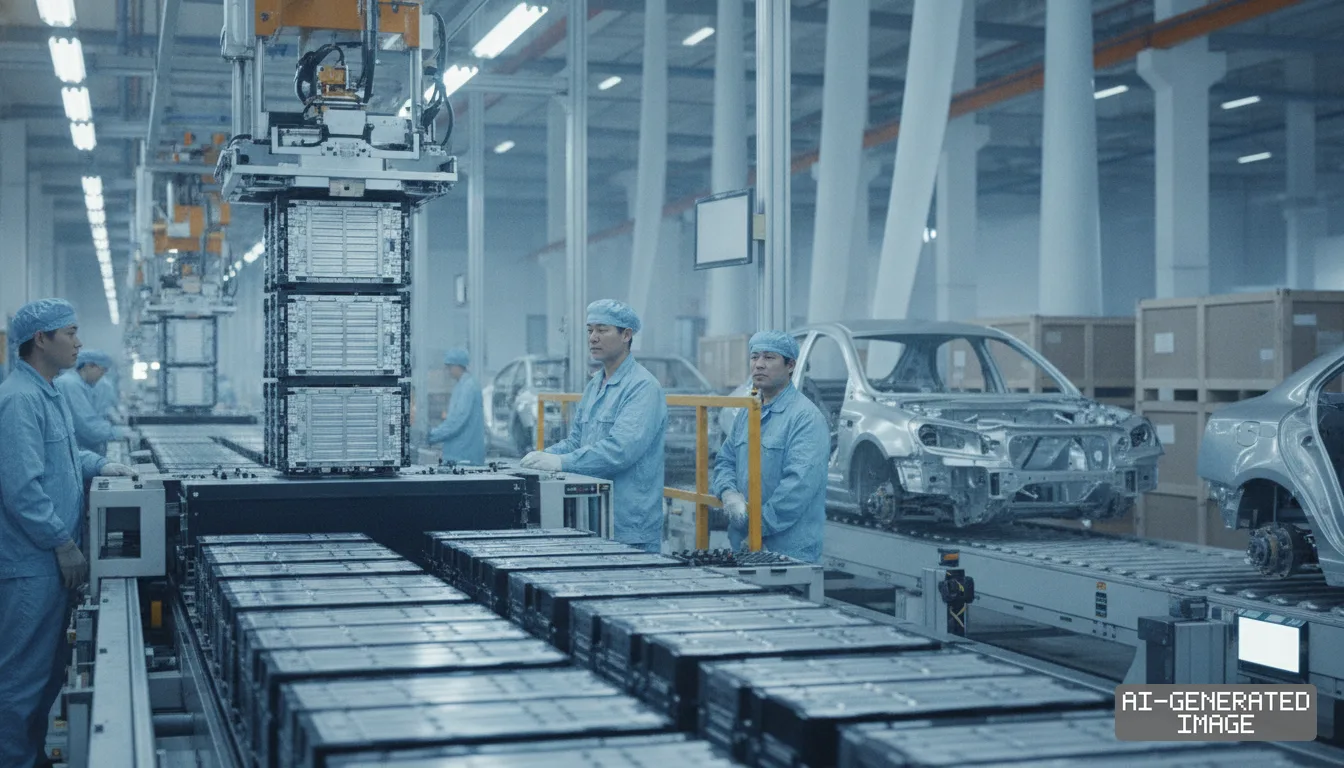
China's General Administration of Customs said Oct. 14 that lithium-ion battery exports rose 36.4% year-on-year in the first three quarters of 2026. Shipments outside the United States drove the overall volume increase.
The release showed broader export growth across the country's clean technology manufacturing base. Outbound shipments of electric vehicles climbed 72.3% during the same nine-month period, while wind turbine shipments grew 22.4%.
Customs trade records revealed a sharp geographic divergence across export routes. Battery shipments delivered to the United States fell 24% by value, while deliveries to non-American destinations surged about 53%.
The divergence shows how Chinese manufacturers are adjusting to Western trade penalties. Cell makers are directing investment away from direct container trade into overseas joint ventures and localized industrial assets.
The commercial strategy pairs local manufacturing capacity with long-term service agreements. This structure allows Chinese producers to embed equipment inside foreign power grids while navigating higher border tariffs.
Gotion High-tech is anchoring this transition through a manufacturing partnership with Volkswagen battery subsidiary PowerCo. Under the agreement, Gotion agreed to invest roughly €1.1 billion ($1.25 billion) for a 49% stake.
The capital will fund the Valencia gigafactory currently under construction in eastern Spain. PowerCo will retain the remaining 51% stake and manage the site as a regional lithium iron phosphate hub.
PowerCo agreed to commit approximately €470 million by 2030 for minority holdings in Gotion assets. The German firm will acquire 49% stakes in Gotion's cell factory in Slovakia and a cathode plant in Morocco.
The transaction marks a fundamental shift from commercial export sales to joint manufacturing equity. It secures local supply for European electric models while limiting Gotion's initial exposure to standalone greenfield risk.
Chinese energy storage equipment specialist Hithium is deploying a similar operational model in the Pacific grid sector. The supplier signed an agreement with Global Power Generation, a unit of Spain-based Naturgy.
Under the contract, Hithium will deliver 84 liquid-cooled storage units totaling 421 megawatt-hours for the Fraser Coast project in Queensland, Australia. The installation connects to an existing regional solar generation plant.
The Australian agreement extends well past the delivery of physical battery hardware. Hithium assumed contractual obligations covering local commissioning, factory acceptance testing, scheduled technical inspections and ongoing maintenance services.
Similar service obligations are reshaping deals across Northeast Asia and Europe. Rept Battero connected its Kanuma energy storage project to the Japanese grid while providing ongoing acceptance testing and maintenance services.
Sungrow Power Supply committed to 98% operational availability and extended maintenance in recent European storage contracts. These commitments require Chinese suppliers to fund dedicated overseas service teams.
Long-term service commitments generate recurring revenue streams across international utilities. They also tie foreign network operators directly to Chinese field engineering teams throughout the multi-year operating lifetime of the project.
Trade data reflects the rapid advance of Chinese cell suppliers across global industrial channels. SNE Research reported Oct. 7 that Contemporary Amperex Technology took 33.7% of the non-China electric vehicle battery market from January through August.
BYD secured an 11% share of the non-Chinese market over the same eight-month period. Chinese producers expanded their combined market footprint by delivering cost-competitive lithium iron phosphate packs to international automakers.
South Korea's three major battery cell manufacturers absorbed the corresponding loss in international delivery volume. The combined non-China market share of LG Energy Solution, Samsung SDI and SK On fell to 26.8%.
The South Korean cohort held a 37.9% share during the same period last year. Their collective delivery volume outside China dropped 12.8% to 96.5 gigawatt-hours, driven by a 46.5% decline in North American installations.
LG Energy Solution recorded 58.1 gigawatt-hours outside China, down 5.8% from the previous year. Its non-China market share slipped from 21.2% to 16.1% as shipments to North American assembly lines contracted.
SK On saw its non-China battery volume fall 14.4% to 24.8 gigawatt-hours through August. The company's international market share declined from 9.9% to 6.9% following sharp cuts in North American electric vehicle assemblies.
South Korean cell producers face structural headwinds due to heavy exposure to high-nickel nickel-cobalt-manganese chemistries. Global automakers have scaled back premium vehicle programs in favor of cheaper iron-based cells manufactured under shared joint ventures.
Chinese battery makers are using their scale to bundle cells with local power infrastructure and system software. This full-system procurement model raises technical entry barriers for suppliers offering standalone battery hardware without regional support networks.
European regulators and automakers are encouraging this equity-linked localization. Automakers gain established cell production processes, while Chinese manufacturers gain protected regional market share that complies with emerging European sourcing guidelines.
The General Administration of Customs has not published the full unit-value breakdown for third-quarter battery exports, which remains restricted to subscription reports compiled by the China Battery Industry Association.
Commercial production at the Valencia gigafactory is scheduled to begin in 2027. PowerCo's staged €470 million investment in Slovakia and Morocco will run in planned funding tranches through 2030.
The cross-border partnership between Gotion and PowerCo remains subject to antitrust approvals from European competition authorities and a formal vote by Gotion shareholders later this quarter.
Impact map
How this development propagates across the region and out to global buyers.
| Event | Korea | China | Japan | Global impact |
|---|---|---|---|---|
| Chinese battery export surge and factory localization | LG Energy Solution, Samsung SDI and SK On non-China market share dropped to 26.8% | Gotion and CATL expand overseas hubs and O&M contracts | Panasonic faces tighter competition in third-country grid and fleet supply | Automakers trade tariff friction for local JV equity and long-term service contracts |
In this story
- Companies
- Gotion High-techContemporary Amperex Technology
- Tickers
- 002074.SZ300750.SZ
- Exposed
- LG Energy SolutionSamsung SDISK OnBYDPowerCo
- Policy
- TariffsSubsidies
- Impact
- Supply ChainCapexOrder Book
Track every Tariffs development → Track every Subsidies development →
Related briefings
- Volkswagen and Gotion commit $3.7B to European battery hubs Also on PowerCo, Gotion High-tech, SK On
- Korea Cuts EV Subsidies on Low Energy Density Cells, Squeezing LFP Imports Also on Gotion High-Tech, SK on, Contemporary Amperex Technology
- CATL tops 15 Chinese automakers combined in first-half profits Also on Gotion High-Tech, BYD, Contemporary Amperex Technology
- BYD and Geely expand Southeast Asian assembly lines to build regional export hubs Also on Gotion High-Tech, Contemporary Amperex Technology, Tariffs
Sources
Primary documents
Reporting
Confidence: high — how we grade this
The documents behind this briefing are linked above. East Asia Brief produces its English text with AI assistance under human editorial review, and does not translate or republish other outlets' articles. See our methodology and AI policy. Spotted an error? Tell us.
The Morning Brief
What changed in Korean, Chinese and Japanese industry overnight — and what it means for your supply chain. One email, weekday mornings, US time. Free.
The Morning Brief is in preparation. Leave your address and we will write to you once — when the first issue is ready. Nothing before that.