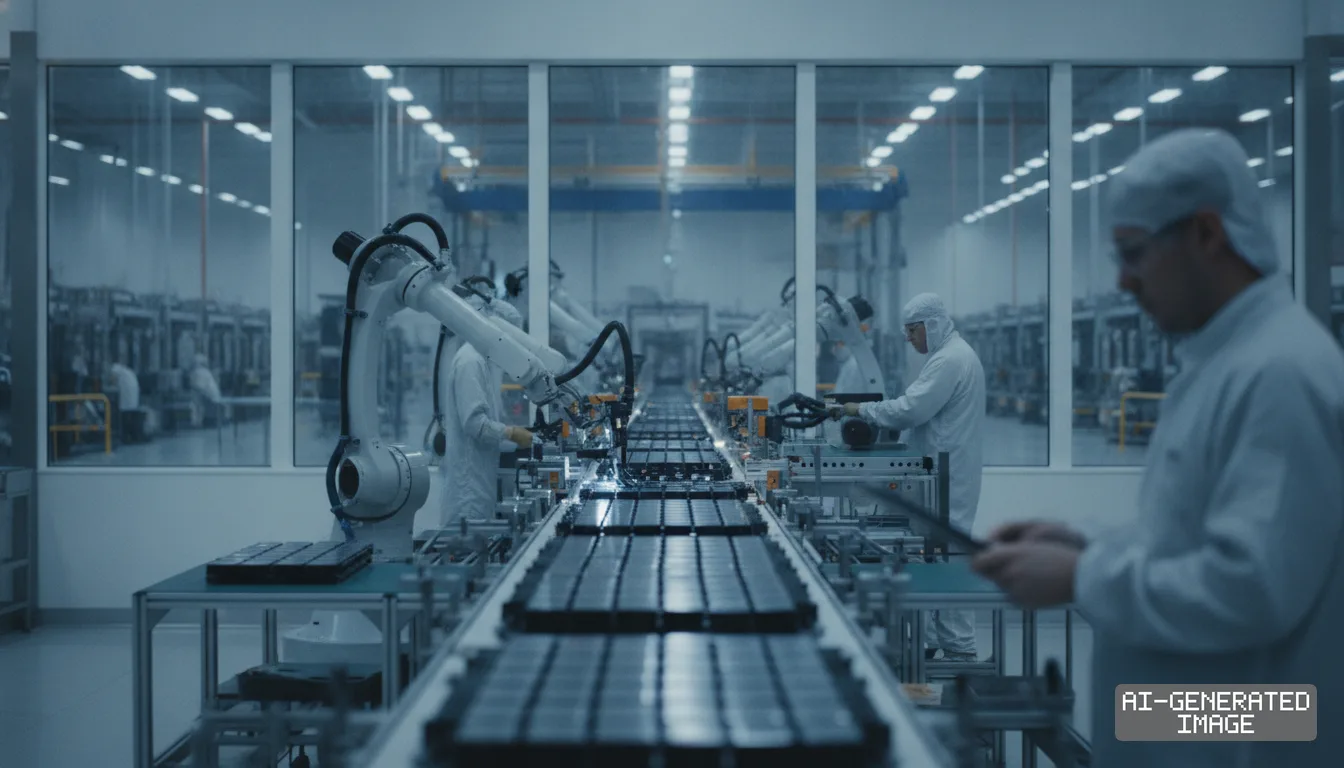
GM vets Korean suppliers for prismatic LMR battery lines
The automaker advances a $1 billion plant conversion in Tennessee, testing cathodes with POSCO Future M and deploying pilot machinery to bypass Chinese supply chains.
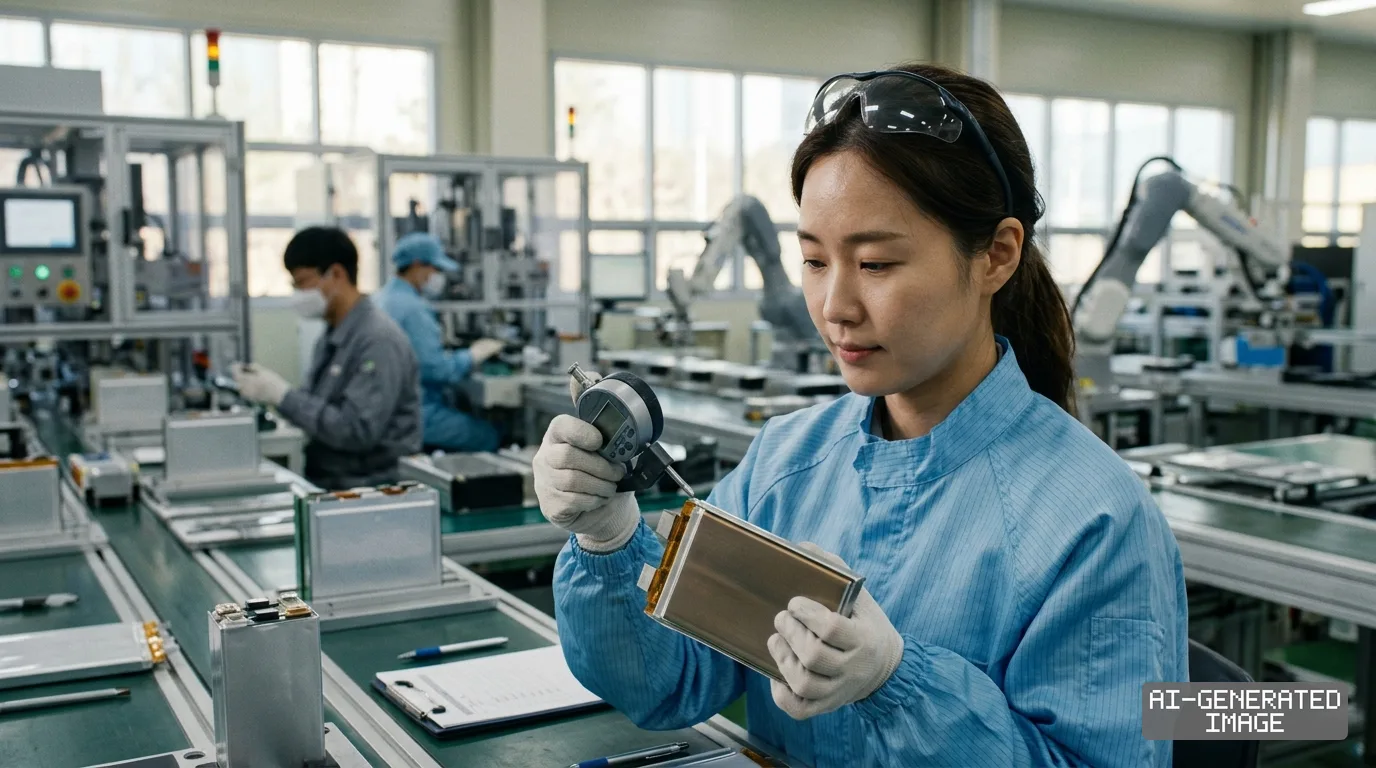
General Motors conducted on-site inspections of South Korean battery component suppliers on Oct. 13, 2026, advancing plans to build a North American supply chain for prismatic lithium manganese rich cells.
Ultium Cells, the joint venture between GM and LG Energy Solution, will invest $1 billion (about 1.36 trillion won) by 2030 to retool its Spring Hill, Tennessee plant for the chemistry. The expansion adds 500 jobs to the facility's existing 1,200-worker base.
The targeted chemistry, known as lithium manganese rich or LMR, raises manganese to roughly 65% of cathode content while eliminating costly cobalt. It provides 33% higher energy density than lithium iron phosphate alternatives at a comparable manufacturing cost.
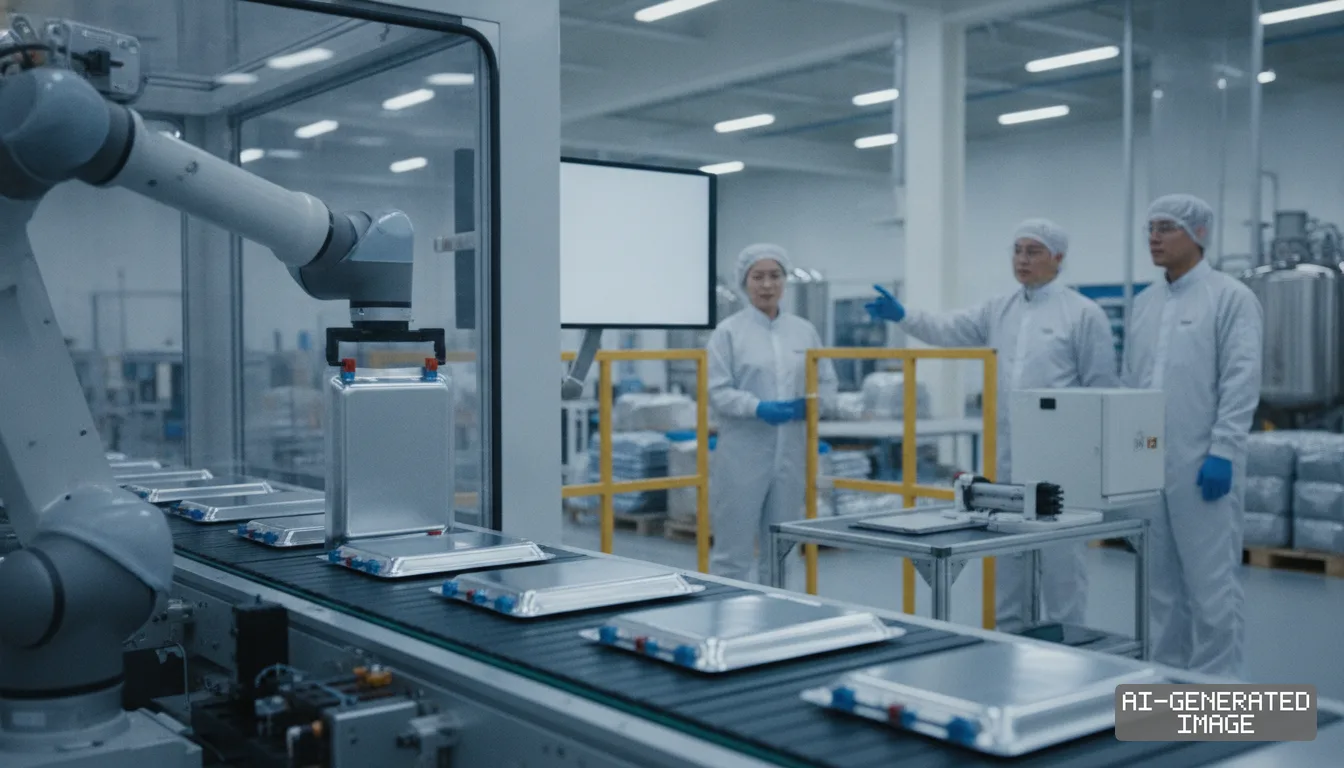
GM engineers inspected South Korean manufacturers of aluminum cans and top caps, the structural enclosures that seal prismatic cells against internal pressure. The vetting focused on vendors within the LG Energy Solution network rather than Samsung SDI suppliers.
The automotive group is shifting its future pack architecture from pouch enclosures to rigid metal prisms. Prismatic casings allow direct integration into vehicle structures, cutting structural module hardware while improving thermal dissipation.
GM selected the prismatic format to power full-size electric pickups and sport utility vehicles, targeting driving ranges exceeding 400 miles (about 643 kilometers) on a single charge. The specification aims to exceed the range of competing trucks using iron-based cells.
The factory conversion in Spring Hill will begin in late 2026. Ultium Cells plans trial output in late 2027 and commercial mass production in 2028, marking the first high-volume manufacturing of prismatic LMR cells globally.
The Tennessee site will operate multi-chemistry lines alongside its existing nickel-cobalt-manganese-aluminum manufacturing. Ultium Cells also began assembling lithium iron phosphate cells at the site in June 2026 for stationary energy storage systems.
Upstream, GM is qualifying cathode active materials developed by POSCO Future M. The Korean materials supplier produces experimental LMR batches at a pilot facility inside its Sejong technical research center.
The Sejong facility tests continuous synthesis, precursor blending and high-temperature calcination to stabilize manganese atoms during electrochemical cycling. LMR cathodes lower raw material overhead by substituting inexpensive refined manganese for nickel and cobalt.
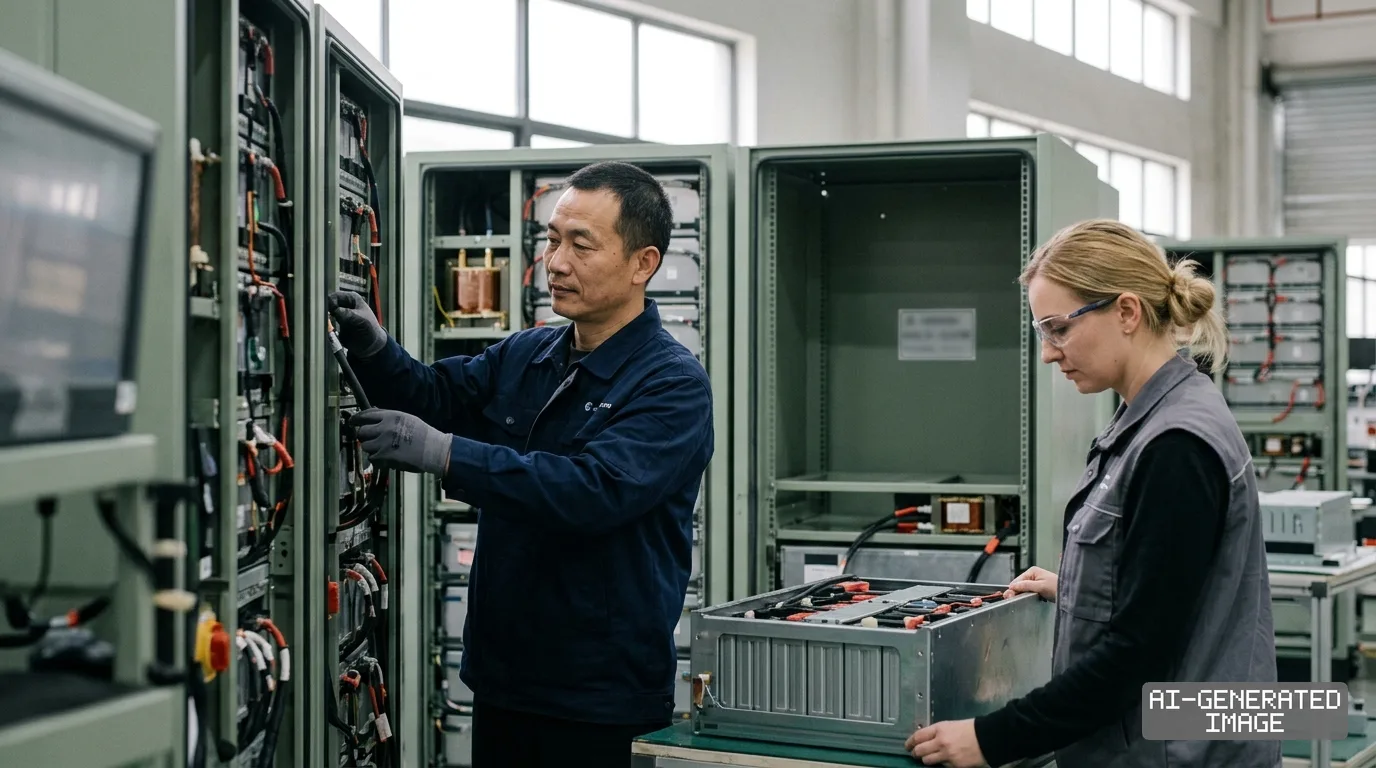
GM already introduced South Korean process equipment at its Battery Cell Development Center in Warren, Michigan. The 500-megawatt-hour pilot facility validates cell manufacturing recipes at one-hundredth the scale of a commercial gigafactory.
Four Korean equipment makers supply the Warren pilot lines. PNT provides continuous roll-to-roll electrode coating machinery, while Wonik PNE supplies automated notching and stacking systems.
Mplus built the assembly units that slide electrode stacks into prismatic cans and weld the terminal caps. SEC installed non-destructive three-dimensional X-ray inspection scanners to verify electrode alignment.
The machinery track record at the Warren pilot plant gives Korean suppliers an advantage for procurement contracts at the Spring Hill plant. Tooling orders for the Tennessee facility are expected to follow the pilot equipment layout.
Procurement rules under the United States Inflation Reduction Act accelerate GM's reliance on Korean partners. Clean vehicle tax credits disqualify electric models containing critical minerals or battery components sourced from Chinese entities of concern.
While Chinese cell makers dominate iron-based cell production, South Korean suppliers offer an established pathway to United States subsidy compliance. GM's joint venture structure with LG Energy Solution keeps cell processing and assembly inside North America.
LG Energy Solution holds over 300 patents related to manganese-rich chemistries, having begun basic research on the formulation in 2010. The company formalized joint development of prismatic LMR cells with GM in December 2024 and confirmed commercial targets in May 2025.
South Korean cathode producers possess production lines that can transition from standard high-nickel compositions to manganese-rich formulations without rebuilding synthesis kilns. That flexibility shortens qualification cycles for North American vehicle platforms.
Modifications to the Spring Hill lines begin in late 2026, with trial production scheduled for late 2027 ahead of full commercial output in 2028.
GM has not published formal procurement filings disclosing the selected can and cap vendors, and spokespersons for the automaker have not confirmed the site visits.
Impact map
How this development propagates across the region and out to global buyers.
| Event | Korea | China | Japan | Global impact |
|---|---|---|---|---|
| GM LMR supply chain pivot | LGES network gains prismatic hardware orders; POSCO Future M validates Sejong cathodes | Excluded from GM North American LMR cell lines under IRA entity rules | Faces heightened competition in US automotive prismatic cell supply | EV cell costs drop toward LFP levels while providing 400-mile truck range |
| GM LMR supply chain pivot | LGES network gains prismatic hardware orders; POSCO Future M validates Sejong cathodes | Excluded from GM North American LMR cell lines under IRA entity rules | Faces heightened competition in US automotive prismatic cell supply | EV cell costs drop toward LFP levels while providing 400-mile truck range |
In this story
- Companies
- General MotorsLG Energy SolutionPOSCO Future M
- Tickers
- GM373220.KS003670.KS
- Exposed
- PNTWonik PNEMplusSEC
- Policy
- SubsidiesTariffs
- Impact
- Supply ChainCapexCost Structure
Track every Subsidies development → Track every Tariffs development →
Related briefings
- Korean battery equipment makers deploy vision robots to cut cell stacking time Also on mPlus, LG Energy Solution, Cost Structure
- Hyundai tests used EV battery storage on South Korea's grid Also on Wonik PNE, LG Energy Solution, Cost Structure
- Hyundai, LG Energy launch used battery storage pilot for EVs Also on Wonik PNE, LG Energy Solution, Cost Structure
- Korean cathode makers automate single-crystal calcination lines to secure yields Also on POSCO Future M, General Motors, LG Energy Solution
Sources
Reporting
Confidence: medium — how we grade this
The documents behind this briefing are linked above. East Asia Brief produces its English text with AI assistance under human editorial review, and does not translate or republish other outlets' articles. See our methodology and AI policy. Spotted an error? Tell us.
The Morning Brief
What changed in Korean, Chinese and Japanese industry overnight — and what it means for your supply chain. One email, weekday mornings, US time. Free.
The Morning Brief is in preparation. Leave your address and we will write to you once — when the first issue is ready. Nothing before that.