CATL warns China's solid-state battery target faces cost gap
The battery maker pegged solid-state readiness at level four out of nine, warning sulfide cells cost up to five times more than mainstream lithium iron phosphate.
Contemporary Amperex Technology Co., Limited pushed back on Oct. 3, 2026, against Beijing's 2030 commercialization timetable for all-solid-state batteries, citing unresolved interface resistance and prohibitive production costs.
The warning follows a joint industrial directive released Sept. 28 by seven Chinese government agencies, led by the Ministry of Industry and Information Technology. The document sets a national roadmap for next-generation batteries.
Under document No. 220, the agencies instructed manufacturers to achieve initial large-scale application of all-solid-state batteries by 2030. The plan builds on an industry whose output value exceeded 1 trillion yuan ($142 billion).
The ministry roadmap also demands that long-life liquid lithium cells reach 15,000 charge cycles. Leading cell makers must simultaneously reduce component defect rates to one part per billion by 2030.
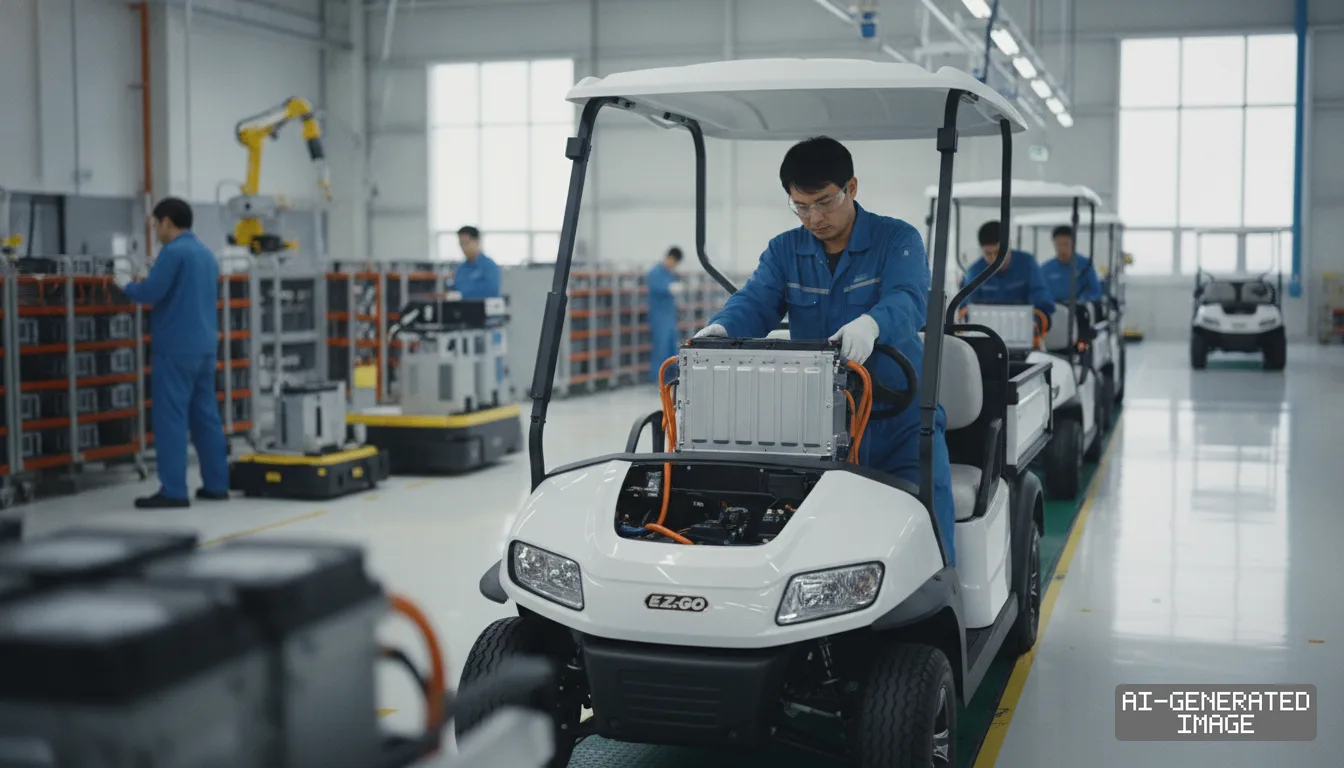
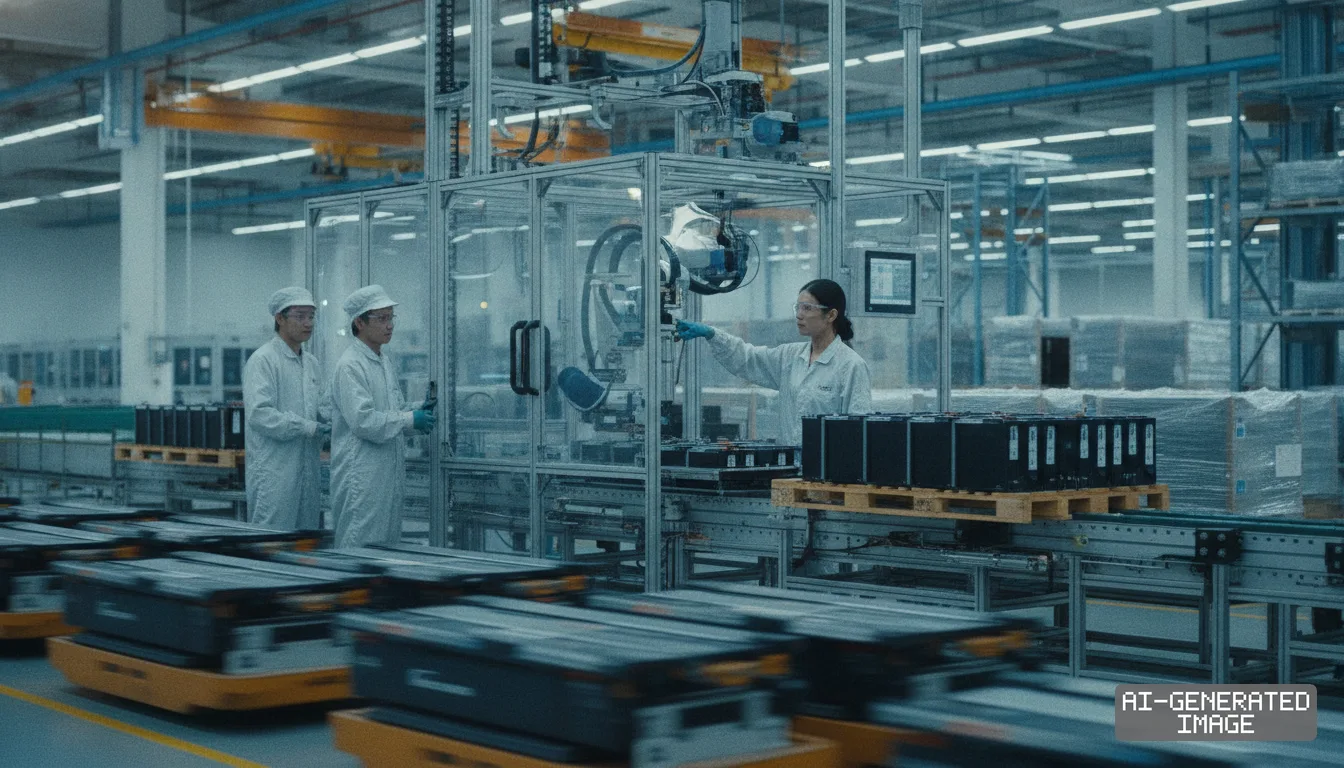
CATL holds roughly 37% of the global electric vehicle battery market, giving its engineering assessments considerable commercial weight. The manufacturer installed 33.08 gigawatt-hours of battery capacity in May 2026 alone.
Mainstream lithium iron phosphate cells accounted for 23.12 gigawatt-hours of that monthly volume. That liquid chemistry represents 70% of the company's vehicle battery deployments.
Robin Zeng, chairman of CATL, rated current all-solid-state technology at level four on a nine-point Technology Readiness Level scale. The ranking confines the chemistry to laboratory validation and prototype demonstration.
Achieving true industrial commercialization requires annual vehicle installations of at least one million units, Zeng said. Reaching that threshold before 2030 remains an exceptionally remote possibility, he added.
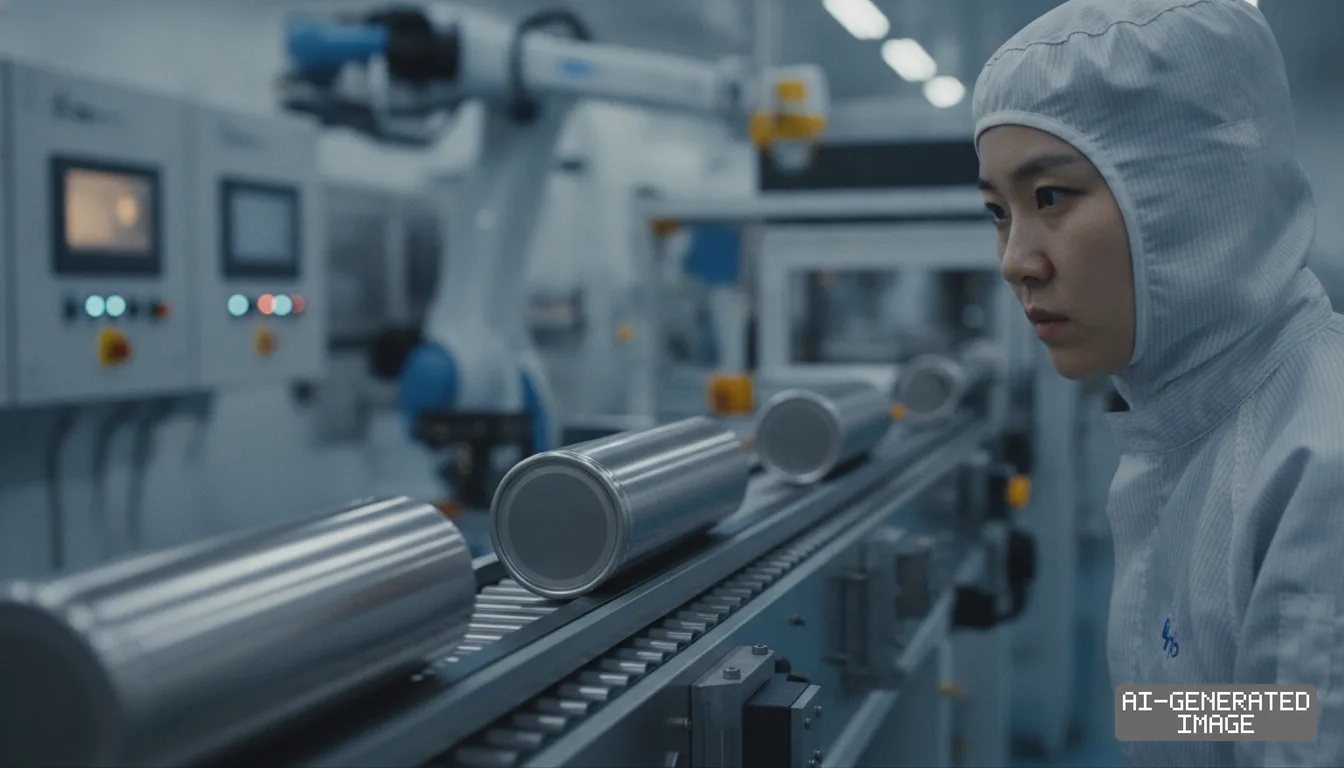
Current sulfide-based solid-state cells cost between 1.6 yuan and 2.2 yuan ($0.23 to $0.31) per watt-hour to fabricate. Mainstream lithium iron phosphate cells cost between 0.39 yuan and 0.50 yuan per watt-hour.
That gap creates an immediate cost hurdle for passenger vehicles. Equipping a standard 70-kilowatt-hour family car with all-solid-state cells would add more than 80,000 yuan ($11,400) to battery pack expenses alone.
The unit economics will restrict early deployments to luxury passenger cars priced above 250,000 yuan ($35,500), Zeng said. Premium vehicle buyers and niche electric aircraft will absorb early pilot volumes.
Severe engineering hurdles reinforce the commercial delay. Solid electrolytes cannot achieve the uniform atomic contact of liquid electrolytes, creating elevated solid-solid interface resistance as lithium ions travel between rigid surfaces.
Cell fabricators use warm isostatic pressing at pressures reaching 6,000 atmospheres to bind materials together. However, uneven compaction densities generate microscopic structural defects that accelerate cell degradation during repeated charging.
Ni Jun, chief manufacturing officer at CATL, said Sept. 21 that industry roadmaps remain largely theoretical. Unsolved interface degradation will keep mass production out of reach for at least five years, Ni said.
Sulfide electrolytes also release toxic hydrogen sulfide gas if exposed to atmospheric moisture during assembly. Production lines require specialized dry rooms with dew points below minus 50 degrees Celsius, driving capital expenditures upward.
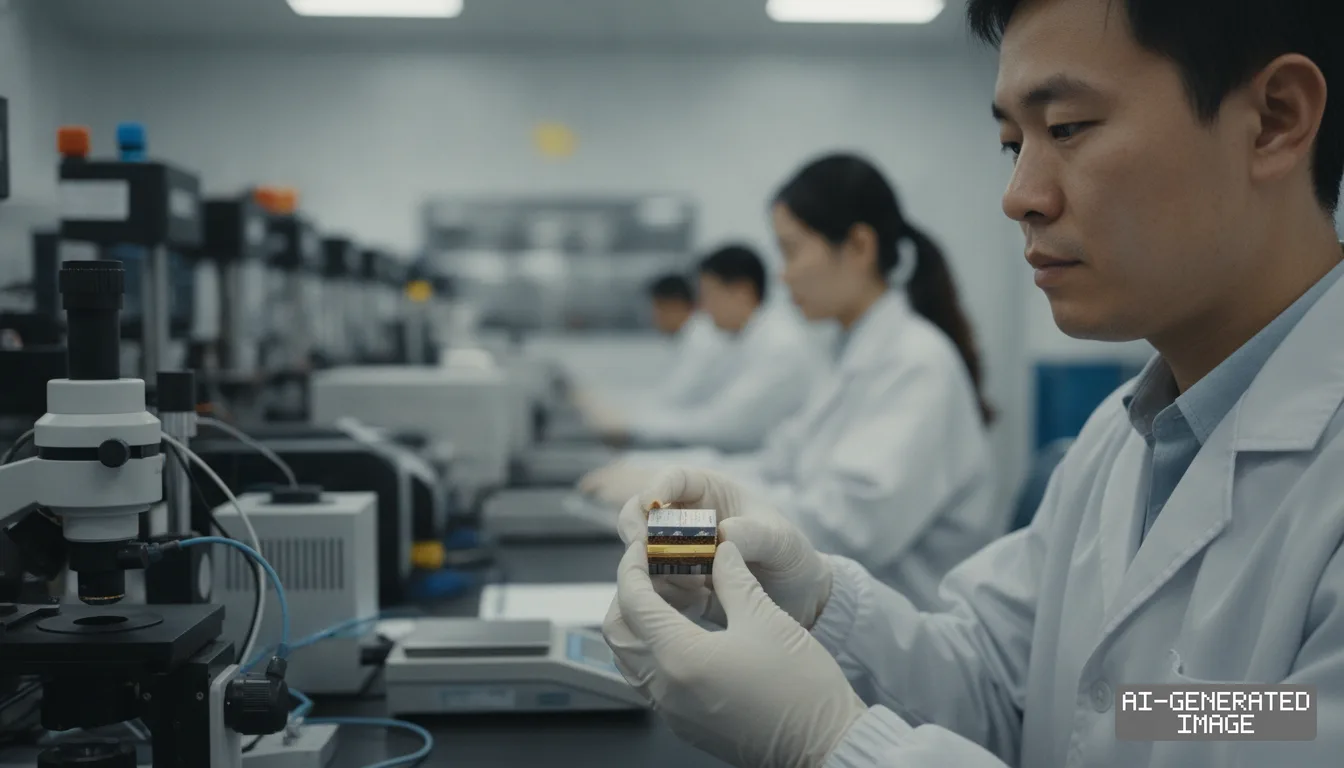
To address the chemistry, CATL assigned more than 1,000 research engineers to sulfide electrolyte architectures. The company built a 10-ampere-hour testing platform and expanded trial fabrication to 20-ampere-hour pouch cells.
Those prototype cells demonstrate an energy density of 500 watt-hours per kilogram, a 40% improvement over liquid ternary cells. Yet charging speeds and operational cycle life remain below automotive mass-production requirements, trial data show.
CATL intends to advance the technology to level seven or eight by 2027, enabling limited trial runs. That pilot schedule matches targets set by Japanese automaker Toyota Motor.
Automakers are turning to semi-solid batteries containing minimal liquid electrolytes to bridge the development gap. Chinese brands including Dongfeng Motor and Nio have deployed oxide-polymer hybrid cells to bypass pure solid-state manufacturing pressures.
The ministry notice does not state the gigawatt-hour production volume required to satisfy its large-scale application milestone, and CATL issued no new exchange filings on Oct. 3.
The 15th Five-Year Plan takes effect Jan. 1, 2027, with the Ministry of Industry and Information Technology planning mid-term technical reviews for solid-state pilot lines in late 2027.
Impact map
How this development propagates across the region and out to global buyers.
| Event | Korea | China | Japan | Global impact |
|---|---|---|---|---|
| China solid-state battery 2030 roadmap | LG Energy Solution and Samsung SDI target 2027-2030 pilot lines for premium EV models | CATL preserves liquid LFP dominance while limiting sulfide solid-state to 20Ah prototypes | Toyota Motor targets 2027 commercialization but faces high warm isostatic pressing costs | EV automakers face an 80,000-yuan battery cost premium per 70 kWh pack before 2030 |
In this story
- Companies
- Contemporary Amperex Technology Co. Limited
- Tickers
- 300750.SZ
- Exposed
- Toyota MotorDongfeng MotorNio
- Policy
- SubsidiesIndustrial Policy
- Impact
- PricingCapexSupply Chain
Track every Subsidies development → Track every Industrial Policy development →
Related briefings
- CATL expands EV battery swap grid to 3,000 stations in China Also on Nio
- UBTECH opens humanoid robot plant with 10,000-unit capacity Also on Dongfeng Motor
- CATL holds 314Ah storage cell prices steady at 0.423 yuan Also on Contemporary Amperex Technology Co. Limited, Pricing
- CATL targets mid-2027 for first sodium-ion battery deliveries in Chile Also on Contemporary Amperex Technology Co. Limited
Sources
Primary documents
Reporting
Confidence: high — how we grade this
The documents behind this briefing are linked above. East Asia Brief produces its English text with AI assistance under human editorial review, and does not translate or republish other outlets' articles. See our methodology and AI policy. Spotted an error? Tell us.
The Morning Brief
What changed in Korean, Chinese and Japanese industry overnight — and what it means for your supply chain. One email, weekday mornings, US time. Free.
The Morning Brief is in preparation. Leave your address and we will write to you once — when the first issue is ready. Nothing before that.