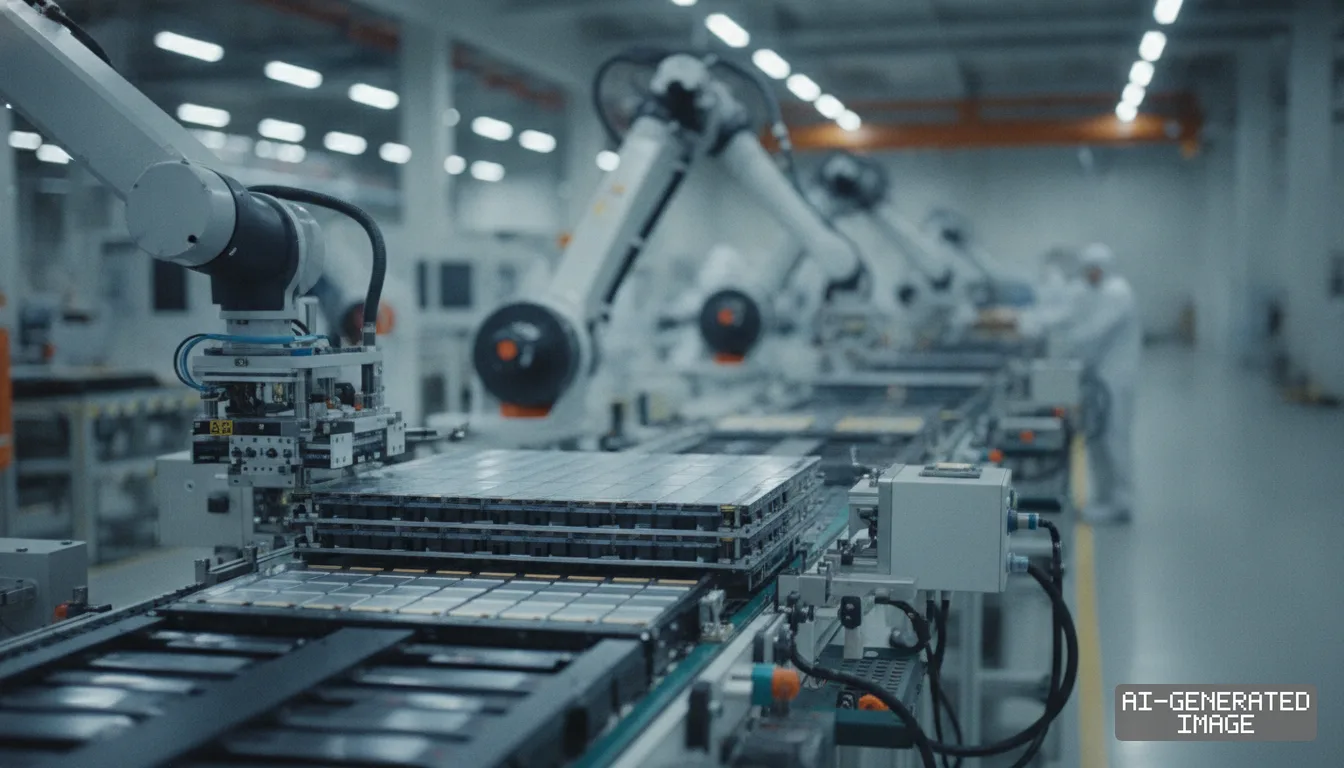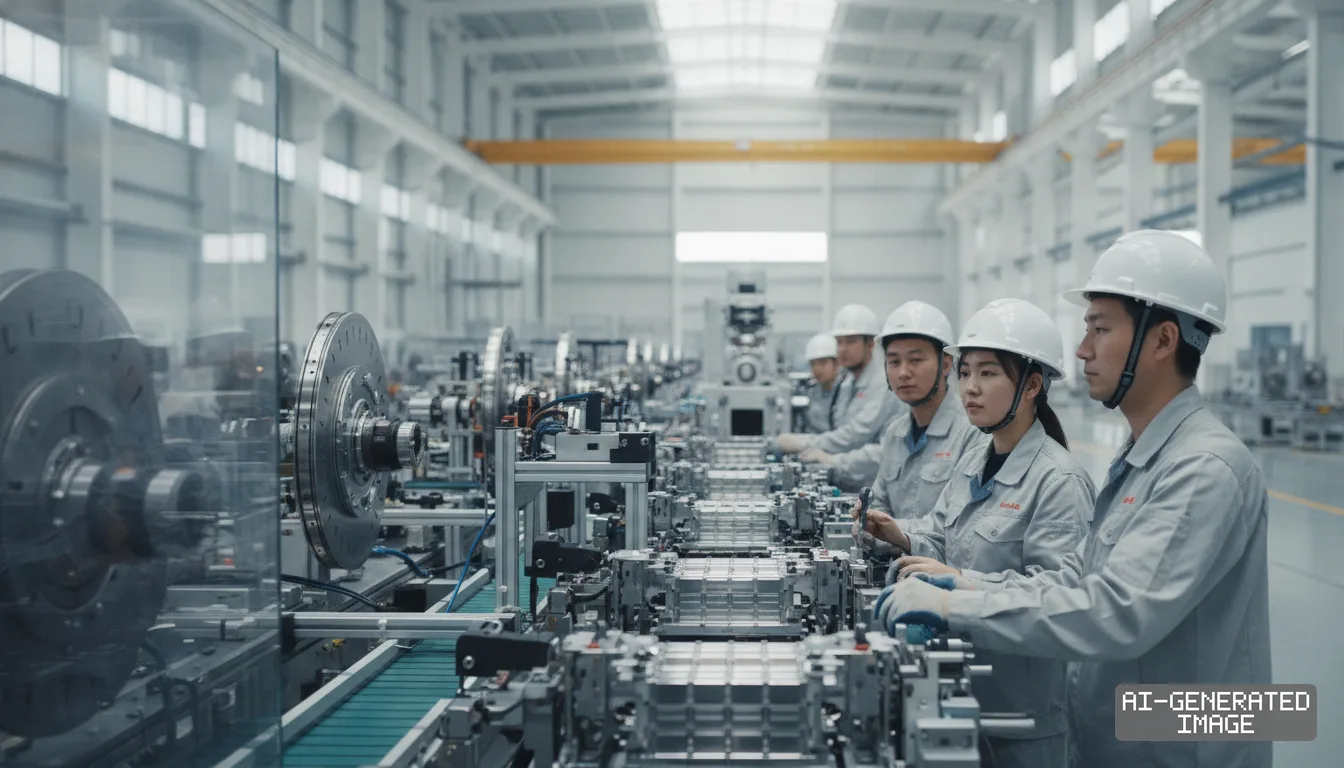
LG Energy Solution readies Mercedes cylindrical cell rollout in Poland
The battery maker has committed 157.5 gigawatt-hours of large-format cylindrical capacity to the German automaker across North America and Europe under regulatory filings spanning through 2038.
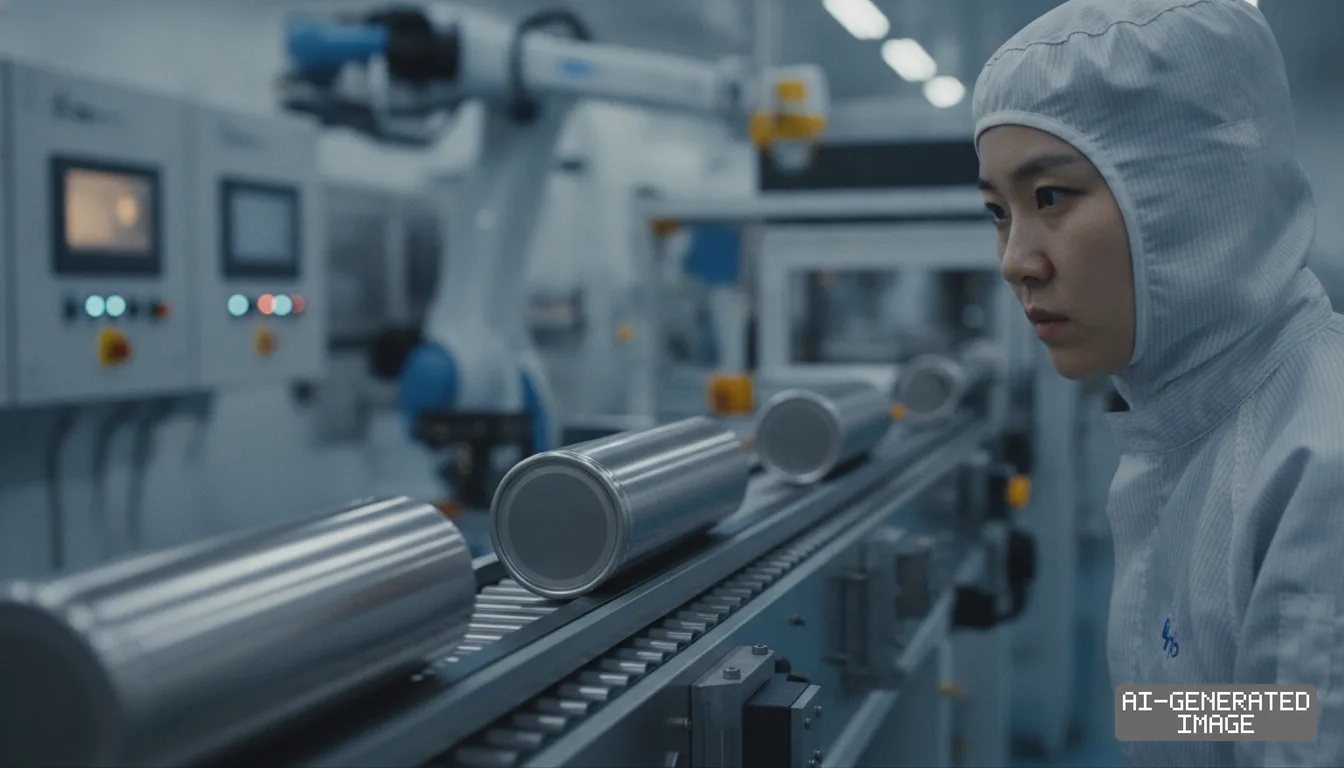
LG Energy Solution moved Oct. 1 to adapt its European manufacturing lines to supply customized 46-series cylindrical batteries for next-generation electric vehicles built by Mercedes-Benz AG.
The production plan serves a cumulative 157.5 gigawatt-hours of cylindrical supply agreements that the South Korean battery maker disclosed with Mercedes-Benz affiliates, representing roughly a quarter of the supplier's contracted global order backlog.
The German automaker previously finalized four multiyear purchase contracts valued at an estimated 25 trillion won ($18.5 billion) with LG Energy Solution, covering deliveries across North America and Europe through 2038.
The transition centers on LG Energy Solution's manufacturing complex in Wroclaw, Poland. The facility operates 86 gigawatt-hours of annual cell capacity and previously focused on pouch-type lithium-ion batteries for European vehicle manufacturers.
Retooling portions of the Wroclaw complex allows the Korean cell maker to assemble 46-series cells closer to German assembly plants, reducing intercontinental logistics costs and shielding shipments from potential trade frictions.
The planned format features a diameter of 46 millimeters and an extended height of 100 millimeters. The architecture provides greater volumetric energy density than older 2170 cylindrical cells and pouch-format alternatives.
European automakers long favored pouch cells for their packaging flexibility within low-profile passenger cars. Premium manufacturers are now adopting large-format cylindrical cells to streamline module assembly and enhance structural battery pack rigidity.
Cylindrical cells utilize continuous winding methods during fabrication rather than the labor-intensive stacking process required for pouch pouches. That manufacturing design accelerates factory output speeds and lowers pack-level manufacturing expenses.
Mercedes-Benz AG relies on South Korean suppliers for over 60% of its high-nickel cell sourcing. The luxury brand plans to introduce more than 40 electrified vehicle models by 2027.
The automaker is structuring its electric lineup around dedicated platforms, including the modular MMA architecture and the MB.EA platform. Premium variants will deploy high-nickel 46-series cells, while base models use lower-cost chemistry.
Official regulatory filings detail the commercial commitments underpinning the factory conversion. LG Energy Solution disclosed an agreement on Oct. 8, 2024, to supply 50.5 gigawatt-hours of EV batteries to North America.
The battery maker followed with two disclosures on Sept. 3, 2025, booking 107 gigawatt-hours across two regions. That order allocated 32 gigawatt-hours to European plants and 75 gigawatt-hours to the United States.
The European volume of 32 gigawatt-hours runs from Aug. 1, 2028, to Dec. 31, 2035. The American contract extends deliveries from July 30, 2029, through the end of 2037.
LG Energy Solution withheld the exact monetary value of the September 2025 contracts under confidentiality terms expiring Dec. 31, 2035. Analysts estimate the deal at roughly 15 trillion won ($11.1 billion).
The commercial alliance also includes lower-cost chemistry for entry-level vehicles. LG Energy Solution signed a contract valued at 2.06 trillion won ($1.5 billion) with Mercedes-Benz AG on Dec. 8, 2025.
Mercedes-Benz Chairman Ola Källenius confirmed in April 2026 that the December contract covers automotive lithium iron phosphate cells. The volume will supply compact luxury vehicles across Europe and North America through 2035.
LG Energy Solution is building a separate cylindrical battery plant in Queen Creek, Arizona, to fulfill American demand. That $5.5 billion facility will begin commercial production of 46-series cells for automakers in 2026.
The company developed its initial 4680 production processes at its Ochang mother fab in South Korea. The domestic lines serve as the pilot testbed before engineers deploy the manufacturing tooling abroad.
Engineers in Wroclaw are evaluating investments in battery module assembly equipment alongside cell fabrication. Module assembly at the cell site allows the supplier to deliver integrated battery units directly to customer vehicle factories.
Operating integrated module lines within Poland aligns with European Union rules encouraging localized battery processing. The strategy shortens shipping intervals between cell production and vehicle assembly in southern Germany.
The pivot intensifies competition among East Asian battery manufacturers for European luxury contracts. Contemporary Amperex Technology and Samsung SDI are both commercializing their own large-format cylindrical cells for German vehicle programs.
South Korean precision equipment makers stand to book orders as LG Energy Solution converts lines in Poland. Retooling pouch lines to cylindrical winding tools requires new winding, can-assembly and inspection machinery.
The company has not disclosed the specific 46100 dimensions, equipment procurement budgets or line conversion schedules in its official regulatory filings submitted to the Korea Exchange.
LG Energy Solution begins commercial shipments under the first North American Mercedes-Benz agreement on Jan. 1, 2028, according to the initial regulatory filing disclosed in Seoul.
Impact map
How this development propagates across the region and out to global buyers.
| Event | Korea | China | Japan | Global impact |
|---|---|---|---|---|
| Cylindrical cell conversion | LG Energy Solution deploys Wrocław lines for 157.5 GWh in contracted orders | CATL faces renewed competition for German premium EV platforms | Panasonic sees large-format cylindrical rivalry expand into European luxury fleets | Automakers accelerate shift toward 46-series cylindrical packaging |
In this story
- Companies
- LG Energy SolutionMercedes-Benz AG
- Tickers
- 373220.KS
- Exposed
- Contemporary Amperex TechnologySamsung SDI
- Policy
- Economic Security
- Impact
- Supply ChainCapexOrder Book
Track every Economic Security development →
Related briefings
- CATL begins trial cell production at 100 GWh Hungarian site Also on Contemporary Amperex Technology, Samsung SDI, LG Energy Solution
- CATL targets 2027 pilot output for all-solid-state batteries Also on Contemporary Amperex Technology, Samsung SDI, LG Energy Solution
- Panasonic Energy unveils 150 C solid-state prismatic battery Also on Contemporary Amperex Technology, Samsung SDI, LG Energy Solution
- Grid Storage Costs Diverge Across East Asia as Safety Rules and Balance of System Shape Pricing Also on Contemporary Amperex Technology, Samsung SDI, LG Energy Solution
Sources
Reporting
Confidence: medium — how we grade this
The documents behind this briefing are linked above. East Asia Brief produces its English text with AI assistance under human editorial review, and does not translate or republish other outlets' articles. See our methodology and AI policy. Spotted an error? Tell us.
The Morning Brief
What changed in Korean, Chinese and Japanese industry overnight — and what it means for your supply chain. One email, weekday mornings, US time. Free.
The Morning Brief is in preparation. Leave your address and we will write to you once — when the first issue is ready. Nothing before that.