CATL lands exclusive battery supply deals with two eVTOL airframers
The 350-watt-hour per kilogram cells offer 50% higher density than standard car packs, cushioning the supplier against slowing domestic electric vehicle shipments.
Contemporary Amperex Technology Co., Limited (CATL) deepened its push into electric aviation on Nov. 27, 2026, pairing 350-watt-hour cells with commercial aircraft developers to offset slowing electric vehicle sales.
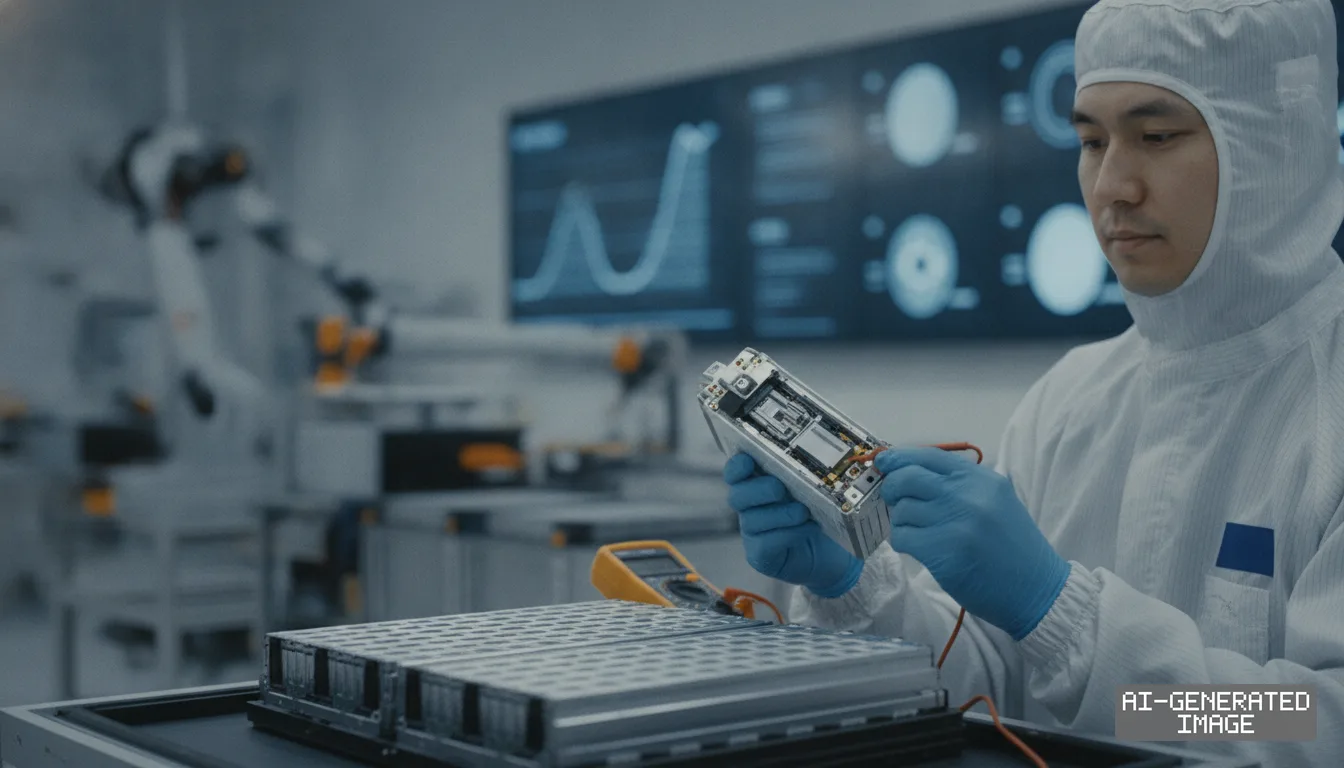
The aviation battery system delivers 350 watt-hours per kilogram at the cell level. That represents a 50% density increase over the 230 to 255 watt-hours per kilogram typical in standard passenger car packs.
CATL installed 242.7 gigawatt-hours of power batteries in the first half of 2026, accounting for 39.9% of the worldwide market. However, domestic electric vehicle shipment growth slowed to single-digit percentage gains this year.
The aircraft partnerships reflect a deliberate effort to commercialize battery chemistries outside passenger automobiles. Aerial systems command higher prices per kilowatt-hour, shielding manufacturers from domestic price wars.
The aviation push centers on commercial contracts signed in November 2026. On Nov. 2, CATL agreed to develop and exclusively supply custom batteries for Blue Vector Intelligent Technology, an airframe builder in Hangzhou.
Blue Vector is designing the SKYLA V30, a six-seat tiltrotor aircraft engineered for passenger transport. CATL will configure prismatic battery modules to meet the tiltrotor's aerodynamic weight limits and high power demands during vertical takeoff.
A second exclusive supply agreement followed on Nov. 12 with EVT Aerotechnics. Under that strategic pact, CATL will supply dedicated aviation batteries for both piloted passenger aircraft and uncrewed aerial cargo fleets.
The agreements build on earlier cooperation with Shanghai-based aircraft maker AutoFlight. CATL took an equity stake in AutoFlight and supplied battery packs for the Carryall cargo model, which cleared regulatory compliance reviews earlier this year.
CATL also partnered with AutoFlight to build an offshore vertiport — a designated floating area for vertical takeoff and landing. The platform extends low-altitude transport routes across rivers, lakes and coastal waters.
To enter commercial flight supply chains, CATL secured the AS9100D aerospace quality management certification. The accreditation is a prerequisite for supplying flight-critical propulsion hardware to commercial airframers.
Aviation batteries face stringent safety rules before passenger flights receive clearance. On Aug. 9, 2026, CATL verified that its 350-watt-hour aviation battery passed adjacent-cell thermal runaway tests witnessed by Civil Aviation Administration of China (CAAC) inspectors.
Thermal runaway — an uncontrolled temperature spike that can spread between failing cells — is the central safety hazard for passenger flight. During the test, two adjacent cells were triggered simultaneously without igniting neighboring units.
CATL prevented propagation by isolating electrical connections from exhaust channels. The system uses aviation-grade titanium alloy casings, which reduce enclosure wall thickness by 60% and trim unit weight by 30% compared with steel.
The cell pairs a high-nickel cathode with a low-expansion silicon-carbon anode. The material combination raises energy density by 50 watt-hours per kilogram over conventional electric vehicle chemistry, the company said in an April filing.
CATL originally introduced its condensed battery technology in April 2023 with a target density of 500 watt-hours per kilogram. The chemistry replaces liquid electrolytes with a conductive biomimetic gel to improve structural stability.
The 500-watt-hour condensed systems completed maiden flight validation on four-tonne aircraft earlier this year, with further trials underway on eight-tonne airframes. Those higher-density variants remain in developmental testing.
Chairman Robin Zeng addressed commercial timelines during the APEC CEO Summit on Nov. 17, 2026. CATL is focusing commercial deployments on cells delivering at least 350 watt-hours per kilogram, Zeng said.
Aviation engineering has also fed back into automotive lines. In April 2026, CATL introduced the Qilin Condensed Battery for premium passenger cars, adapting the 350-watt-hour aviation cell structure to deliver 1,500 kilometers of driving range.
The commercial filings do not state the financial value, order volumes or delivery schedules for the Blue Vector and EVT contracts. CATL has not confirmed whether the aircraft will eventually adopt 500-watt-hour condensed cells.
Seven Chinese aircraft builders plan to begin commercial deliveries by Dec. 31, 2026, under low-altitude trial flight rules issued by the Ministry of Industry and Information Technology.
Impact map
How this development propagates across the region and out to global buyers.
| Event | Korea | China | Japan | Global impact |
|---|---|---|---|---|
| Aviation battery commercialization | LG Energy Solution and SK on face Chinese lead in certified 350 Wh/kg flight cells | CATL secures domestic eVTOL supply chain across passenger and freight airframes | Panasonic holds flight cell capex in reserve pending US FAA electric airworthiness rules | eVTOL bill of materials shifts toward high-nickel silicon packs as cell costs exceed |
| Aviation battery commercialization | LG Energy Solution and SK on face Chinese lead in certified 350 Wh/kg flight cells | CATL secures domestic eVTOL supply chain across passenger and freight airframes | Panasonic holds flight cell capex in reserve pending US FAA electric airworthiness rules | eVTOL bill of materials shifts toward high-nickel silicon packs as cell costs exceed $120 per kWh |
In this story
- Companies
- Contemporary Amperex Technology (CATL)
- Tickers
- 300750.SZ
- Exposed
- AutoFlight
- Policy
- Standards
- Impact
- Supply ChainOrder BookCost Structure
Track every Standards development →
Related briefings
- CATL wins exclusive battery deal with eVTOL firm Blue Vector Also on AutoFlight, Standards, Order Book
- CATL opens 8,000-square-meter battery service hub in Oslo Also on AutoFlight, Cost Structure
- Mitsubishi Shipbuilding wins contract for four ammonia car carriers Also on Standards, Cost Structure, Order Book
- China humanoid robotics stocks draw 10.2B yuan on new state roadmap Also on Standards, Cost Structure, Order Book
Sources
Primary documents
Reporting
Confidence: high — how we grade this
The documents behind this briefing are linked above. East Asia Brief produces its English text with AI assistance under human editorial review, and does not translate or republish other outlets' articles. See our methodology and AI policy. Spotted an error? Tell us.
The Morning Brief
What changed in Korean, Chinese and Japanese industry overnight — and what it means for your supply chain. One email, weekday mornings, US time. Free.
The Morning Brief is in preparation. Leave your address and we will write to you once — when the first issue is ready. Nothing before that.