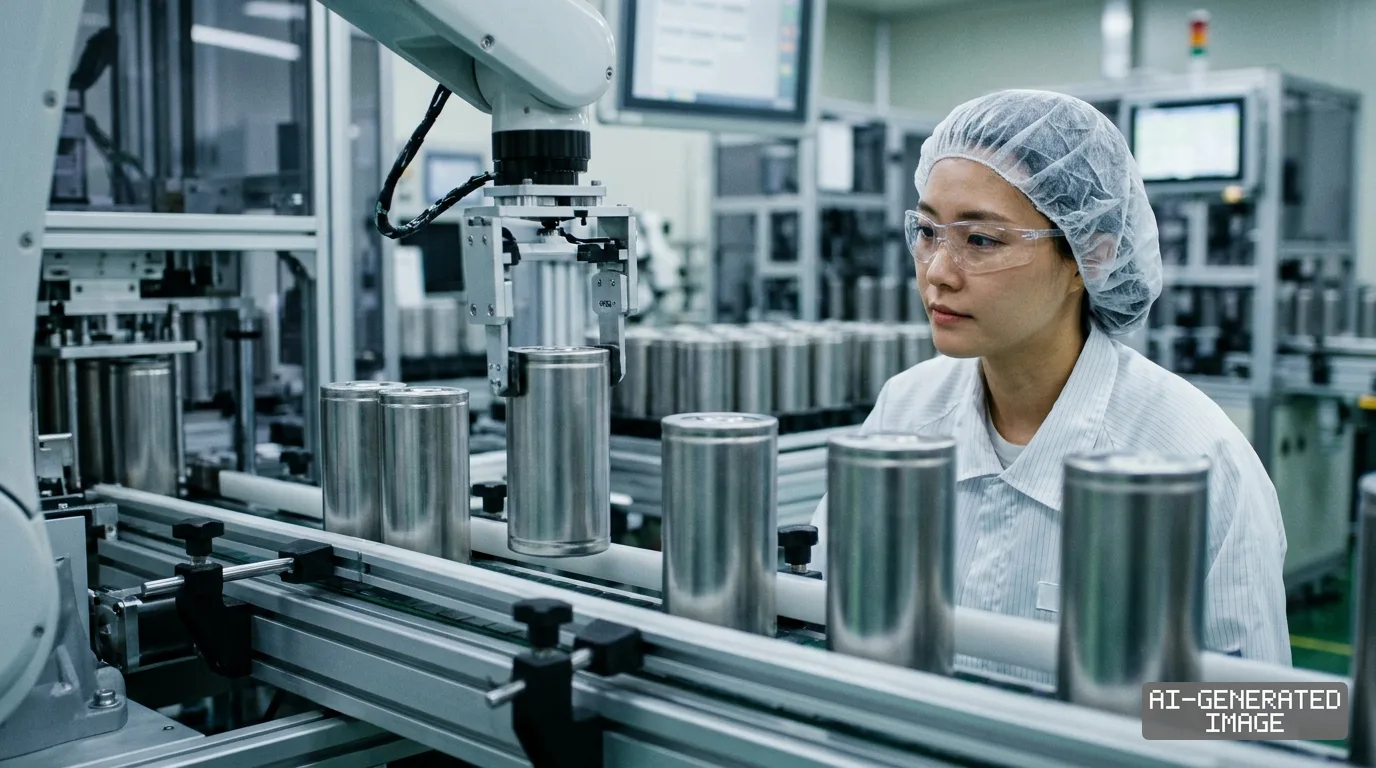
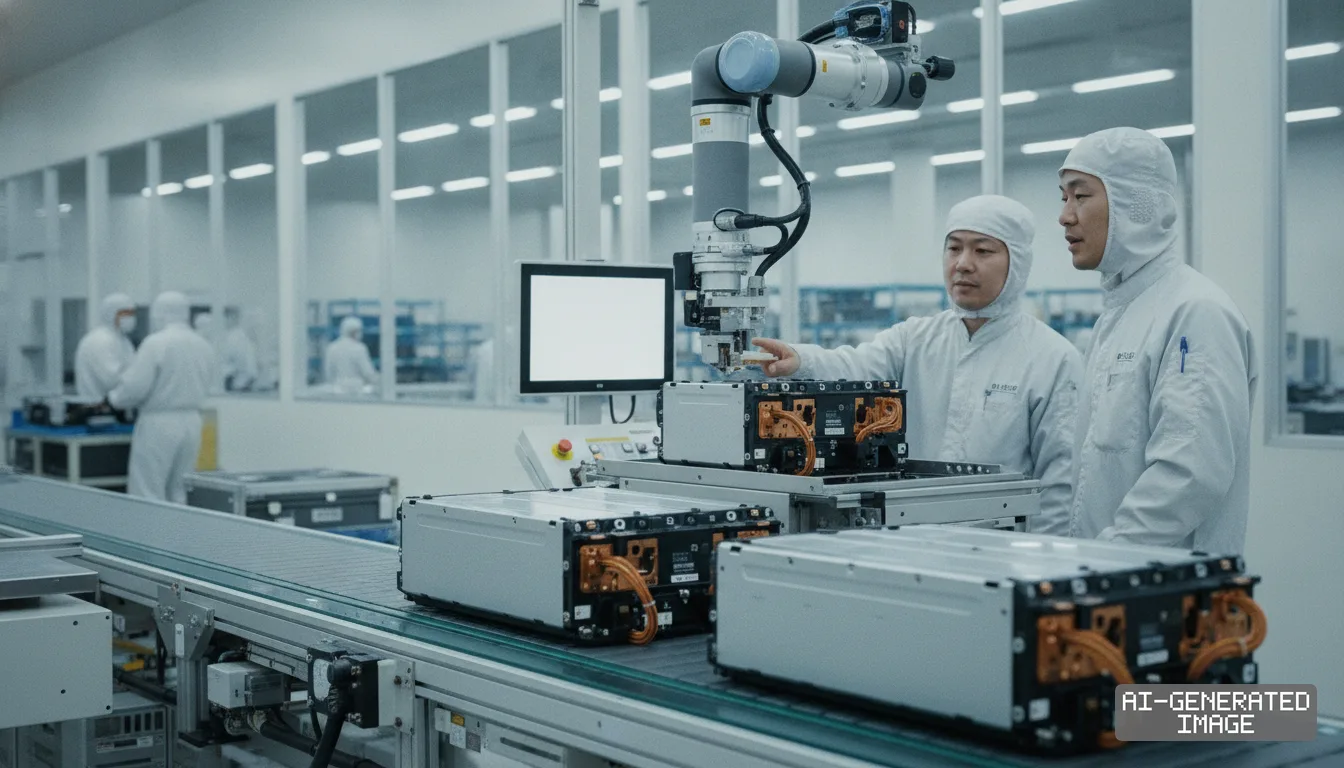
CLSA cuts CATL 2026 profit outlook 11% on EV battery margin squeeze
The brokerage projected fourth-quarter earnings of 15 billion yuan, lowering full-year profit to 80 billion yuan as automakers delay absorbing tax changes.
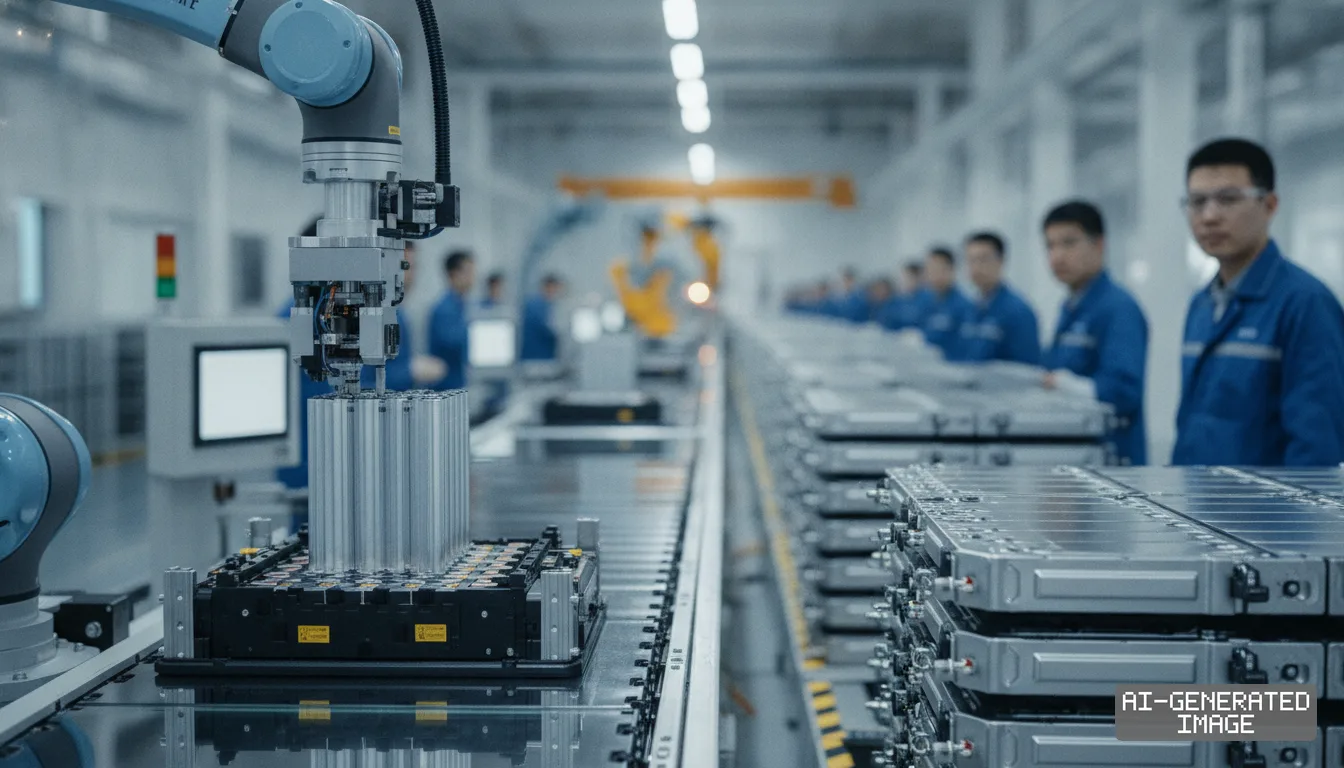
Contemporary Amperex Technology faces narrowing unit margins and a potential 2027 earnings shortfall as carmakers resist higher cell prices, CLSA said Nov. 26 in a client report.
The brokerage modeled a fourth-quarter net profit of 15 billion yuan ($2.07 billion). That figure marks a 35% decline from a year earlier and a 30% contraction from the prior quarter.
That quarterly drop would leave full-year 2026 net profit at 80 billion yuan ($11.05 billion). The total falls 11% below current institutional consensus projections of 90 billion yuan.
The projected earnings contraction reflects delays in passing recent tax adjustments to automotive buyers. Contract terms across the industry typically fix cell prices over quarterly or annual procurement cycles.
China reinstated a 2% consumption tax on lithium-ion cells on Sept. 1, 2026. The tax rule applies to lithium primary batteries and lithium-ion cells while exempting sodium-ion and solid-state alternatives.
Automakers confronting slower retail growth in electric vehicles have pushed back against spot price adjustments. Battery producers have absorbed the initial tax costs on domestic deliveries as a result.
Export operations face compounding margin friction from fiscal changes. The Chinese government reduced the export value-added tax rebate on battery products from 9% to 6% on April 1, 2026.
The tax rebate cancellation affects 22 customs commodity codes covering lithium-ion accumulators, primary cells and battery parts, according to the ministry notice.
The finance ministry policy maintains an exemption on export consumption taxes, leaving domestic sales to absorb the bulk of the newly imposed levies.
Year-end asset impairments and seasonal one-off accounting charges will also weigh on fourth-quarter figures, the brokerage said. Those non-operating costs arrive as factory throughput stabilizes across older lines.
Investor anxiety over earnings compression prompted a sharp equity sell-off on Nov. 25. Shares in Contemporary Amperex Technology fell 8% on the Shenzhen Stock Exchange and 12% in Hong Kong.
The company, traded under code 300750 in Shenzhen and 3750 in Hong Kong, ranks as the world's largest battery manufacturer. It supplies more than a third of global electric vehicle traction cells.
Capital commitments remain elevated despite near-term pricing headwinds. Construction in progress totaled 43.03 billion yuan ($5.94 billion) on Sept. 30, 2026, according to third-quarter financial statements.
That capital total represents a 44.73% increase from 29.73 billion yuan at the close of 2025. The balance expanded as the company installed cleanroom systems and cell assembly lines.
The company financed factory additions partly through working capital debt. Notes payable expanded 48.08% during the first nine months of the year to 152.93 billion yuan ($21.12 billion).
Short-term borrowings surged 208.43% over the same period, reaching 39.90 billion yuan ($5.51 billion). The company cited general operating scale and factory investments in its quarterly disclosure.
Executive leadership expressed confidence in medium-term demand during an Oct. 20 earnings briefing. Management told investors that electric vehicle and stationary storage markets would sustain healthy expansion in 2027.
CLSA modeled CATL cell delivery volumes to increase 15% year over year to 1.13 terawatt-hours in 2027. That projection assumes steady demand growth from commercial transport and grid-scale storage systems.
Unit profitability faces heightened risks under prolonged retail discounting. If net profit slips to 0.07 yuan per watt-hour, full-year 2027 net profit will remain flat at roughly 80 billion yuan.
Institutional consensus currently anticipates 2027 net profit of 104 billion yuan ($14.36 billion). Meeting that projection requires CATL to defend net margins of at least 0.09 yuan per watt-hour across delivered packs.
The brokerage reduced its target price to 400 yuan for Shenzhen A-shares and HK$585 ($75.20) for Hong Kong shares. It maintained an Outperform investment rating on the manufacturer.
Slower factory commissioning schedules would reverberate through upstream chemical processors. Chinese suppliers of cathode active materials and synthetic graphite anode powders face reduced spot delivery orders.
Refiners of battery-grade lithium carbonate and nickel sulfate have already scaled back run rates. Upstream producers risk accumulating inventory if battery assemblers delay taking delivery of contracted mineral feeds.
Major battery manufacturers across the region are prioritizing line utilization rates over uncommitted capacity growth. Companies are pacing equipment procurement to protect factory operating margins against idle depreciation charges.
CATL has not published project-level capital expenditure budgets or revised commissioning timetables for individual domestic manufacturing bases for 2027.
Fiscal regulations will tighten further at year-end. China's Ministry of Finance and State Taxation Administration will abolish the remaining 6% battery export tax rebate on Jan. 1, 2027.
Under customs administrative procedures, shipments must complete export exit formalities before midnight on Dec. 31 to secure the 6% rebate. Cargo delayed past that cutoff will lose export tax support.
Domestic cost structures will encounter another mandated increase in late 2027. The consumption tax on lithium-ion batteries is scheduled to double from 2% to 4% on Sept. 1, 2027.
Impact map
How this development propagates across the region and out to global buyers.
| Event | Korea | China | Japan | Global impact |
|---|---|---|---|---|
| Chinese battery tax changes and margin defense | LG Energy Solution and SK on see overseas price competition ease as Chinese export rebates drop | CATL faces 0.07 yuan per Wh unit profit risk as carmakers resist tax pass-through | Panasonic Energy retains cost insulation on North American lines backed by local cell tax credits | Automakers absorb higher cell procurement overhead or extend EV production timelines into 2027 |
In this story
- Companies
- Contemporary Amperex Technology
- Tickers
- 300750.SZ3750.HK
- Impact
- PricingCapexCost Structure
Related briefings
- CATL accelerates share buyback as quarterly net profit cools Also on Contemporary Amperex Technology, Pricing, Cost Structure
- CATL profit growth slows to 14% as price cuts pinch margins Also on Contemporary Amperex Technology, Pricing, Cost Structure
- Korean cathode makers retool production lines for LMFP chemistry as price war spreads Also on Contemporary Amperex Technology, Pricing, Cost Structure
- Grid Storage Costs Diverge Across East Asia as Safety Rules and Balance of System Shape Pricing Also on Contemporary Amperex Technology, Pricing, Cost Structure
Sources
Primary documents
Reporting
Confidence: high — how we grade this
The documents behind this briefing are linked above. East Asia Brief produces its English text with AI assistance under human editorial review, and does not translate or republish other outlets' articles. See our methodology and AI policy. Spotted an error? Tell us.
The Morning Brief
What changed in Korean, Chinese and Japanese industry overnight — and what it means for your supply chain. One email, weekday mornings, US time. Free.
The Morning Brief is in preparation. Leave your address and we will write to you once — when the first issue is ready. Nothing before that.