CATL opens direct online sales of 587Ah cells at $65 per kWh
The battery maker opened spot orders on its digital storefront at 435 yuan per kilowatt-hour, bypassing resellers and setting a fresh price floor for utility systems.
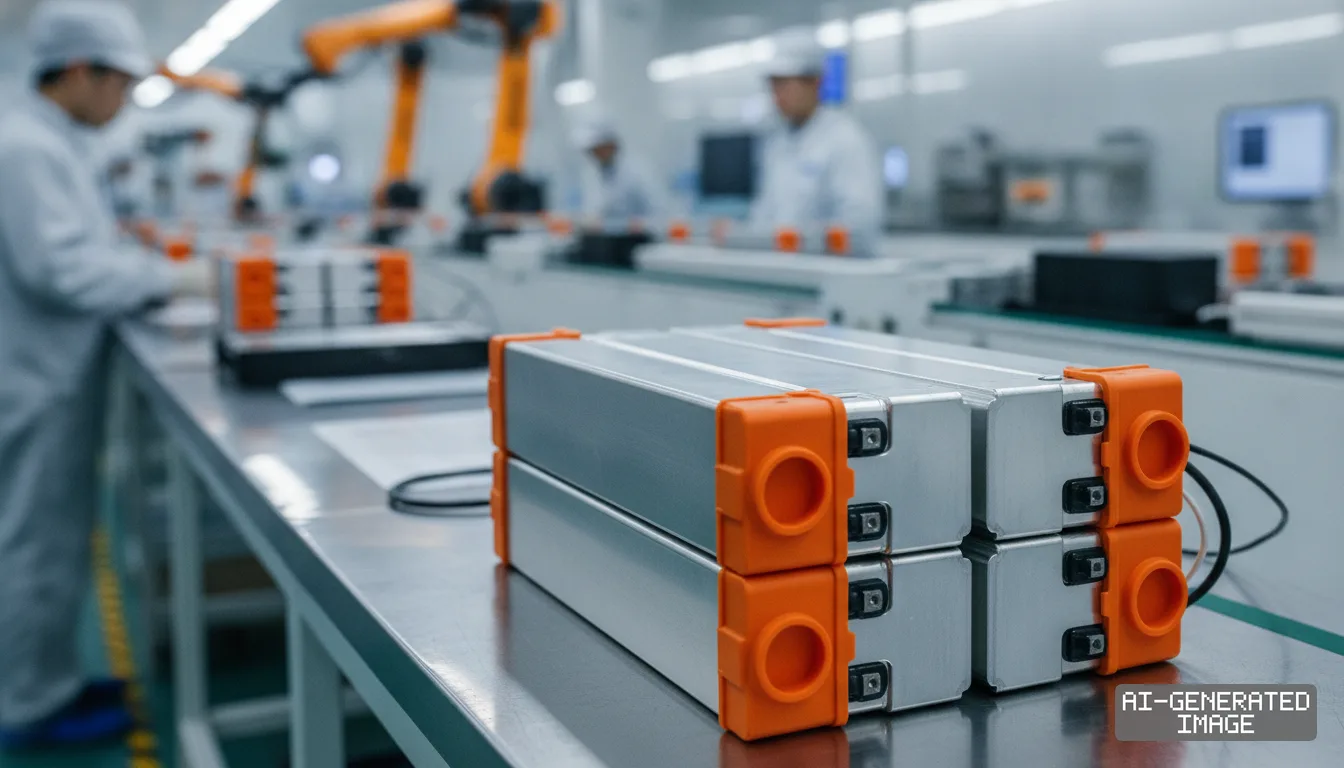
Contemporary Amperex Technology opened commercial sales of its 587-ampere-hour energy storage battery cells on its online storefront on Sept. 15, pricing the units at $65 per kilowatt-hour.
The listing on CATL Mall sets a benchmark price of 435 yuan ($65) per kilowatt-hour for utility-scale lithium iron phosphate (LFP) cells. That represents an immediate discount against wholesale distributor contracts.
Buyers face a minimum order quantity of 324 cells, packaged in three shipping crates. That threshold equates to 609 kilowatt-hours of capacity, or an entry commitment of roughly $40,000.
The Fujian-based manufacturer pledged five-year warranties and promised dispatch within three to five business days. The direct platform is restricted to registered Chinese system integrators, storefront rules showed.
CATL introduced the digital storefront on Aug. 21 to bypass middlemen in domestic grid-storage procurement. More than 1,800 energy storage integration companies registered during the platform's initial three weeks of operation.
The storefront initially offered 280-ampere-hour cells for 0.494 yuan per watt-hour and 314-ampere-hour cells for 0.395 yuan per watt-hour. The 587-ampere-hour model had remained listed as pending sale until Tuesday's activation.
The 587-ampere-hour unit is not a newly developed experimental product. CATL unveiled mass production specifications at its technology showcase on June 10, 2025, designing the cell for utility-scale stationary battery arrays.
The cell delivers an energy density of 434 watt-hours per liter, a 10% increase over previous iterations. It operates at a 0.5C charge and discharge rate, standard for long-duration stationary storage.
Each 587-ampere-hour cell provides 1.88 kilowatt-hours of nominal energy at 3.2 volts. The engineering standard accommodates 1,500-volt power conversion systems and standard 20-foot shipping containers without exceeding road transport weight limits.
CATL deployed the format inside its utility-scale TENER container platforms. An investor relations filing published on July 26, 2026, confirmed that large-scale customer shipments of the 587-ampere-hour cell were already underway.
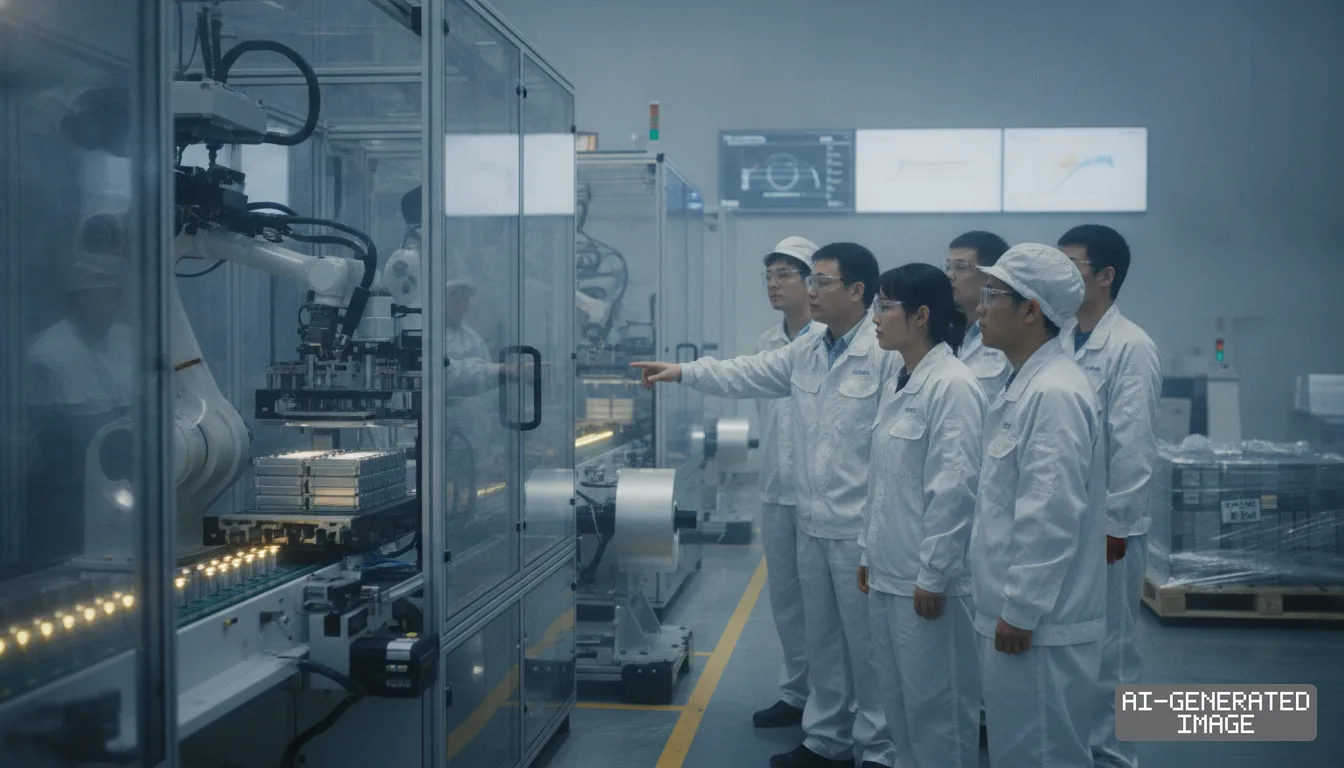
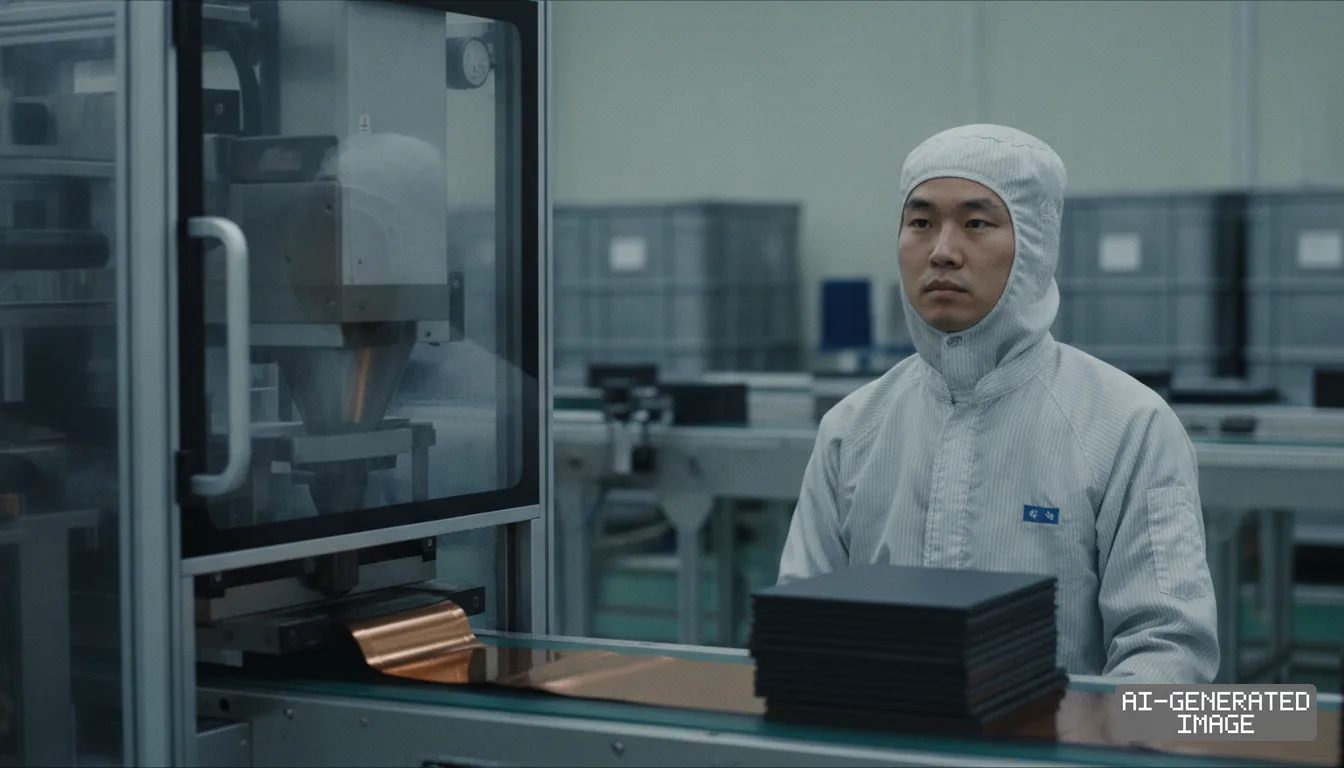
The cells roll off automated assembly lines at CATL's manufacturing complex in Jining, Shandong province. Daily output at the Jining facility exceeded 220,000 units, with production lines completing each cell in under two seconds.
High manufacturing speed and larger cell volume lowered unit production costs by 42%, the company said. That internal efficiency enables CATL to preserve gross margins while selling below $70 per kilowatt-hour.
Small-scale system integrators previously paid distributor markups of 15% to 20% on smaller cell volumes. Direct digital ordering allows mid-tier pack builders to match the procurement pricing of utility conglomerates, analysts said.
The transparent price increases margin pressure on competing Chinese manufacturers. Second-tier cell producers such as EVE Energy and HiTHIUM rely heavily on domestic private integrators to absorb uncontracted cell capacity, industry records show.
South Korean battery manufacturers face steep commercial barriers in utility markets. LG Energy Solution and Samsung SDI sell grid storage cells at an estimated $85 to $100 per kilowatt-hour, trade analysts said.
LG Energy Solution is converting production lines in Ochang, South Korea, to manufacture energy storage cells. However, its higher nickel-based chemistries and nascent LFP lines remain exposed to Chinese pricing deflation.
Samsung SDI continues to position its nickel-rich prismatic cells for specialized backup installations. That premium strategy isolates the supplier from low-margin grid tenders where capital cost per kilowatt-hour determines equipment procurement.
Western developers building renewable projects in Europe and Australia often track Chinese domestic cell pricing. A published $65 spot benchmark hardens buyer expectations during upcoming power purchase and equipment supply contract negotiations.
Falling cell costs also accelerate the retirement of the 314-ampere-hour standard across Chinese grid tenders. Larger formats reduce system part counts, simplify thermal management piping and cut on-site balance-of-plant installation labor.
CATL plans to bring an additional 100 gigawatt-hours of energy storage production capacity online in Jining before Dec. 31, 2026. That scheduled expansion will reinforce cell availability for the digital sales portal.
The company has not published a formal stock exchange disclosure regarding the retail pricing, however. Storefront terms do not state whether foreign buyers will gain purchasing access on the domestic platform.
The online catalog maintained active inventory allocations for immediate fulfillment across eastern China on Wednesday morning.
Impact map
How this development propagates across the region and out to global buyers.
| Event | Korea | China | Japan | Global impact |
|---|---|---|---|---|
| CATL 587Ah online direct sales | LG Energy Solution and Samsung SDI face price gap against $85- | — | — | — |
| CATL 587Ah online direct sales | LG Energy Solution and Samsung SDI face price gap against $85-$100/kWh ESS lines | Tier-2 cell makers EVE Energy and HiTHIUM lose pricing power with local integrators | Panasonic excluded from utility storage bids as Chinese LFP price floor drops | Grid storage integrators see spot cell procurement costs fall toward $65/kWh benchmark |
In this story
- Companies
- CATL
- Tickers
- 300750.SZ3750.HK
- Exposed
- LG Energy SolutionSamsung SDIEVE Energy
- Policy
- Industrial SubsidiesMarket Access
- Impact
- PricingSupply ChainCapex
Related briefings
- CATL holds 314Ah storage cell prices steady at 0.423 yuan Also on EVE Energy, Samsung SDI, LG Energy Solution
- CATL tops 15 Chinese automakers combined in first-half profits Also on EVE Energy, Pricing
- Estun buys humanoid robot maker Codroid for 487 million yuan Also on Industrial Subsidies, Pricing
- China servo motor makers squeeze foreign rivals on cost and delivery Also on Industrial Subsidies, Pricing
Sources
Reporting
Confidence: medium — how we grade this
The documents behind this briefing are linked above. East Asia Brief produces its English text with AI assistance under human editorial review, and does not translate or republish other outlets' articles. See our methodology and AI policy. Spotted an error? Tell us.
The Morning Brief
What changed in Korean, Chinese and Japanese industry overnight — and what it means for your supply chain. One email, weekday mornings, US time. Free.
The first issue goes out shortly. Sign up now and you will not miss it.