Sila signs $1B Panasonic anode contract to replace Chinese graphite
Silicon-carbon materials from Moses Lake will feed US battery lines as Western cell producers work to bypass Beijing export licensing rules.
Sila Nanotechnologies Chief Executive Officer Gene Berdichevsky set a two-year timeline on Nov. 21, 2026, to establish a non-China anode supply chain following a commercial supply pact with Panasonic Energy.
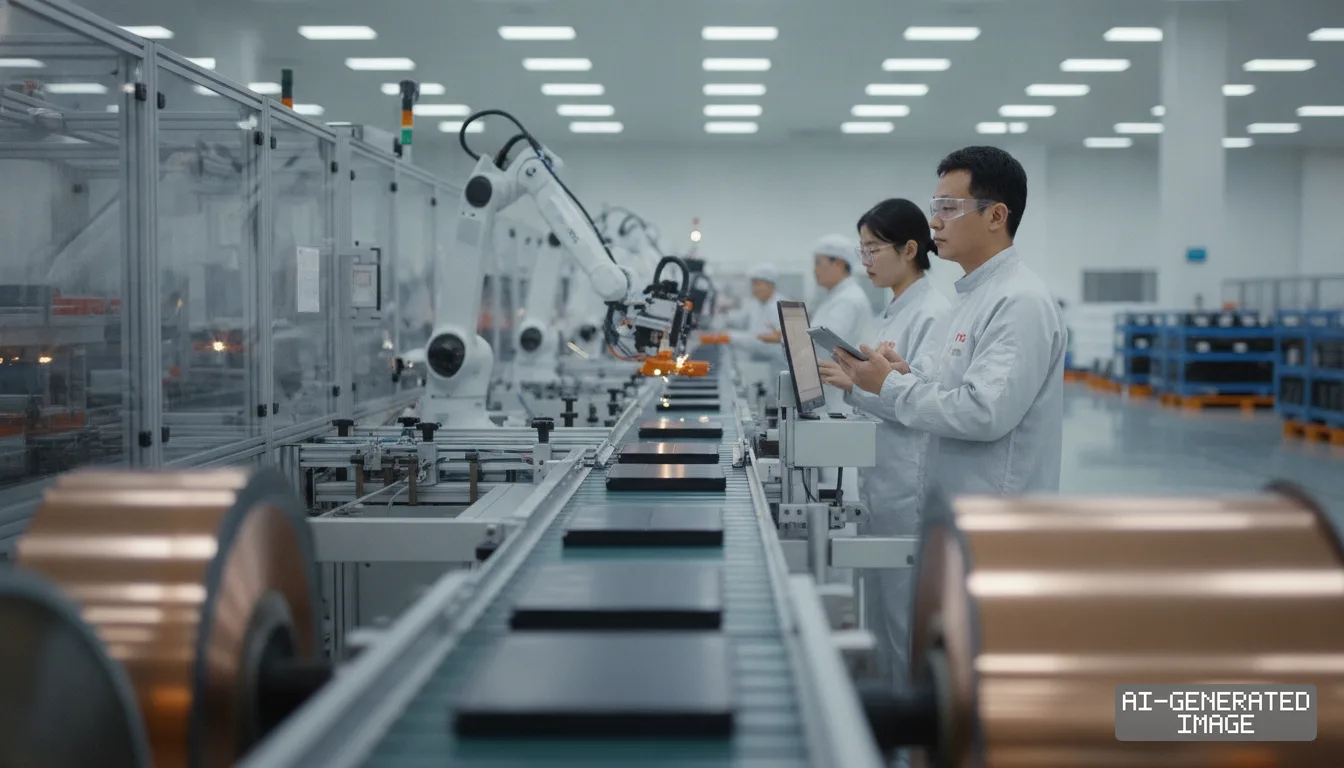
The multiyear commercial contract announced Nov. 18 with Panasonic Energy Corporation of North America has the potential to exceed $1 billion in cumulative material purchases. It directs silicon-carbon anode powder from Sila's factory in Moses Lake, Washington, into U.S. cell manufacturing lines.
The agreement targets Western dependence on Chinese synthetic and natural graphite, which account for more than 90% of global anode processing. China enacted export licensing controls on graphite products in December 2023, compelling battery manufacturers to establish alternative regional supply channels.
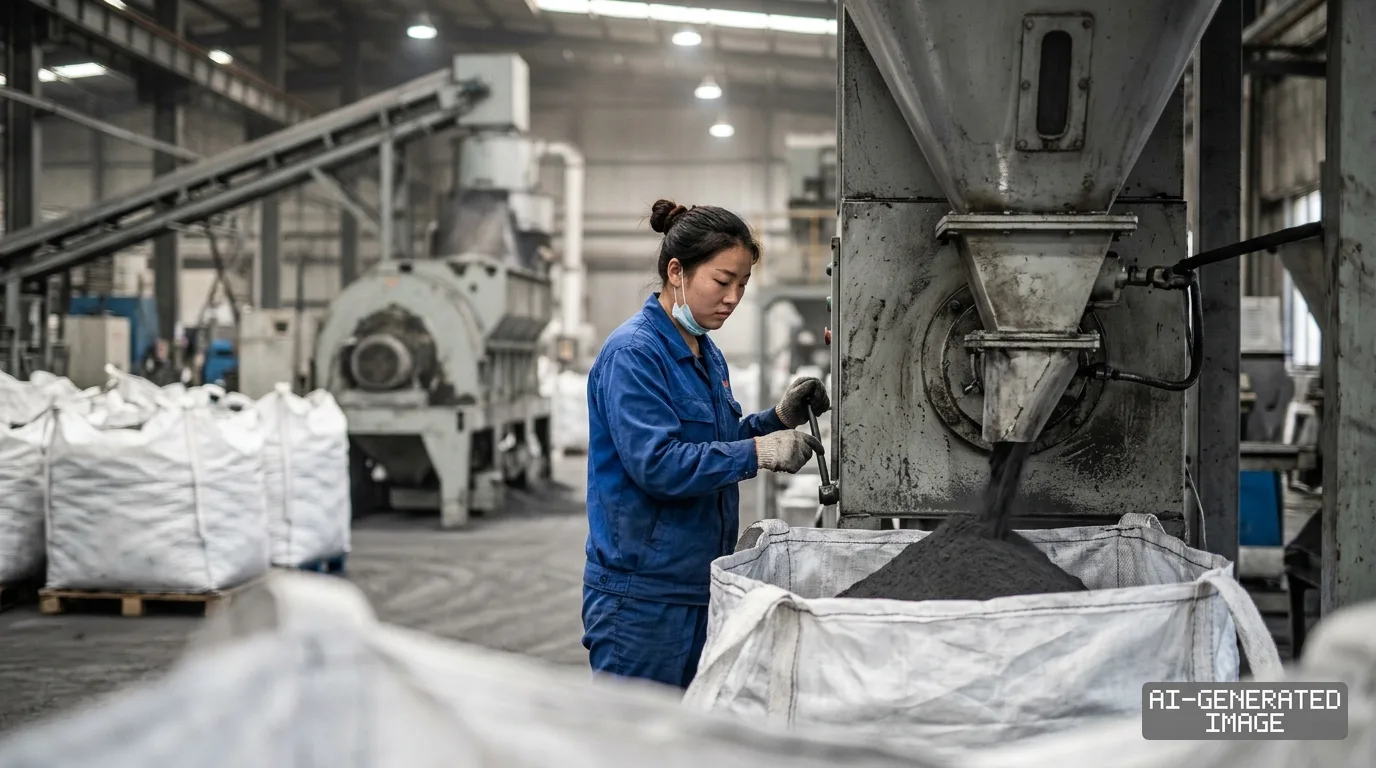
Sila manufactures Titan Silicon, a patented silicon-carbon composite — an engineered powder designed to store lithium ions with higher density than graphite while restraining structural expansion during charging cycles. Sila's Moses Lake facility operates with an initial capacity sized for 2 gigawatt-hours of cell production.
Panasonic Energy plans to integrate the nanocomposite powder to raise battery cell volumetric energy density by 25% by 2031. The Japanese battery manufacturer targets 1,000 watt-hours per liter, up from current levels of 800 watt-hours per liter, to boost vehicle range and reduce pack weight.
Silicon absorbs roughly 10 times more lithium ions by weight than conventional graphite, enabling faster charging speeds. Industry test data indicates high-content silicon anodes can achieve an 80% recharge in under 15 minutes when paired with optimized electrolytes, Berdichevsky said in an interview Nov. 21.
Berdichevsky said commercial qualification of the material will provide Western automakers with an operational alternative to Chinese supply chains within two years. The manufacturing buildout focuses on meeting domestic content requirements under the U.S. Inflation Reduction Act, Berdichevsky said.
Sila secured a $1.4 billion conditional loan commitment from the U.S. Department of Defense's Office of Strategic Capital in August 2026 to finance plant expansion. That debt package followed an equity funding round of $300 million closed in July 2026 to expand domestic production.
The capital supports construction work to expand the Moses Lake site, creating an estimated 500 manufacturing and construction jobs, the company said. Sila designed the factory to supply battery lines for electric passenger vehicles, defense uncrewed aerial systems and commercial industrial equipment.
Western automakers face steep cost hurdles in matching China's graphite sector. Chinese refiners benefit from low electricity tariffs and integrated synthetic graphitization furnaces that hold production costs below $5 per kilogram, making graphite the cheapest active material in electric vehicle battery packs.
Synthetic graphite production requires high-temperature thermal treatment exceeding 2,500 degrees Celsius. Very few commercial graphitization facilities operate outside East Asia, leaving North American and European gigafactories almost entirely dependent on imported precursor and finished graphite materials.
Silicon-carbon composites carry higher initial manufacturing costs per ton than graphite, but their energy density reduces total material consumption. Replacing a portion of anode graphite with silicon-carbon powder cuts total cell volume and allows automakers to maintain vehicle range with smaller battery enclosures, Sila said.
Rival battery materials developers are also deploying large capital investments across international manufacturing hubs. Group14 Technologies closed a €150 million ($169 million) Series D equity extension on Oct. 29, 2026, to fund construction of a 10 gigawatt-hour silicon active material facility in Sagunto, Spain.
Group14 operates a 10 gigawatt-hour factory in Sangju, South Korea, through its BAM-3 joint facility, which began EV-scale production of its SCC55 silicon-carbon material in March 2026. The company is constructing its BAM-2 plant in Moses Lake, Washington, where two production modules will add 20 gigawatt-hours of capacity in 2027.
U.S. trade policy has accelerated corporate demand for non-Chinese anode inputs. Washington imposed a 93.5% tariff on Chinese synthetic graphite imports, while Foreign Entity of Concern guidelines disqualify electric vehicles from federal consumer tax credits if their cells contain critical battery components processed in China.
Tier-one cell manufacturers are using long-term offtake contracts to guarantee local materials supply ahead of statutory deadlines. Panasonic Energy manufactures cylindrical lithium-ion cells for automakers including Tesla at its Nevada gigafactory and is completing construction of an additional cell manufacturing plant in De Soto, Kansas.
Automakers continue to evaluate silicon chemistry across accelerated aging cycles to measure battery degradation and swelling over thousands of fast-charging sessions. Pure silicon particles expand up to 300% during charging, requiring precise carbon matrix engineering or elastic binders to prevent electrode cracking inside commercial packs.
The supply agreement between Sila and Panasonic does not disclose contracted tonnage, guaranteed annual volumes or unit pricing, and public regulatory records do not show a new commercial cell demonstration filed on Nov. 21.
Sila targets expanded commercial output and initial volume shipments under the Panasonic contract by 2028, when customer cell qualification across North American assembly lines is scheduled to conclude.
Impact map
How this development propagates across the region and out to global buyers.
| Event | Korea | China | Japan | Global impact |
|---|---|---|---|---|
| Silicon anode supply chain shift | Group14 scales 10 GWh BAM-3 plant in Sangju, supplying local and export cell lines | Domestic refiners hold >90% graphite processing but face Western tariff and FEOC exclusions | Panasonic secures non-China silicon material from Moses Lake for US EV cell lines | Automotive supply chains substitute synthetic graphite to comply with IRA and DoD requirements |
| Silicon anode supply chain shift | Group14 scales 10 GWh BAM-3 plant in Sangju, supplying local and export cell lines | Domestic refiners hold >90% graphite processing but face Western tariff and FEOC exclusions | Panasonic secures non-China silicon material from Moses Lake for US EV cell lines | Automotive supply chains substitute synthetic graphite to comply with IRA and DoD requirements |
In this story
- Companies
- Sila NanotechnologiesPanasonic Energy
- Tickers
- 6752.T
- Exposed
- Group14 TechnologiesTesla
- Policy
- Export ControlsTariffs
- Impact
- Supply ChainCapexCompliance
Track every Export Controls development → Track every Tariffs development →
Related briefings
- US Treasury reviews IRA mineral standards as 80% mandate nears Also on Panasonic Energy, Tesla, Compliance
- Sumitomo Metal cuts profit guidance 25% on nickel impairment Also on Panasonic Energy, Tesla
- Panasonic develops humanoid robot batteries at Osaka lab Also on Panasonic Energy, Tesla
- Panasonic Energy opens Osaka battery hub for advanced cells Also on Panasonic Energy, Tesla
Sources
Reporting
Confidence: medium — how we grade this
The documents behind this briefing are linked above. East Asia Brief produces its English text with AI assistance under human editorial review, and does not translate or republish other outlets' articles. See our methodology and AI policy. Spotted an error? Tell us.
The Morning Brief
What changed in Korean, Chinese and Japanese industry overnight — and what it means for your supply chain. One email, weekday mornings, US time. Free.
The Morning Brief is in preparation. Leave your address and we will write to you once — when the first issue is ready. Nothing before that.