BYD launches Tang electric SUV pre-sales from 225,000 yuan in China
The baseline five-seat model sits 14,900 yuan below the Da Tang crossover, expanding a vehicle lineup that delivered 98,278 units in 10 months.

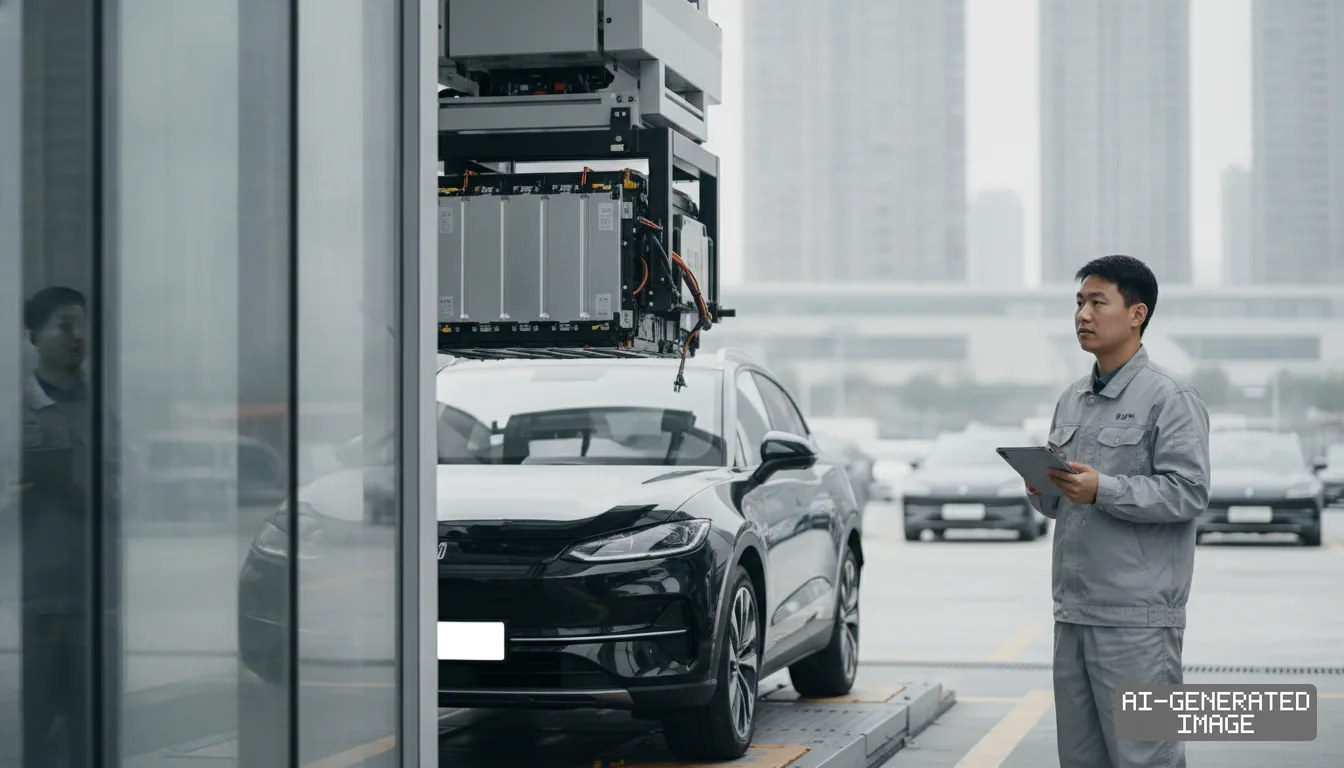
BYD opened domestic pre-sales for its third-generation Tang electric sport utility vehicle on Nov. 13, setting the entry price at 225,000 yuan ($33,510) across dealership networks in China.
The baseline price tag sits 14,900 yuan ($2,219) below the seven-seat Da Tang. BYD introduced that larger crossover on June 17 at 239,900 yuan.
The Tang model family generated 98,278 customer deliveries across China during the first 10 months of 2026. Deliveries of the Da Tang reached 54,222 units since June, representing more than half of that volume.
Lu Tian, general manager of the sales division for BYD's Dynasty Network, announced the pre-sale launch on Weibo on Nov. 13. Showroom display vehicles began arriving at franchise dealerships across Chinese provinces the same morning, Lu said.
Prospective buyers can place advance reservations through the Dynasty mobile application or in franchised showrooms. The commercial launch program spans three trim configurations priced between 225,000 yuan and 260,000 yuan ($38,720).
The entry model features a single-motor rear-wheel-drive powertrain and roof-mounted lidar sensors. It offers an operating range of 850 kilometers under the China Light-Duty Vehicle Test Cycle (CLTC).
The mid-range trim sells at a pre-sale price of 240,000 yuan ($35,740) while matching the 850-kilometer driving envelope. The top configuration adds dual-motor all-wheel drive, carrying a 260,000 yuan sticker and a 770-kilometer CLTC certification.
The five-seat SUV measures 5,045 millimeters long, 1,980 millimeters wide and 1,740 millimeters high, built on a 2,950-millimeter wheelbase. The interior incorporates 1,003 millimeters of second-row legroom and rear seats reclining up to 130 degrees.
That physical footprint places the third-generation Tang directly against the Tesla Model Y in China's premium electric utility category. Tesla lists the base rear-wheel-drive Model Y at 249,900 yuan in China.
The entry Tang undercuts that rival by 24,900 yuan, or roughly 10%. BYD includes standard autonomous driving hardware and an additional 306 kilometers of certified CLTC driving range at that lower price point.
Powertrains rely entirely on lithium iron phosphate batteries supplied by FinDreams Battery. The manufacturing subsidiary produces cells exclusively for BYD using thin prismatic form factors known as blade batteries.
Blade design integrates cells directly into battery packs without intermediate structural modules. That manufacturing architecture cuts mechanical overhead and bypasses cost volatility associated with nickel and cobalt raw materials.
Filings published by China's Ministry of Industry and Information Technology list pack sizes of 88.6 kilowatt-hours and 105.8 kilowatt-hours for the vehicle platform. The larger capacity powers the rear-wheel-drive 850-kilometer variant.
The vehicle architecture incorporates high-voltage flash-charging circuitry. The electrical system recharges the pack from 10% to 70% in five minutes under standard temperature conditions, according to technical disclosures from the carmaker.
A charge from 10% to 97% requires nine minutes under ambient operating temperatures, the company said. Low ambient temperatures during winter conditions add approximately three minutes to that duration.
The chassis integrates BYD's DiSus-A dual-chamber air suspension system with forward road-scanning preview cameras. The rear drive unit uses an electric motor rated at 300 kilowatts, while dual-motor variants deliver 515 kilowatts.
Dual-motor configurations accelerate from zero to 100 kilometers per hour in 4.3 seconds. Cargo storage includes a 205-liter front luggage trunk and a 910-liter rear compartment expandable to 2,098 liters.
The five-seat cabin features a 35.4-inch cockpit display bar and a 30-inch central touchscreen. Cabin electronics incorporate independent ten-point massage seating, heating functions and zero-gravity seating for the front passenger.
Commercial timing reflects sales shifts across BYD's utility vehicle operations. Tang nameplate registrations totaled 16,664 units in October 2026, with the Da Tang taking 14,000 units, or 84% of line deliveries.
Sales for the broader Tang series declined 25.3% year-on-year across the January-to-October period. The five-seat layout is intended to restore volume among urban family households seeking larger passenger space.
The pricing strategy tightens margin boundaries for competing Chinese EV builders. Li Auto and Nio maintain primary product lineups in the 250,000-to-350,000 yuan bracket, where competition for household buyers has intensified.
Li Auto generates more than 80% of its passenger vehicle revenue from multi-row extended-range and pure-electric sport utility vehicles. Nio prices its entry Onvo L60 utility vehicle close to 206,900 yuan, facing direct cross-shopping against BYD's longer-range blade packs.
In-house production across battery cells, motor controllers and silicon-carbide power modules allows BYD to preserve automotive gross margins near 20%. Foreign brands, by contrast, struggle to achieve gross profitability on mid-size battery-electric models produced in China.
Preliminary vehicle pricing in China typically drops prior to commercial distribution. BYD launched the Da Han sedan on Oct. 13 at retail stickers 14,000 yuan below its initial pre-sale price announcement.
The pre-sale announcement does not state the official showroom delivery date or overseas shipment allocations. BYD has not published the complete factory options catalogue across individual trim variants.
Showroom bookings remain active across authorized retail stores in China through November. BYD will finalize standard features and retail delivery timelines at its national product launch scheduled for December 2026.
Impact map
How this development propagates across the region and out to global buyers.
| Event | Korea | China | Japan | Global impact |
|---|---|---|---|---|
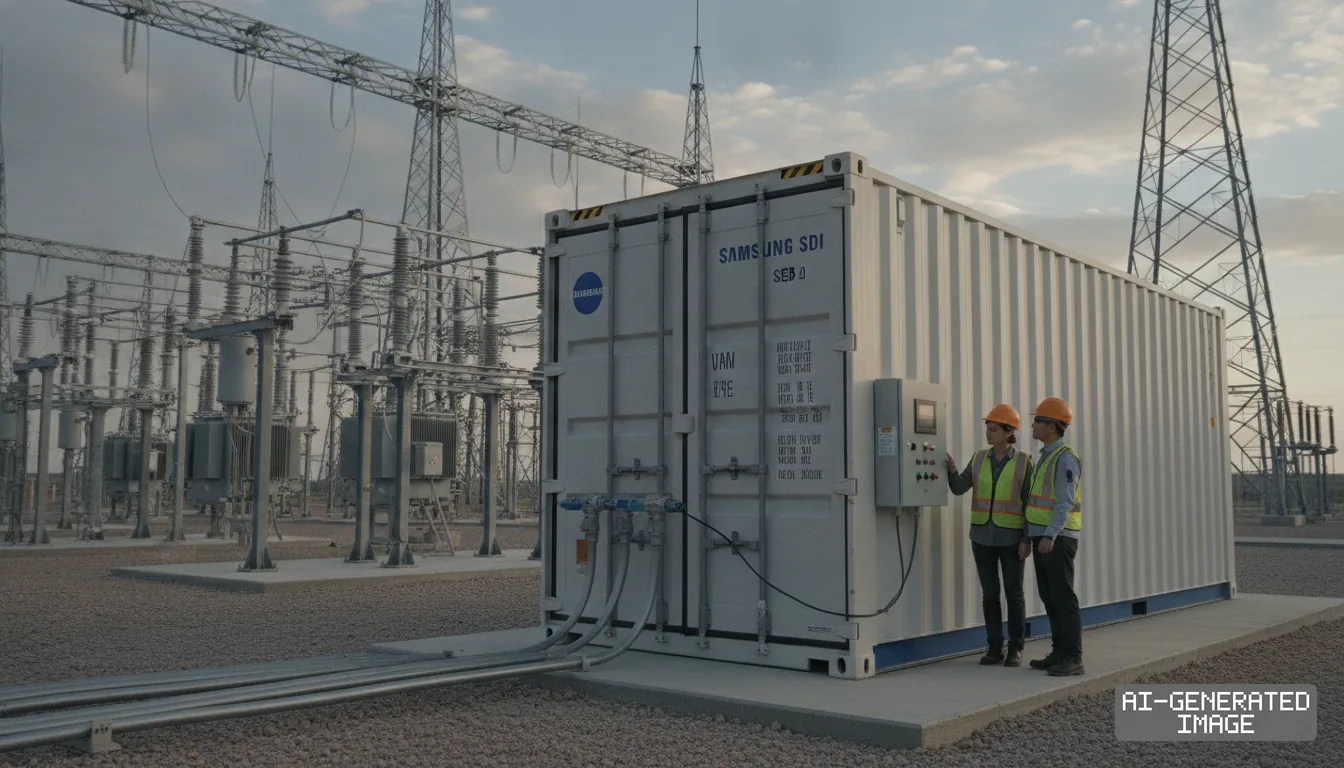
| BYD third-generation Tang pre-sales | LG Energy Solution and Samsung SDI face price pressure as LFP blade packs displace nickel-rich cathode chemistries in China | Li Auto and Nio face margin compression in the 250,000-yuan SUV bracket against BYD vertical integration | Toyota and Honda pure EV lines face steeper discounts to match 850 km range and sub-$34,000 entry pricing | Tesla faces direct pricing challenge in China where Model Y starts 24,900 yuan higher than the entry Tang |
In this story
Related briefings
- BYD schedules Fangchengbao Tai 9 hybrid SUV debut for Nov. 19 Also on Li Auto, BYD, Pricing
- BYD Denza N8 debuts Nov. 12 with 1,003-kilometer battery range Also on Li Auto, BYD, Pricing
- Li Auto and EV rivals drop CATL to build in-house batteries Also on Li Auto, BYD, Pricing
- BYD sets Denza N8 pre-orders to target luxury EV market in China Also on Li Auto, Pricing
Sources
Reporting
Confidence: medium — how we grade this
The documents behind this briefing are linked above. East Asia Brief produces its English text with AI assistance under human editorial review, and does not translate or republish other outlets' articles. See our methodology and AI policy. Spotted an error? Tell us.
The Morning Brief
What changed in Korean, Chinese and Japanese industry overnight — and what it means for your supply chain. One email, weekday mornings, US time. Free.
The Morning Brief is in preparation. Leave your address and we will write to you once — when the first issue is ready. Nothing before that.