Arcfox launches 52,000-yuan EV with 99-second CATL battery swap
The BAIC marque cuts upfront costs 24% by separating chassis ownership from a 399-yuan monthly battery lease on the new Beta T1 hatchback.
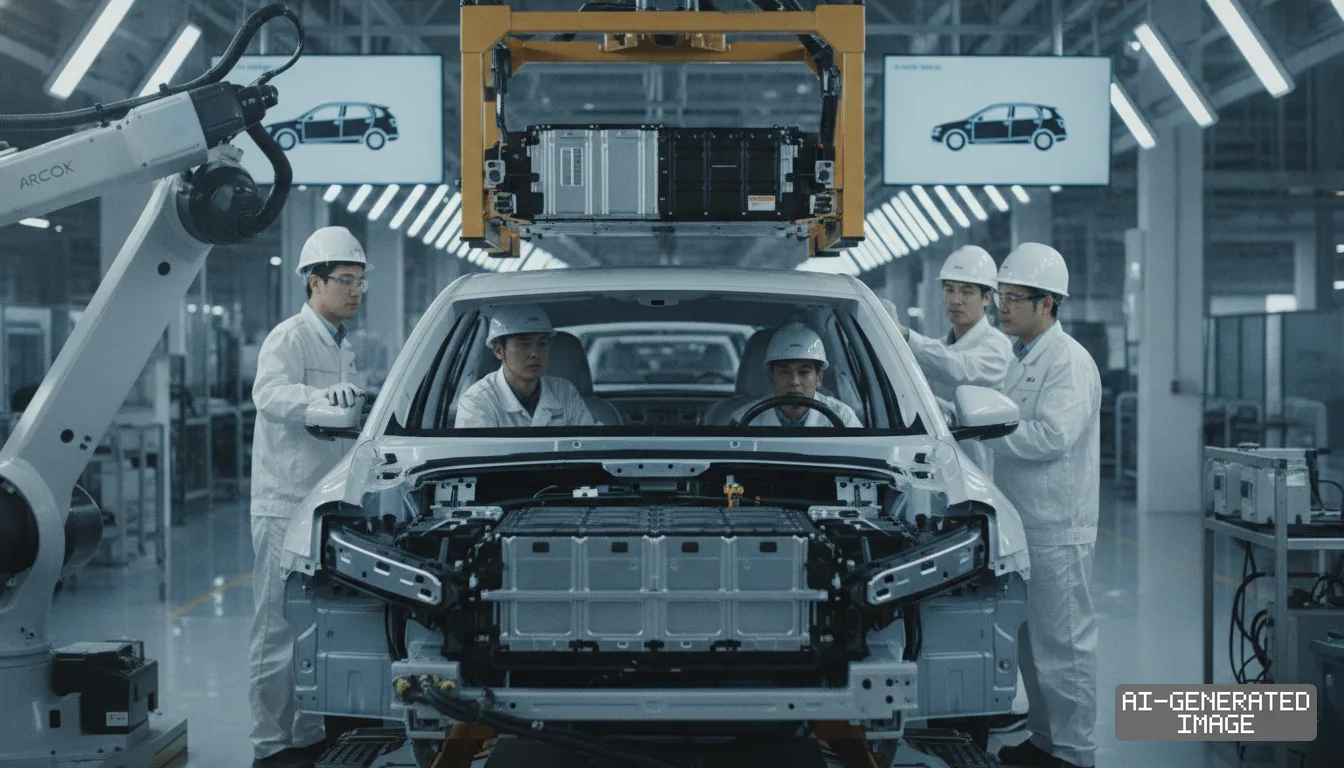
Arcfox, the electric marque of BAIC Group, released the battery-swappable Beta T1 hatchback on Nov. 14, 2026, lowering upfront purchase costs to 52,000 yuan ($7,740) under a battery subscription contract.
The model relies on vehicle-battery separation, where buyers purchase the chassis and lease the pack. The structure trims 16,800 yuan ($2,500), or 24%, off the entry sticker price of the plug-in Beta T1.
Drivers pay Contemporary Amperex Technology (CATL) 399 yuan ($59) a month for battery access covering 5,000 kilometers of travel. An unlimited-mileage tier costs 599 yuan ($89) monthly, Arcfox said.
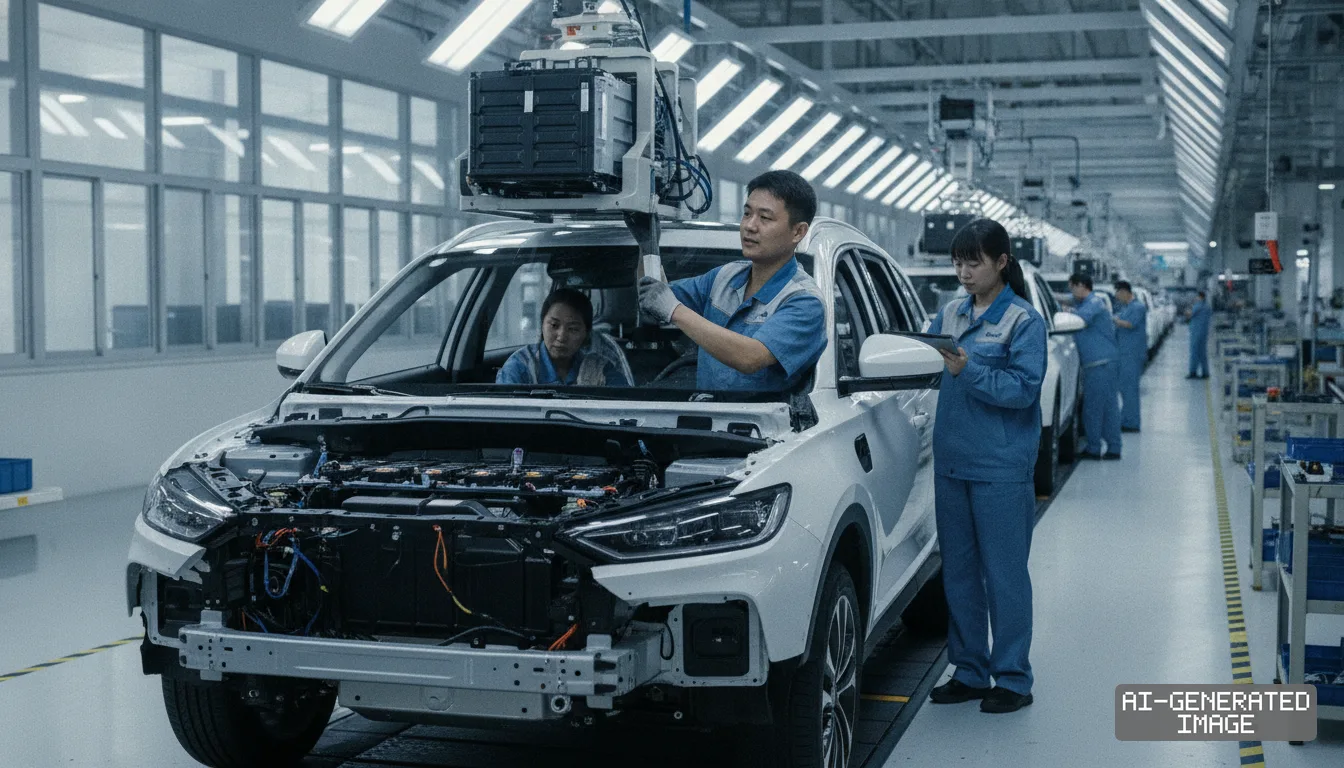
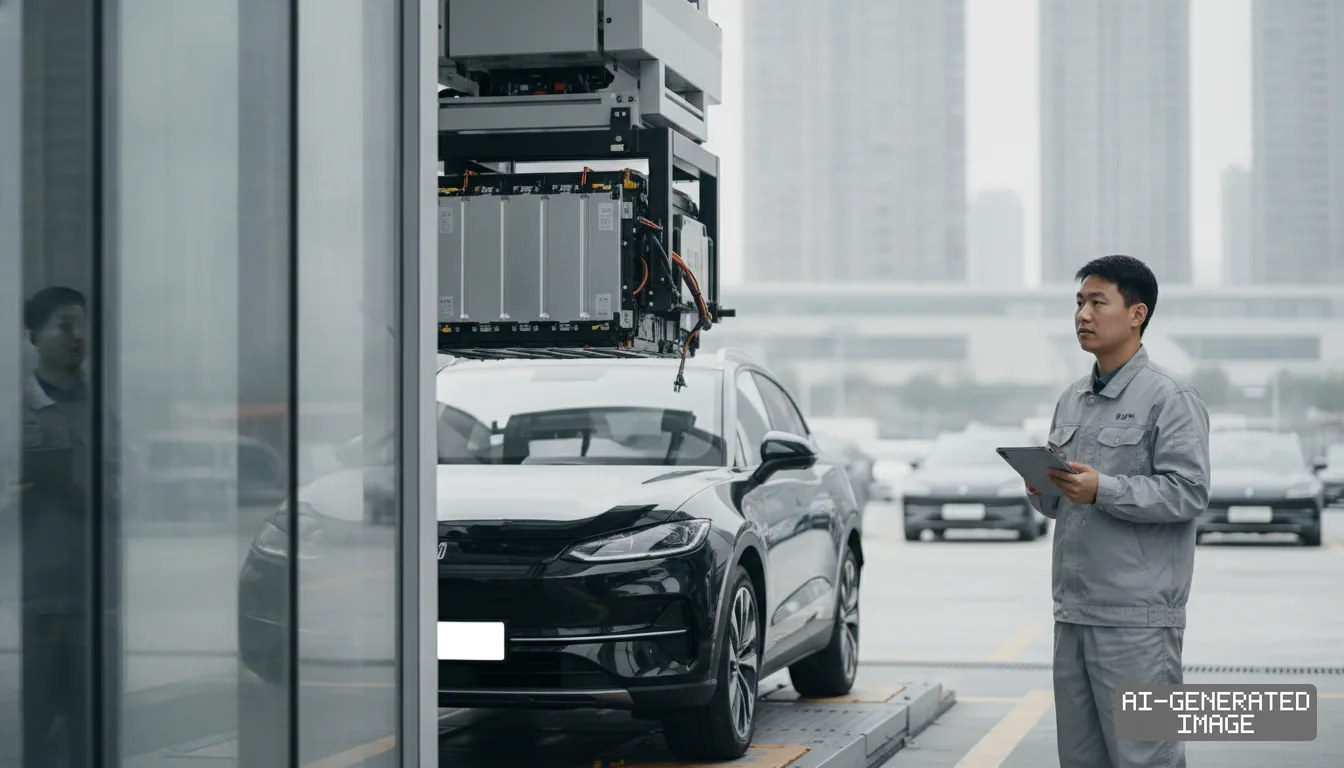
Power swaps take 99 seconds inside CATL's automated Chocolate swap stations. The vehicle mounts a 54-kilowatt-hour lithium iron phosphate pack that yields 530 kilometers of China Light-Duty Vehicle Test Cycle (CLTC) range.
The entry 530 Pro trim sells for 52,000 yuan, while the higher-specification 530 Max variant costs 60,000 yuan ($8,935). Compared to the 76,800-yuan plug-in long-range variant, the swap version cuts initial outlay by 24,800 yuan.
Arcfox introduced the swappable Beta S3 sedan alongside the hatchback. That model carries a 192-line lidar sensor and sells for 78,800 yuan ($11,735) with battery leasing after purchase subsidies, down from an 85,300-yuan list price.
Separating the battery from the retail invoice shifts upfront acquisition costs into operating expenses. The mechanism lowers urban electric vehicle prices below comparable compact gasoline sedans in China's municipal fleets.
The commercial strategy targets private rideshare operators, urban taxi drivers and suburban commuters. For high-mileage drivers, the 16,800-yuan hardware savings cover roughly 42 months of battery subscription fees at promotional rates.
Hunan CRRC Times Electric Drive Technology supplies the 95-kilowatt electric traction motor for the Beta T1. The powertrain produces a top speed of 150 kilometers per hour in the 1,555-kilogram chassis.
Horizon Robotics supplies the Journey J6M computing chip for the Beta S3 sedan. The computing processor controls navigation assistance on urban roads and manages automated docking at swap sites.
CATL shoulders the capital spending for battery inventory and automated switching stations. The battery supplier had built 2,520 Chocolate swap stations across 200 Chinese cities as of Sept. 30, 2026.
The swap deployment gives CATL an expanding captive consumer channel for cell manufacturing. CATL installed 54-kilowatt-hour standardized modules inside the vehicle bodies under long-term supply agreements with BAIC Group.
The rapid-exchange infrastructure challenges rival charging networks operated by automakers. Dedicated fast-charging plugs require 20 to 30 minutes for a replenishment cycle, while swapping restores maximum range in under two minutes.
Nio operates the largest dedicated swap footprint in China with more than 2,400 locations. However, Nio focuses on premium vehicles above 200,000 yuan, leaving sub-100,000-yuan mass vehicles open to CATL's shared architecture.
BAIC Group is scaling shared battery standards to spread station construction costs across multiple marques. Joint venture partners Chongqing Changan Automobile and FAW Group have also signed adaptation agreements for Chocolate swap stations.
Shared swap stations reduce grid-load spikes in crowded metropolitan cores. Centralized station packs charge slowly during off-peak hours, shielding municipal grids from simultaneous direct-current fast-charging surges.
Fleet buyers take direct exposure to the subscription cost structure. Commercial taxi companies run roughly 8,000 kilometers a month, making the 599-yuan unlimited-mileage subscription roughly 40% cheaper than equivalent gasoline consumption.
Arcfox bundled 10,000 kilometers of complimentary swap vouchers for customers ordering the vehicles before Jan. 31, 2027. The promotional package includes 20 swap sessions to accelerate initial station throughput.
CATL intends to increase its Chocolate swap station footprint to 3,000 sites by Dec. 31, 2026. The battery manufacturer plans to expand the network to 6,000 operational locations nationwide by the end of 2027.
Arcfox has not published the residual buyout terms for drivers who decide to purchase the battery pack after leasing. BAIC Group and CATL also have not disclosed how warranty liabilities are divided if shared batteries degrade prematurely.
BAIC Chairman Zhang Jianyong said at the launch event in Beijing that shared swapping removes the primary cost barrier for compact electric vehicles.
Impact map
How this development propagates across the region and out to global buyers.
| Event | Korea | China | Japan | Global impact |
|---|---|---|---|---|
| Arcfox 99-second swap EV launch | LG Energy Solution and Samsung SDI face price pressure as BaaS undercuts entry EV thresholds | BAIC and CATL accelerate BaaS adoption across 2,520 swap stations; pressure rises on Nio | Japanese automakers face wider cost disadvantages in China municipal fleet markets | Compact EV entry pricing falls below gasoline parity, accelerating fleet electrification |
In this story
- Companies
- BAIC GroupContemporary Amperex Technology
- Tickers
- 300750.SZ1958.HK
- Exposed
- Horizon RoboticsNio
- Impact
- PricingSupply ChainCapex
Related briefings
- CATL and BAIC Sign Battery-Swap Pact to Target 1 Million EVs Also on BAIC Group, Nio, Contemporary Amperex Technology
- German makers expand China capex despite EU de-risking rules Also on Horizon Robotics
- China Tightens Connected Vehicle Data Rules With Mandatory Local Sensor Scrubbing Also on Horizon Robotics
- CATL plans 6,000 EV battery swap stations across 297 Chinese cities Also on Nio, Contemporary Amperex Technology, Pricing
Sources
Reporting
Confidence: medium — how we grade this
The documents behind this briefing are linked above. East Asia Brief produces its English text with AI assistance under human editorial review, and does not translate or republish other outlets' articles. See our methodology and AI policy. Spotted an error? Tell us.
The Morning Brief
What changed in Korean, Chinese and Japanese industry overnight — and what it means for your supply chain. One email, weekday mornings, US time. Free.
The Morning Brief is in preparation. Leave your address and we will write to you once — when the first issue is ready. Nothing before that.