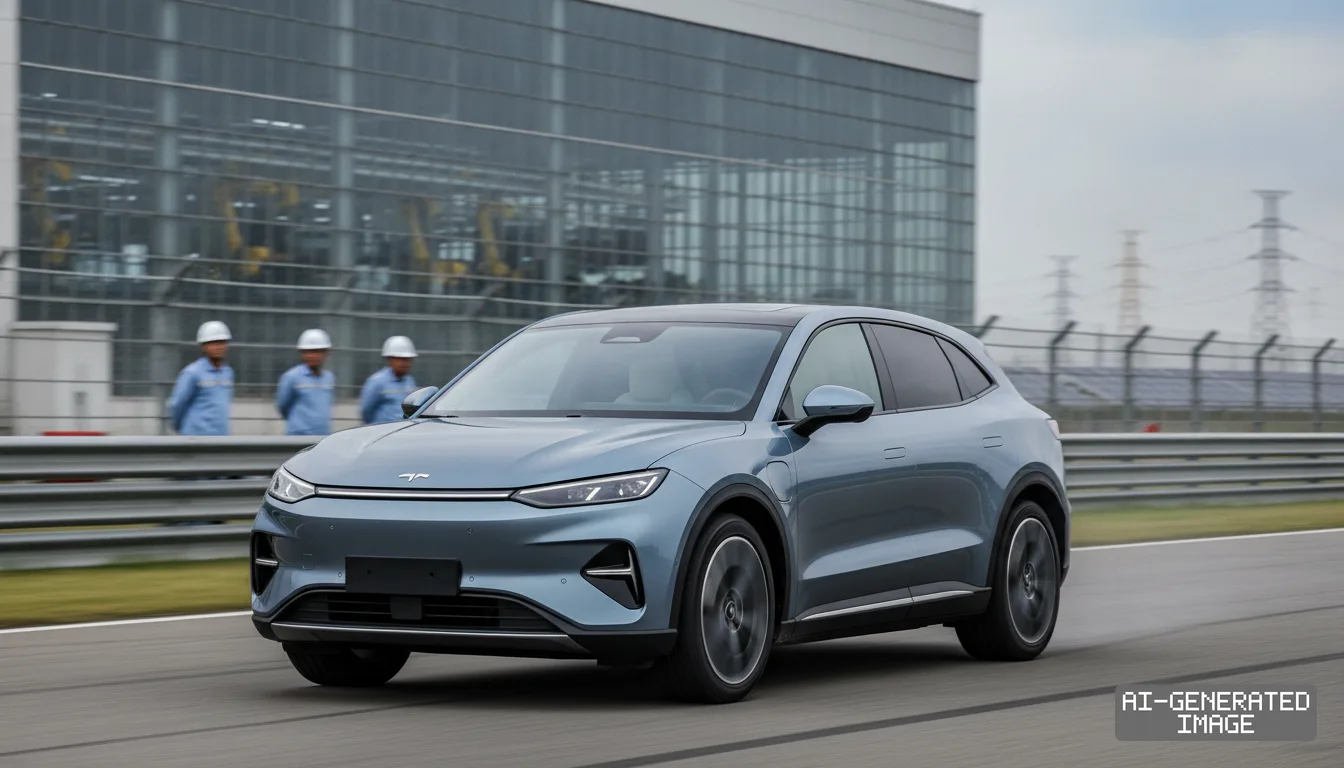
BYD clears 520 kW Han saloon in MIIT catalog filing
China's industry ministry homologated four next-generation Han saloon variants on Oct. 16, following the rollout of BYD's nine-minute Flash Charge platform.
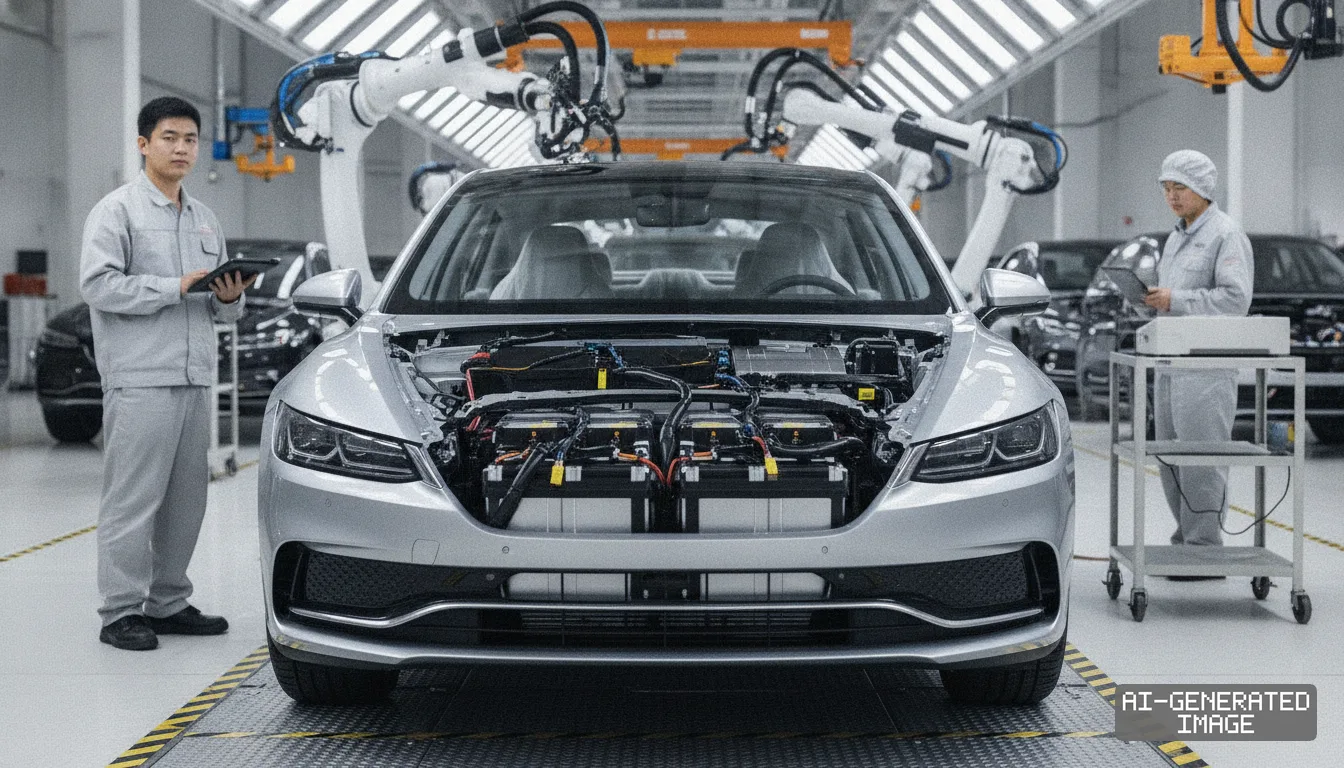
China's Ministry of Industry and Information Technology approved vehicle homologation filings for BYD's next-generation Han electric saloon on Oct. 16, clearing a 520 kW all-wheel-drive flagship for domestic production.
The regulatory entry lists four production specifications for the executive sedan. The filing spans three battery-electric variants and one plug-in hybrid model, clearing assembly lines in central and eastern China.
The approval gives BYD formal regulatory clearance across two primary manufacturing hubs. The Ministry of Industry and Information Technology catalog authorizes output at BYD plants in Xi'an in Shaanxi province and Changzhou in Jiangsu province.
The filing expands BYD's executive saloon portfolio after commercial deliveries opened earlier in the week. BYD launched retail sales of its Da Han flagship on Oct. 13, pricing the model between 235,900 yuan ($33,150) and 275,900 yuan ($38,770).
The Oct. 16 catalog approval establishes dimensions for the next-generation body. The saloon measures 5,156 mm in length, 1,969 mm in width, and 1,492 mm in height, riding on a 3,030 mm wheelbase.
Single-motor rear-wheel-drive configurations in the filing deliver two output tiers. The base electric version generates 245 kW, while a second rear-wheel-drive configuration produces 300 kW, according to the ministry filing.
The top-tier all-wheel-drive configuration pairs a 200 kW front electric drive unit with a 320 kW rear motor. The combined 520 kW powertrain achieves a homologated maximum velocity of 270 km/h.
A hybrid variant combines a 1.5-liter turbocharged combustion engine with a 200 kW electric drive unit. The hybrid configuration shares the same 5,156 mm chassis architecture as the pure battery models.
The catalog listing follows market deployment of BYD's second-generation Blade Battery. That commercial architecture uses a 102.3 kWh pack to yield up to 1,008 km of driving range under the China Light-Duty Vehicle Test Cycle.
BYD is positioning the platform around extreme fast-charging capability. The automaker's proprietary Flash Charge hardware replenishes the 102.3 kWh battery from 10% to 97% state of charge in nine minutes at dedicated terminals.
The charging system can also lift pack levels from 10% to 70% in five minutes, BYD said in its Oct. 13 rollout brief. The setup draws peak charging power of up to 1,500 kW under ideal electrical conditions.
The commercial Da Han sedan delivered to domestic showrooms on Oct. 13 features an all-wheel-drive package rated at 570 kW. That commercial rating exceeds the 520 kW maximum homologated in the Oct. 16 ministry publication.
The regulatory publication confirms BYD is preparing parallel derivative models. Splitting vehicle specifications allows the automaker to target distinct performance tiers while containing powertrain bill-of-materials costs.
BYD generated annual revenue exceeding 804 billion yuan ($113 billion) in 2025. Executive models like the Han generate outsized operational margins compared to entry-level compacts like the Dolphin and Seagull.
Premium sedan competition in China centers on DC fast-charging throughput. Domestic buyers evaluate high-voltage electrical architectures alongside absolute battery capacity when comparing saloon offerings.
Ultra-fast replenishment aims to neutralize cold-weather charging degradation. BYD said cold-temperature trials at minus 30 degrees Celsius lengthened the 20% to 97% charging cycle by three minutes.
To support the vehicles, BYD is constructing proprietary ultra-fast infrastructure. The carmaker plans to deploy 20,000 Flash Charging stations across mainland metropolitan centers by the end of 2026.
High charging throughput places new thermal demands on pack materials. The battery architecture relies on lower internal cell resistance to handle continuous high-amperage input without triggering thermal runaway.
Automakers across East Asia are watching Chinese charging speeds escalate. Battery suppliers in South Korea and Japan face pressure to match 10-minute replenishment benchmarks in export markets.
Commercial rollout schedules for the homologated 520 kW variant remain unannounced. Formal vehicle deliveries generally start within six to eight weeks after ministry homologation documents publish.
The Oct. 16 ministry filing does not state charging duration benchmarks, battery kilowatt-hour capacities, or driving range ratings for the 520 kW variant.
Impact map
How this development propagates across the region and out to global buyers.
| Event | Korea | China | Japan | Global impact |
|---|---|---|---|---|
| MIIT Han homologation | Cell makers face rising customer demand for 10-minute fast charging | BYD scales 520 kW saloon across Xi'an and Changzhou lines | Premium EV imports face price-to-performance pressure from 235,900 yuan segment | Fast-charging benchmarks compress charging stops toward conventional refueling times |
In this story
Track every Standards development →
Related briefings
- Samsung SDI targets 2027 to produce cylindrical LFP for AI server units Also on Standards, BYD, Pricing
- India Rebukes China on Trade Barriers as Deficit Hits $100B Also on Standards
- Boston Dynamics faces US supply curb on Chinese robot parts Also on Standards
- HD Hyundai delivers world’s first lashing-free boxship to CMA CGM Also on Standards
Sources
Reporting
Confidence: medium — how we grade this
The documents behind this briefing are linked above. East Asia Brief produces its English text with AI assistance under human editorial review, and does not translate or republish other outlets' articles. See our methodology and AI policy. Spotted an error? Tell us.
The Morning Brief
What changed in Korean, Chinese and Japanese industry overnight — and what it means for your supply chain. One email, weekday mornings, US time. Free.
The Morning Brief is in preparation. Leave your address and we will write to you once — when the first issue is ready. Nothing before that.