USTR targets tariff circumvention hubs across Southeast Asia
Trade authorities tighten origin verification as rerouted goods through Vietnam and Mexico face 40% penalty tariffs, threatening supply chains built on minor finishing.
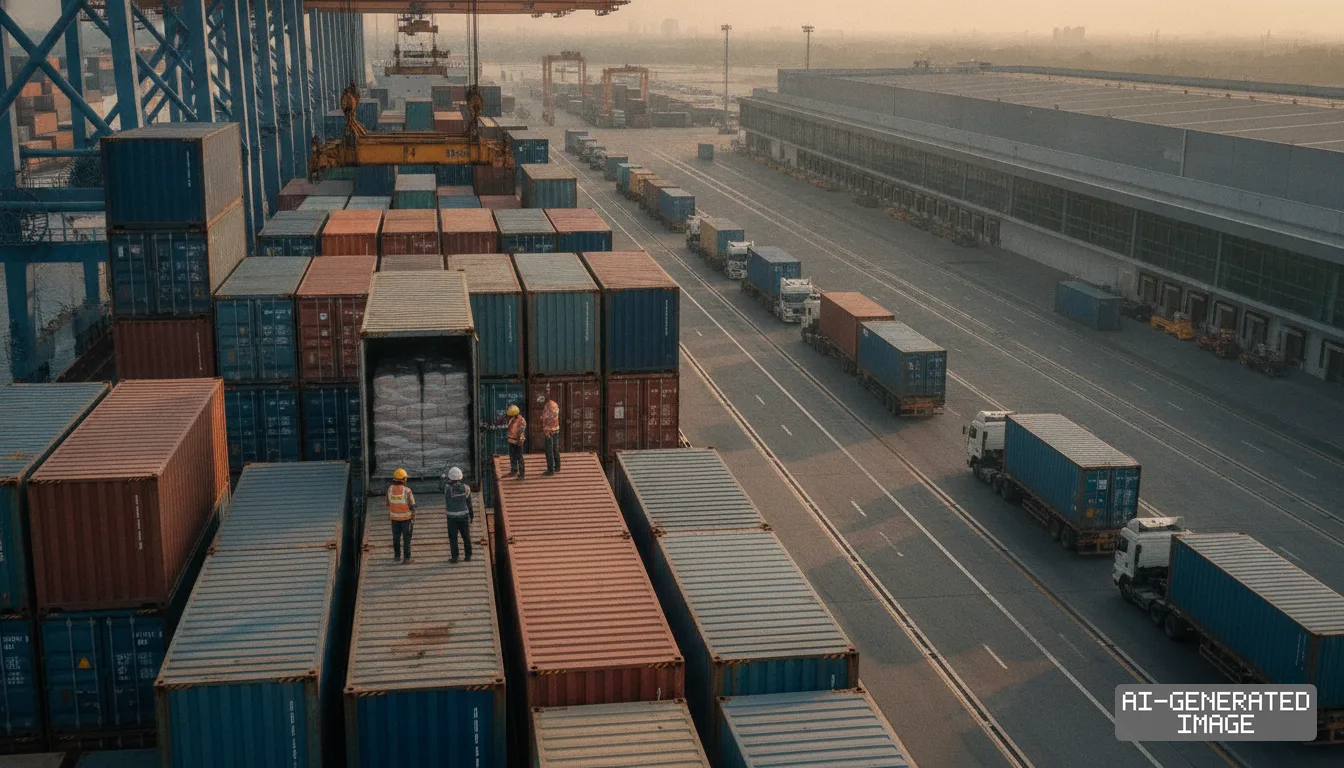
The Office of the United States Trade Representative expanded enforcement against third-country transshipment on Oct. 26, 2026, targeting Chinese goods rerouted through Southeast Asia to evade import tariffs.
The measure confronts customs fraud schemes where Chinese exporters route freight through intermediate ports to disguise origins. Federal trade audits estimate that transshipped goods generated $28 billion in lost tariff revenue during 2025.
A White House supply chain report calculated that intermediary hubs handled $67 billion in rerouted Chinese cargo in 2025. That volume accounts for more than 60% of benchmark transshipment into the United States.
United States customs law requires substantial transformation before an imported product qualifies for third-country tariff rates. Minor assembly, packaging and superficial finishing do not meet the legal standard for a change of origin.
The Office of the United States Trade Representative emphasized this origin standard during Section 301 hearings. Agency records specify that relabeling containers or performing basic component mating does not shield imports from penalty duties.
Bilateral trade agreements have formalized punitive tariffs to close transshipment loopholes across Southeast Asia. The United States-Vietnam trade agreement concluded on July 2, 2025 lowered Vietnam's reciprocal baseline tariff to 20%.
The accord introduced a 40% punitive tariff on goods deemed transshipped from China. The penalty applies whenever products undergo minor finishing rather than genuine manufacturing within Vietnamese borders.
The 40% surcharge forces Vietnamese exporters to submit granular supply chain records. Exporters must produce raw material receipts and component provenance documentation to prove local value creation before goods clear American ports.
Indonesia signed a comparable bilateral trade pact with Washington on Jan. 30, 2026. The Agreement on Reciprocal Trade established joint trade remedy procedures under Article 5 of the accord.
Article 5 enables bilateral investigators to exchange customs data during circumvention inquiries. The provision authorizes United States authorities to apply additional tariffs to products passing through Indonesian ports without substantial transformation.
Trade authorities have also stepped up oversight along North American corridors. The United States-Mexico-Canada Agreement requires strict regional value content rules to prevent Asian components from entering duty-free via Mexican assembly plants.
Mexican authorities approved higher external tariffs on non-free-trade imports in late 2025 to deter pass-through cargo. United States customs officers now inspect Mexican industrial parks for imported Chinese parts used in automotive and electronic subassemblies.
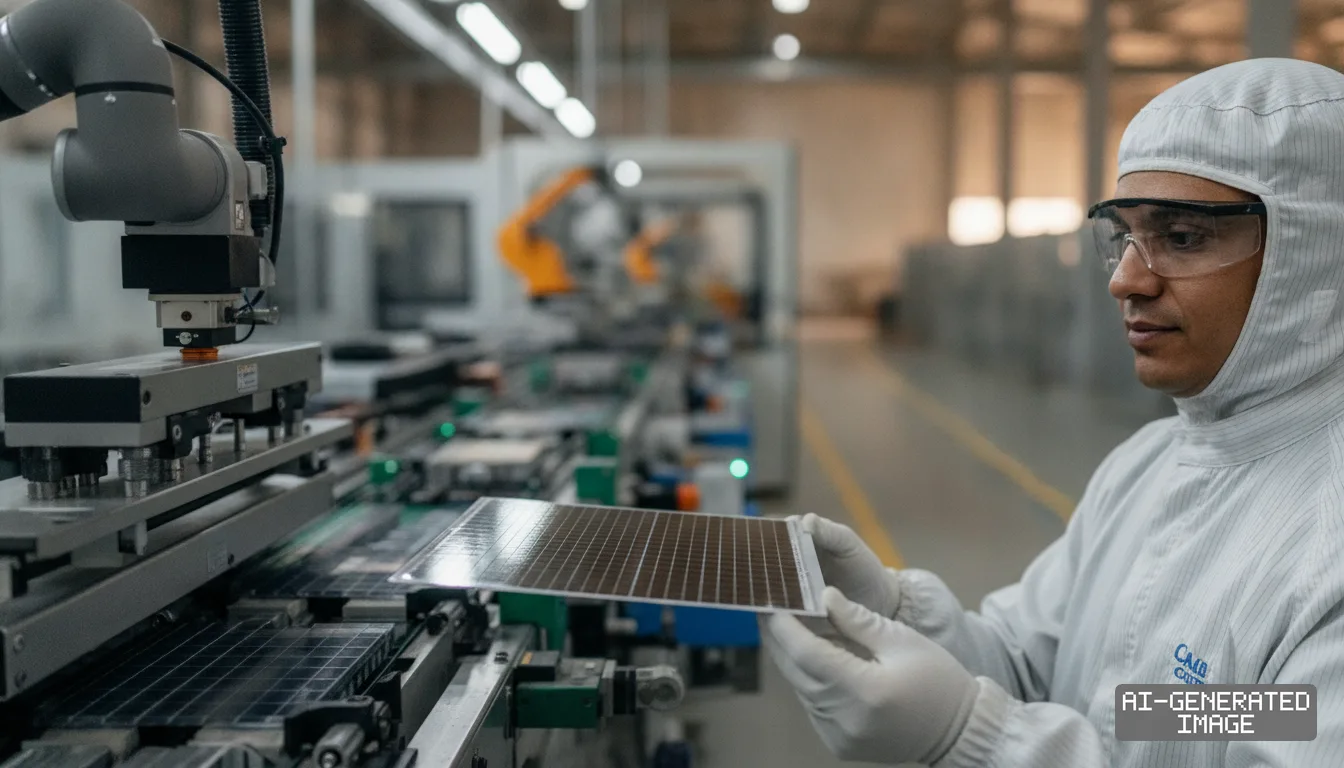
The renewable energy equipment sector faces the heaviest enforcement exposure. The United States Department of Commerce found widespread tariff evasion among solar manufacturers routing Chinese wafers through Southeast Asian assembly lines.
Boviet Solar Technology operates module manufacturing plants in Vietnam that fell under Commerce Department circumvention findings. The orders imposed anti-dumping duties exceeding 100% on modules completed with Chinese silicon components.
Vina Solar Technology also adjusted facility operations in Vietnam following United States regulatory scrutiny. The company faced export constraints after customs officials began requiring documentation that silicon wafers originated outside China.
The enforcement campaign triggered a steep decline in Southeast Asian module flows. Monthly United States solar imports from Cambodia, Malaysia, Thailand and Vietnam dropped from a 2024 average of 3.8 gigawatts to 1.1 gigawatts.
Shipments from alternative hubs rose as suppliers sought unpenalized routes. United States imports from Indonesia and Laos climbed above 34% of total solar module inflows during the same period.
Trade regulators moved quickly to close the secondary channels. On Sept. 11, 2026, the Commerce Department announced preliminary dumping duties of 94.36% for Indonesian producers and 65.43% for Lao suppliers.
The Centre for Economic Policy Research analyzed these trade shifts in studies published by CEPR Press. A study led by Caroline Freund found that tariff gaps cause immediate rerouting without breaking underlying Chinese supply ties.
A separate CEPR discussion paper by Anh Do and Sharat Ganapati documented how hub-and-spoke port networks facilitate trade diversions. The researchers noted that intermediary nations often see surging component imports alongside expanding exports to protected markets.
Procurement executives must now verify entire sub-tier bills of materials to avoid cargo seizures. Importers that rely on third-country certificates of origin risk retroactive duty clawbacks when customs audits uncover Chinese upstream inputs.
The Centre for Economic Policy Research has not published a standalone docket for an Oct. 26 release, and agency notices do not provide company-specific audit findings for unlisted assemblers.
The United States International Trade Commission will vote on its final injury determination covering Southeast Asian solar imports on Oct. 31, 2026. Importers face customs liquidation deadlines for unliquidated entries on Nov. 15, 2026.
Impact map
How this development propagates across the region and out to global buyers.
| Event | Korea | China | Japan | Global impact |
|---|---|---|---|---|
| Transshipment origin enforcement | no direct punitive rate, suppliers face tighter origin documentation on Vietnam exports | component exporters lose tariff arbitrage as US levies 40% penalty on pass-through hubs | regional assemblers in Vietnam re-evaluate sub-tier Chinese part sourcing | compliance overhead and audit risks increase 15-20% across Southeast Asian export corridors |
In this story
- Companies
- Boviet Solar TechnologyVina Solar Technology
- Policy
- TariffsLocal Content Rules
- Impact
- Supply ChainPricingCompliance
Track every Tariffs development → Track every Local Content Rules development →
Related briefings
- US warns it will bar Chinese electric vehicles via Canada Also on Local Content Rules, Tariffs, Compliance
- Trump 100% China tariff threats hit Asian intermediate hubs Also on Local Content Rules, Tariffs, Compliance
- Stellantis pushes Leapmotor European parts past 40% in Spain Also on Local Content Rules, Tariffs, Compliance
- China waives African import tariffs to secure mineral flows Also on Local Content Rules, Tariffs, Pricing
Sources
Primary documents
Reporting
Confidence: high — how we grade this
The documents behind this briefing are linked above. East Asia Brief produces its English text with AI assistance under human editorial review, and does not translate or republish other outlets' articles. See our methodology and AI policy. Spotted an error? Tell us.
The Morning Brief
What changed in Korean, Chinese and Japanese industry overnight — and what it means for your supply chain. One email, weekday mornings, US time. Free.
The Morning Brief is in preparation. Leave your address and we will write to you once — when the first issue is ready. Nothing before that.