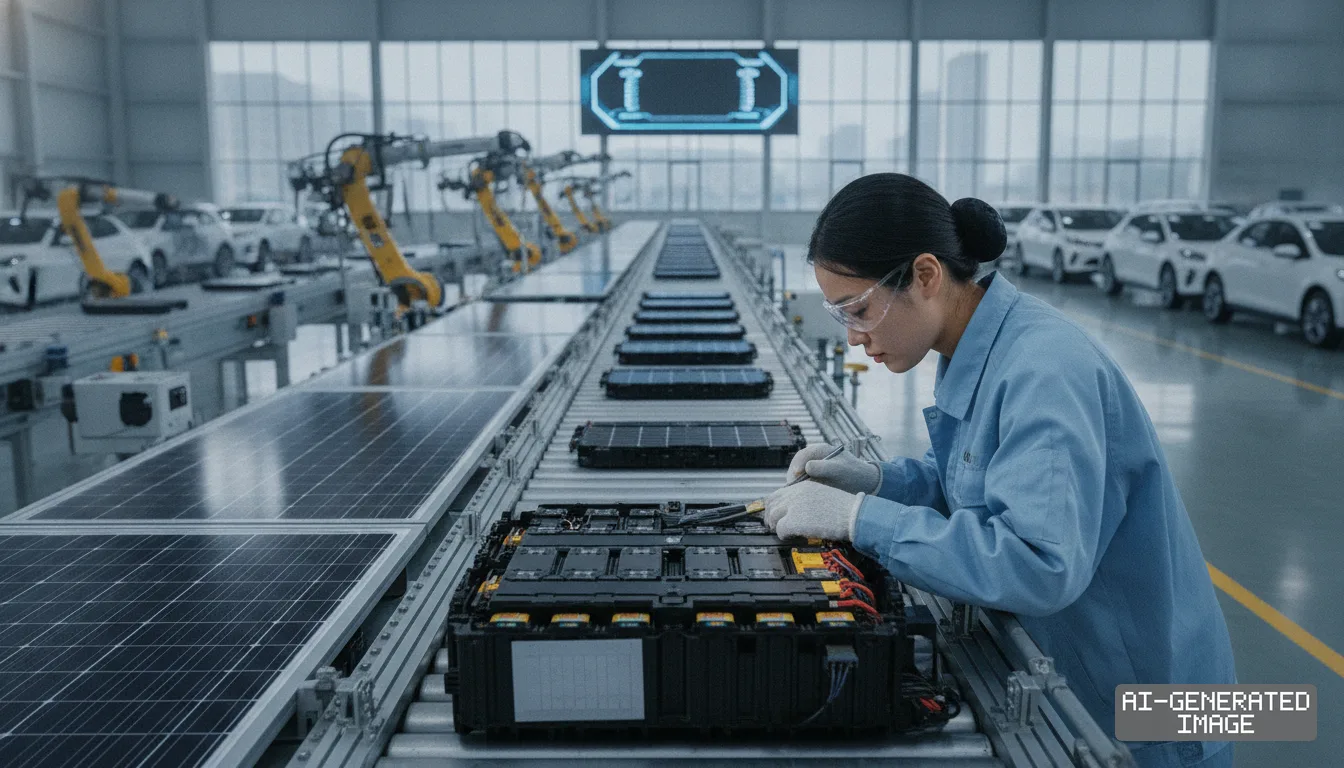
China curbs solar equipment exports as India cell fabs stall
Beijing's licensing mandate targets 12 critical photovoltaic technologies, jeopardizing Indian factory schedules that rely on Chinese machinery to bridge a 225-gigawatt cell supply gap.
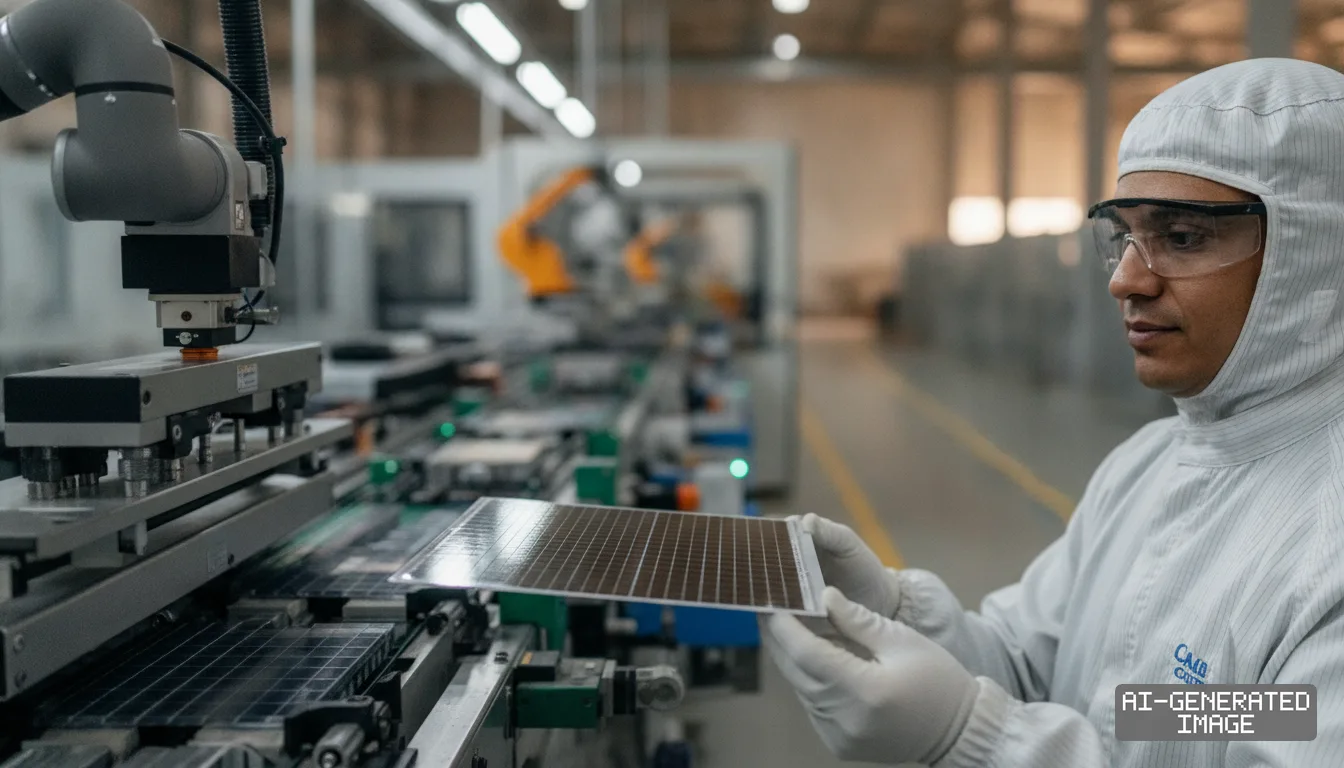
Indian solar manufacturer Solex Energy warned Oct. 25, 2026 that China's widening export controls on upstream wafer and cell equipment threaten to freeze domestic production plans across India.
The warning follows a regulatory notice issued Oct. 16, 2026 by China's Ministry of Commerce and the Ministry of Science and Technology. That joint measure placed 12 advanced photovoltaic manufacturing technologies under export restrictions or outright prohibitions.
China controls between 75% and 90% of the global supply chain for solar components and production equipment. The new policy mandates immediate export pre-registration for proprietary Chinese machines used to manufacture high-efficiency silicon wafers and solar cells.
India held approximately 262 gigawatts of cumulative solar module assembly capacity but only 37 gigawatts of cell production capacity as of June 2026. The 225-gigawatt structural gap leaves Indian module builders almost entirely dependent on imported upstream components.
Solex Energy Chairman and Managing Director Chetan Shah said Oct. 25, 2026 that equipment shortages could trigger severe project delays and drive installation tariffs higher. Shah spoke on the sidelines of the Renewable Energy India Expo 2026 in Greater Noida.
Solex Energy, listed on the National Stock Exchange of India, unveiled its proprietary N-type TOPCon quarter-cell module at the exhibition. The company is developing domestic cell manufacturing lines that require precision machinery currently sourced exclusively from Chinese suppliers.
India possesses roughly two gigawatts of domestic ingot and wafer capacity and zero polysilicon refining capacity, Shah said. Any disruption to Chinese equipment consignments halts factory commissioning before plants produce their first functional solar cell.
China's Ministry of Commerce designated 12 photovoltaic technologies under Announcement No. 48 of 2026. The ministry classified ultra-thin silicon wafers under 70 micrometers and tandem perovskite cell manufacturing processes under the absolute export ban category.
The Chinese notice placed mainstream manufacturing processes—including Tunnel Oxide Passivated Contact, or TOPCon, and Heterojunction, or HJT—under restrictive export licensing. Exporters must secure state approval before transferring machinery, software or technical services overseas.
The Chinese commerce ministry said the restrictions protect national security interests. Officials cited the growing integration of advanced photovoltaic and power-conversion technologies into aerospace systems, high-altitude surveillance platforms and sensitive defense infrastructure.
For Indian clean energy developers, the technological barricade arrives at an operational pinch point. The Ministry of New and Renewable Energy requires government-backed projects to source components from an approved list of domestic manufacturers, known as ALMM List-II.
The ALMM framework mandates Indian-made cells for subsidized installations to stimulate domestic manufacturing. However, domestic cell factories cannot expand output without imported Chinese ingot-pulling furnaces, diamond-wire wafer slicers and plasma-enhanced chemical vapor deposition tools.
Indian module manufacturers cannot meet local delivery quotas if cell plant construction stalls. Shah urged the Indian government Oct. 25, 2026 to grant a 12-month extension for ALMM-II compliance rules to prevent immediate project cancellations across utility grids.
Indian developers also face pressure from export markets. Indian producers exported approximately 92% of their outward solar module shipments to the United States during the first half of 2026, relying on compliant cell provenance.
Without Chinese equipment, domestic producers cannot readily replace foreign cells with certified Indian supply. Rival equipment suppliers in Europe and Japan maintain smaller manufacturing capacity and quote delivery lead times exceeding 18 months.
The Ministry of Commerce notice opened a public consultation window that runs through Nov. 15, 2026. The ministry did not state whether Beijing will grant export licences to Indian applicants once the permanent catalogue takes effect.
The draft regulations do not restrict shipments of finished solar panels or assembled cells. By restricting the transfer of capital tools and manufacturing recipes, Beijing preserves its domestic upstream dominance while slowing industrial autonomy programs in competing nations.
The regulatory notice leaves uncertain whether previously signed equipment procurement contracts will receive administrative waivers. The ministry has not published the formal implementation date for the finalized restriction catalogue following the November feedback deadline.
Impact map
How this development propagates across the region and out to global buyers.
| Event | Korea | China | Japan | Global impact |
|---|---|---|---|---|
| China PV export curbs | Hanwha Qcells sees margin relief in non-China cell exports to US | Chinese equipment builders retain upstream monopolies under MOFCOM pre-registration | Machinery builders see 18-month order backlogs from Indian developers | India utility solar capex faces cost spikes and 12-month project delays |
In this story
- Companies
- Solex Energy
- Tickers
- SOLEX.NS
- Exposed
- Vikram Solar
- Policy
- Export Controls
- Impact
- Supply ChainCapexOrder Book
Track every Export Controls development →
Related briefings
- China curbs solar wafer tech exports to shield its industry lead Also on Export Controls, Order Book
- Arafura signs 850-ton rare earth deal for Western magnets Also on Export Controls, Order Book
- ASML reviews 2028 EUV tool expansion as Q3 sales hit €11.7B Also on Export Controls, Order Book
- Tokyo Electron nears 1 trillion yen profit on memory capex Also on Export Controls, Order Book
Sources
Primary documents
Reporting
Confidence: high — how we grade this
The documents behind this briefing are linked above. East Asia Brief produces its English text with AI assistance under human editorial review, and does not translate or republish other outlets' articles. See our methodology and AI policy. Spotted an error? Tell us.
The Morning Brief
What changed in Korean, Chinese and Japanese industry overnight — and what it means for your supply chain. One email, weekday mornings, US time. Free.
The Morning Brief is in preparation. Leave your address and we will write to you once — when the first issue is ready. Nothing before that.