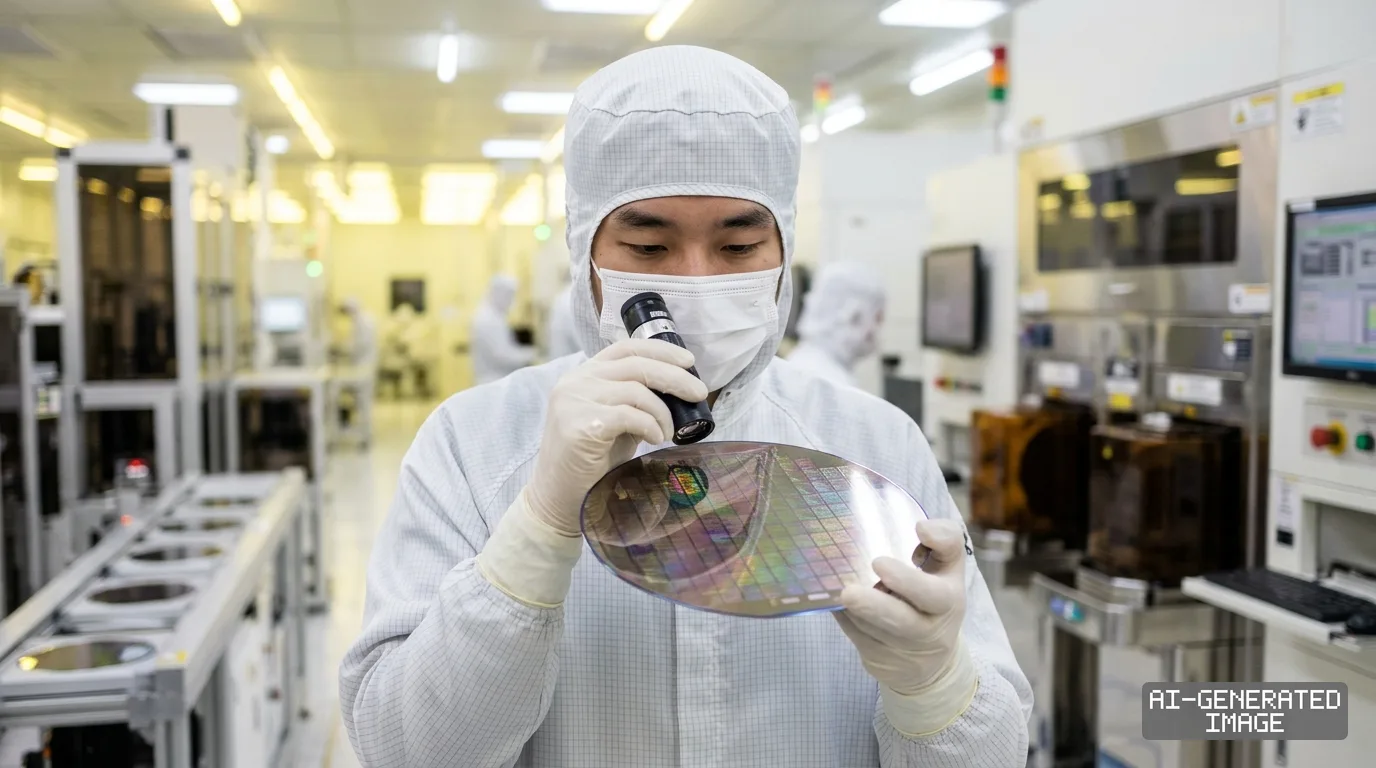
US signs multilateral AI supply chain pact with eight allies
The San Francisco Declaration commits South Korea, Japan and six other nations to joint technology controls under Washington's Pax Silica banner.
U.S. Under Secretary of State for Economic Affairs Jacob Helberg signed a multilateral artificial intelligence supply chain accord with eight partner nations on Nov. 15, establishing a collective technology security framework.
The agreement, titled the San Francisco Declaration on the Secure Foundations of Enduring Prosperity, enlists South Korea, Japan, Britain, Australia, Israel, India, Qatar and the United Arab Emirates under Washington's Pax Silica initiative.
The eight signatory nations represent 32% of the 25 governments that joined the initial Pax Silica framework in December 2025, expanding multilateral coordination over semiconductor inputs, energy networks and advanced computing hardware.
The declaration establishes a shared list of sensitive artificial intelligence technologies and critical supply links, treating the physical infrastructure behind advanced computing as a collective security responsibility among member states, Helberg said.
Supply chain vulnerabilities span multiple jurisdictions across the hardware pipeline, from chip design facilities in the United States to fabrication equipment in Europe and transshipment hubs in East Asia, according to the initiative framework.
The European Commission, Germany, Sweden and the Netherlands chose not to sign on Nov. 15, deferring their accessions while internal authorities examine how the measures align with European Union economic security regulations.
Washington launched the Pax Silica framework on Dec. 12, 2025, during an inaugural summit in Washington, seeking to counter the high concentration of critical mineral refining and advanced manufacturing within non-allied supply corridors.
South Korea's Ministry of Foreign Affairs confirmed its participation following the inaugural session, with Second Vice Foreign Minister Kim Jina attending both the founding summit and subsequent ministerial meetings to coordinate semiconductor policy.
The coalition deepened cooperation during a second ministerial summit on June 25, 2026, where member states adopted the Joint Statement on AI Opportunity Partnership to harmonize regulations across commercial compute ecosystems.
The initiative has steadily widened its diplomatic perimeter throughout 2026. Paraguay formally acceded to the declaration on Oct. 23, while 54 countries endorsed the AI Opportunity statement during September meetings.
To enforce supply chain provenance, the U.S. State Department issued a competitive notice on Aug. 12 offering $50 million in funding to pilot an AI supply chain credentialing platform across customs and shipping hubs in Panama.
The system tracks the transit of advanced graphics processors, fabrication tools and critical minerals through regional transit lanes, establishing documented chains of custody before cargo reaches Asian assembly lines or packaging facilities.
Multilateral tracking aims to curb illicit secondary diversion of dual-use chips, which can serve both commercial data centers and military computing clusters, by screening consignments against allied trade compliance databases.
The expansion of allied oversight lands directly on East Asian semiconductor producers with legacy production assets in China. SK hynix manufactures approximately 45% of its dynamic random-access memory wafers in Wuxi, China.
Samsung Electronics produces about 40% of its NAND flash memory chips at its Xi'an facility, making both Korean chipmakers vulnerable to tightening compliance standards that govern spare parts and auxiliary processing chemicals.
Advanced packaging—the backend process that connects multiple silicon dies into high-bandwidth memory stacks—has emerged as a focal chokepoint under the agreement, as governments coordinate restrictions on specialized substrate materials and bonding equipment.
Japanese equipment builders face parallel commercial exposure. Tokyo Electron generated roughly 40% of its quarterly semiconductor equipment revenue from buyers in China, where domestic chipmakers continue buying deposition tools to expand mature nodes.
Tokyo joined the San Francisco Declaration to ensure its export restrictions match U.S. guidelines, shielding domestic toolmakers from unilateral regulatory penalties while preserving access to Western research partnerships and subsidies.
The U.S. Department of State and South Korea's Ministry of Foreign Affairs have not published the full text of the San Francisco Declaration, its specific enforcement thresholds, or its binding legal annexes.
The absence of public technical annexes leaves enterprise compliance officers unable to determine whether the joint critical technology list will mandate new statutory export licenses or function primarily as an information-sharing channel.
European Commission delegates and trade officials from Germany and the Netherlands are scheduled to resume formal negotiations next week, aiming to reconcile the declaration's hardware lists with European single-market export regulations.
The accord takes effect as heads of state gather for the Asia-Pacific Economic Cooperation forum opening Nov. 18 in Shenzhen, establishing allied coordination ahead of scheduled bilateral talks between Washington and Beijing.
Impact map
How this development propagates across the region and out to global buyers.
| Event | Korea | China | Japan | Global impact |
|---|---|---|---|---|
| Pax Silica San Francisco Declaration | Samsung and SK hynix face tightened hardware scrutiny on China memory fabs | Shenzhen APEC talks open under unified allied tech transfer screening | Tokyo Electron aligns tool compliance to protect allied Western market access | AI hardware supply chains face mandatory provenance tracking from Panama pilot |
In this story
- Companies
- Samsung ElectronicsSK hynixTokyo Electron
- Tickers
- 005930.KS000660.KS8035.T
- Policy
- Export ControlsStandards
- Impact
- Supply ChainComplianceCapex
Track every Export Controls development → Track every Standards development →
Related briefings
- White House keeps chip export controls after Xi-Trump summit Also on Tokyo Electron, SK hynix, Samsung Electronics
- Tokyo Electron nears 1 trillion yen profit on memory capex Also on Tokyo Electron, SK hynix, Samsung Electronics
- CXMT starts 5th-gen DRAM output, bypassing US tool controls Also on Tokyo Electron, SK hynix, Samsung Electronics
- Tokyo Electron Deploys Cryogenic Etch Systems to Challenge US Grip on 3D NAND Also on Tokyo Electron, SK hynix, Samsung Electronics
Sources
Primary documents
Reporting
Confidence: high — how we grade this
The documents behind this briefing are linked above. East Asia Brief produces its English text with AI assistance under human editorial review, and does not translate or republish other outlets' articles. See our methodology and AI policy. Spotted an error? Tell us.
The Morning Brief
What changed in Korean, Chinese and Japanese industry overnight — and what it means for your supply chain. One email, weekday mornings, US time. Free.
The Morning Brief is in preparation. Leave your address and we will write to you once — when the first issue is ready. Nothing before that.