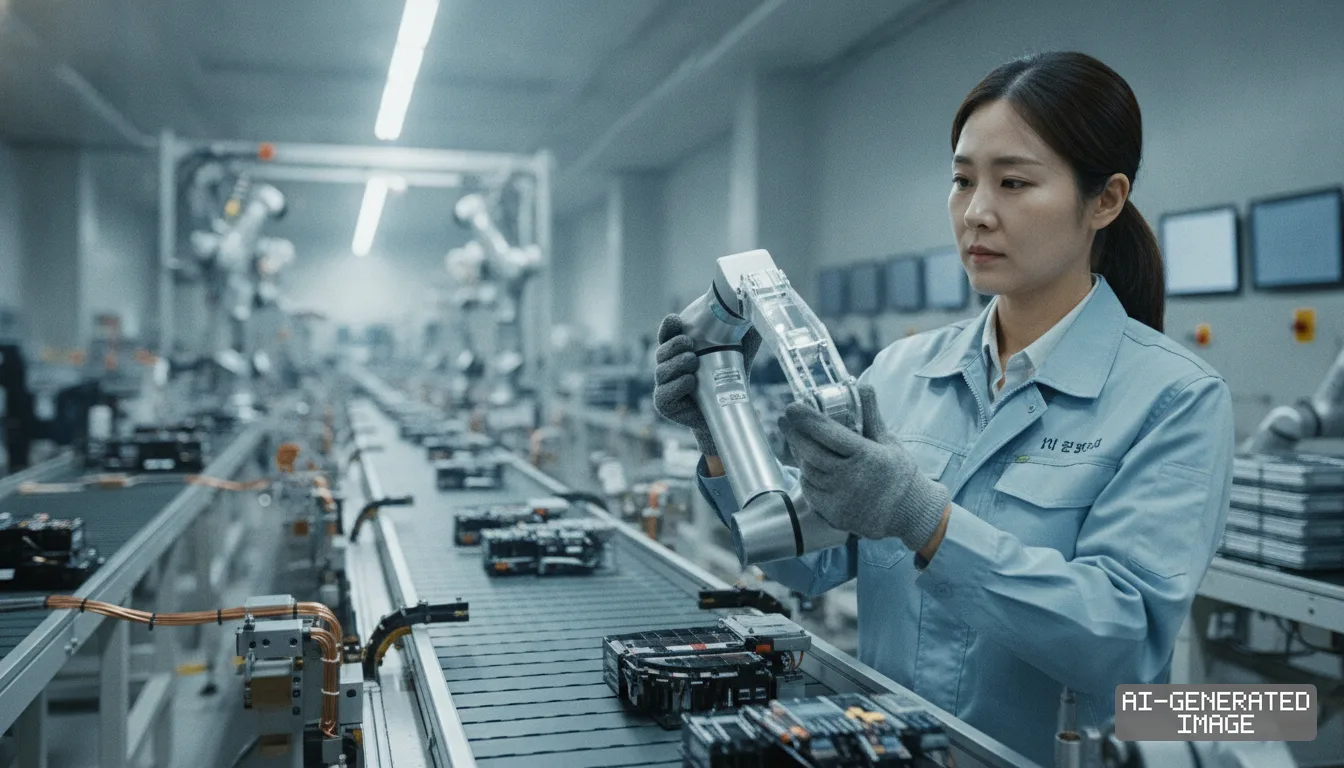
US lawmakers urge export bans on avionics supplying China jets
A bipartisan House report warns Western flight controls and carbon brakes reach Commercial Aircraft Corp of China through six commercial joint ventures.
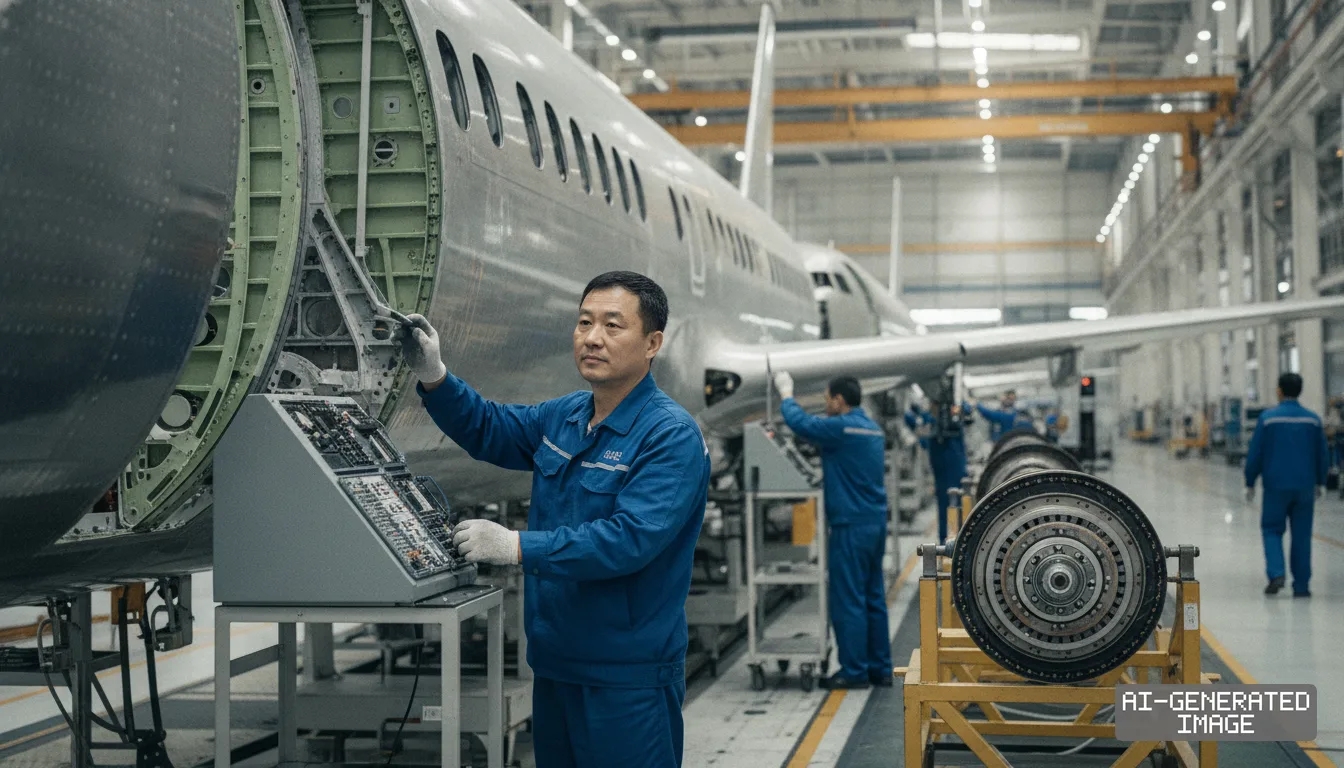
House Select Committee on the CCP Chairman John Moolenaar called on federal agencies Nov. 20 to block export licenses and curb investment flows sustaining commercial aviation manufacturing across China.
The committee released a report documenting at least six active joint ventures between Western aerospace suppliers and Chinese state-owned aviation manufacturers. Those commercial partnerships provide critical avionics, flight controls and carbon braking assemblies for regional and narrowbody passenger jets.
Commercial Aircraft Corp of China (COMAC) relies on foreign suppliers for more than 50% of the components on the C919 passenger aircraft. The state-run planemaker designed the narrowbody jet to challenge passenger models built by Boeing and Airbus.
GE Aerospace maintains a 50% equity stake in Aviage Systems, an avionics joint venture established with Aviation Industry Corp of China (AVIC). Aviage supplies the integrated modular computing system that manages flight data and avionics networking for the C919.
Honeywell Aerospace operates an aircraft braking joint venture with Hunan Boyun Aero Systems. Boyun sought export licenses for proprietary vapor infiltration processes after domestic carbon brakes failed qualification runs, the report said.
Collins Aerospace, a unit of RTX, maintains joint ventures with AVIC subsidiaries to manufacture communication, navigation and cockpit control systems. Chinese partner facilities tied to those programs support military aircraft production lines, according to committee findings.
The Commerce Department Bureau of Industry and Security approved export licenses for controlled dual-use flight technologies despite corporate links to Chinese military enterprises. Agency licensing officers relied on commercial end-user designations, the report said.
Joint ventures established inside mainland China bypass jurisdiction under the Committee on Foreign Investment in the United States (CFIUS). That statutory limitation prevents cross-border review of technical knowledge transferred during domestic operations in China.
The committee urged the Federal Aviation Administration (FAA) to deny airworthiness certification for Chinese commercial aircraft, including the C919 and ARJ21. China uses bilateral safety agreements with Western aviation regulators to pursue commercial flight authority abroad.
Lawmakers asked the Treasury Department to add commercial aviation to outbound investment restrictions under the Outbound Investment Security Program. The current outbound screening framework covers microelectronics, artificial intelligence, quantum systems, supercomputing and hypersonics.
The report recommended that Congress amend the proposed Comprehensive Outbound Investment National Security Act to write aerospace prohibitions directly into statutory law. That measure would block private equity and venture funding for Chinese aircraft facilities.
Lawmakers introduced the Aerospace Transparency Act, designated H.R. 11047, to bar federal defense procurement from contractors maintaining joint manufacturing ventures with designated Chinese military firms. The defense contracting exclusion would force Western suppliers to separate military supply chains from Chinese civilian ventures.
The committee also asked Congress to pass the Geospatial Intelligence Transparency and Security Act, designated H.R. 11048. That legislation directs national intelligence agencies to assess national security risks from commercial geospatial artificial intelligence platforms.
Airbus received a formal inquiry letter from the committee regarding its industrial ties with Chinese state aviation manufacturers. The European aircraft manufacturer operates an A320 final assembly plant in Tianjin and partners with AVIC on utility helicopter production.
Unilateral American export limits risk placing domestic manufacturers at a competitive disadvantage, the committee said. European and Asian suppliers could take over vacated supply contracts unless allied governments coordinate export licensing restrictions simultaneously.
AVIC operates as the primary defense aerospace contractor for China, building frontline military aircraft including the J-20 stealth fighter and Y-20 transport. The report said Chinese civil-military integration policies funnel dual-use Western technology from commercial aircraft straight to defense platforms.
COMAC plans to scale C919 annual output toward 150 aircraft by 2028. Tightening American export licenses for flight management computers and CFM International LEAP-1C engine subcomponents would disrupt that domestic manufacturing schedule.
Public comments on the Treasury Department proposed outbound investment rules close Dec. 7. The department will determine whether to address aerospace before publishing final administrative regulations.
The committee notice does not state when House leadership will schedule floor votes for H.R. 11047. The Commerce Department has not published any formal adjustments to its dual-use aviation export licensing criteria.
Impact map
How this development propagates across the region and out to global buyers.
| Event | Korea | China | Japan | Global impact |
|---|---|---|---|---|
| Aerospace export control crackdown | domestic aerospace suppliers face stricter component re-export screening on dual-use commercial avionics | COMAC risks production slowdown on C919 narrowbody jet if avionics and engine parts face export denials | aerospace parts suppliers to Western primes face expanded compliance screening on China deliveries | global commercial jet supply chain fractures as dual-use export rules expand from chips into aviation |
In this story
- Companies
- Honeywell InternationalRTX CorporationCommercial Aircraft Corp of ChinaAviation Industry Corp of ChinaAirbus
- Tickers
- GEHONRTX000768.SZAIR.PA
- Exposed
- Boeing
- Policy
- Export ControlsInvestment Screening
- Impact
- Supply ChainComplianceOrder Book
Track every Export Controls development → Track every Investment Screening development →
Related briefings
- China Retains Gallium Export Curbs Ahead of Nov. 27 Deadline Also on RTX Corporation, Export Controls, Compliance
- Bell Textron vets 17 Korean suppliers for helicopter supply chain Also on Airbus, Boeing, Compliance
- FANUC UK restructures sales leadership to target aerospace and defense Also on Airbus, Boeing, Order Book
- US limits aircraft part licenses to China to counter mineral limits Also on Boeing, Export Controls, Compliance
Sources
Primary documents
Reporting
Confidence: high — how we grade this
The documents behind this briefing are linked above. East Asia Brief produces its English text with AI assistance under human editorial review, and does not translate or republish other outlets' articles. See our methodology and AI policy. Spotted an error? Tell us.
The Morning Brief
What changed in Korean, Chinese and Japanese industry overnight — and what it means for your supply chain. One email, weekday mornings, US time. Free.
The Morning Brief is in preparation. Leave your address and we will write to you once — when the first issue is ready. Nothing before that.