Honda opens R&D center to 30 South Korean mobility suppliers
The Tochigi sourcing showcase matches Korean parts makers with Honda procurement teams as the Japanese automaker cuts development costs beyond legacy keiretsu ties.
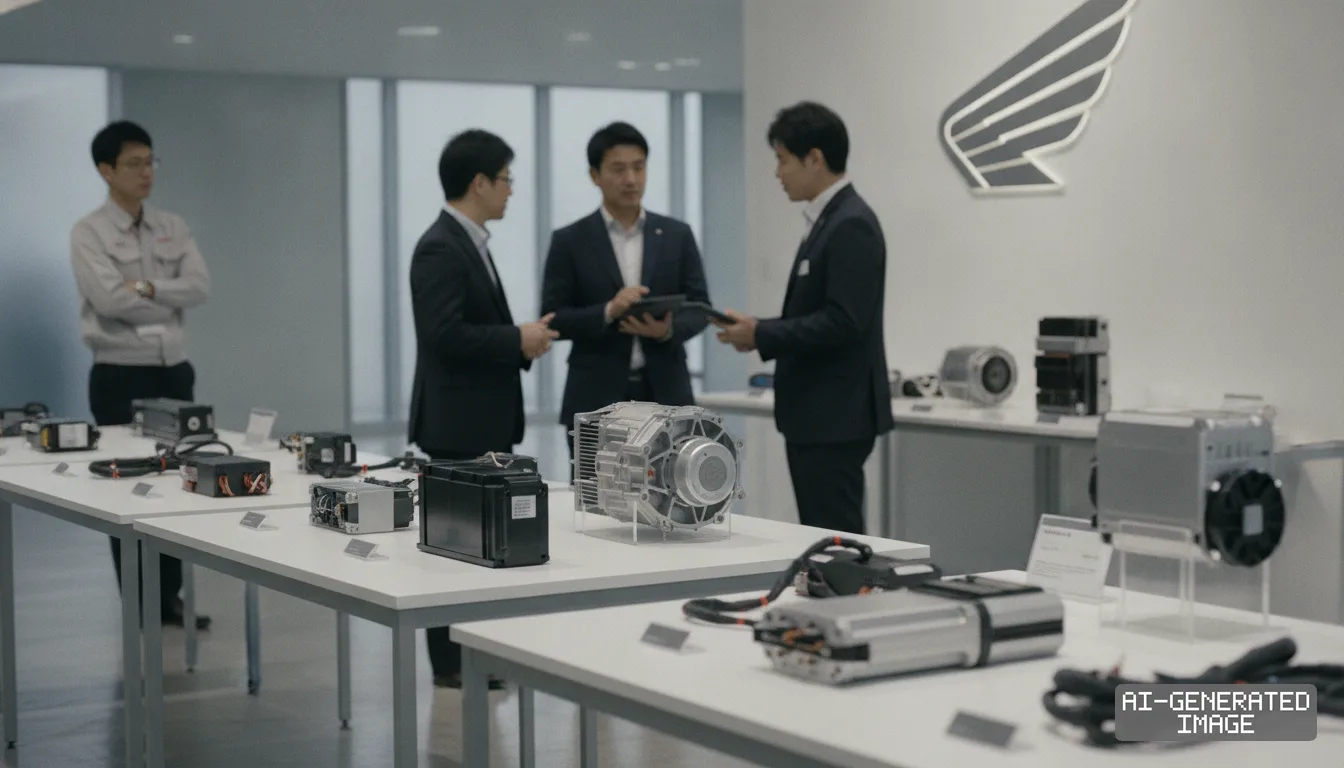
The Korea Trade-Investment Promotion Agency opened a specialized electric vehicle supply showcase at Honda Motor's Tochigi research center on Oct. 15, 2026, pitching 30 South Korean component makers to the automaker.
The initiative connects South Korean parts producers directly with Honda purchasing divisions as the Japanese manufacturer reassesses its insular keiretsu supplier network to reduce vehicle engineering costs.
Thirty South Korean parts makers held more than 50 one-on-one supply meetings with Honda purchasing officials, while eight suppliers conducted dedicated technical presentations on proprietary mobility hardware and software.
The bilateral event, titled 2026 Inside HONDA - EV Partnering Day, took place between 10:00 and 16:00 inside the exhibition hall of Honda's Automobile R&D Center in Haga, Tochigi Prefecture.
The Korea Trade-Investment Promotion Agency organized the procurement day alongside two regional industrial hubs, Gyeonggi Technopark and Busan Technopark, to help domestic suppliers enter Japanese automotive production lines.
Official preparations began when the state trade agency posted a project solicitation on July 23, closing applicant screening on Aug. 20 before finalizing the 30-firm cohort.
The delegation covered five primary technological segments, including software-defined vehicles, autonomous driving systems, secondary batteries, thermal management hardware and vehicular communications security.
The Tochigi meetings mark the first major corporate partnering event organized between the South Korean trade promoter and Honda since a previous session held two years earlier in 2024.
Honda agreed to host the South Korean cohort to support its "Triple Half" development initiative, an internal cost-reduction framework that senior management announced in May 2026.
The Triple Half program mandates halving vehicle development expenditures, shortening development timelines by 50% and halving total engineering workloads compared with 2025 operational levels.
Achieving those reductions requires Honda to dismantle rigid in-house sourcing routines and incorporate external component suppliers capable of delivering standardized electric vehicle systems rapidly.
Japanese carmakers historically relied on exclusive equity-linked supplier groups known as keiretsu, an arrangement that shielded domestic component vendors from foreign competitors for decades.
Rising software complexity and severe price competition across global electric vehicle markets have made those domestic arrangements increasingly expensive for Japanese brands to sustain alone.
Honda has recorded substantial financial charges linked to its electric mobility reorganization, prompting executives to seek standardized components and lower procurement overhead across Asia.
The 30 participating South Korean suppliers conducted structured commercial negotiations with Honda's core purchasing department, its advance development engineering teams and its established tier-one and tier-two vendors.
Eight of the visiting South Korean enterprises secured separate technical pitching slots to present proprietary electronic architectures, battery enclosures and heat-pump modules directly to Honda development engineers.
South Korean component manufacturers have built substantial manufacturing scale and quality records by supplying major electric vehicle assembly platforms in North America and Europe.
Securing commercial orders in Japan allows those parts producers to diversify their customer books away from domestic assembly lines and mitigate slowing demand in western EV markets.
The state trade promoter intends to provide year-round administrative backing, offering local legal and technical consulting to shepherd participating South Korean firms through Honda's supplier qualification process.
Qualified component makers will gain access to tenancy and commercial liaison resources at the agency's overseas Global Partnering Center to support contract negotiations and vendor code registration.
The official project notice does not state the individual corporate names of the 30 participating South Korean parts makers, and the trade agency has not published the identities of the eight pitching firms.
Honda procurement engineers will conduct preliminary technical evaluations on the submitted component samples over the coming weeks, followed by on-site factory qualification audits through early 2027.
Impact map
How this development propagates across the region and out to global buyers.
| Event | Korea | China | Japan | Global impact |
|---|---|---|---|---|
| Honda EV sourcing opening | 30 component suppliers access Honda tier-1 procurement channels | Domestic Chinese tier-1 suppliers face stiffer Korean competition at Japanese OEMs | Honda dilutes exclusive keiretsu sourcing to halve R&D overhead | Automakers accelerate external module sourcing to compress EV development cycles |
In this story
- Companies
- Honda MotorKorea Trade-Investment Promotion Agency
- Tickers
- 7267.T
- Policy
- Trade & Industrial Policy
- Impact
- Supply ChainCost Structure
Track every Trade & Industrial Policy development →
Related briefings
- Bell Textron vets 17 Korean suppliers for helicopter supply chain Also on Korea Trade-Investment Promotion Agency, Trade & Industrial Policy
- Ultium Cells to build first prismatic LMR battery line in US Also on Trade & Industrial Policy, Cost Structure
- Strong Won Cuts Samsung and SK hynix Profit Views by 21T Won Also on Trade & Industrial Policy, Cost Structure
- USTR puts no timeline on $60B US-China tariff cuts as supply chains wait Also on Trade & Industrial Policy
Sources
Primary documents
Reporting
Confidence: high — how we grade this
The documents behind this briefing are linked above. East Asia Brief produces its English text with AI assistance under human editorial review, and does not translate or republish other outlets' articles. See our methodology and AI policy. Spotted an error? Tell us.
The Morning Brief
What changed in Korean, Chinese and Japanese industry overnight — and what it means for your supply chain. One email, weekday mornings, US time. Free.
The Morning Brief is in preparation. Leave your address and we will write to you once — when the first issue is ready. Nothing before that.