Chinese Battery Makers Lean on Korean Suppliers to Meet US, EU Rules
Reports point to Chinese cell and material producers routing output through Korean component makers to satisfy foreign-entity and local-content requirements.
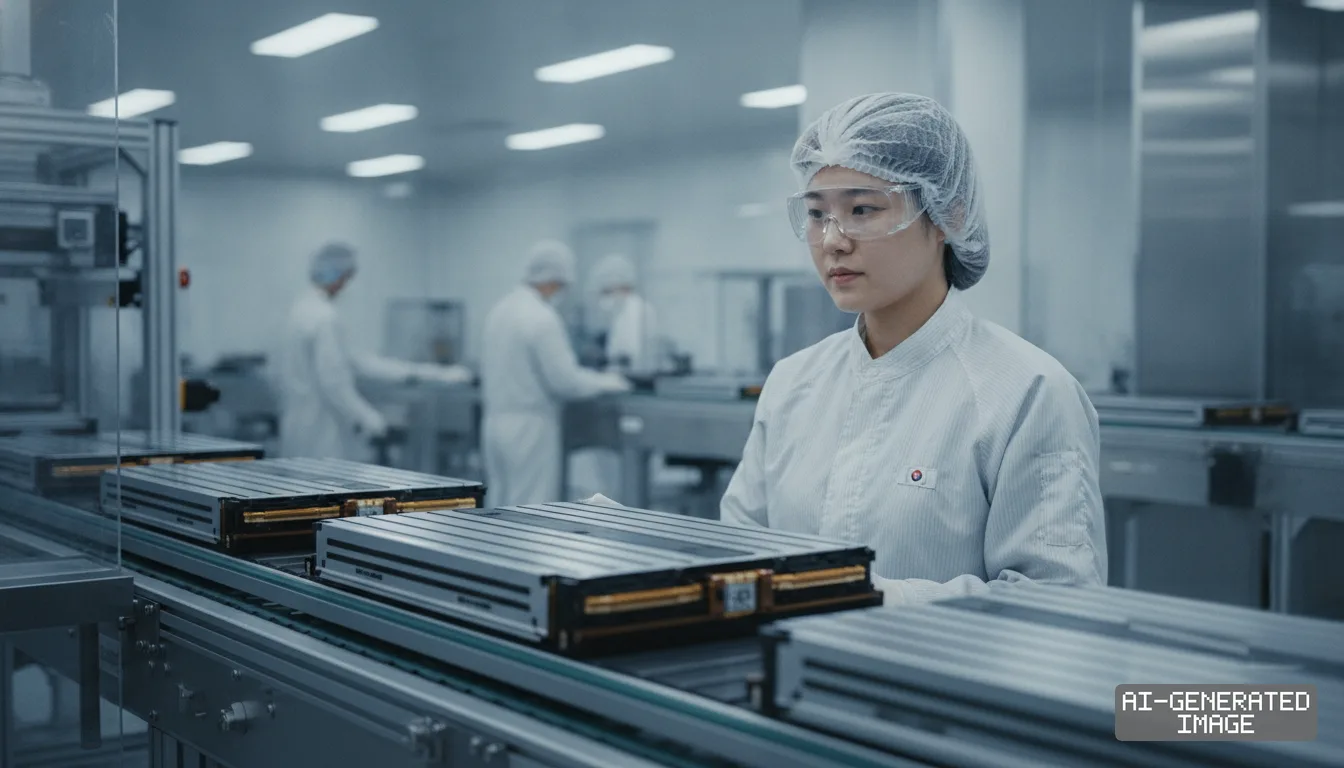
Chinese battery and materials companies are increasingly working through South Korean suppliers to meet US and European content rules that restrict Chinese-linked inputs, according to reports that emerged Oct. 13, 2026. The arrangements reportedly involve licensing and joint-venture structures rather than direct exports from China.
The United States and the European Union have each built rules meant to limit how much Chinese content can sit inside a battery that still qualifies for a subsidy or a market incentive. In the United States, the foreign entity of concern (FEOC) rule under the Inflation Reduction Act bars vehicles from claiming the federal clean-vehicle tax credit if their battery contains critical minerals or components sourced from entities tied to China, Russia, Iran or North Korea. The rule took effect in stages starting in 2024, tightening further for critical minerals in 2025.
South Korea hosts a large base of cathode, anode and precursor producers — companies such as Ecopro, POSCO Future M and L&F — that have existing supply relationships with automakers and battery cell makers in the United States and Europe. That position makes Korean plants a natural point for Chinese materials producers to route output so that it can be labeled as processed outside China before it reaches a US or European battery line.
The structure typically reported in this space involves a Chinese firm licensing its processing technology to a joint venture based in Korea or built with a Korean partner, rather than shipping finished cathode or precursor material directly from a Chinese factory. Under current FEOC guidance, ownership and control — not just the location of the technology's origin — determine whether an entity counts as a foreign entity of concern, which is why the structure of these deals, not simply their geography, is the point regulators are expected to scrutinize.
The European Union's approach differs from the US FEOC rule. The EU's Battery Regulation, which entered into force in 2023, sets carbon-footprint declaration and due-diligence requirements rather than a strict nationality-based content ban, with recycled-content minimums phasing in toward 2031. Even so, battery makers selling into the EU face growing pressure from carbon-footprint rules that favor material processed with lower-emission power sources, which has pushed some Chinese-linked supply chains to add a processing step in Korea or elsewhere before material reaches a European cell plant.
For South Korean component makers, the arrangement offers additional processing volume and licensing revenue at a time when their own cathode and precursor lines are running below capacity because of slower electric-vehicle demand growth in the United States and Europe. It also places those Korean firms closer to the compliance line that US Treasury and EU customs officials are expected to examine as they refine FEOC and carbon-footprint enforcement in the coming years.
The exposure for individual Korean suppliers is not yet documented in a public filing or ministry notice identifying specific contract values, volumes or the names of the Chinese counterparties involved. Without a primary disclosure — a company filing, a ministry statement or a US Treasury or European Commission notice — the scale of the practice, and which Korean firms carry the largest share of this pass-through volume, cannot be confirmed here.
US Treasury guidance has already drawn criticism from lawmakers who argue that licensing-based structures let Chinese firms retain effective control of battery supply chains while meeting the letter of the FEOC rule. Treasury has previously said it would continue to refine the ownership and control tests used to determine FEOC status, though no new rule specific to Korean licensing arrangements has been published as of this writing.
What remains unconfirmed is whether any specific Korean company named in this reporting has disclosed a licensing or joint-venture agreement with a Chinese battery or materials firm tied to this routing pattern, and whether US Treasury or EU regulators have opened any formal review of such arrangements. No government notice, company filing or regulatory statement verifying the scale, dollar value or specific corporate parties involved in this activity was available to confirm at the time of publication.
In this story
- Policy
- Export ControlsSubsidies
- Impact
- Supply ChainCompliance
Track every Export Controls development → Track every Subsidies development →
Related briefings
- Korean battery makers secure non-FEOC LFP supply contracts Also on Export Controls, Compliance
- China yttrium export curbs squeeze Western chip toolmakers Also on Export Controls, Compliance
- Pentagon awards Elmet $2.45B to cut China tungsten reliance by 2027 Also on Export Controls, Compliance
- Talga advances Japan graphite anode pacts for Swedish output Also on Export Controls, Compliance
Sources
Primary documents
Reporting
- US rules give Korean LFP makers rare opening against China - THE INVESTOR
- Korean Battery Makers Lock In Local Supply as US Rules Tighten - Bloomberg
- CATL extends battery passport record ahead of 2027 rules
- Chinese battery companies spy a South Korean loophole to skirt US subsidy rules
Confidence: high — how we grade this
The documents behind this briefing are linked above. East Asia Brief produces its English text with AI assistance under human editorial review, and does not translate or republish other outlets' articles. See our methodology and AI policy. Spotted an error? Tell us.
The Morning Brief
What changed in Korean, Chinese and Japanese industry overnight — and what it means for your supply chain. One email, weekday mornings, US time. Free.
The Morning Brief is in preparation. Leave your address and we will write to you once — when the first issue is ready. Nothing before that.