China holds dual-use controls on 40 technologies without Quad curbs
The Ministry of Commerce kept interim licensing in place for artificial intelligence and solar wafer equipment without issuing fresh country-specific rules.

China's Ministry of Commerce maintained strict dual-use licensing across 40 restricted technology categories on Nov. 20, but issued no formal notice targeting the United States, Japan and India.
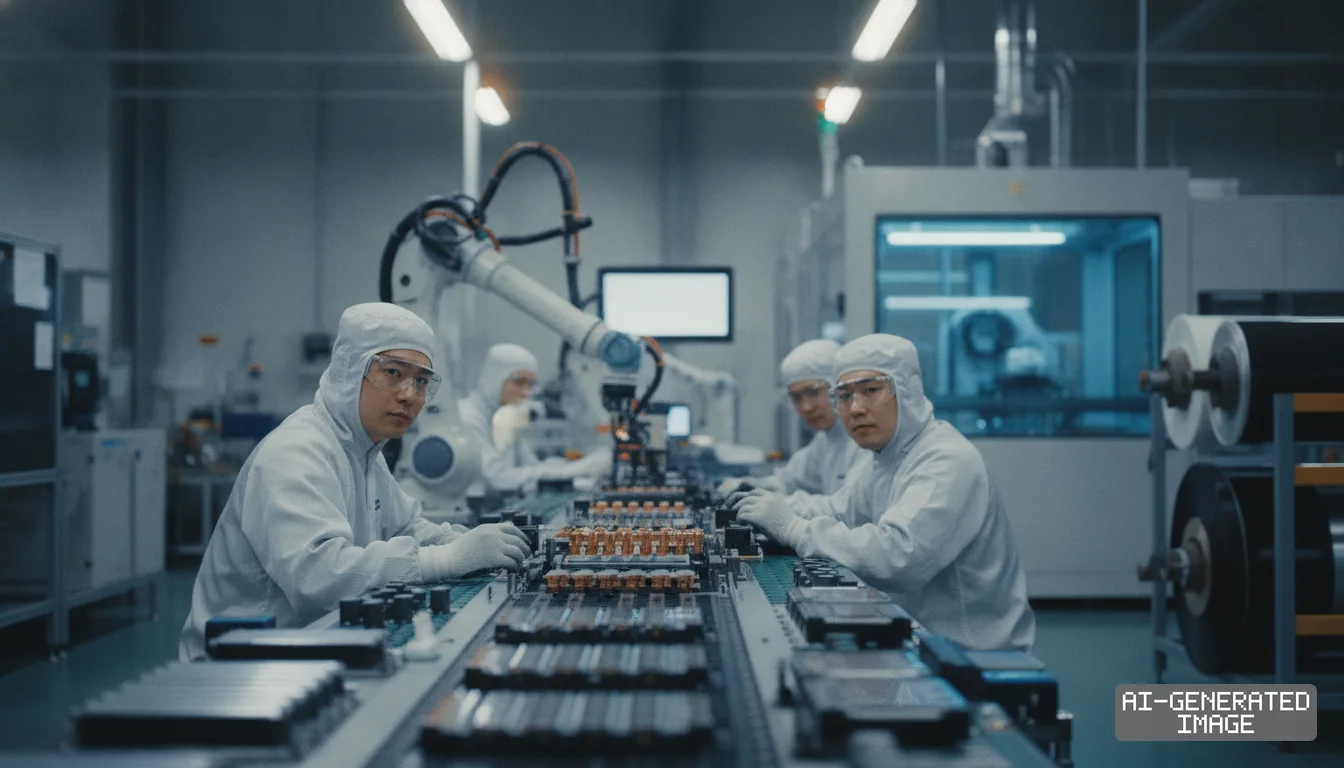
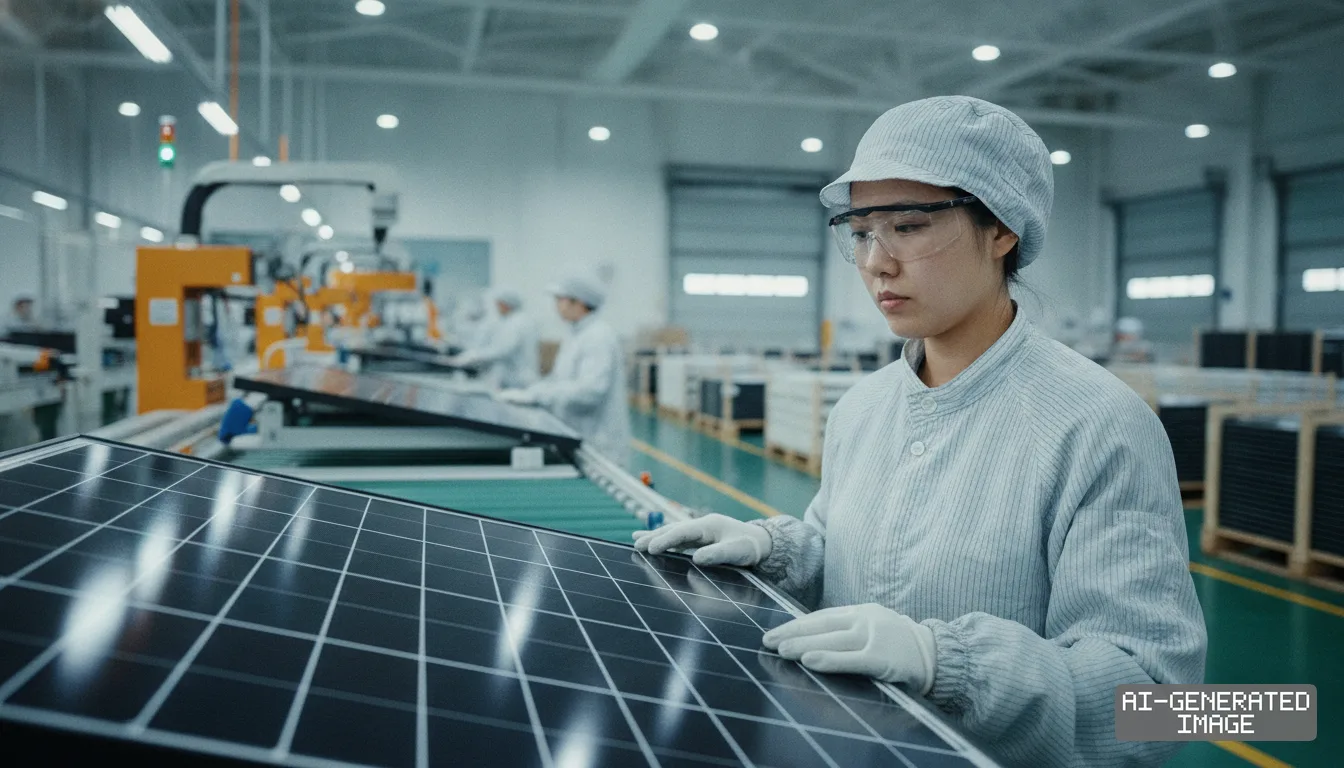
The 40 technologies placed under export control on Oct. 16 represent China's largest licensing expansion of 2026, spanning 23 artificial intelligence models, 12 solar wafer tools and five biopharmaceutical methods.
China holds more than 90% of global refining capacity for gallium and over 70% for germanium, giving existing dual-use mineral restrictions substantial leverage over foreign semiconductor and defense contractors.
Market speculation increased after leaders from the Quad partnership—grouping the United States, Japan, India and Australia—issued a joint statement on Nov. 17 pledging supply chain diversification away from single-source dependencies.
The ministry responded through established administrative channels, emphasizing that export reviews operate strictly under national security legislation rather than geopolitical retaliation, according to regulatory briefing records.
Chinese trade oversight functions primarily under the Export Control Law and the Regulations on the Export Control of Dual-Use Items, which took effect in late 2024.
These legal instruments authorize regulators to halt cross-border transfers without issuing country-specific embargo decrees, the ministry said in previous regulatory guidance.
Instead of introducing blanket prohibitions against the three nations, Chinese trade authorities continue to apply item-specific scrutiny and selective corporate entity designations.
This administrative framework compels multinational equipment suppliers and chip designers to submit exhaustive documentation detailing end-user facilities and technical applications.
The interim pre-registration system created under Announcement No. 48 of 2026 took effect immediately on Oct. 16, requiring domestic technology holders to file preliminary transfer contracts before export approval.
Exporters transferring advanced computing clusters, large language model weights or cell therapy technologies must complete provincial filings before commercial negotiations conclude, according to the ministry notice.
Japanese industrial manufacturers carry the heaviest documented exposure to China's targeted dual-use export control lists.
The ministry added 20 Japanese defense and maritime enterprises to its formal export control list on Feb. 24, 2026, barring them from receiving Chinese origin dual-use components.
Mitsubishi Heavy Industries saw six naval shipbuilding, engine and maritime equipment subsidiaries cut off from direct Chinese shipments under Announcement No. 11.
Commercial and naval maritime machinery accounts for roughly 10% of total group revenue at Mitsubishi Heavy Industries, where procurement teams face secondary delays in specialized steel castings.
Kawasaki Heavy Industries saw its aerospace systems division placed under Chinese dual-use procurement bans.
The aerospace systems division generates approximately 25% of annual revenue at Kawasaki Heavy Industries, which recorded 1.8 trillion yen ($11.6 billion) in group sales last fiscal year.
IHI Corporation had five propulsion and power subsidiaries blacklisted under the same February decree, restricting access to upstream metallurgical inputs.
Aircraft engine and turbine components represent roughly 35% of overall sales at IHI Corporation, complicating maintenance cycles that rely on Chinese precision forgings.
Fujitsu Defense & National Security also remains barred from purchasing Chinese origin dual-use goods under the February order.
The communications supplier equips naval radars and command consoles for Japan's Ministry of Defense, shifting toward domestic synthetic graphite to offset Chinese export restrictions.
American defense contractors operate under separate mineral restrictions established on Dec. 3, 2024, under Announcement No. 46.
That order banned direct sales of gallium, germanium, antimony and superhard materials to United States military end-users and instituted rigorous dual-use reviews on graphite shipments.
The ministry reinforced those curbs on Aug. 5, 2026, by tightening dual-use drone hardware export controls toward United States entities under Announcement No. 34.
The measure targeted automatic flight controllers, high-frequency communications relays and specialized payload housings commonly used in commercial and defense aerial vehicles.
Indian manufacturers face administrative inspection delays rather than targeted statutory prohibitions.
Electronics assembly facilities in India depend heavily on Chinese component inputs, where customs screening at southern ports has lengthened average transit times by three weeks.
Procurement officers report that routine dual-use export licence applications now require between 45 and 90 days for administrative clearance.
The extended timeline has forced regional hardware producers to maintain 15% higher buffer inventories to protect against component delivery shortfalls.
The ministry has not published any regulatory notice establishing a trilateral trade embargo against the United States, Japan and India, and the documents do not settle whether additional rare earths face imminent export caps.
The ministry closed the public comment period for Announcement No. 48 on Nov. 15, and authorities are scheduled to finalize the revised technical catalogue before Dec. 31.
Existing interim pre-registration rules will govern all 40 advanced technology categories until the State Council issues the final implementation decree.
Impact map
How this development propagates across the region and out to global buyers.
| Event | Korea | China | Japan | Global impact |
|---|---|---|---|---|
| dual-use export screening | no direct entity listing, memory suppliers maintain 45-day review buffers | MOFCOM controls 40 advanced technologies and 90% of refined gallium output | 20 defense entities face component cutoffs, hitting 10-35% of divisional revenue | cross-border licence clearance stretches to 90 days, lifting inventory costs 15% |
In this story
- Companies
- Mitsubishi Heavy IndustriesKawasaki Heavy IndustriesIHI CorporationFujitsu
- Tickers
- 7011.T7012.T7013.T6702.T
- Policy
- Export Controls
- Impact
- Supply ChainCompliance
Track every Export Controls development →
Related briefings
- TSMC Rolls Out Embedded RRAM Also on Fujitsu
- Silicon interposer scaling drives foundry and OSAT shifts in 3.5D chiplets Also on Fujitsu
- Japan Seeks US Help on China Yttrium Curbs as Metal Runs Out Also on IHI Corporation, Mitsubishi Heavy Industries, Export Controls
- METI expands Western rare earth alliances as China chokes yttrium Also on IHI Corporation, Mitsubishi Heavy Industries, Export Controls
Sources
Primary documents
Reporting
Confidence: high — how we grade this
The documents behind this briefing are linked above. East Asia Brief produces its English text with AI assistance under human editorial review, and does not translate or republish other outlets' articles. See our methodology and AI policy. Spotted an error? Tell us.
The Morning Brief
What changed in Korean, Chinese and Japanese industry overnight — and what it means for your supply chain. One email, weekday mornings, US time. Free.
The Morning Brief is in preparation. Leave your address and we will write to you once — when the first issue is ready. Nothing before that.