China drops tariffs on African goods to secure mineral supply lines
The State Council Tariff Commission expanded duty-free access across 53 partner nations as first-half bilateral trade climbed 19.6% to $158.3 billion.
China's General Administration of Customs reported Oct. 9, 2026 that two-way trade with Africa rose 19.6% to $158.3 billion in the first half of the year following sweeping tariff eliminations.
The expansion marks Beijing's broadest market opening for developing partners, designed to shield raw material inflows from Western trade friction and preserve processing margins at home.
African deliveries to Chinese ports increased 22.1% during the first six months of 2026, customs statistics showed. The jump followed a directive from the State Council Tariff Commission that eliminated import duties across 53 African nations.
The commission issued the decree on April 28, 2026, extending preferential access from May 1, 2026 through April 30, 2028. The policy expanded a zero-tariff regime that initially covered 33 least developed countries starting Dec. 1, 2024.
The revised schedule brought 20 additional non-least developed economies into the zero-tariff framework. The group includes South Africa, Egypt, Nigeria and Kenya.
Only Eswatini remains excluded from the duty exemptions because the kingdom maintains formal diplomatic ties with Taiwan.
The policy removes customs duties on standard tariff lines while holding tariff-rate quotas to zero within assigned volume caps. Above-quota cargo remains subject to standard most-favored-nation duties.
For Chinese industrial planners, the duty waiver consolidates access to critical minerals that feed battery cells, stainless steel mills and clean-energy hardware.
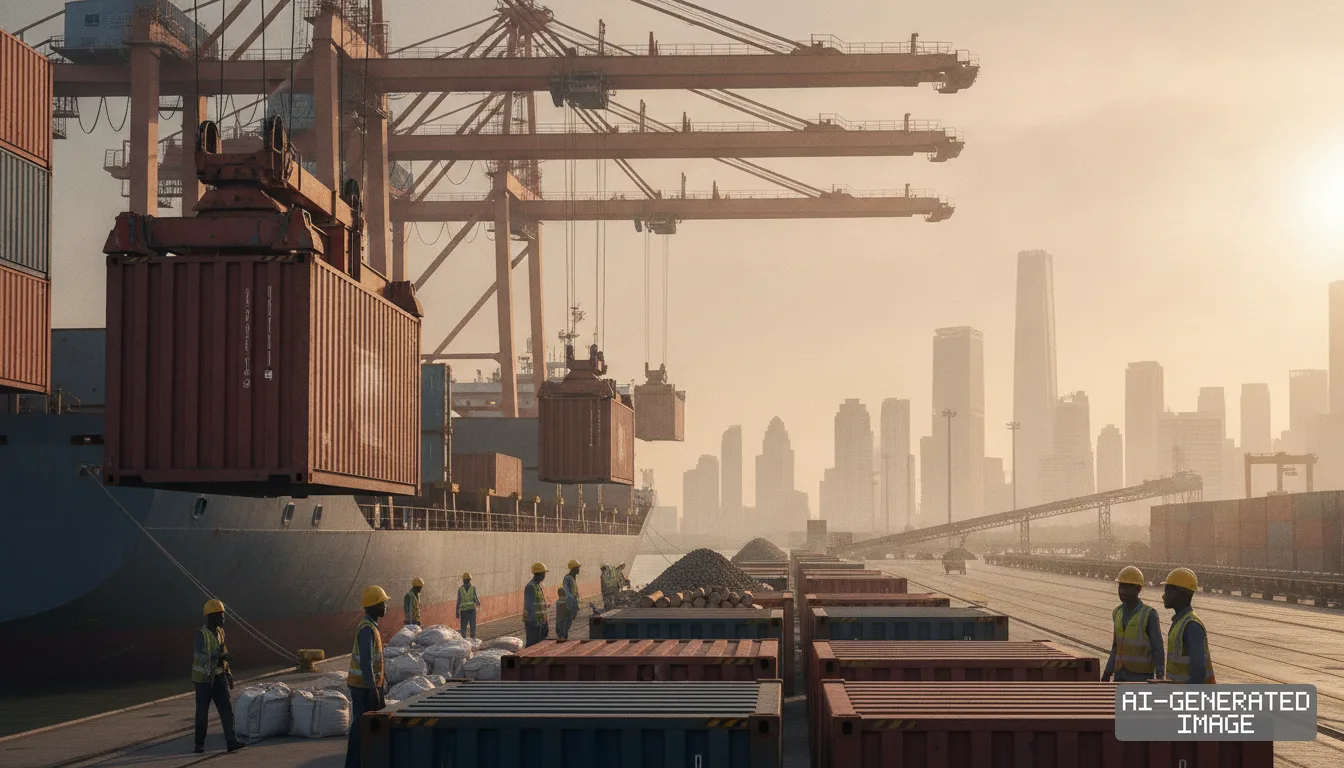
South Africa serves as the primary corridor for these flows, moving chromium, manganese and magnetite iron ore to Chinese coastal smelters.
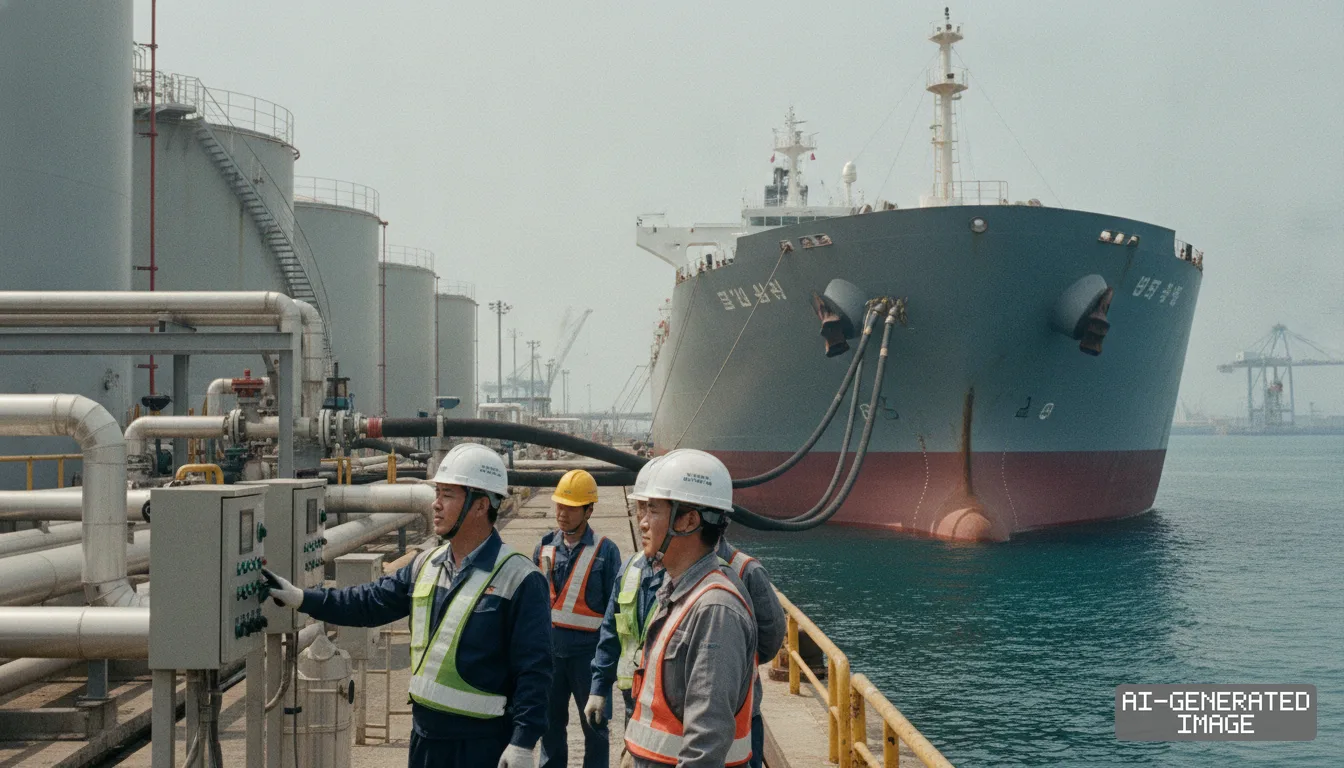
At the deep-water Port of Ngqura near Gqeberha, port operator Transnet SOC Ltd recorded an unprecedented surge in dry bulk departures bound for China during the third quarter.
Transnet SOC Ltd handles dry bulk across seven commercial berths at the facility, where minerals account for more than 70% of outgoing freight volume.
Business strategy manager Xola Mkontwana said the duty-free designation accelerated bulk commodity movements across the port system.
Shipments of chrome and magnetite through the terminal rose sharply as Chinese refiners took advantage of the zero-tariff entry point, Mkontwana said.
The tariff removal eliminates import charges that previously ran between 8% and 30% on African primary goods and processed agricultural items.
Unwrought metal ores, concentrates and intermediate alloys now enter Chinese terminals without duty payments, lowering landing costs for mainland smelters.
Chinese battery manufacturers and alloy producers draw heavily on African deposits to counter supply limits linked to Western mineral alliances.
The duty exemptions also cover agricultural shipments, allowing South African citrus, Kenyan avocados and Ethiopian coffee to compete against Latin American and Southeast Asian suppliers.
Awo Coffee in Addis Ababa now channels 90% of its roasted coffee exports to mainland buyers, processing 160 metric tons of beans for Chinese roasters annually.
Company managers said the elimination of customs levies protected gross export margins against escalating ocean freight rates.
Beijing framed the initiative under the Forum on China-Africa Cooperation, presenting the concessions as non-reciprocal support for African industrial growth.
Total bilateral trade reached $348 billion in 2025, climbing 17.7% from $295.6 billion in 2024, according to commerce ministry records.
Chinese outbound shipments to the continent expanded 25.8% to $225.03 billion in 2025, leaving Beijing with a large bilateral trade surplus.
Removing import tariffs on African cargo represents an effort to rebalance those exchanges while locking in multiyear resource supply contracts.
The ministry said the zero-tariff terms offer immediate relief to African exporters navigating currency depreciation and higher borrowing costs.
Chinese state engineering contractors have coordinated with mining operators to expand logistics links between inland extraction sites and regional container hubs.
Rail upgrades connecting copper and cobalt belts in Zambia and the Democratic Republic of the Congo to coastal ports have accelerated alongside the tariff policy.
By waiving import duties unilaterally, China avoids the lengthy multi-year negotiations required by comprehensive free trade pacts.
The approach also sidesteps World Trade Organization disputes by structuring the tariff waiver as temporary non-reciprocal development assistance.
Chinese commercial banks and development lenders have tied new trade credit lines directly to customs-cleared zero-tariff commodities.
The Ministry of Commerce said Oct. 9 that it will use the current two-year implementation window to negotiate bilateral Economic Partnership for Shared Development agreements.
Those bilateral pacts are intended to replace the temporary preferential decree with binding, permanent trade treaties before the current measure expires.
The State Council Tariff Commission has not published product-level quotas for agricultural commodities covered by tariff-rate caps, leaving exact within-quota thresholds undisclosed.
The temporary tariff exemptions will expire April 30, 2028, unless China signs bilateral treaties or extends the commission decree.
Impact map
How this development propagates across the region and out to global buyers.
| Event | Korea | China | Japan | Global impact |
|---|---|---|---|---|
| China Africa zero tariff expansion | Posco and battery cathode makers face higher procurement costs as Chinese refiners capture unrefined African chrome and manganese | Coastal smelters reduce feedstock landing costs by 8% to 30% across 53 partner nations | Trading houses face tighter competition securing South African ore allocations at deep-water terminals | Resource trade reroutes toward Asian processing hubs, weakening Western critical mineral security pacts |
| China Africa zero tariff expansion | Posco and battery cathode makers face higher procurement costs as Chinese refiners capture unrefined African chrome and manganese | Coastal smelters reduce feedstock landing costs by 8% to 30% across 53 partner nations | Trading houses face tighter competition securing South African ore allocations at deep-water terminals | Resource trade reroutes toward Asian processing hubs, weakening Western critical mineral security pacts |
In this story
- Companies
- Transnet SOC Ltd
- Policy
- Tariffs
- Impact
- Supply ChainCost StructurePricing
Track every Tariffs development →
Related briefings
- TSMC raises foundry prices for fabless clients by up to 10% in 2027 Also on Tariffs, Pricing, Cost Structure
- USTR lowers China consumer tariffs, squeezing Southeast Asian hubs Also on Tariffs, Pricing, Cost Structure
- CATL widens global EV battery lead to 39.4% as Korean share slips Also on Tariffs, Pricing, Cost Structure
- China Imposes 55% Tariff on Brazil Beef as Imports Hit Quota Also on Tariffs, Pricing, Cost Structure
Sources
Primary documents
Reporting
Confidence: high — how we grade this
The documents behind this briefing are linked above. East Asia Brief produces its English text with AI assistance under human editorial review, and does not translate or republish other outlets' articles. See our methodology and AI policy. Spotted an error? Tell us.
The Morning Brief
What changed in Korean, Chinese and Japanese industry overnight — and what it means for your supply chain. One email, weekday mornings, US time. Free.
The Morning Brief is in preparation. Leave your address and we will write to you once — when the first issue is ready. Nothing before that.