Korea rejects Russia fuel breach claims as port checks widen
Trade authorities confirmed refined petroleum falls outside current export controls after reports alleged 176,000 tonnes moved from southern ports to Russia.
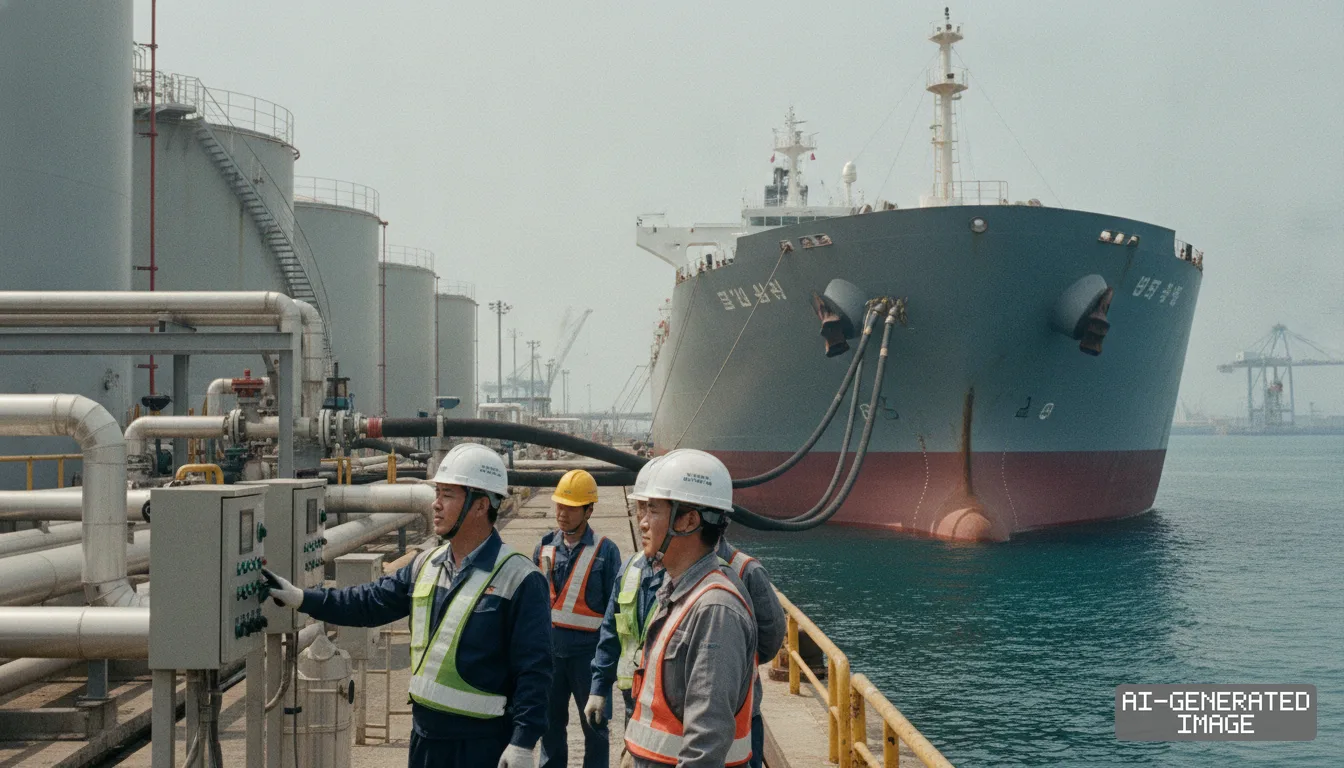
South Korea’s trade and foreign ministries said Oct. 8 that domestic port loadings of commercial fuels do not violate export controls, while pledging inspections into suspected Russian cargo diversions.
The joint government statement responded to media reports alleging that tankers transported more than 176,000 tonnes of refined petroleum from South Korean hubs to the Russian Far East. The reported volume moved across 14 separate voyages during July and August 2026.
Shipments of commercial diesel and jet fuel do not fall under current South Korean export control lists for Russia, the ministries said. Because refined oil remains outside those schedules, loading such products at domestic terminals does not breach domestic trade statutes.
Strategic goods face an outright export ban under South Korea’s Foreign Trade Act. The Ministry of Trade, Industry and Energy also maintains catch-all restrictions on 1,402 dual-use industrial items, including heavy machinery, motor vehicles and sensitive electronic components.
South Korea’s total exports to Russia fell from $10 billion in 2021 to $4 billion in 2025, according to trade ministry figures. Annual bilateral shipments dropped to $6.3 billion in 2022, $6.1 billion in 2023 and $4.5 billion in 2024 as restrictions broadened.
Official customs records show zero shipments of diesel, jet fuel or gasoline cleared directly from South Korea to Russia between January 2025 and August 2026, according to the Korea International Trade Association. That clearance data covers every major domestic refinery port.
The Guardian reported Oct. 6 that seven tankers loaded fuel at the southern ports of Ulsan and Yeosu before discharging in Russian waters. The report alleged that the fuel deliveries softened the domestic impact of Ukrainian drone strikes on Russian refining facilities.
South Korean officials rejected claims that Seoul enabled sanctions circumvention. Assessing individual commercial voyages without verified ownership data or confirmed fuel origins is inaccurate and improper, the foreign ministry said during a press briefing.
Interagency investigators plan to examine the sailing routes of the seven named vessels alongside customs export paperwork filed in July and August. The Korea Customs Service will determine whether shippers submitted fraudulent papers when clearing outward cargo.
Discrepancies between declared arrival destinations and actual vessel routes do not automatically prove customs fraud, trade officials said. Maritime charterers frequently redirect merchant cargoes on the high seas during standard commercial trading.
The government will initiate legal enforcement proceedings if investigators discover deliberate misrepresentation or falsified bills of lading. The ministries said border control agencies will increase monitoring at coastal fuel terminals to prevent indirect leakage to Russian buyers.
The joint notice stated that authorities have not confirmed whether the 176,000 tonnes of fuel originated in South Korean refineries. The government has also not identified the intermediate trading desks or established whether the ultimate recipients were Russian state companies.
Customs and trade officials are reviewing voyage logs against export declarations filed in July and August 2026, with enforcement proceedings to follow if investigators uncover fraudulent destination filings under the Foreign Trade Act.
Impact map
How this development propagates across the region and out to global buyers.
| Event | Korea | China | Japan | Global impact |
|---|---|---|---|---|
| Russia fuel circumvention audit | Customs targets shipping manifests at Ulsan and Yeosu; no domestic law breach on fuel | Independent traders face tighter paperwork checks when lifting marine fuel from Korean ports | Japanese refiners monitor Korean catch-all list to prevent regional bunker diversion | Tanker charterers face heightened destination verification across Northeast Asian routes |
| Russia fuel circumvention audit | Customs targets shipping manifests at Ulsan and Yeosu; no domestic law breach on fuel | Independent traders face tighter paperwork checks when lifting marine fuel from Korean ports | Japanese refiners monitor Korean catch-all list to prevent regional bunker diversion | Tanker charterers face heightened destination verification across Northeast Asian routes |
In this story
- Policy
- Export ControlsEconomic Security
- Impact
- ComplianceSupply Chain
Track every Export Controls development → Track every Economic Security development →
Related briefings
- EU puts China rare earth curbs on trade docket to cut deficit Also on Export Controls, Compliance
- China Delays Rare Earth Export Controls in U.S. Trade Truce Also on Export Controls, Compliance
- CXMT Hired 27 Samsung and SK hynix Engineers for DRAM Fabs Also on Export Controls, Compliance
- LS Eco Energy builds Vietnam samarium hub ahead of defense ban Also on Export Controls, Compliance
Sources
Primary documents
Reporting
Confidence: high — how we grade this
The documents behind this briefing are linked above. East Asia Brief produces its English text with AI assistance under human editorial review, and does not translate or republish other outlets' articles. See our methodology and AI policy. Spotted an error? Tell us.
The Morning Brief
What changed in Korean, Chinese and Japanese industry overnight — and what it means for your supply chain. One email, weekday mornings, US time. Free.
The Morning Brief is in preparation. Leave your address and we will write to you once — when the first issue is ready. Nothing before that.