Beijing targets Samsung $59 billion outlay to secure tech supply
People's Daily labelled the Korean chipmaker an essential partner as advanced manufacturing accounts for 90% of its cumulative spending across 15 factories.
China's state-run People's Daily praised Samsung Electronics on Nov. 8, 2026, as a deeply embedded supply chain partner, highlighting its cumulative $59 billion investment across Chinese high-tech manufacturing.
The editorial framing appeared during the ninth China International Import Expo in Shanghai. The trade fair serves as Beijing's primary platform to demonstrate commercial openness to multinational industrial corporations.
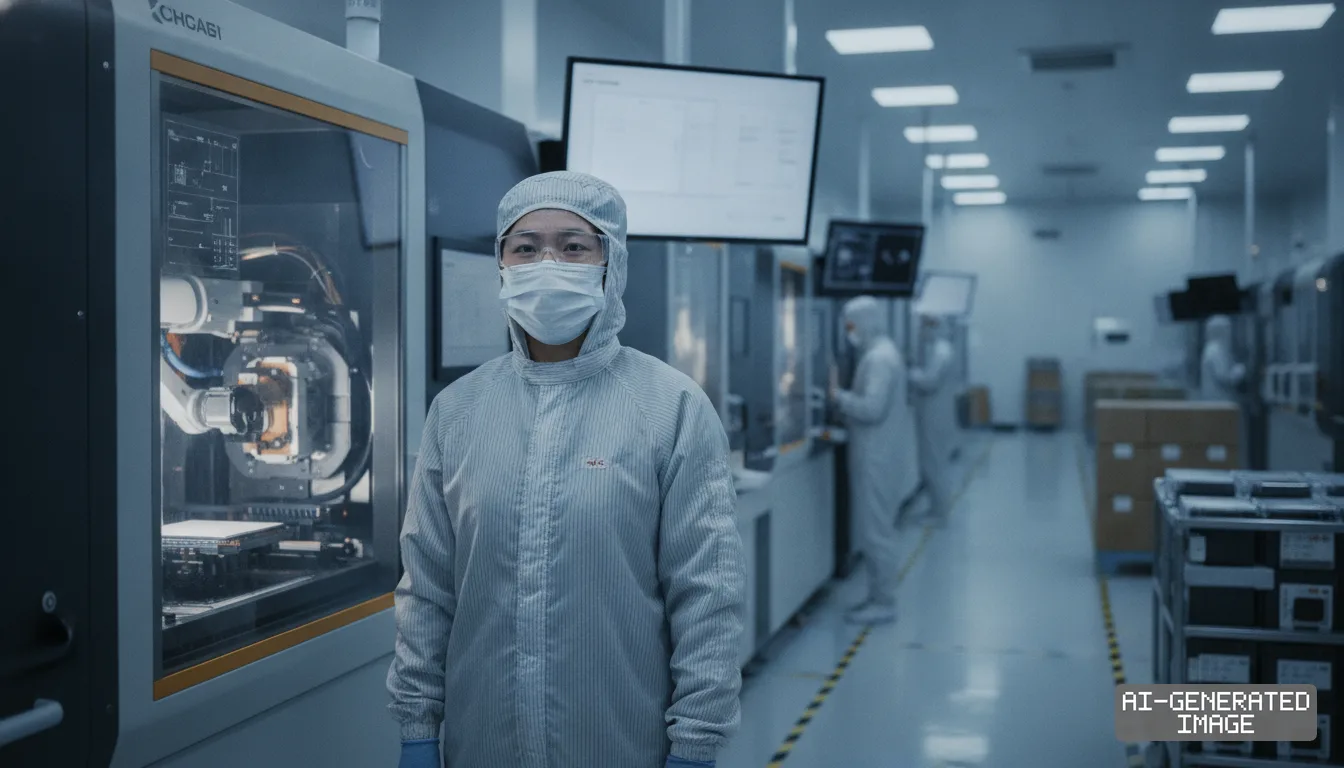
The paper reported that advanced manufacturing and research facilities account for 90% of Samsung's cumulative spending in China. The South Korean technology conglomerate currently operates 15 production factories and 14 research and development centers nationwide.
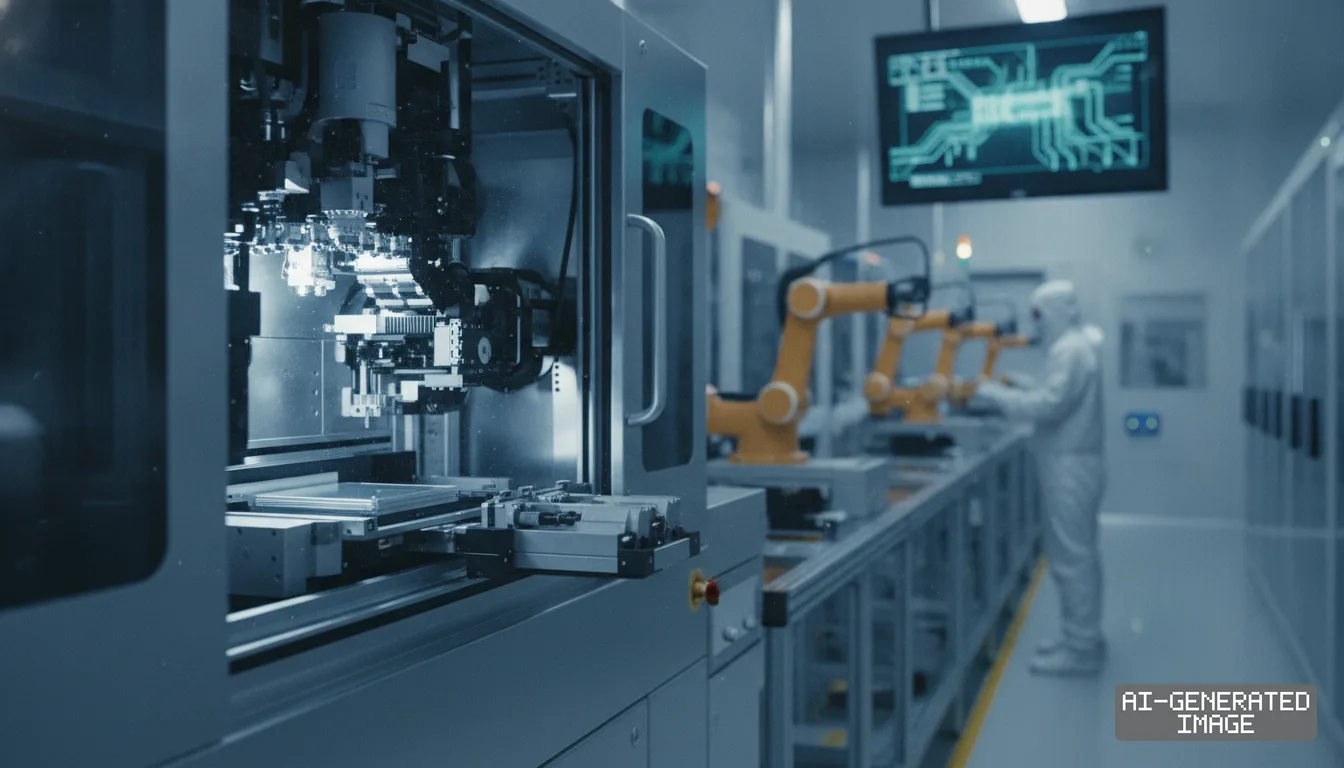
Samsung Electronics relies on China for core semiconductor manufacturing. Its memory fabrication complex in Xi'an produces roughly 40% of the company's global NAND flash output, anchoring its mobile and enterprise storage business.
Chinese state media highlighted Samsung's ongoing shifts toward high-value manufacturing. The paper cited recent 2026 expansions, including a biomedical research facility in Beijing and a production line in Suzhou for advanced medical imaging equipment.
Samsung also established an advanced manufacturing technology research institute in Suzhou this year. The facility represents the group's first overseas laboratory dedicated specifically to next-generation production processes.
At the Shanghai expo, Samsung showcased its latest storage hardware. Products included low-power double data rate memory featuring processing-in-memory architecture and universal flash storage 5.0 chips with 40% improved energy efficiency.
"We want to embed research, manufacturing and innovation directly into China," said Zhang Daijun, senior vice president of Samsung China, in remarks published by the state newspaper.
The coverage aligns with Beijing's broader campaign to retain foreign technology capital amid expanding Western trade restrictions. Ministry of Commerce data show high-tech foreign direct investment reached 228.53 billion yuan ($32.1 billion) between January and September 2026.
That high-tech intake grew 33.8% from the same period last year. High-technology sectors accounted for 41.6% of China's 548.81 billion yuan in total actual utilized foreign investment during the nine-month period.
For Beijing, publicizing Samsung's industrial footprint serves a strategic diplomatic purpose. Highlighting deep integration helps counter pressure from United States export control rules that seek to isolate Chinese advanced manufacturing clusters.
The publicity also signals regulatory stability to multinational suppliers operating inside China. Domestic authorities have sought to assure foreign component makers that local operations will face predictable commercial conditions.
Samsung must balance its massive fixed assets in China against tightening multilateral technology oversight. The company operates its Xi'an fabrication lines under validated end-user authorizations that require regular administrative coordination with trade authorities.
South Korean memory makers face compounding capital expenditure trade-offs. Upgrading mainland fabrication lines to advanced nodes requires specialized lithography equipment subject to international licensing controls.
The state media report did not document any new capital expenditure commitments by Samsung Electronics. Regulatory filings with the Korea Exchange confirm the cited $59 billion represents cumulative historical investment rather than new spending.
Samsung has not announced additional semiconductor wafer fabrication expansion projects in Shaanxi province for the current fiscal cycle. Corporate representatives declined to comment on future fab upgrades beyond existing maintenance allocations.
The commercial showcase in Shanghai concludes its six-day exhibition schedule on Nov. 10, 2026. Trade officials from South Korea and China are scheduled to hold bilateral supply chain consultations in early December.
Impact map
How this development propagates across the region and out to global buyers.
| Event | Korea | China | Japan | Global impact |
|---|---|---|---|---|
| Beijing state media framing of Samsung | Samsung maintains $59B base and Xi'an NAND fab while managing US equipment limits | Beijing leverages Korean memory presence to bolster high-tech FDI claims | Equipment makers monitor fab maintenance budgets under dual licensing regimes | Memory supply stability reinforced as Xi'an plant operates without immediate disruption |
In this story
- Companies
- Samsung Electronics
- Tickers
- 005930.KS
- Policy
- Export Controls
- Impact
- Supply ChainCapexCompliance
Track every Export Controls development →
Related briefings
- Korea opens US talks as tool license delays hit SK hynix Dalian Also on Samsung Electronics, Export Controls, Compliance
- Nvidia halts H200 chip lines, shifting TSMC output to Rubin Also on Samsung Electronics, Export Controls, Compliance
- OpenAI abandons China chip curbs as Nvidia protects exports Also on Samsung Electronics, Export Controls, Compliance
- SK hynix seeks US export clearance for Wuxi memory equipment Also on Samsung Electronics, Export Controls, Compliance
Sources
Primary documents
Reporting
Confidence: high — how we grade this
The documents behind this briefing are linked above. East Asia Brief produces its English text with AI assistance under human editorial review, and does not translate or republish other outlets' articles. See our methodology and AI policy. Spotted an error? Tell us.
The Morning Brief
What changed in Korean, Chinese and Japanese industry overnight — and what it means for your supply chain. One email, weekday mornings, US time. Free.
The Morning Brief is in preparation. Leave your address and we will write to you once — when the first issue is ready. Nothing before that.