Samsung Heavy takes 342 billion won Oceania LNG carrier contract
The single-vessel award commits Geoje shipyard berths through mid-2029 and lifts commercial bookings to 146% of the company's annual merchant target.
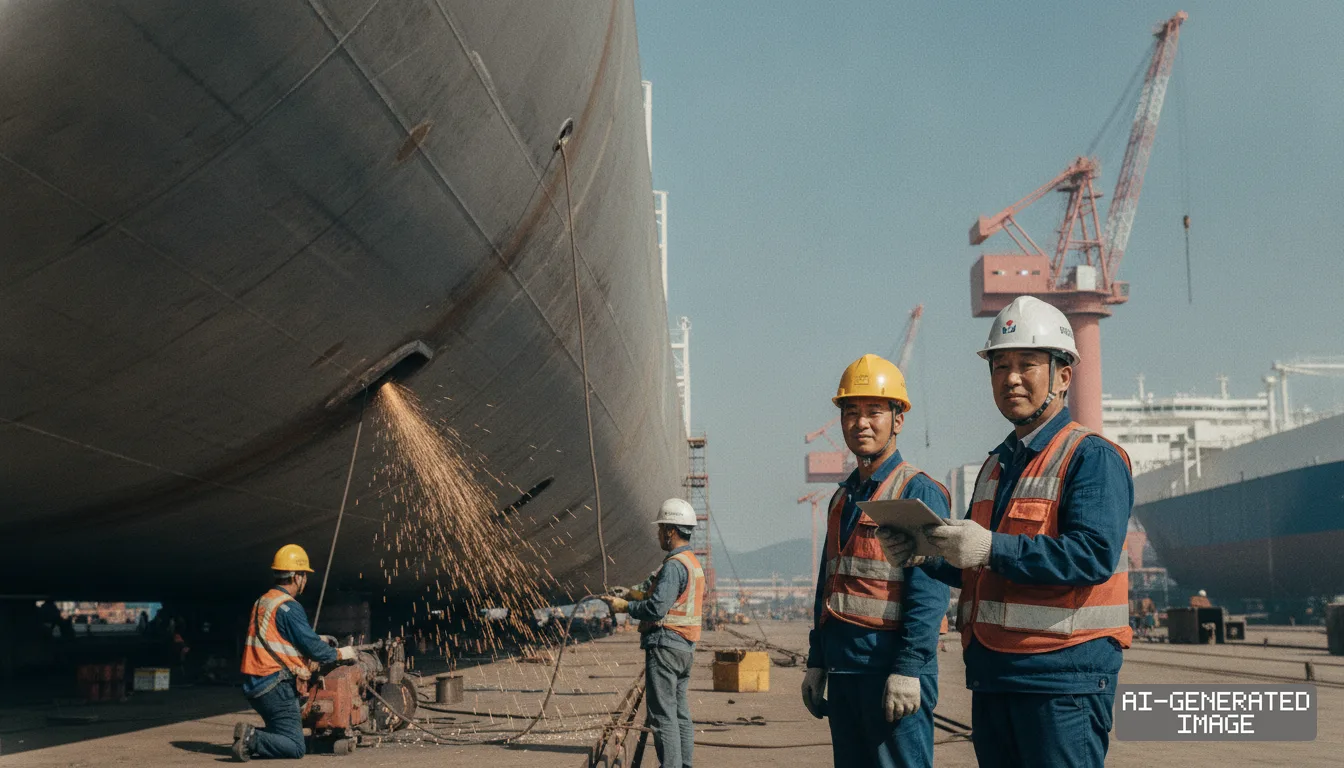
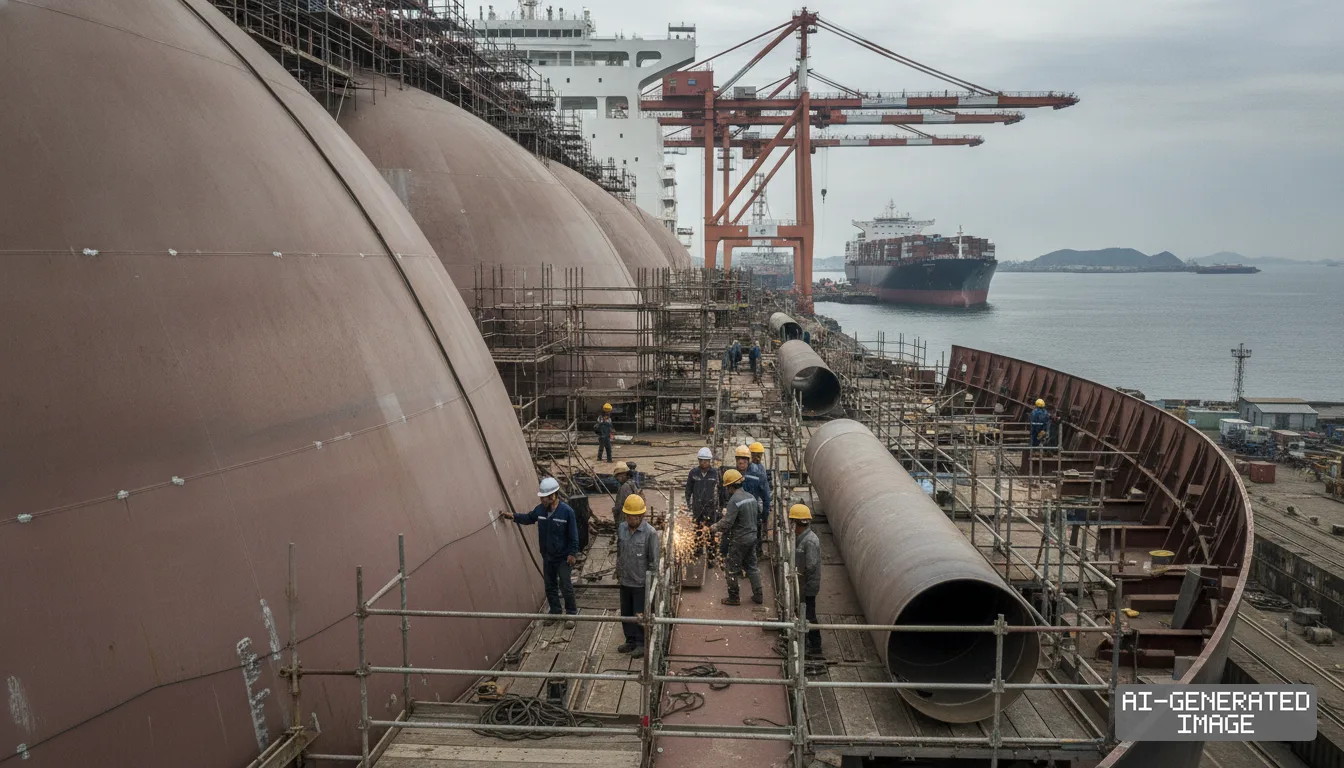
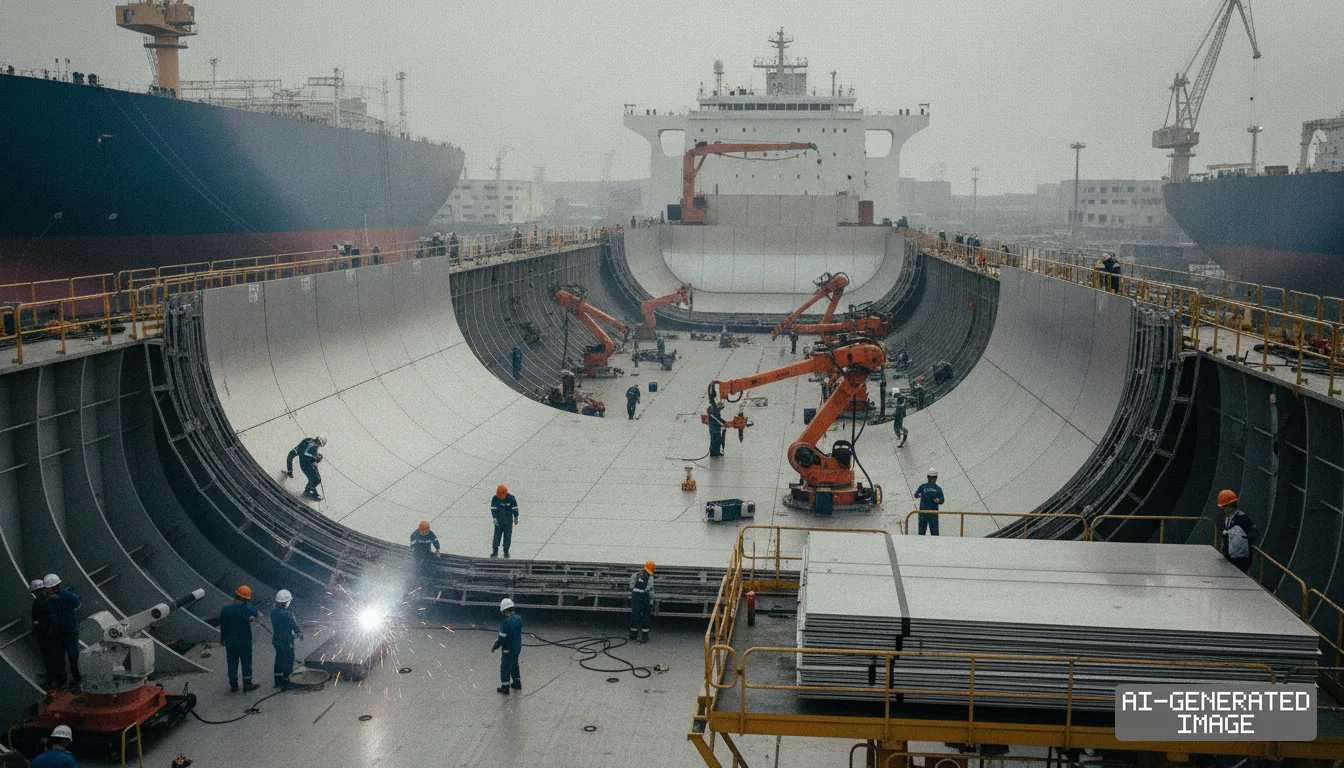
Samsung Heavy Industries secured a 342.4 billion won ($257 million) order on Nov. 16, 2026, to construct a single liquefied natural gas carrier for an Oceania-based shipowner.
The contract equals 3.2% of the shipbuilder's 2025 consolidated revenue of 10.65 trillion won. The award was finalized on Nov. 13 and formally disclosed to financial regulators on Nov. 16.
The transaction commits building berths at the company's Geoje shipyard through the third quarter of 2029. Under the contract terms, the vessel must be delivered by July 15, 2029.
Samsung Heavy Industries applied an exchange rate of 1,332.4 won per US dollar to calculate the contract value, according to the regulatory filing submitted to the Korea Exchange.
The single-vessel contract expands the yard's commercial shipbuilding backlog for 2026 to 47 vessels valued at $8.3 billion. That total exceeds the company's annual merchant target of $5.7 billion by 46%.
The merchant order book for 2026 is concentrated in gas and tanker tonnage. Samsung Heavy Industries has booked 21 LNG carriers this year, a tally that includes one floating storage and regasification unit.
The commercial backlog also contains 14 crude oil tankers, six liquefied petroleum and ammonia carriers, four container vessels and two very large ethane carriers, the company said in an operational update.
The merchant contracts sit alongside Samsung Heavy Industries' offshore engineering division. That unit has booked two floating liquefied natural gas production facilities worth $4.4 billion during 2026.
Combining both divisions brings total orders booked by Samsung Heavy Industries in 2026 to 49 hulls and floating facilities valued at $12.7 billion. The sum represents 91% of the annual target of $13.9 billion.
The yard's order cadence reflects a selective contracting strategy focused on high-margin vessels. High-specification LNG carriers and offshore production units now occupy the majority of available construction slots.
Securing delivery schedules into mid-2029 limits open construction berths for international shipowners. Korean shipbuilders have systematically pushed forward delivery windows as carrier operators replace aging steam-turbine hulls.
The contract pricing matches levels seen across top-tier South Korean shipyards throughout 2026. Standard 174,000-cubic-meter LNG carriers have maintained prices above $250 million due to sustained demand for cryogenic tonnage.
Shipowners have continued to secure long-term transport capacity to serve global export terminals. Export projects entering service across North America and Africa require specialized vessels capable of handling chilled cargoes.
Samsung Heavy Industries structures its vessel contracts around installment payments tied to milestone progress. The builder collects advance deposits followed by stage payments as steel cutting, keel laying and launching proceed.
The company booked 10.65 trillion won in consolidated revenue and 862.2 billion won in operating profit in 2025, according to audited balance-sheet data included in the filing. Total assets stood at 14.95 trillion won.
The shipyard ended 2025 with total liabilities of 10.85 trillion won and total equity of 4.10 trillion won. Its balance sheet has stabilized following consecutive quarters of higher-priced vessel handovers.
Contractual terms for the Oceania-bound ship remain governed by standard commercial shipbuilding covenants. The financial filing stipulates that the contract termination date corresponds to the actual physical vessel delivery.
Construction timing remains subject to adjustments depending on production scheduling at Geoje. Any alterations to intermediate build phases will be recorded in future disclosures, the company said.
The regulatory filing does not disclose the commercial identity or ownership group of the Oceania-based buyer, citing trade secret and client confidentiality agreements.
The next operational milestone for Samsung Heavy Industries arrives when the company reviews fourth-quarter order intake against its remaining $1.2 billion gap to the 2026 annual target.
Impact map
How this development propagates across the region and out to global buyers.
| Event | Korea | China | Japan | Global impact |
|---|---|---|---|---|
| Single LNG carrier award | Samsung Heavy Industries extends order book to | — | — | — |
| Single LNG carrier award | Samsung Heavy Industries extends order book to $12.7B, reaching 91% of 2026 goal | Competing yards see standard LNG carrier price benchmark sustained at $257M | Fleet operators face tight Korean berth availability through July 2029 | Global LNG charterers commit capital into mid-2029 delivery windows |
In this story
- Companies
- Samsung Heavy Industries
- Tickers
- 010140.KS
- Impact
- Order BookPricingCapex
Related briefings
- Korean shipyards hit 90% order target by prioritizing gas carriers Also on Samsung Heavy Industries, Pricing, Order Book
- Hanwha Ocean mounts first FLNG bid in decade against Samsung Heavy Also on Samsung Heavy Industries, Pricing, Order Book
- HD Hyundai Heavy signs $465m deal for four ammonia vessels Also on Samsung Heavy Industries, Pricing, Order Book
- J.P. Morgan adds two Samsung Heavy VLGCs to expand gas fleet Also on Samsung Heavy Industries, Pricing, Order Book
Sources
Primary documents
Reporting
Confidence: high — how we grade this
The documents behind this briefing are linked above. East Asia Brief produces its English text with AI assistance under human editorial review, and does not translate or republish other outlets' articles. See our methodology and AI policy. Spotted an error? Tell us.
The Morning Brief
What changed in Korean, Chinese and Japanese industry overnight — and what it means for your supply chain. One email, weekday mornings, US time. Free.
The Morning Brief is in preparation. Leave your address and we will write to you once — when the first issue is ready. Nothing before that.