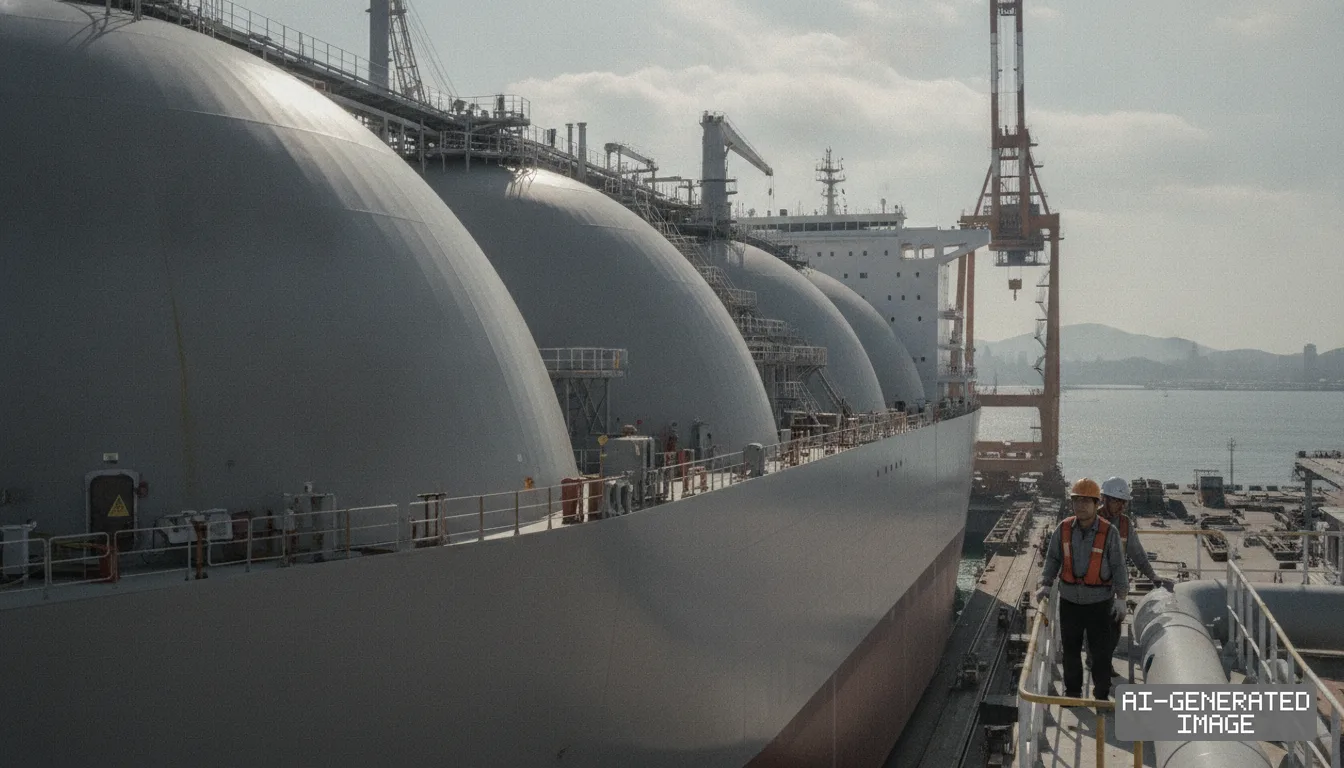
Samsung Heavy and Korean yards race to build floating data centers
Samsung Heavy designs 50-megawatt offshore computation modules for a Texas site as tech operators encounter terrestrial grid connection queues and municipal cooling curbs.
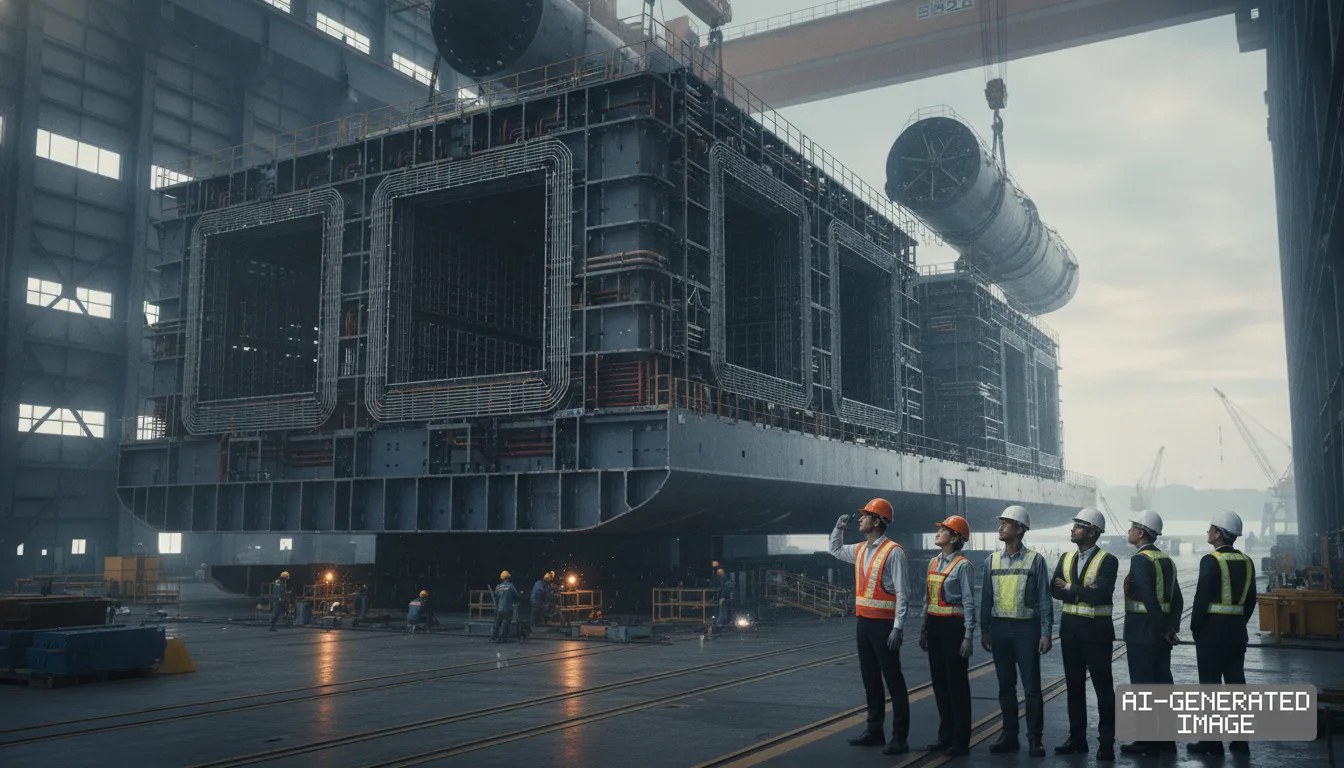
Hanwha Ocean, Samsung Heavy Industries and HD Hyundai converged on floating artificial intelligence data center contracts on Nov. 9, 2026, pitching offshore power and cooling barges to land-constrained tech operators.
The pivot addresses a dual bottleneck facing artificial intelligence clusters worldwide: multi-year delays in securing terrestrial electrical grid connections and mounting municipal restrictions on freshwater consumption for cooling.
Samsung Heavy Industries is designing 50-megawatt floating units for a planned 500-megawatt Texas campus, representing an initial 10% slice of the developer's planned computing capacity.
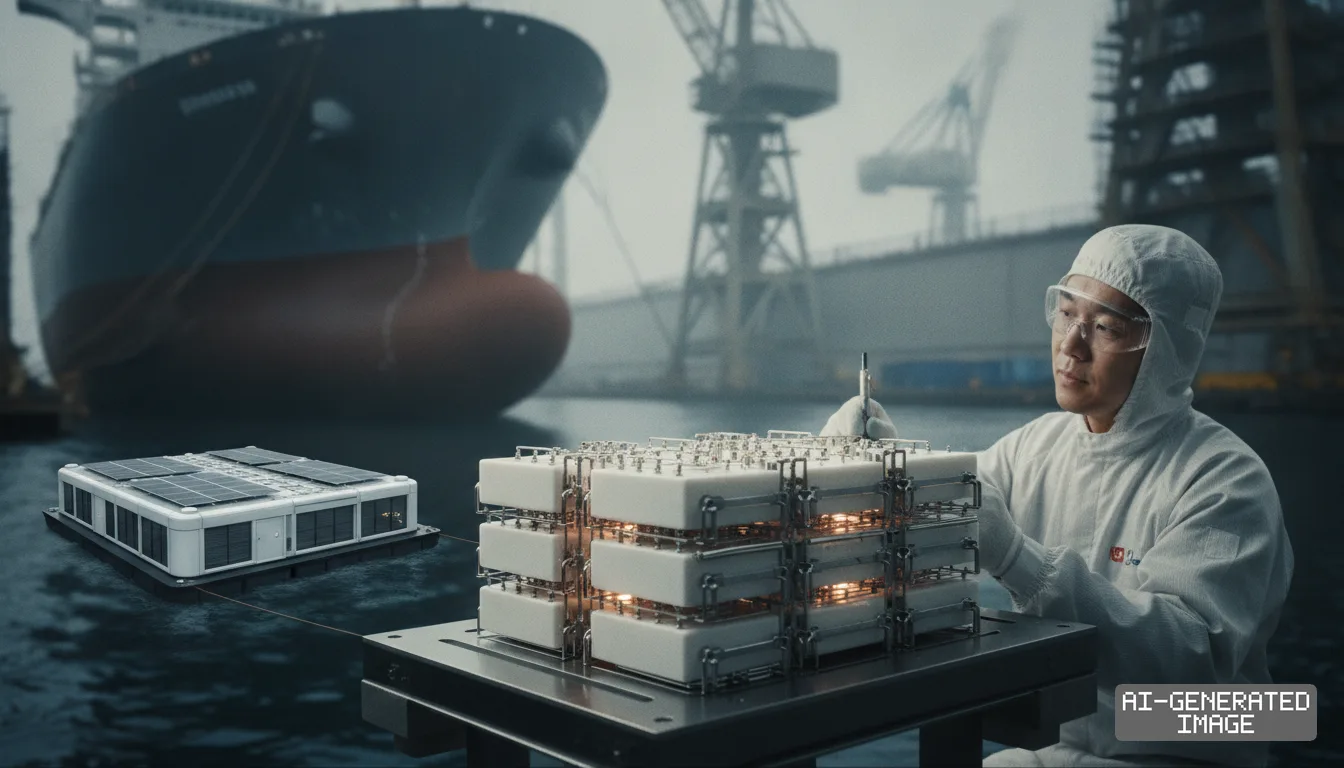
Each floating barge functions as a self-contained computational island moored along coastal waters or river estuaries. The platform houses high-density server racks, power generation turbines and marine heat exchangers on a single hull.
Hanwha Ocean widened its push on Nov. 5 by signing an engineering agreement with Swiss technology group ABB to develop integrated power and control systems through May 2027.
The shipbuilder unveiled its self-developed 60-megawatt floating data center design at the Gastech exhibition in September, where the concept received Approval in Principle from the American Bureau of Shipping.
Computing workloads in large-scale artificial intelligence models cause extreme power fluctuations within fractions of a second. Those surges can destabilize voltage frequencies across localized marine microgrids, the company said.
Hanwha Ocean will establish layout criteria for liquefied natural gas engines, while ABB designs power distribution software to adjust generator output in real time during computing spikes.
Offshore deployment introduces environmental stresses absent from inland warehouses. Moored hulls encounter continuous wave motion, mechanical vibration, humidity swings and airborne salt spray that can degrade sensitive silicon microprocessors.
Samsung Heavy Industries established the earliest commercial footprint among the domestic yards, securing design certification from the American Bureau of Shipping and Lloyd's Register in April for a 50-megawatt platform.
The shipbuilder signed an engineering contract in July with United States infrastructure developer Mousterian Corporation. The deal covers basic design, detailed engineering and production blueprints for two moored data barges.
Those initial units form the core of Project Zeus, a 500-megawatt hybrid campus in Texas situated alongside an existing natural gas plant to eliminate public grid interconnection queues.
Mousterian Corporation also plans Project Sandpiper, an 860-megawatt water-adjacent installation in San Jose targeted for 2029, according to project development disclosures.
Samsung Heavy Industries and Mousterian Corporation designed the barges to use bulk non-evaporative cooling. The closed-loop circuit consumes zero potable water and eliminates external chiller fans, cutting facility noise and freshwater withdrawals.
Samsung Heavy Industries also signed commercial agreements in June with Greek vessel operator Capital Clean Energy Carriers and United States server manufacturer Supermicro at the Posidonia maritime exhibition.
Supermicro is evaluating server rack configurations to ensure central processors and high-bandwidth memory withstand prolonged maritime vibration, Samsung Heavy Industries said.
Samsung Heavy Industries Vice Chairman and Chief Executive Officer Choi Sung-An said floating facilities represent an extension of five decades of offshore engineering and fabrication experience.
Samsung Heavy Industries has set a commercialization target for the second quarter of 2028, aiming to secure turnkey construction contracts before shipyard fabrication begins.
HD Korea Shipbuilding & Offshore Engineering, the intermediate holding company of HD Hyundai, entered the sector in July by partnering with French energy management specialist Schneider Electric.
HD Korea Shipbuilding will design and fabricate the floating hulls, while Schneider Electric provides internal power distribution infrastructure and cooling management systems for the server halls.
HD Korea Shipbuilding & Offshore Engineering Chief Executive Officer Kim Hyeong-kwan said the joint development will establish core technologies required to deploy high-density computing clusters safely at sea.
HD Hyundai told institutional investors in August that the group holds an advantage in packaging hull fabrication with internal dual-fuel power generation engines produced by its own manufacturing divisions.
Affiliate HD Hyundai Marine Solution established a dedicated floating data center unit last quarter. The division is developing lifecycle maintenance and engineering support frameworks for international installations, the company said.
Shipyard fabrication offers significant schedule advantages over terrestrial civil engineering. Modular hulls assembled in controlled dockyards can reach operation within 24 months, roughly half the timeline required for land-based facilities.
Direct seawater cooling also delivers substantial thermal efficiencies. Marine heat rejection systems pull water from ocean depths, lowering power usage effectiveness ratios without straining municipal utility systems.
Hanwha Ocean and ABB will conclude their technical reviews and control logic development by May 2027, ahead of Samsung Heavy Industries' target commercial delivery in the second quarter of 2028.
The shipbuilders have not disclosed the commercial values of upcoming hull fabrication contracts, and international maritime safety authorities have yet to establish standardized certification protocols for permanently moored high-voltage data barges.
Impact map
How this development propagates across the region and out to global buyers.
| Event | Korea | China | Japan | Global impact |
|---|---|---|---|---|
| floating data center race | Hanwha Ocean, Samsung Heavy and HD KSOE open order pipelines for 50-60MW barges | Jiangnan and Hudong-Zhonghua hold no commercial AI barge designs, lagging in marine power integration | Imabari and JMU maintain no active offshore computing programs, ceding modular barge export market | Hyperscale cloud operators secure shipyard-built capacity in 24 months, bypassing land grid queues |
In this story
- Companies
- Hanwha OceanSamsung Heavy IndustriesHD Korea Shipbuilding & Offshore Engineering
- Tickers
- 042660.KS010140.KS009540.KS
- Exposed
- ABBSchneider ElectricSupermicro
- Impact
- Order BookCapexSupply Chain
Related briefings
- China Antimonopoly Review Imposes Harsher Operational Remedies on Automation Mergers Also on Schneider Electric, ABB, Order Book
- China servo motor makers squeeze foreign rivals on cost and delivery Also on Schneider Electric, Order Book
- Novarc unveils physical AI welding robots at FABTECH 2026 event Also on ABB, Hanwha Ocean, Order Book
- Estun Automation completes buyout of robotics unit Codroid Also on ABB, Order Book
Sources
Reporting
Confidence: medium — how we grade this
The documents behind this briefing are linked above. East Asia Brief produces its English text with AI assistance under human editorial review, and does not translate or republish other outlets' articles. See our methodology and AI policy. Spotted an error? Tell us.
The Morning Brief
What changed in Korean, Chinese and Japanese industry overnight — and what it means for your supply chain. One email, weekday mornings, US time. Free.
The Morning Brief is in preparation. Leave your address and we will write to you once — when the first issue is ready. Nothing before that.