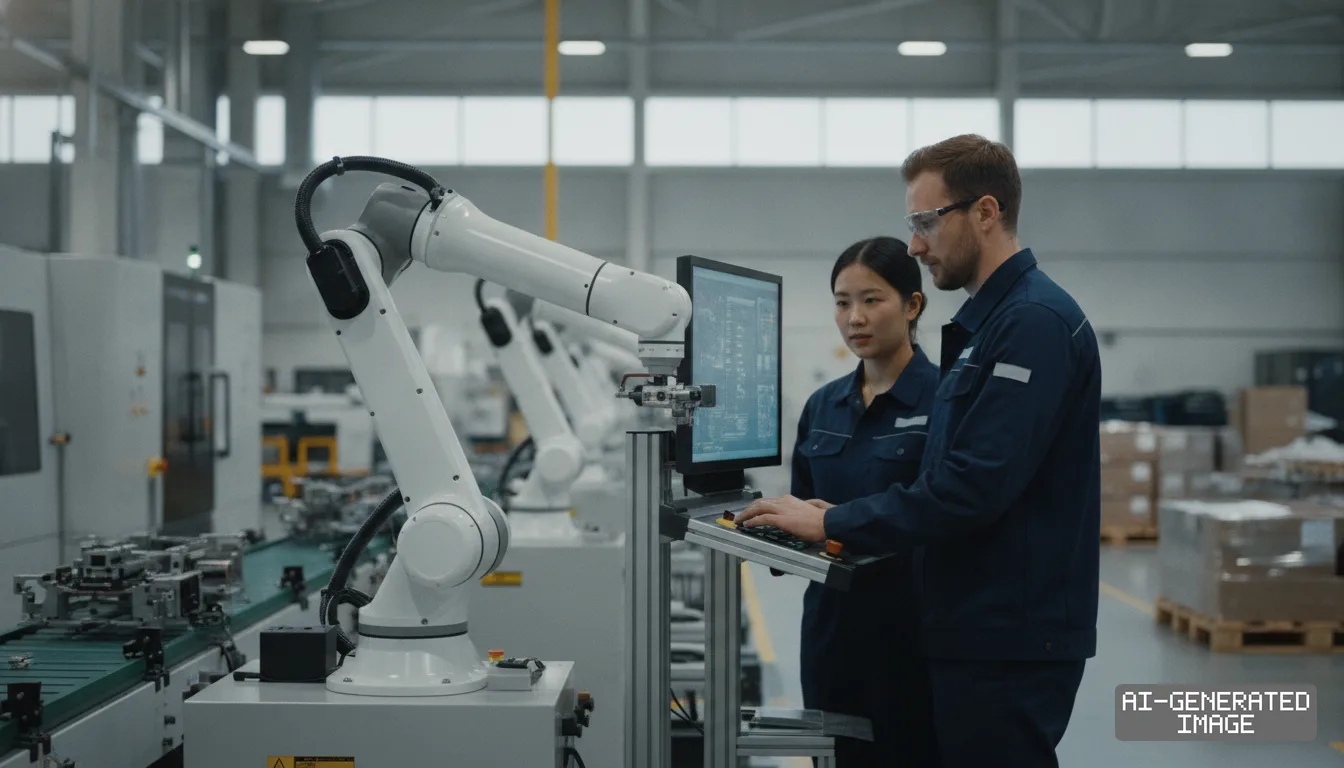
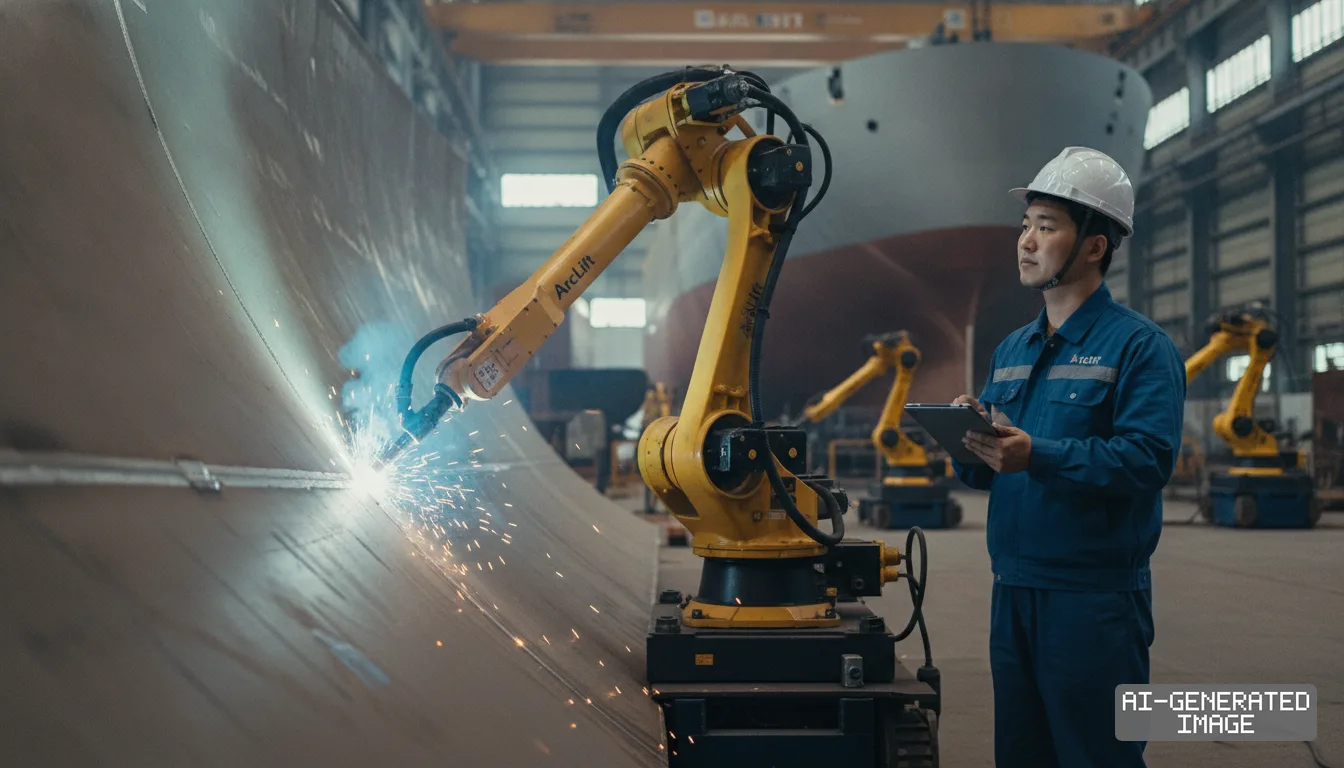
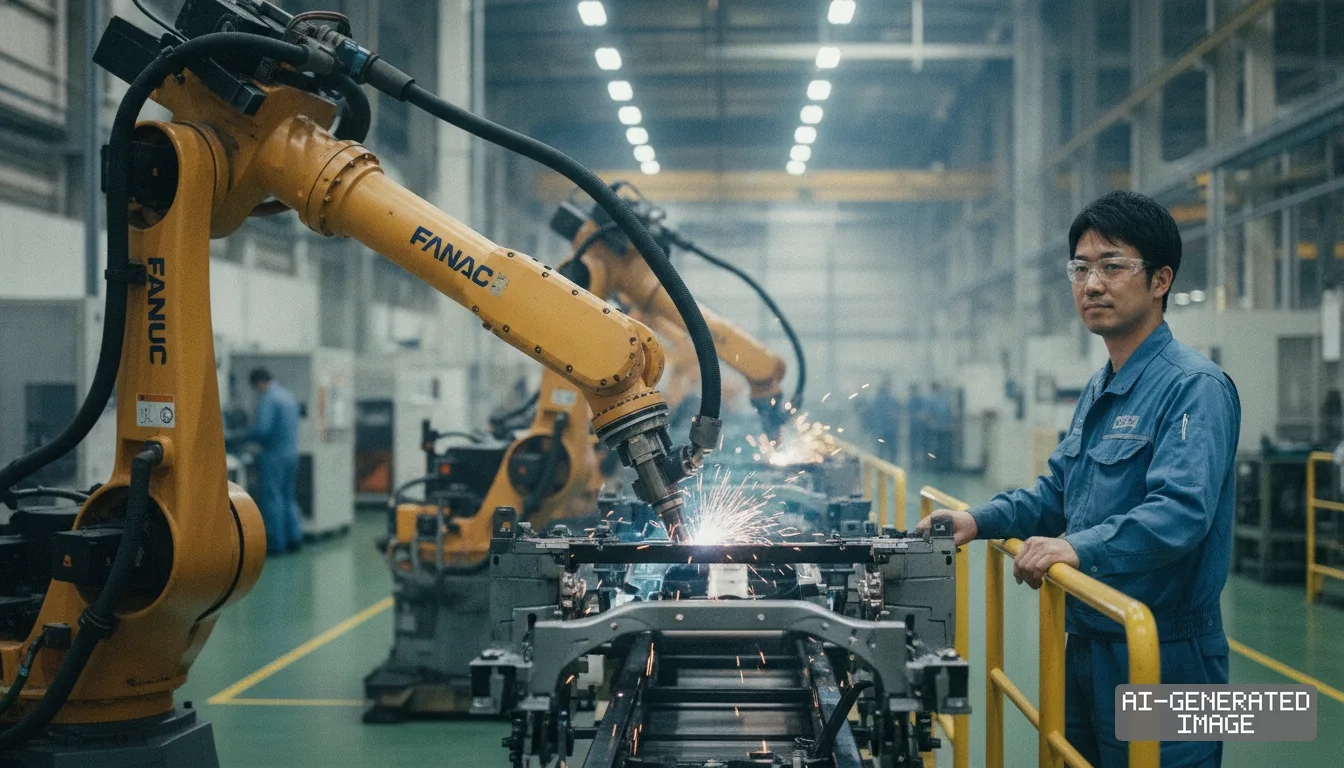
Novarc unveils physical AI welding robots at FABTECH 2026 event
The Canadian roboticist paired its vision-guided adaptive software with Yaskawa and ABB arms to cut rework on heavy pipe joints using one million hours of physical welding data.
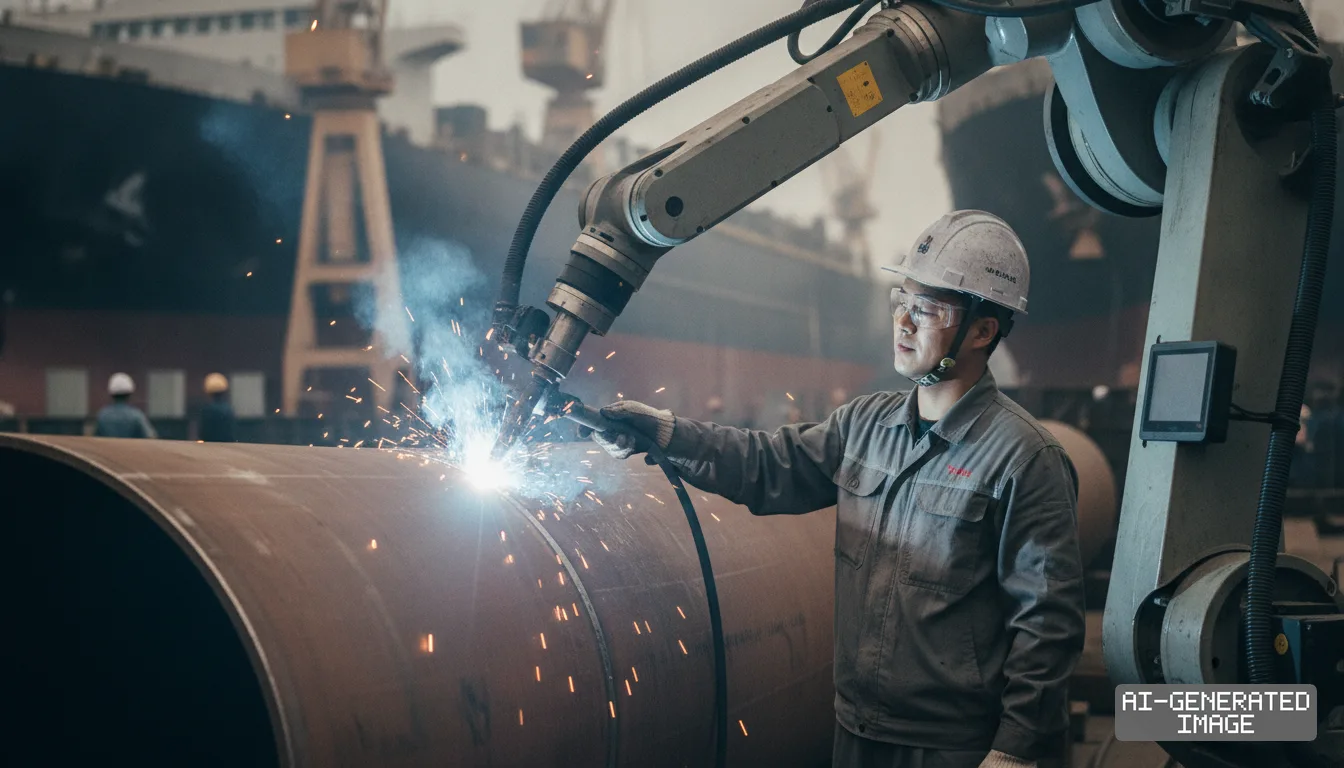
Novarc Technologies unveiled an artificial intelligence welding system on Oct. 19, 2026, targeting heavy industrial pipe fabrication across shipbuilding yards, power plants and modular data center construction projects.
The Canadian robotics firm trained its underlying machine learning models on almost one million hours of arc-on physical welding data. That dataset captures torch angles, voltage fluctuations and molten puddle behaviors accumulated across fabrication shops over 10 years.
Novarc said its dual-process spool welding robot delivers up to 400% productivity gains over conventional manual pipe jointing. The mobile cell alternates between tungsten inert gas root welding and metal inert gas fill passes in under 30 seconds.
The platform combines high-resolution optical cameras with real-time adaptive algorithms to adjust the torch path during active electric discharge. It measures joint geometry before arc ignition to calculate root gap variations, tack welds and pipe misalignments automatically.
Incoming steel pipes frequently deviate in circularity, bevel angle and wall thickness in heavy industrial yards. Conventional factory robots run on rigid programmed paths, causing metal burn-through and seam voids whenever raw pipe joints shift by more than one millimeter.
The physical AI system recalculates robotic travel speed, torch oscillation, voltage and wire feed rates on the fly. That continuous adjustment maintains molten puddle stability without forcing an operator to halt production or rewrite underlying motion code, the company said.
Novarc designed the software package to retrofit directly onto standard six-axis articulated arms built by Japan's Yaskawa Electric. The software communicates with Yaskawa YRC1000 robot controllers through a commercial deployment agreement signed by Yaskawa America in June 2026.
Yaskawa sells roughly one-third of its industrial multi-axis arms into arc welding and metal fabrication workcells. Enabling real-time optical adaptation allows Yaskawa clients to automate small-batch, variable pipe runs without replacing installed mechanical positioners on factory floors.
The company also expanded operational compatibility to industrial robot arms manufactured by Switzerland-based ABB. The retrofit package operates across standard ABB controller hardware, targeting structural steel fabricators that maintain established ABB robot fleets across North America and Europe.
Equipment manufacturer Miller Electric rolled out a collaborative industrial welding station powered by Novarc's AI algorithms in August 2026. Branded as the Copilot Builder with Blue iQ, the system pairs Novarc vision hardware with Miller heavy-duty power sources.
Miller Electric supplies an estimated 40% of manual and semi-automatic power sources found in North American industrial fabricators. The supplier partnership gives Novarc direct access to certified industrial distribution channels and existing yard maintenance accounts.
Heavy infrastructure fabricators face an acute contraction in certified manual labor as senior master welders retire. The American Welding Society projects a national deficit exceeding 300,000 qualified welding technicians across heavy fabrication sectors by 2028.
Asian shipyards experience similar skilled labor deficits across high-pressure pipe fabrication shops. South Korea's Hanwha Ocean signed a technical memorandum of understanding with Novarc on May 26, 2026, to test automated pipe welding cells across marine block fabrication lines at its Geoje shipyard.
Commercial vessels like liquefied natural gas carriers require thousands of specialized pipe spools per hull. Manual pipe repairs and radiographic re-inspection can add weeks to vessel erection schedules when joint defects appear in pre-outfitting stages.
Novarc packages its primary spool welding unit into a compact base that occupies 16 square feet of shop floor. The robotic base links with up to four external pipe positioners to maintain uninterrupted arc duty cycles across continuous work shifts.
The company also introduced a dedicated data center welding cell designed for structural framing skids and cooling conduit headers. That configuration targets structural steel modules demanded by hyperscale cloud data center construction throughout North America.
Welding telematics upload directly to an enterprise quality dashboard that Novarc markets as NovHub. Plant supervisors use the platform to track arc-on time, log joint heat inputs and archive weld records for non-destructive inspection audits.
Novarc has not disclosed per-unit hardware prices, software subscription fee tiers or binding equipment delivery schedules for Asian shipyard customers.
Novarc will demonstrate the physical AI suite on operational Yaskawa and ABB arms at the FABTECH 2026 industrial trade exhibition in Las Vegas from Oct. 21 to Oct. 23, 2026.
Impact map
How this development propagates across the region and out to global buyers.
| Event | Korea | China | Japan | Global impact |
|---|---|---|---|---|
| physical AI welding rollout | Hanwha Ocean evaluates cell integration to counter yard welder shortages | pipe fabricators face widened productivity gaps against automated Western and Korean yards | Yaskawa expands factory arm utilization by retrofitting adaptive AI vision without robot rewiring | heavy industrial fabrication shops cut pipe rework rates on high-mix assembly lines |
In this story
- Companies
- Novarc TechnologiesYaskawa ElectricABBMiller Electric
- Tickers
- 6506.TABBN.SW
- Exposed
- Hanwha Ocean
- Impact
- CapexSupply ChainOrder Book
Related briefings
- Hanwha Ocean taps Maum AI for shipyard welding automation Also on Novarc Technologies, Hanwha Ocean, Order Book
- Estun Automation completes buyout of robotics unit Codroid Also on ABB, Yaskawa Electric, Order Book
- FANUC America taps Palladyne AI for factory robot autonomy Also on ABB, Yaskawa Electric, Order Book
- Fanuc and Google launch AI welding robot to read blueprints Also on ABB, Yaskawa Electric, Order Book
Sources
Reporting
Confidence: medium — how we grade this
The documents behind this briefing are linked above. East Asia Brief produces its English text with AI assistance under human editorial review, and does not translate or republish other outlets' articles. See our methodology and AI policy. Spotted an error? Tell us.
The Morning Brief
What changed in Korean, Chinese and Japanese industry overnight — and what it means for your supply chain. One email, weekday mornings, US time. Free.
The Morning Brief is in preparation. Leave your address and we will write to you once — when the first issue is ready. Nothing before that.