Hanwha Ocean Wins ABS Approval for 60 MW Floating Data Unit
The classification society certified the modular offshore design on Sept. 30, 2026, as South Korean shipyards target terrestrial grid bottlenecks delaying artificial intelligence server hubs.
Hanwha Ocean secured Approval in Principle from the American Bureau of Shipping on Sept. 30, 2026, for a 60-megawatt floating data center design intended to bypass terrestrial power grid bottlenecks.
The classification decision certifies that the preliminary marine engineering meets structural and safety standards set by the Houston-based maritime agency. It allows the shipbuilder to market the hull design to global cloud operators.
The 60-megawatt facility represents roughly a third of the 200-megawatt upper limit evaluated by class societies for floating computing vessels. That volume provides sufficient power to support approximately 15,000 artificial intelligence server racks.
The American Bureau of Shipping, which inspects commercial vessels and offshore platforms, has issued conceptual approvals for marine data centers ranging from 50 to 200 megawatts over the past 12 months.
Terrestrial data centers face widening delays across East Asia and North America due to local grid queue congestion and municipal limits on freshwater consumption for evaporative cooling.
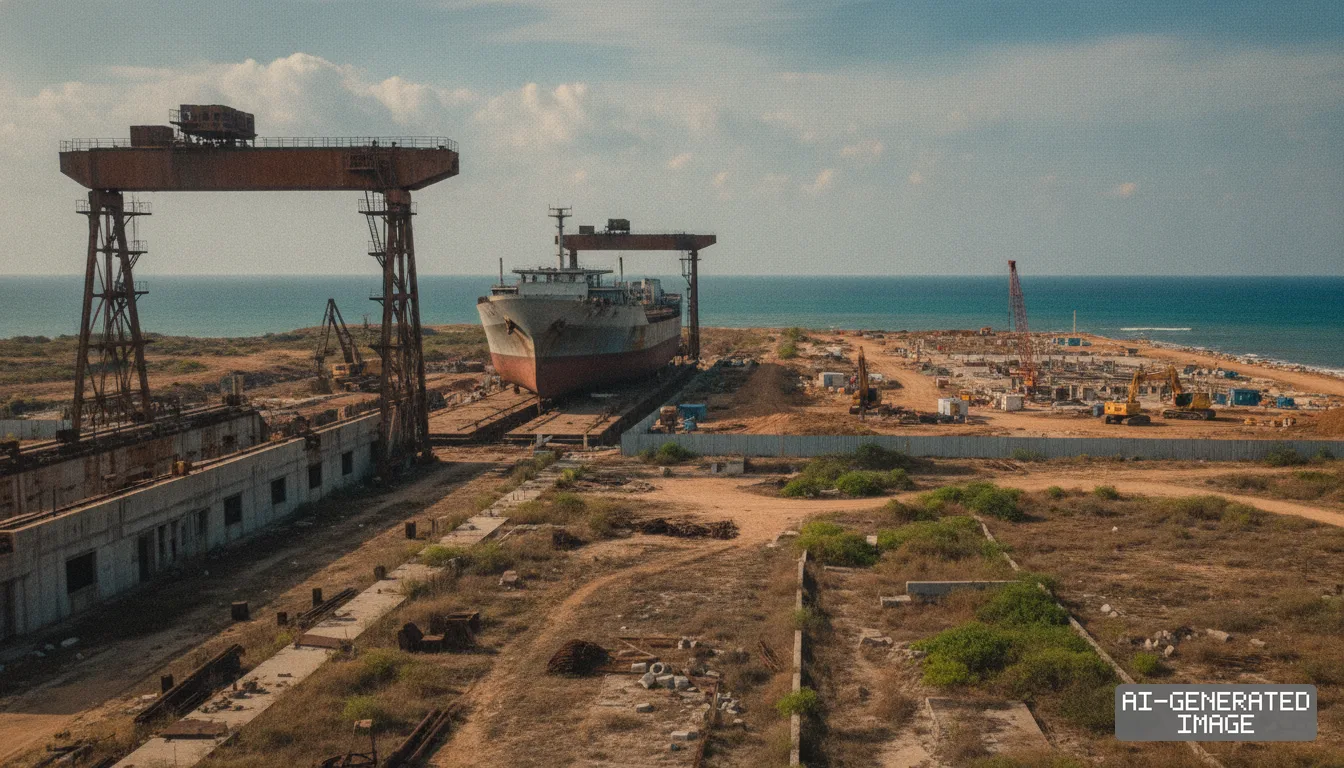
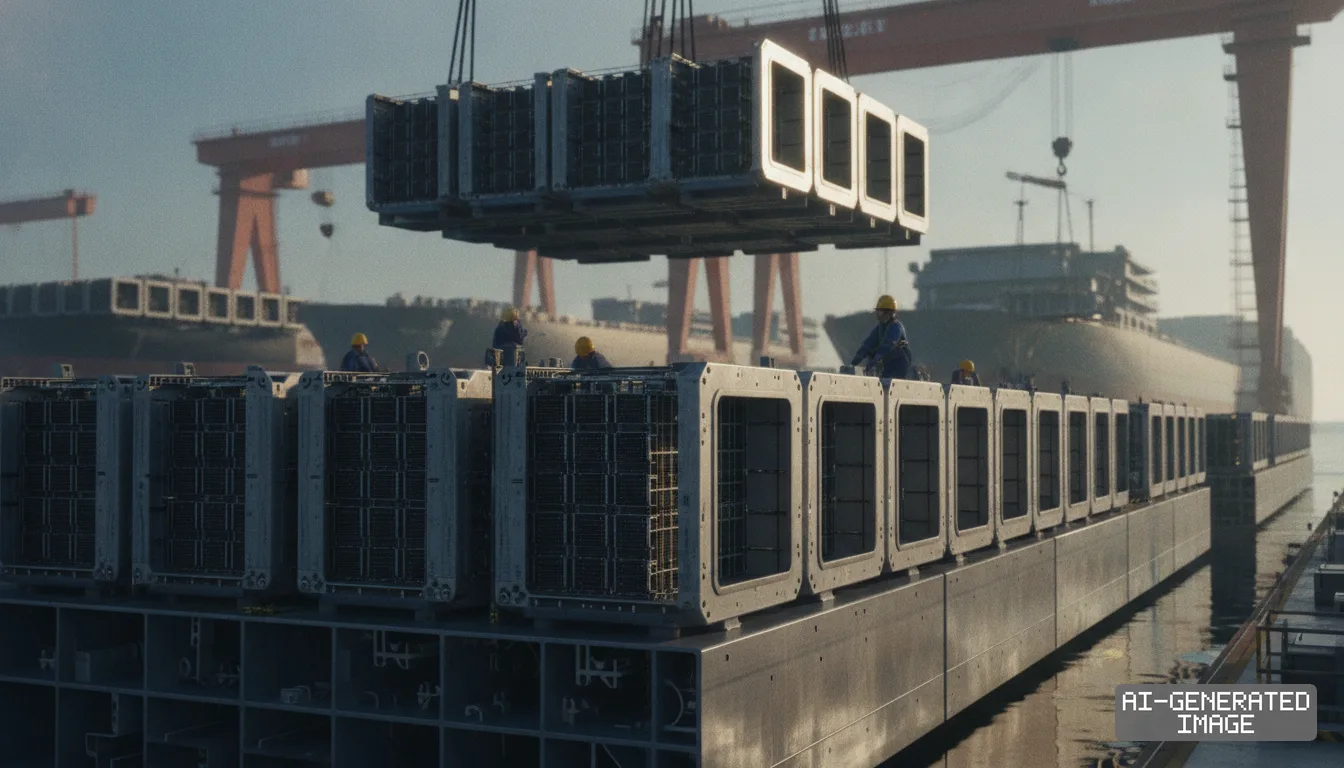
Hanwha Ocean developed the platform to house computing hardware on a towed barge structure. The hull operates in sheltered coastal waters or offshore anchorages rather than on industrial real estate.
The design pairs modular computer rooms with onboard power generation units and open-loop seawater cooling equipment. That system circulates cold ocean water through heat exchangers to absorb thermal output without consuming inland drinking water supplies.
Modular layout allows operators to select diverse energy feeds, server rack architectures and compute capacities according to regional deployment rules, the shipbuilder said.
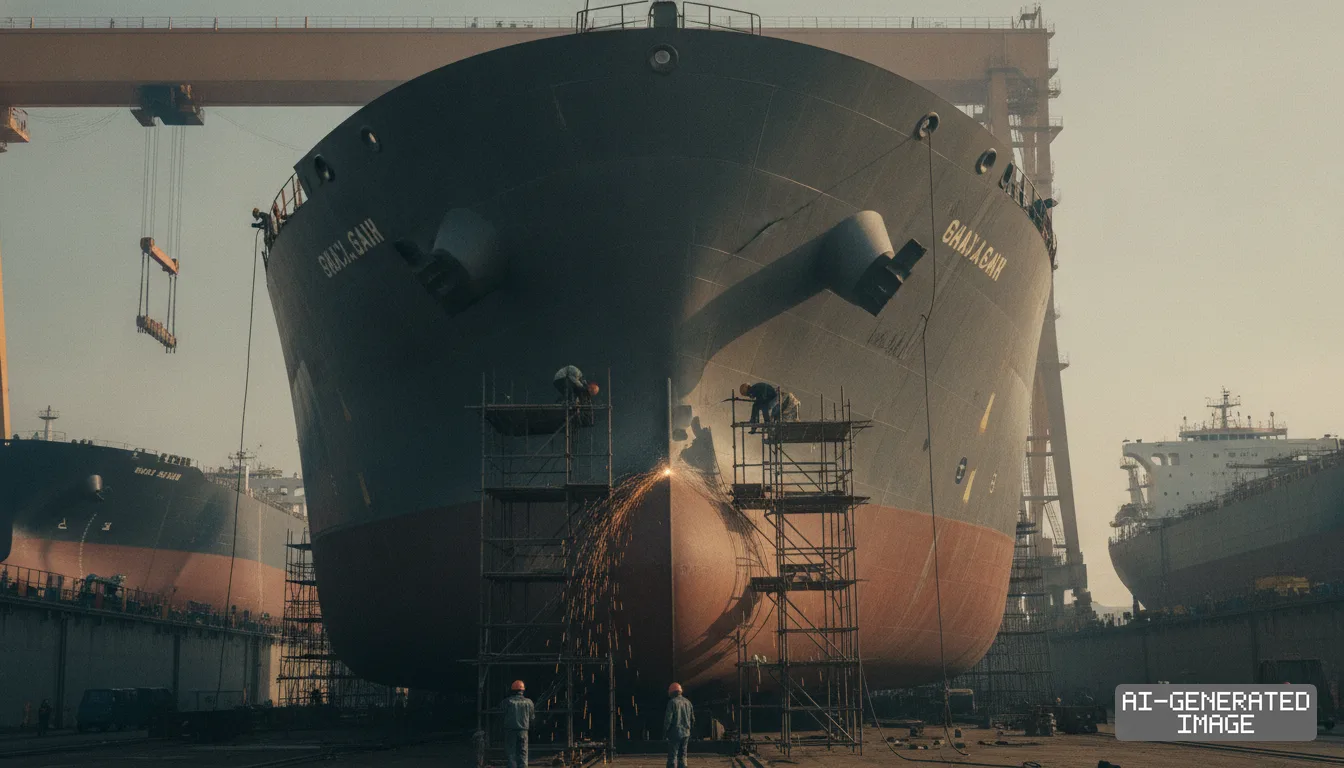
Hanwha Ocean books the program under its offshore engineering unit, which builds deepwater energy platforms and liquefied natural gas carriers at its Geoje shipyard.
The shipbuilder relies on affiliate companies inside Hanwha Group to supply auxiliary infrastructure, including power generation machinery, operational software and physical perimeter security.
Patrick Ryan, chief technology officer at the American Bureau of Shipping, said offshore engineering experience matters directly as tech companies seek practical paths to move digital infrastructure onto water.
Hanwha Ocean previously displayed a physical model of the 60-megawatt platform at the Gastech 2026 energy conference in Bangkok, which closed Sept. 17.
Shipbuilders across South Korea and Japan are pursuing floating industrial platforms to diversify revenues beyond cyclical merchant vessel construction.
In Japan, Mitsui O.S.K. Lines has studied floating data hulls in partnership with engineering contractors to evaluate whether marine units can serve coastal metropolitan power loads.
In the United States, waterborne data developer Nautilus Data Technologies commissioned a commercial barge-based server facility in 2021, proving that water cooling can lower mechanical operating overhead.
The American Bureau of Shipping expanded its technical advisory scope for marine computing in 2025 by publishing a safety study on nuclear-powered data barges.
That research reviewed the integration of small modular reactors with floating computing platforms to deliver baseload electricity without relying on onshore transmission interconnects.
Hanwha Ocean has not disclosed whether its 60-megawatt design relies on aeroderivative gas turbines, shore-line umbilical cables or alternative marine fuels to generate operating electricity.
Commercial deployment of floating computing hulls requires developers to navigate port state safety rules, seabed anchoring permits and undersea fiber optic cable connections.
The approval document confirms technical feasibility under baseline naval architecture principles, but it does not authorize shipyard hull cutting or drydock fabrication.
The official notices do not state target commercial delivery dates, customer off-take agreements, capital spending commitments, or an expiration date for the conceptual classification.
Hanwha Ocean and the American Bureau of Shipping plan to evaluate detailed engineering specifications as commercial developers advance site selection reviews.
Impact map
How this development propagates across the region and out to global buyers.
| Event | Korea | China | Japan | Global impact |
|---|---|---|---|---|
| 60 MW floating data center AiP | Hanwha Ocean adds offshore AI infrastructure design to Geoje yard engineering pipeline | Domestic shipyards face expanding competition in high-value offshore utility platforms | Mitsui O.S.K. Lines contends with rival Korean designs for coastal server hulls | Cloud operators gain seawater-cooled alternative to congested terrestrial utility queues |
In this story
- Companies
- Hanwha Ocean
- Tickers
- 042660.KS
- Exposed
- American Bureau of ShippingMitsui O.S.K. LinesNautilus Data Technologies
- Policy
- Economic Security
- Impact
- Order BookCapexSupply Chain
Track every Economic Security development →
Related briefings
- Hanwha Ocean unveils 60MW floating data center for AI demand Also on American Bureau of Shipping, Hanwha Ocean, Order Book
- HD Hyundai wins ABS approval for 100MW floating power barge Also on American Bureau of Shipping, Order Book
- MOL names world's first LNG carrier fitted with rigid sails Also on Mitsui O.S.K. Lines, Hanwha Ocean, Order Book
- Hanwha Ocean equips MOL LNG carrier with dual rigid sails Also on Mitsui O.S.K. Lines, Hanwha Ocean, Order Book
Sources
Reporting
Confidence: medium — how we grade this
The documents behind this briefing are linked above. East Asia Brief produces its English text with AI assistance under human editorial review, and does not translate or republish other outlets' articles. See our methodology and AI policy. Spotted an error? Tell us.
The Morning Brief
What changed in Korean, Chinese and Japanese industry overnight — and what it means for your supply chain. One email, weekday mornings, US time. Free.
The Morning Brief is in preparation. Leave your address and we will write to you once — when the first issue is ready. Nothing before that.