HD Hyundai cuts steel for Philippine frigate ahead of 2029
An 844.7 billion won contract for two 3,200-ton warships brings Manila's naval orders at the Ulsan yard to 12 hulls, deepening regional defense integration.
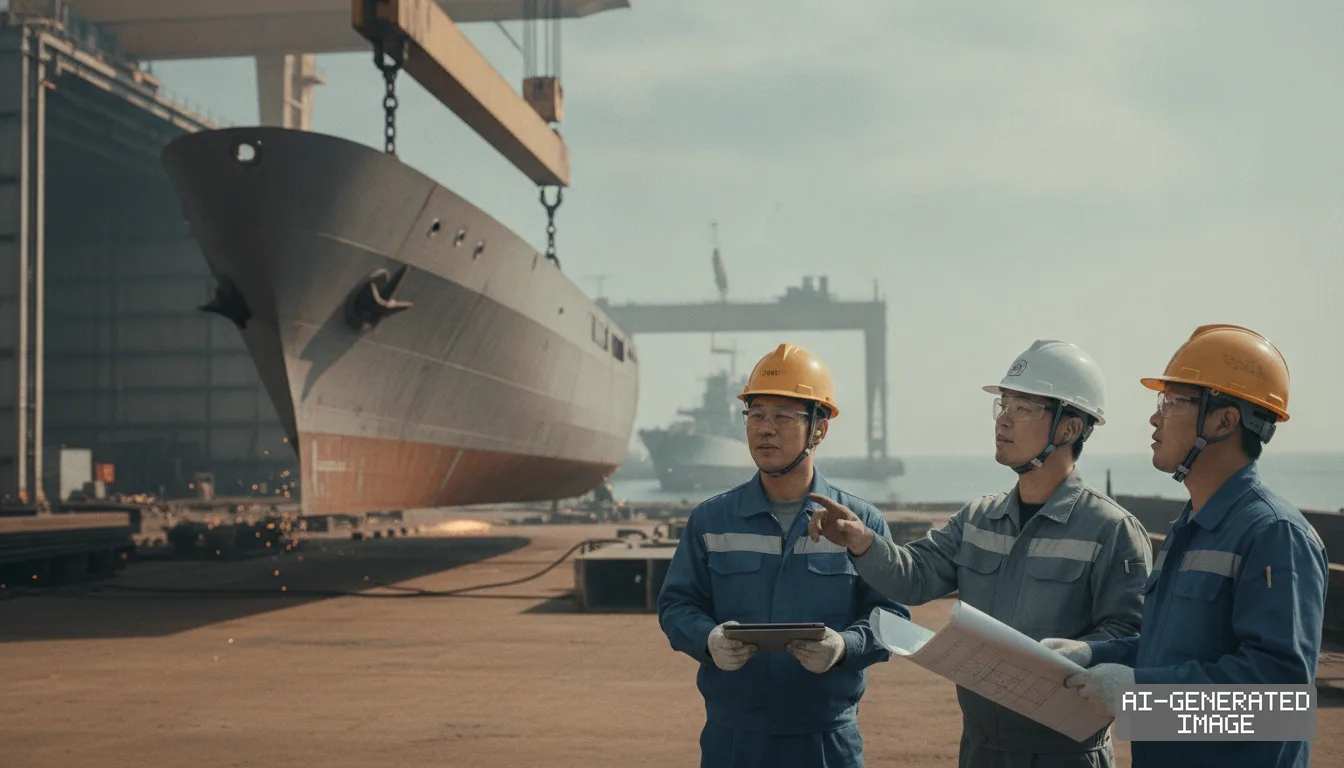
HD Hyundai Heavy Industries began construction Nov. 4, 2026, on the lead ship of two 3,200-ton guided-missile frigates ordered by the Philippine Department of National Defense.
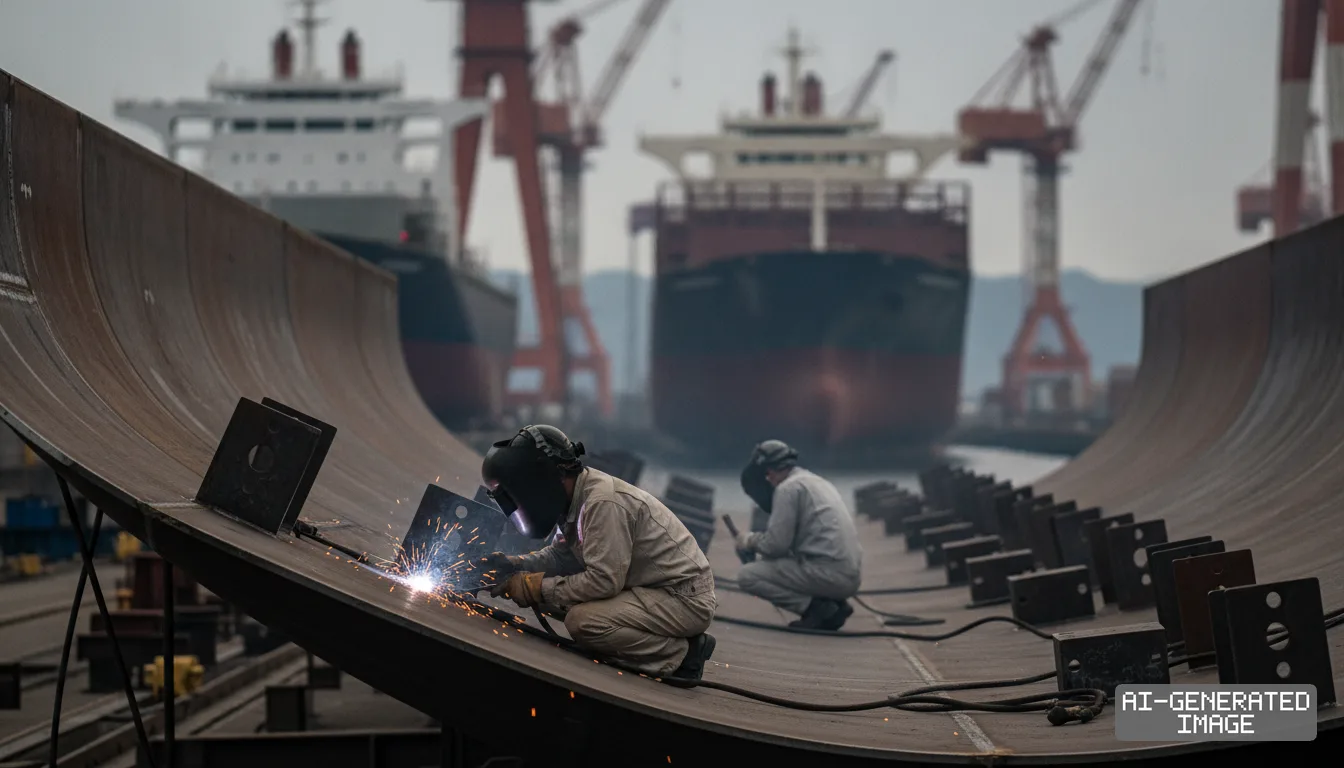
The steel-cutting ceremony took place at the company's main shipyard in Ulsan, South Korea. The event marks the start of hull fabrication for an 844.7 billion won ($585 million) contract signed on Dec. 26, 2025.
The contract represents the fourth naval vessel procurement package agreed between the Philippine military and the South Korean shipbuilder. The order brings the total number of naval surface combatants and patrol ships ordered by Manila from the shipbuilder to 12 hulls.
Executive Vice President Kim San, head of the naval ship safety and production division at HD Hyundai Heavy Industries, attended the ceremony alongside a delegation of senior Philippine Navy officers.
Under the baseline contract, the two guided-missile frigates are scheduled for sequential delivery starting in the second half of 2029. HD Hyundai Heavy Industries announced Nov. 4 that it is formally targeting an earlier handover date.
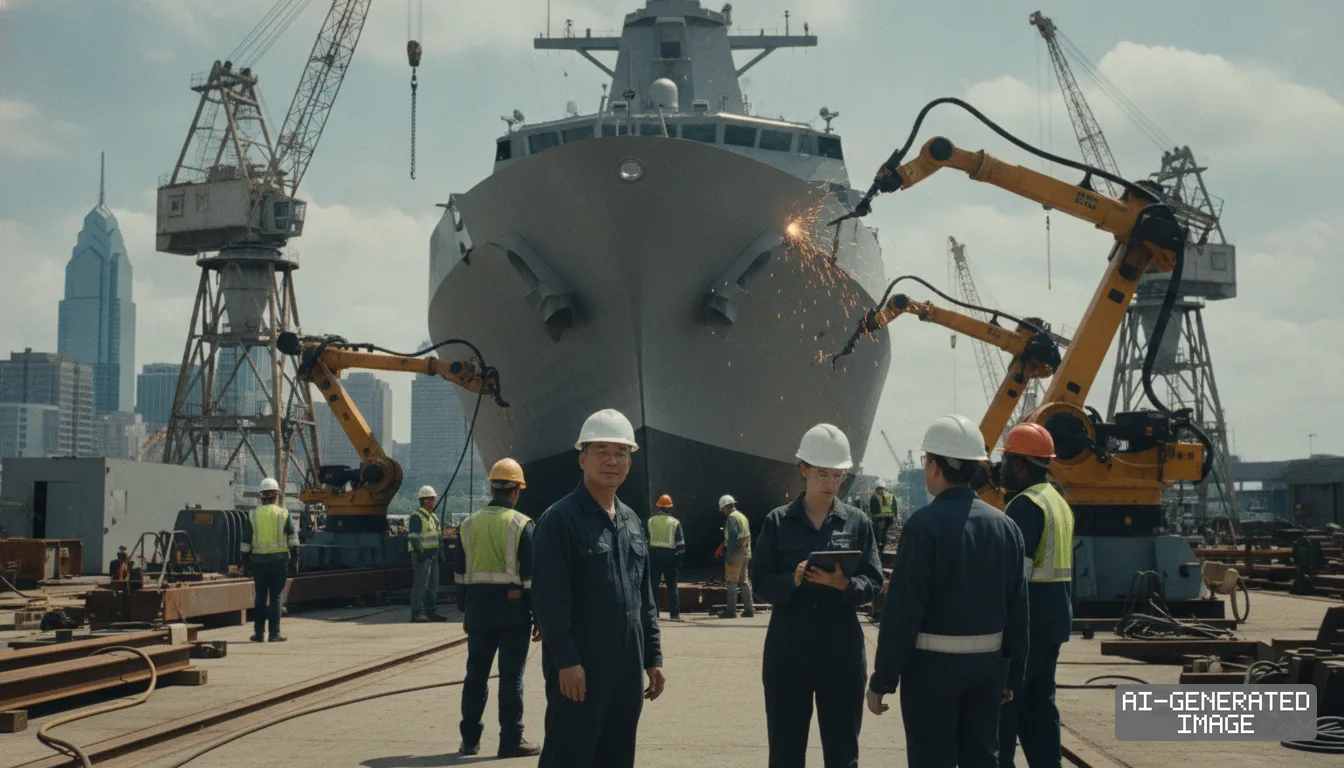
The shipbuilder said it plans to pull the completion schedule forward by utilizing yard infrastructure expanded during its recent corporate merger with HD Hyundai Mipo. The consolidation concentrated engineering personnel, dry dock availability and modular construction facilities within the primary Ulsan yard.
The new warships share their core architectural baseline with the Philippine Navy's two Miguel Malvar-class frigates. The Miguel Malvar-class hulls measure 118.4 meters in length, carry a beam of 14.9 meters and displace 3,200 tons.
Replicating an existing hull form avoids the non-recurring engineering lead times that typically lengthen naval construction cycles. The shared design also streamlines operational training, maintenance routines and component inventories for the frontline fleet.
The ships feature combined diesel and diesel propulsion arrangements capable of maximum sustained speeds of 25 knots. Their cruising range spans roughly 4,500 nautical miles, supporting long-endurance patrols across the archipelagic waters of the South China Sea.
Combat suites on the class incorporate vertical launching systems, anti-ship cruise missiles, anti-submarine torpedoes and advanced electronic warfare systems. Aviation facilities accommodate an anti-submarine warfare helicopter and rigid-hull inflatable boats for maritime interdiction.
The partnership began in 2016 when the Philippine government selected the Ulsan yard to build two 2,600-ton Jose Rizal-class frigates. Those vessels were delivered in 2020 and 2021, becoming Manila's first modern missile-capable surface combatants.
Subsequent awards followed under the Horizon modernization program initiated by the Philippine military. The shipyard secured contracts for two 3,200-ton Miguel Malvar-class frigates and six 2,400-ton offshore patrol vessels before landing the latest two-frigate tender.
The procurement program relies on a bilateral framework established through a 2009 defense procurement agreement between Seoul and Manila. The intergovernmental mechanism permits direct contract negotiations between South Korean defense contractors and the Philippine defense department.
Exporting identical surface combatants creates a standardized logistical footprint for South Korean maritime defense products throughout Southeast Asia. Naval planners in Manila have tied fleet recapitalization to integrated lifecycle maintenance contracts managed directly with the original shipbuilder.
HD Hyundai Heavy Industries maintains technical support personnel in the Philippines to service delivered hulls. That maintenance footprint supports sustained operational availability as the Philippine fleet conducts high-tempo patrols around contested offshore features.
For South Korean shipbuilding, naval export contracts provide stable, high-margin production volume that offsets cyclical demand swings in commercial merchant vessel orders. Defense vessels carry higher engineering complexity and stricter quality milestones than standard merchant hulls, generating predictable revenue streams across multi-year construction cycles.
The Philippine surface combatant program also functions as an operational testbed for South Korean naval electronics and munitions makers. Domestic weapons suites and combat management systems proven in Southeast Asian littoral conditions gain reference records needed to compete for tenders in South America, the Middle East and Oceania.
The contractual delivery window for the two new frigates opens in the second half of 2029. Production milestones will shift to keel-laying once structural block assembly advances in Ulsan.
The shipbuilder did not state the exact revised handover date or specify how many months it intends to cut from the 2029 contractual delivery schedule. The Philippine Department of National Defense has not published updated deployment timelines for the two hulls.
Impact map
How this development propagates across the region and out to global buyers.
| Event | Korea | China | Japan | Global impact |
|---|---|---|---|---|
| Philippine frigate steel cutting | HD Hyundai Heavy Industries commits expanded dock space to fast-track 844.7 billion won naval contract | PLA Navy faces growing fleet of standardized South Korean-built frigates along South China Sea patrol corridors | Japanese naval builders face entrenched South Korean platform standards across Southeast Asian procurement tenders | Allied maritime supply chains solidify maintenance and munitions interoperability across the First Island Chain |
In this story
- Companies
- HD Hyundai Heavy Industries
- Tickers
- 329180.KS
- Exposed
- HD HyundaiHD Hyundai Mipo
- Policy
- Procurement Rules
- Impact
- Order BookCapexSupply Chain
Track every Procurement Rules development →
Related briefings
- HD Hyundai Heavy union votes down wage deal, reopening talks Also on HD Hyundai Mipo, HD Hyundai, HD Hyundai Heavy Industries
- Guangzhou Shipyard lands $1 billion dual-fuel car carrier order from Ray Also on HD Hyundai Mipo, HD Hyundai Heavy Industries, Order Book
- HD Hyundai Marine Engine inks WinGD pact for dual-fuel units Also on HD Hyundai Mipo, HD Hyundai Heavy Industries, Order Book
- HD Hyundai forms US shipyard venture with Kiewit Maritime Also on Procurement Rules, HD Hyundai, Order Book
Sources
Reporting
Confidence: medium — how we grade this
The documents behind this briefing are linked above. East Asia Brief produces its English text with AI assistance under human editorial review, and does not translate or republish other outlets' articles. See our methodology and AI policy. Spotted an error? Tell us.
The Morning Brief
What changed in Korean, Chinese and Japanese industry overnight — and what it means for your supply chain. One email, weekday mornings, US time. Free.
The Morning Brief is in preparation. Leave your address and we will write to you once — when the first issue is ready. Nothing before that.