Hanwha Philly Shipyard names Kim Hyuk to lead US naval push
The 25-year shipbuilding veteran takes the helm to transfer Geoje process engineering to Philadelphia as naval orders mount.
Hanwha Philly Shipyard appointed Kim Hyuk as chief executive officer on Nov. 3, 2026, tasking the naval architecture veteran with transferring automated commercial and naval construction systems from South Korea to Philadelphia.
The appointment follows a capital restructuring announced Oct. 29, in which Hanwha Aerospace subsidiary Hanwha Defense USA acquired a 60% controlling stake in the Philadelphia facility.
The management overhaul arrives four days after the shipyard won a $269 million (357.5 billion won) contract to build one medium landing ship for the U.S. Navy. That program includes options for three additional vessels out of an anticipated 35-ship class.
Kim succeeds David Kim, who oversaw the integration process after Hanwha Group acquired the former Aker-owned yard for $100 million in December 2024.
The new chief executive graduated from Seoul National University with a degree in naval architecture and ocean engineering. He spent 25 years handling merchant hulls, naval vessels and offshore floating gas units at Daewoo Shipbuilding & Marine Engineering and its successor Hanwha Ocean.
Kim most recently headed the smart vessel business center at Hanwha Systems, directing autonomous navigation and unmanned surface craft development.
At the Philadelphia yard, Kim reports directly to Tom Anderson, president of shipbuilding at Hanwha Defense USA and a retired U.S. Navy rear admiral. Anderson previously served as the U.S. Navy program executive officer for ships and acting commander of Naval Sea Systems Command.
Kim's primary mandate is transplanting the production engineering systems of Hanwha Ocean's Geoje shipyard into the American yard.
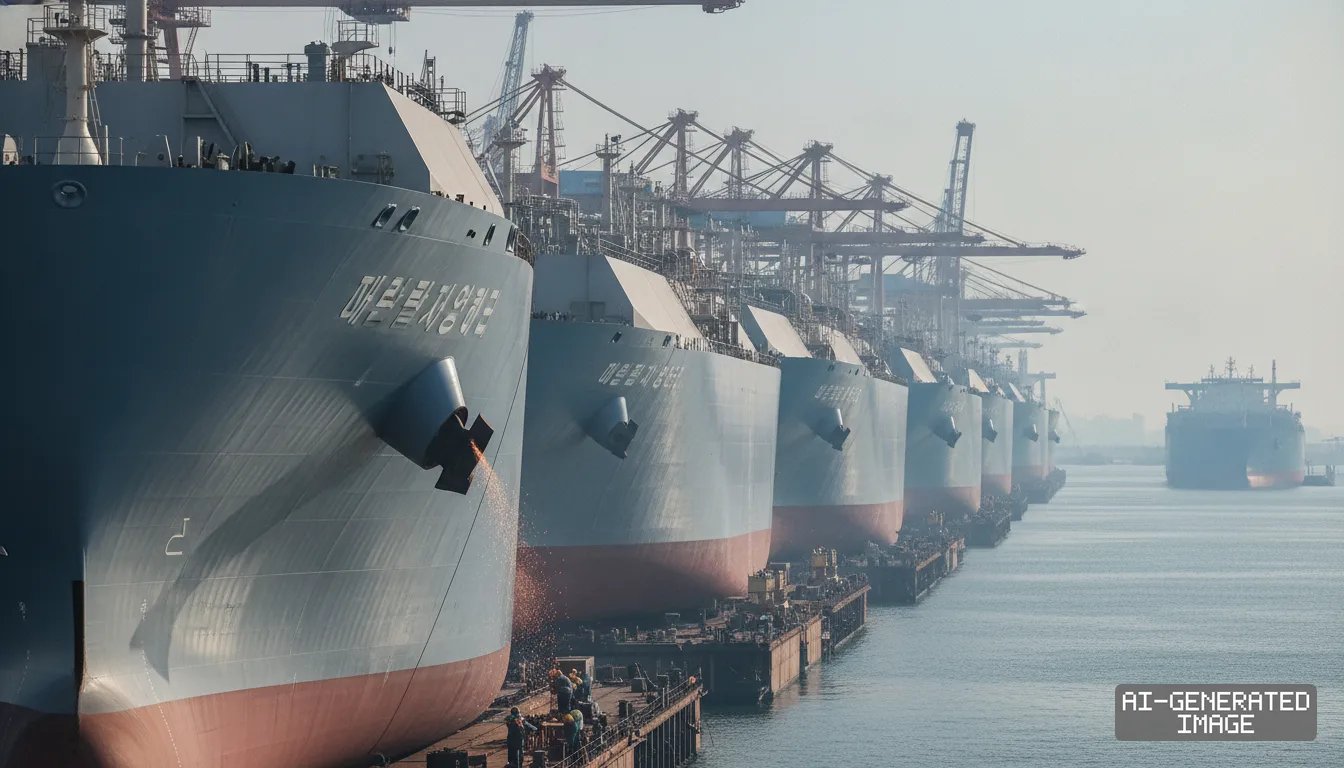
The Geoje complex in South Korea delivers 35 to 45 commercial and special-purpose vessels each year. In contrast, the Philadelphia yard has historically completed one to two commercial vessels annually.
Hanwha plans to raise Philadelphia's production volume toward 20 ships annually under a phased $5 billion capital investment program. That expansion requires reconfiguring the yard from a pure merchant builder into a hybrid facility capable of handling auxiliary naval combatants.
U.S. defense shipyards face persistent delivery backlogs, chronic skilled labor shortages and outdated assembly workflows. The Pentagon has repeatedly urged allied shipbuilders to invest domestic capital and operational know-how directly into American waterfronts.
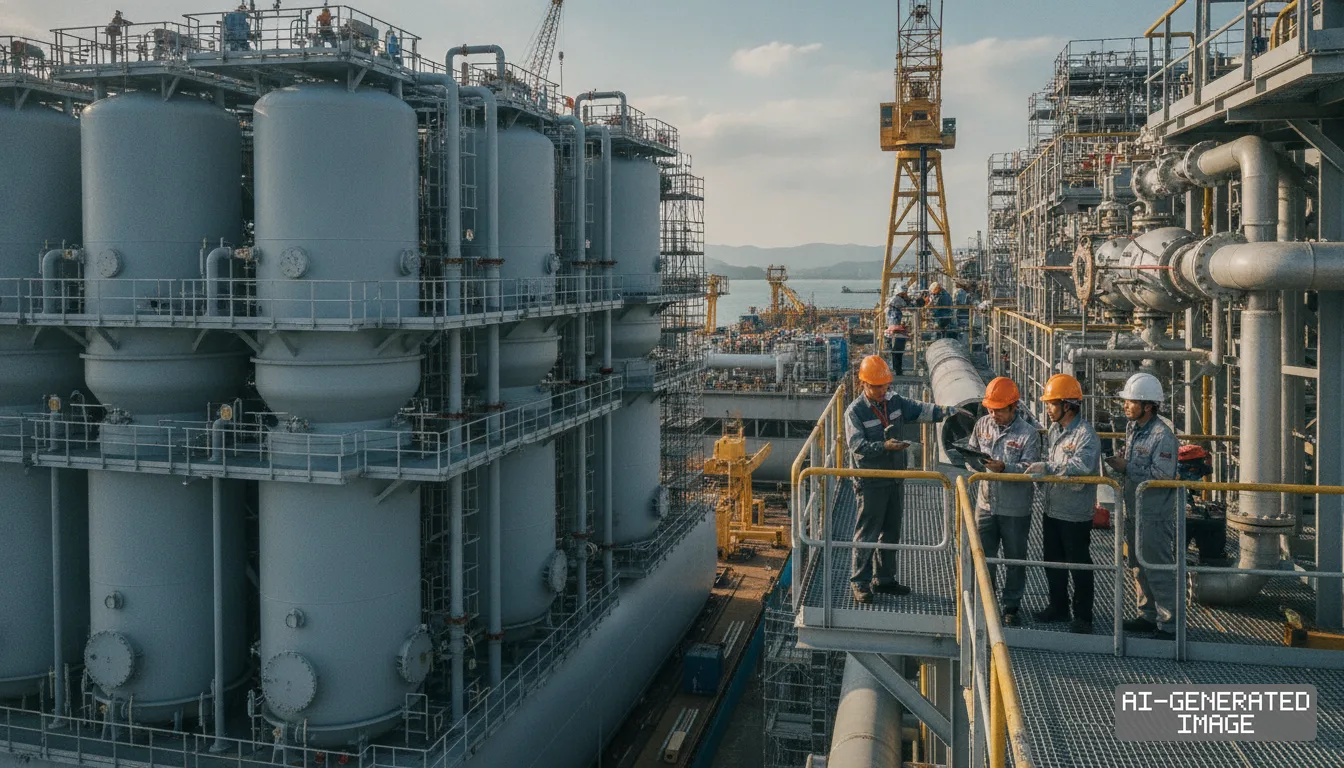
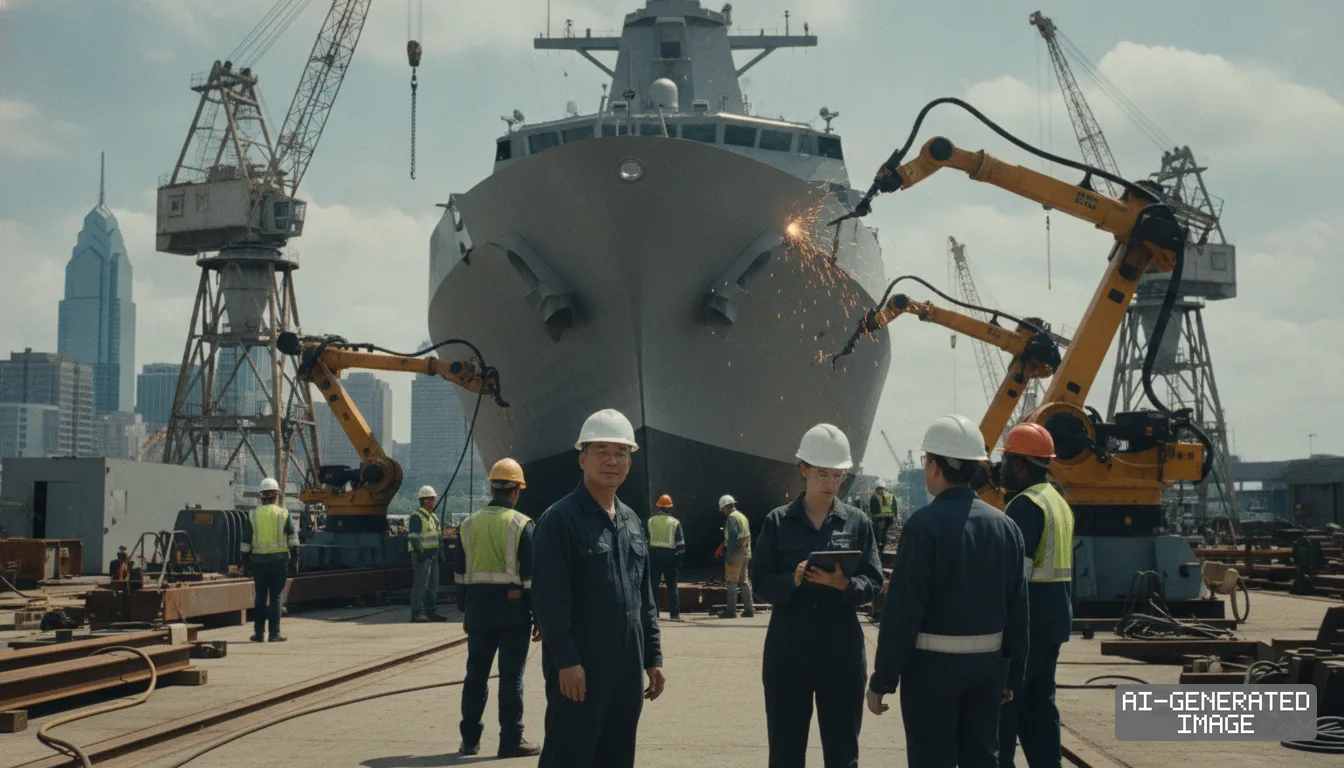
South Korean yards rely heavily on precision block construction, automated robotic welding and digital twin dry-dock management. In Geoje, massive pre-outfitted hull modules are assembled in covered workshops before heavy-lift goliath cranes position them into dry docks within millimeter tolerances.
Applying those production methods in Pennsylvania will test whether East Asian yard discipline can function under U.S. labor rules and domestic maritime supply chains. The Philadelphia facility operates under collective bargaining agreements with the Philadelphia Metal Trades Council, requiring careful coordination on shop-floor jurisdictional work rules.
The yard must also comply with strict Buy American provisions and Jones Act statutory constraints governing domestic steel, propulsion machinery and electrical components.
Kim will focus on improving operational throughput, expanding dry-dock capacity and training local trade personnel to build dual-use hulls. Modernized panel lines, computerized pipe spool fabrication and digital scheduling tools will be phased across the 82-acre facility.
The leadership pivot comes amid rising Pentagon order commitments. In July 2026, the yard won a design and construction award from the U.S. Missile Defense Agency for a maritime missile test instrumentation vessel.
The medium landing ship contract confirmed Oct. 29 represents the yard's first direct combat-support program. The 100-meter vessel is designed to transport small Marine Corps units across littoral archipelagos. Project manager TOTE Services oversees procurement and construction administration under the initial $269 million delivery order.
Regulatory filings by Hanwha subsidiaries in Seoul do not state whether the transfer of Geoje engineering software, fabrication patents or robotic welding tooling involves a separate commercial intellectual property licensing contract. The group has treated the deployment as an internal operating upgrade executed through executive management.
Contract options for the remaining three landing ships under the current award structure will come up for formal execution between fiscal years 2027 and 2028, establishing the initial production milestones for Kim's manufacturing reforms.
Impact map
How this development propagates across the region and out to global buyers.
| Event | Korea | China | Japan | Global impact |
|---|---|---|---|---|
| Geoje process transfer to Philadelphia | Hanwha Ocean exports naval engineering expertise while Geoje yard maintains 35-45 annual deliveries | Chinese naval yards maintain high-volume modular build lead without US market access | Mitsubishi Heavy Industries and JMU observe US defense licensing frameworks for future yard tie-ups | US Navy procurement tests commercial yard turnaround with $269 million initial landing ship |
In this story
- Companies
- Hanwha Philly ShipyardHanwha OceanHanwha SystemsHanwha Aerospace
- Tickers
- 042660.KS272210.KS012450.KS
- Exposed
- TOTE Services
- Policy
- Procurement Rules
- Impact
- CapexSupply ChainOrder Book
Track every Procurement Rules development →
Related briefings
- US Navy inspects Hanwha Philly Shipyard, workforce now 2,500 Also on Hanwha Philly Shipyard, Hanwha Ocean, Order Book
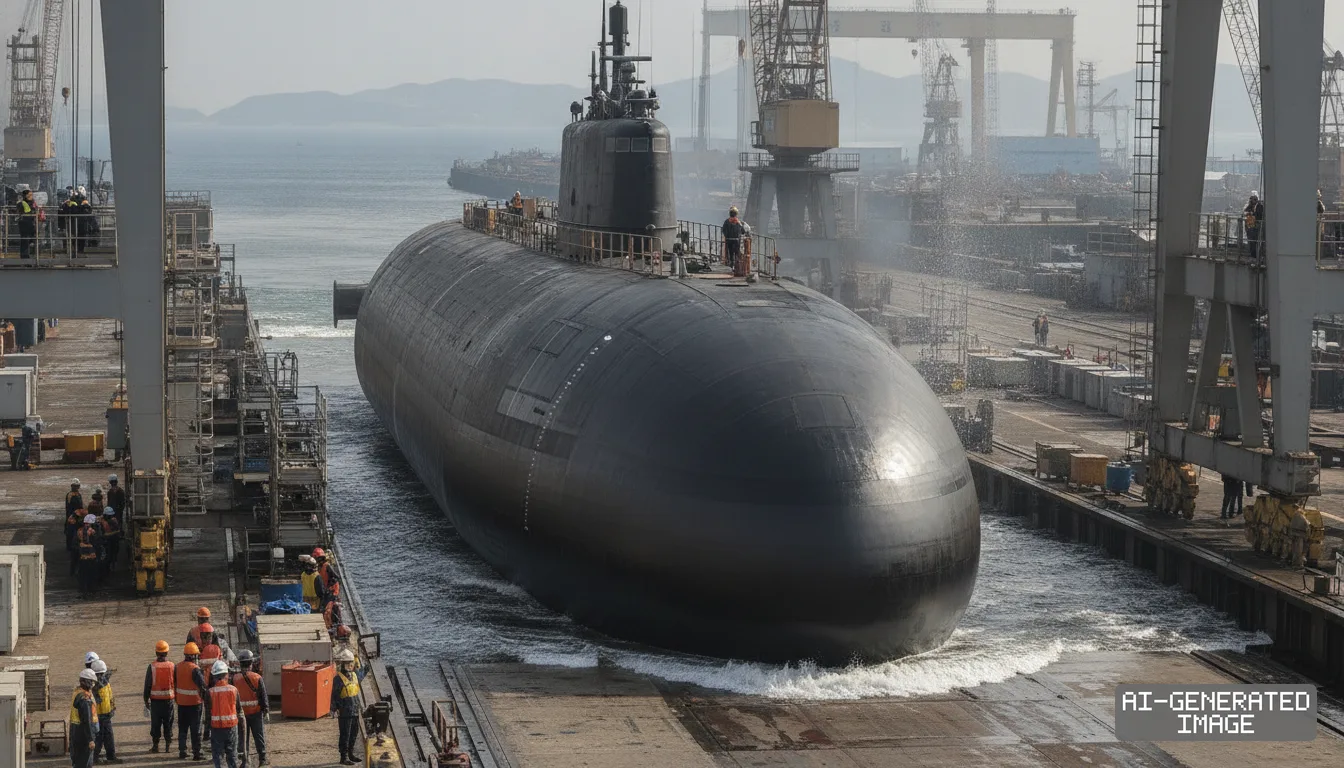
- Hanwha Ocean Launches 3,600-Ton Submarine Seo Hui in Geoje Also on Hanwha Aerospace, Procurement Rules, Hanwha Ocean
- Samsung and SK hynix see KOSPI weighting fall to 50 percent Also on Hanwha Aerospace, Order Book
- US Army Names Hanwha Artillery as XM1776 in $263M Deal Also on Hanwha Aerospace, Order Book
Sources
Reporting
Confidence: medium — how we grade this
The documents behind this briefing are linked above. East Asia Brief produces its English text with AI assistance under human editorial review, and does not translate or republish other outlets' articles. See our methodology and AI policy. Spotted an error? Tell us.
The Morning Brief
What changed in Korean, Chinese and Japanese industry overnight — and what it means for your supply chain. One email, weekday mornings, US time. Free.
The Morning Brief is in preparation. Leave your address and we will write to you once — when the first issue is ready. Nothing before that.