HD Hyundai books $243 million order for two Ro-Ro vessels
The contract with Luxembourg-based CLdN secures shipyard berths through late 2029 while accelerating dual-fuel fleet renewal under tightening European maritime carbon rules.
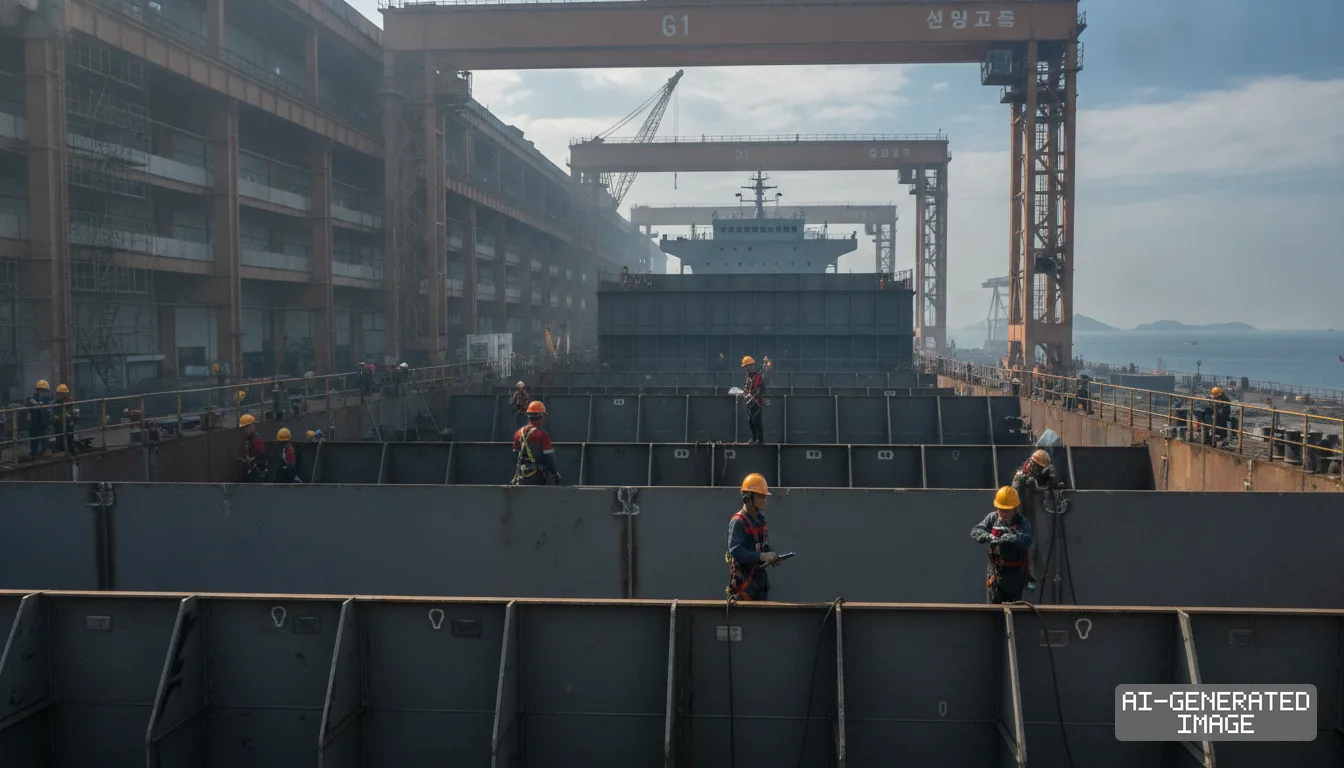
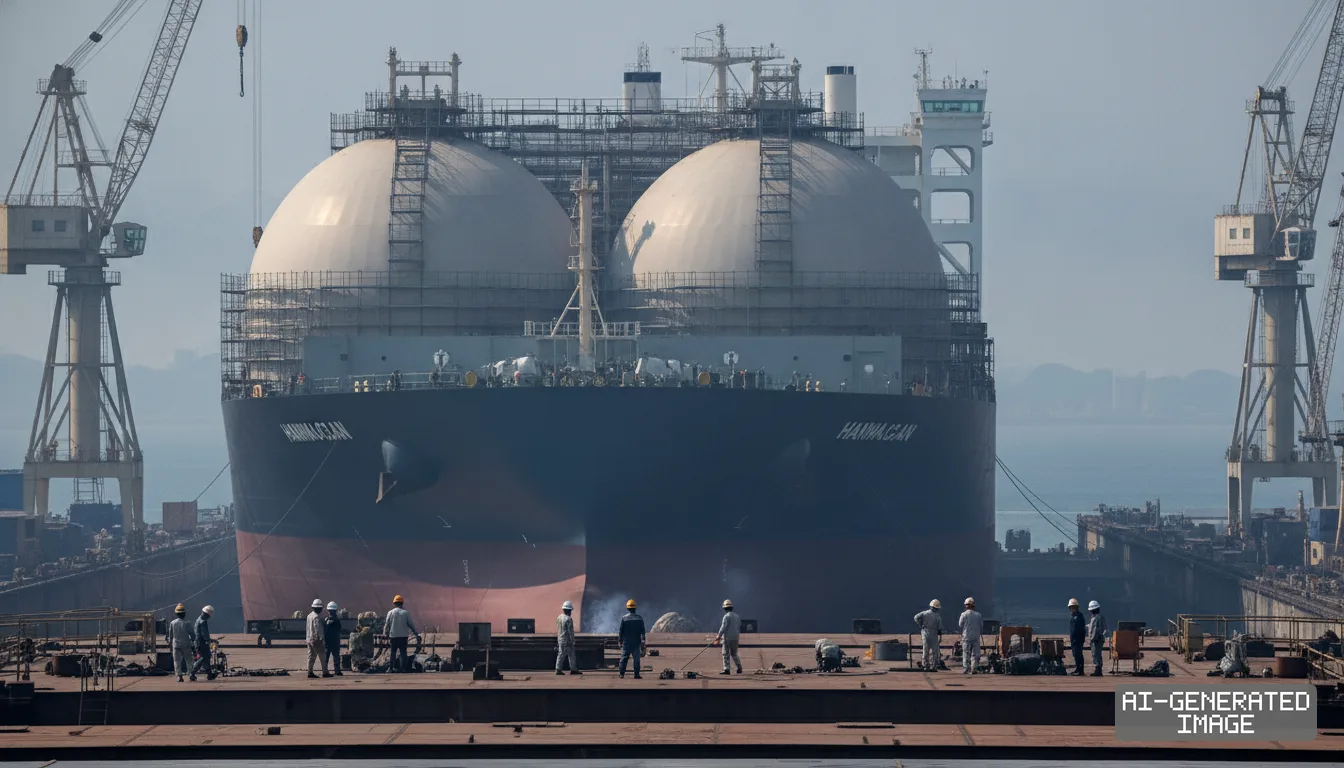
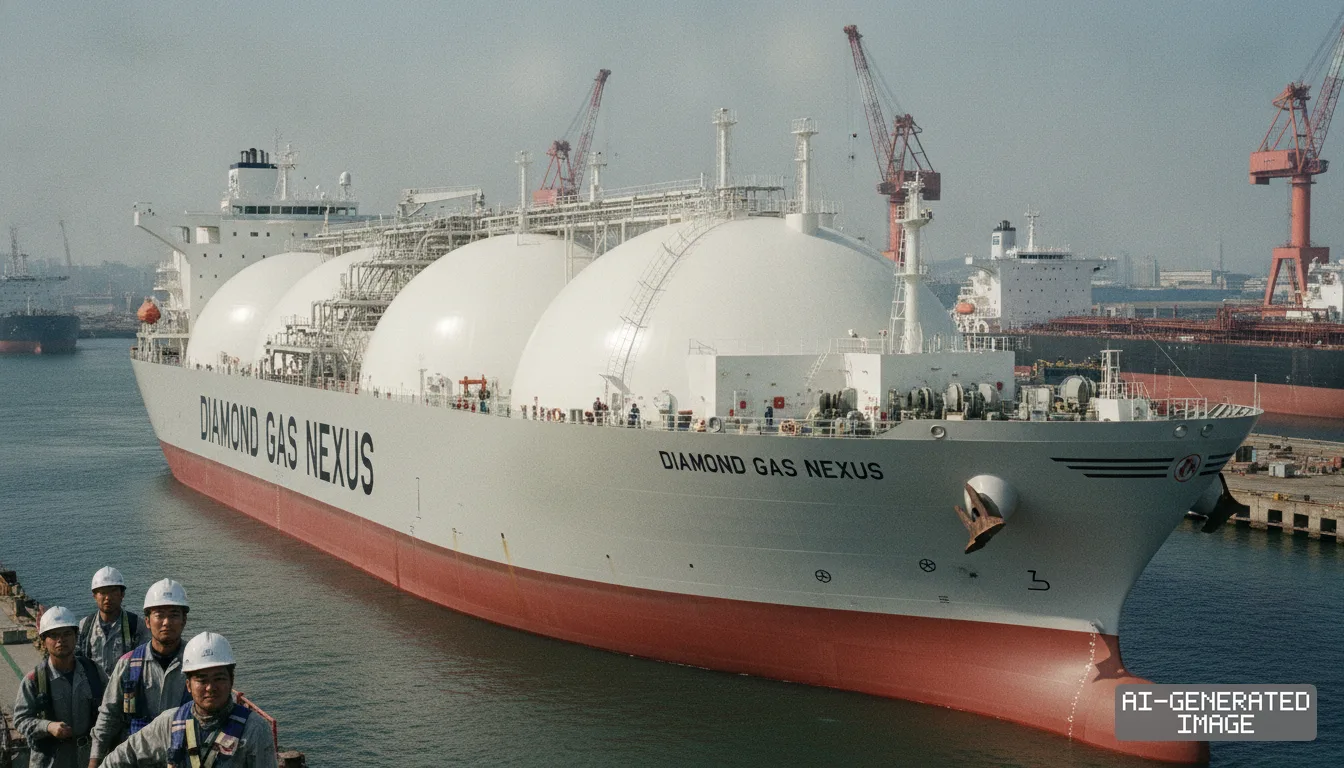
CLdN finalized an order with HD Hyundai Heavy Industries on Sept. 28, 2026, to construct two 6,700-lane-metre roll-on/roll-off vessels valued at 336.2 billion won ($243 million).
The contract price represents 1.91% of HD Hyundai Heavy Industries' 2025 revenue of 17.58 trillion won. Each vessel costs about 168.1 billion won ($121.5 million).
The order lifts cumulative 2026 bookings at parent holding group HD Korea Shipbuilding & Offshore Engineering to 169 vessels worth $18.71 billion. That total covers 80.3% of its $23.31 billion annual target.
Roll-on/roll-off vessels — cargo ships configured so wheeled trucks and trailers drive directly on and off through ramps — carry freight across shortsea corridors. The new units will serve European freight networks.
Luxembourg-based CLdN operates a fleet of 28 freight ships across Britain, Ireland and continental Europe. The two vessels mark the 15th and 16th ships ordered by CLdN from HD Hyundai shipyards over the past decade.
The agreement diversifies the South Korean shipbuilder's commercial backlog beyond standard liquefied natural gas (LNG) tankers and containerships. High-specification cargo vessels now absorb available slipway space through the end of the decade.
Each vessel provides 6,700 lane metres of trailer capacity, adding an upper deck compared with CLdN's older 5,000-lane-metre class. The configuration expands usable floor area for unescorted freight trailers.
Direct wide ramps connect the quay to the upper decks. The design speeds vehicle movement during port calls and shortens turnaround schedules in high-frequency freight rotations, CLdN said.
The vessels will feature dual-fuel propulsion engines operating on conventional marine diesel or LNG. The configuration reduces sulphur oxides, nitrogen oxides and particulate matter relative to standard heavy fuel oils.
Engine rooms will reserve structural space for larger electric shaft generators and battery systems. Engineers can retrofit energy storage once modular marine battery packs reach higher commercial energy densities.
Fuel consumption per ship will match CLdN's 5,000-lane-metre vessels despite the higher cargo payload. That cargo density improves fuel efficiency by 30% to 40% per tonne-kilometre of freight moved, CLdN said.
The efficiency gains target European decarbonization targets. The European Union Emissions Trading System now penalizes carbon-intensive commercial vessels calling at continental ports, while FuelEU Maritime mandates lower greenhouse gas intensity.
Shortsea shipping routes face immediate compliance costs under the European regulations. High-capacity hulls running on LNG avoid surcharges levied on older diesel tonnage operating across the North Sea and English Channel.
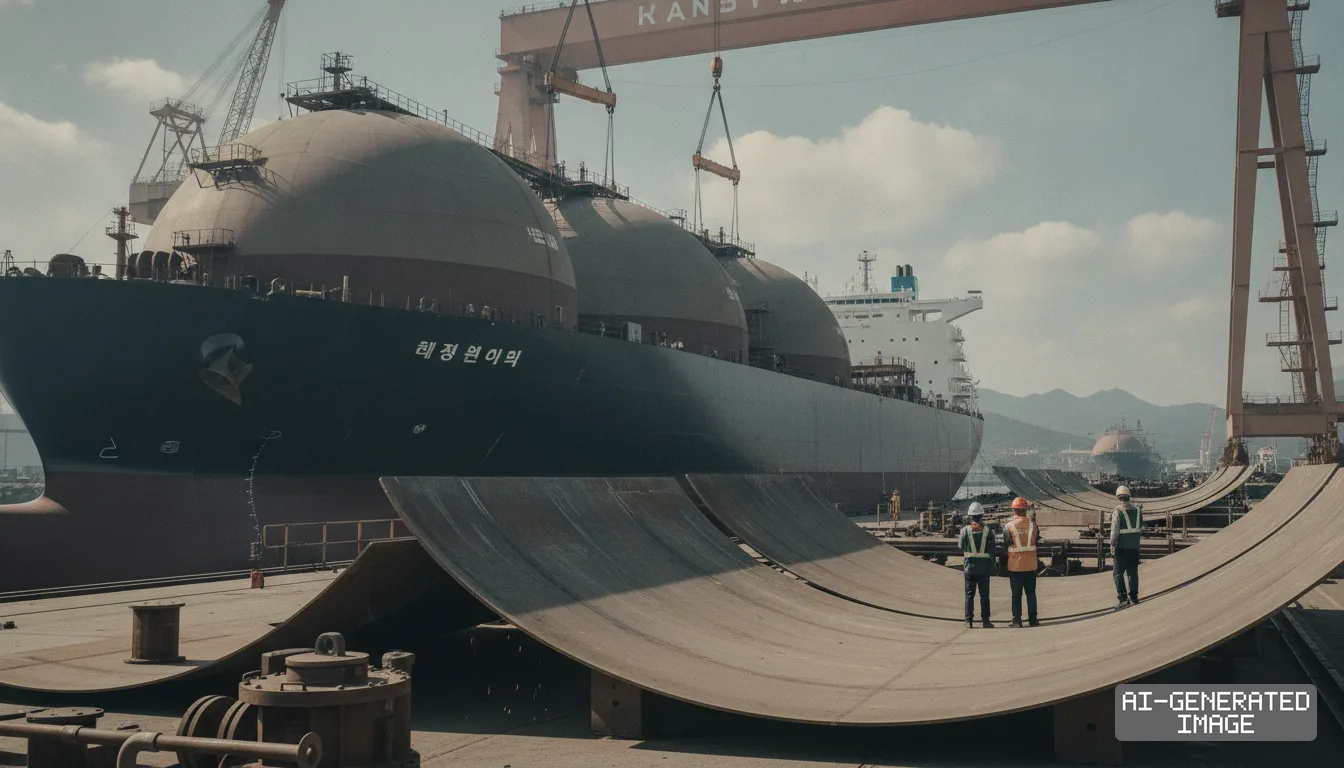
HD Hyundai Heavy Industries builds the two vessels at its main yard in Ulsan. The contract allows the shipbuilder to preserve high dock utilization while charging premium prices for non-standard naval architecture.
Specialized freight vessels demand complex cargo deck ventilation, fire-suppression systems and heavy-load ramps. These structural requirements deliver higher margins per compensated gross ton than basic bulk carriers or standard oil tankers.
South Korean yards have prioritized high-value orders as Chinese shipbuilders take larger volume shares in commodity vessel segments. Tailored ro-ro contracts protect revenue margins against price pressure from overseas yards.
The transaction highlights steady capital expenditure by CLdN. The operator directed about 750 million euros ($830 million) into fleet renewal over the previous decade, progressively upsizing vessel dimensions to lower unit shipping expenses.
The newbuildings slot between CLdN's six 5,000-lane-metre H5-class freighters and its two 8,000-lane-metre G9-class vessels. The company also introduced two 8,400-lane-metre hybrid vessels into commercial operations in 2025.
The regulatory filing does not name CLdN directly, identifying the client only as a European shipping company due to commercial confidentiality clauses. Cross-checks against shipowner announcements confirm the counterparty.
Construction begins in early 2028. The formal contract runs through Nov. 30, 2029, when HD Hyundai Heavy Industries must deliver the second vessel.
Impact map
How this development propagates across the region and out to global buyers.
| Event | Korea | China | Japan | Global impact |
|---|---|---|---|---|
| HD Hyundai Ro-Ro contract | HD Hyundai books $243 million, securing dock slots through late 2029 | Competing yards miss European dual-fuel ro-ro slot allocation | Specialized ro-ro equipment makers face tighter supply competition | European shortsea cargo gains 30-40% fuel efficiency per tonne-km |
In this story
- Companies
- HD Hyundai Heavy IndustriesCLdN
- Tickers
- 329180.KS009540.KS
- Exposed
- HD Korea Shipbuilding & Offshore Engineering
- Policy
- Economic Security
- Impact
- Order BookCapexCost Structure
Track every Economic Security development →
Related briefings
- HD Hyundai wins ABS approval for 100MW floating power barge Also on HD Korea Shipbuilding & Offshore Engineering, HD Hyundai Heavy Industries, Order Book
- Asyad Shipping orders two MR product tankers at HD Hyundai Also on HD Korea Shipbuilding & Offshore Engineering, HD Hyundai Heavy Industries, Order Book
- HD Hyundai and Hanwha Ocean Lock In LNG Carrier Berth Slots Through 2029 Also on HD Korea Shipbuilding & Offshore Engineering, HD Hyundai Heavy Industries, Order Book
- HD Hyundai Heavy union launches partial strike as shipyard wage talks break down Also on HD Korea Shipbuilding & Offshore Engineering, HD Hyundai Heavy Industries, Order Book
Sources
Reporting
Confidence: medium — how we grade this
The documents behind this briefing are linked above. East Asia Brief produces its English text with AI assistance under human editorial review, and does not translate or republish other outlets' articles. See our methodology and AI policy. Spotted an error? Tell us.
The Morning Brief
What changed in Korean, Chinese and Japanese industry overnight — and what it means for your supply chain. One email, weekday mornings, US time. Free.
The Morning Brief is in preparation. Leave your address and we will write to you once — when the first issue is ready. Nothing before that.