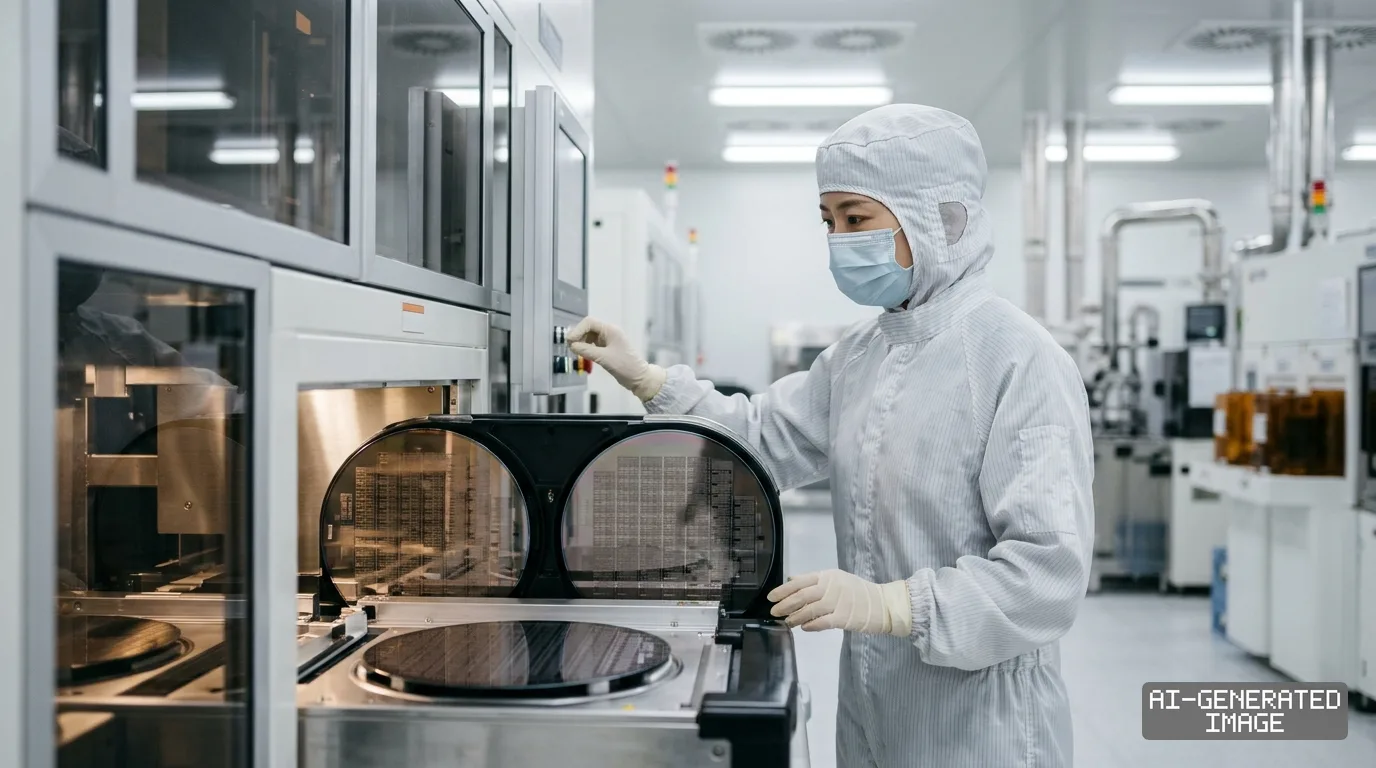
SK hynix logs record profit on AI memory, plans 100T won payout
Operating margin hit 79.7% as HBM4 shipments began, prompting South Korea's second-largest chipmaker to allocate half of 2026 cash flow to dividends and share cancellations.
SK hynix posted record third-quarter operating profit of 83.33 trillion won ($61.8 billion) on Oct. 28, 2026, driven by accelerating shipments of high-bandwidth memory for artificial intelligence accelerators.
The operating margin reached 79.7% during the quarter, setting a company record for the sixth consecutive reporting period. Revenue rose 327.9% from a year earlier to 104.62 trillion won ($77.6 billion).
The quarterly revenue marked the first time the company exceeded 100 trillion won in a single three-month period. Net profit for the quarter rose to 39.78 trillion won ($29.5 billion).
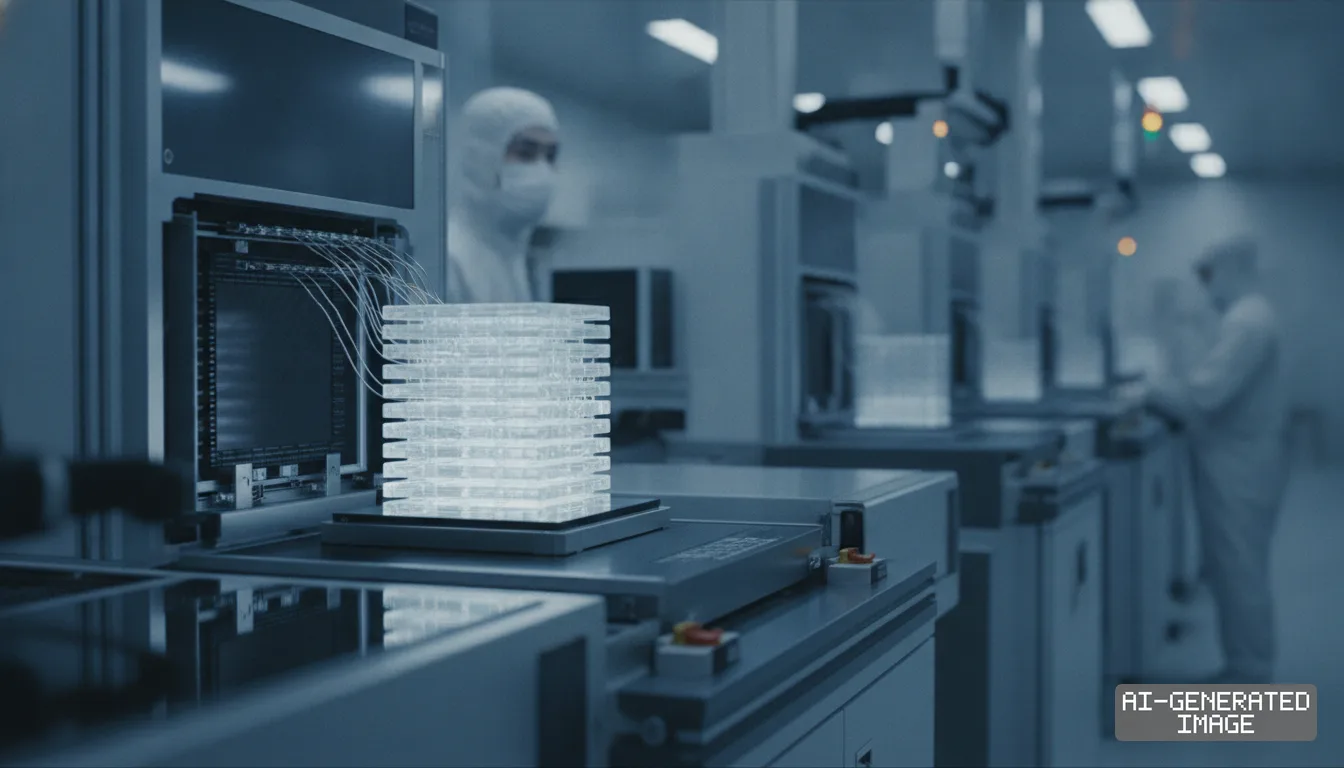
SK hynix makes dynamic random-access memory and flash storage. The company supplies high-bandwidth memory — stacks of dynamic random-access memory dies linked by vertical electrical channels called through-silicon vias — to developers of artificial intelligence processors.
The third-quarter results reflected the initial commercial deliveries of sixth-generation HBM4 chips. SK hynix said HBM4 shipments will overtake fifth-generation HBM3E volumes and revenue in the fourth quarter of 2026.
The shift establishes HBM4 as the primary product line for advanced computing clusters entering operation in 2027. Demand for stacked memory modules continues to outstrip wafer fabrication capacity across the semiconductor sector.
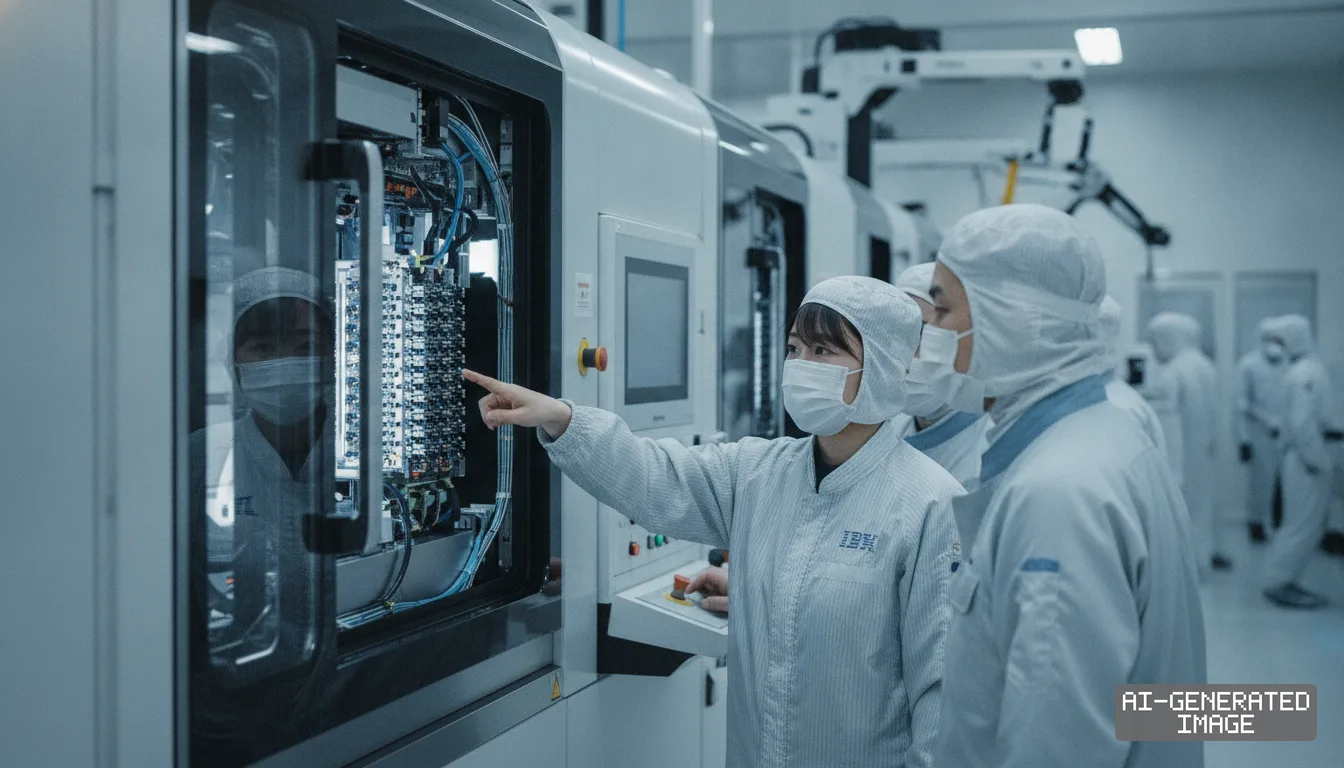
SK hynix said it will ramp cleanroom operations at its M15X fabrication plant in Cheongju, South Korea, to maximum capacity by December. The plant expansion is dedicated to expanding HBM4 packaging lines.
The company entered long-term supply agreements with 14 global technology customers. Those multi-year contracts reserve more than 50% of the company's planned high-bandwidth memory capacity for 2027 and 2028.
Memory chip shortages across global artificial intelligence hardware supply chains will persist through 2030, SK hynix said in its financial disclosure. The company noted that enterprise server operators are booking capacity years in advance to avoid cluster buildout delays.
SK hynix also halted the initial public offering process for its United States storage subsidiary Solidigm. The company decided to discontinue the listing review due to prevailing conditions in international financial markets.
Alongside the earnings release, the board of directors approved an expanded shareholder distribution policy on Oct. 28, 2026. The company plans to return roughly 100 trillion won ($74.2 billion) to equity holders for the 2026 fiscal year.
The payout represents more than 50% of projected annual free cash flow. The annual allocation includes more than 30 trillion won in cash dividends and more than 60 trillion won in share repurchases and cancellations.
As part of the package, the board approved a third-quarter shareholder return worth roughly 60 trillion won on Oct. 28. The immediate package combines 14 trillion won in cash dividends with a 20 trillion won share buyback program.
The third-quarter cash dividend stands at 20,000 won per share. That figure includes an operational dividend of 10,000 won per share tied to quarterly earnings growth.
The payout also adds an extraordinary dividend of 10,000 won per share. SK hynix funded the extraordinary distribution from realized investment gains on its equity holding in Japanese memory producer Kioxia.
The board directed 10 trillion won of the newly approved 20 trillion won share buyback toward cancellation. The remaining 10 trillion won in repurchased equity is designated for employee compensation programs.
The new buyback follows an earlier 40 trillion won share repurchase program authorized by the board on Aug. 19. The company completed market purchases for that 40 trillion won tranche on Oct. 21 and is executing the formal share cancellation.
Global cloud infrastructure operators continue to increase capital expenditure on generative model training systems. That hardware spending directs high margins toward high-bandwidth memory manufacturers capable of meeting density and thermal standards.
Production yields on stacked memory dies remain tight across the sector. High manufacturing complexity widens the profitability spread between suppliers with mature yield rates and those managing node conversions.
SK hynix indicated that capital expenditures in 2027 will concentrate on cleanroom conversions and advanced packaging infrastructure rather than conventional memory wafer additions. The strategy prioritizes margin preservation over gross volume output.
The regulatory filings on Oct. 28 do not state the record date or payment date for the third-quarter dividend of 20,000 won per share. SK hynix has not published the completion schedule or cancellation dates for the newly authorized 20 trillion won buyback.
In the fourth quarter of 2026, the company expects HBM4 to surpass HBM3E in shipments, while long-term contracts take effect across its 14 global customer accounts.
Impact map
How this development propagates across the region and out to global buyers.
| Event | Korea | China | Japan | Global impact |
|---|---|---|---|---|
| SK hynix Q3 2026 results and 100T won payout | SK hynix allocates 100T won to FY2026 dividends and buybacks as M15X ramps | Domestic memory fabs face widening multi-generation packaging gap in HBM4 | Kioxia equity holding generates 10,000 won per share special dividend distribution | 14 AI server customers face memory supply tightness locked into LTAs through 2030 |
In this story
Related briefings
- High-purity hydrogen peroxide supply chains face regional bottlenecks across East Asian fabs [90 characters] Also on Kioxia, SK hynix
- Solidigm $45 Billion Fab Speculation Collides With SK hynix Financing Limits Also on Solidigm, SK hynix
- SK hynix subsidiary Solidigm weighs NAND fab in New York Also on Solidigm, SK hynix
- SK hynix halts Solidigm US IPO as dual-listing rules tighten Also on Solidigm, SK hynix
Sources
Primary documents
Reporting
Confidence: high — how we grade this
The documents behind this briefing are linked above. East Asia Brief produces its English text with AI assistance under human editorial review, and does not translate or republish other outlets' articles. See our methodology and AI policy. Spotted an error? Tell us.
The Morning Brief
What changed in Korean, Chinese and Japanese industry overnight — and what it means for your supply chain. One email, weekday mornings, US time. Free.
The Morning Brief is in preparation. Leave your address and we will write to you once — when the first issue is ready. Nothing before that.