Kioxia merges Iwate fab subsidiary after ¥4.25 trillion half-year sales
A statutory filing outlines the internal integration and a ¥47.9 billion interim cash dividend supported by surging artificial intelligence server memory demand.
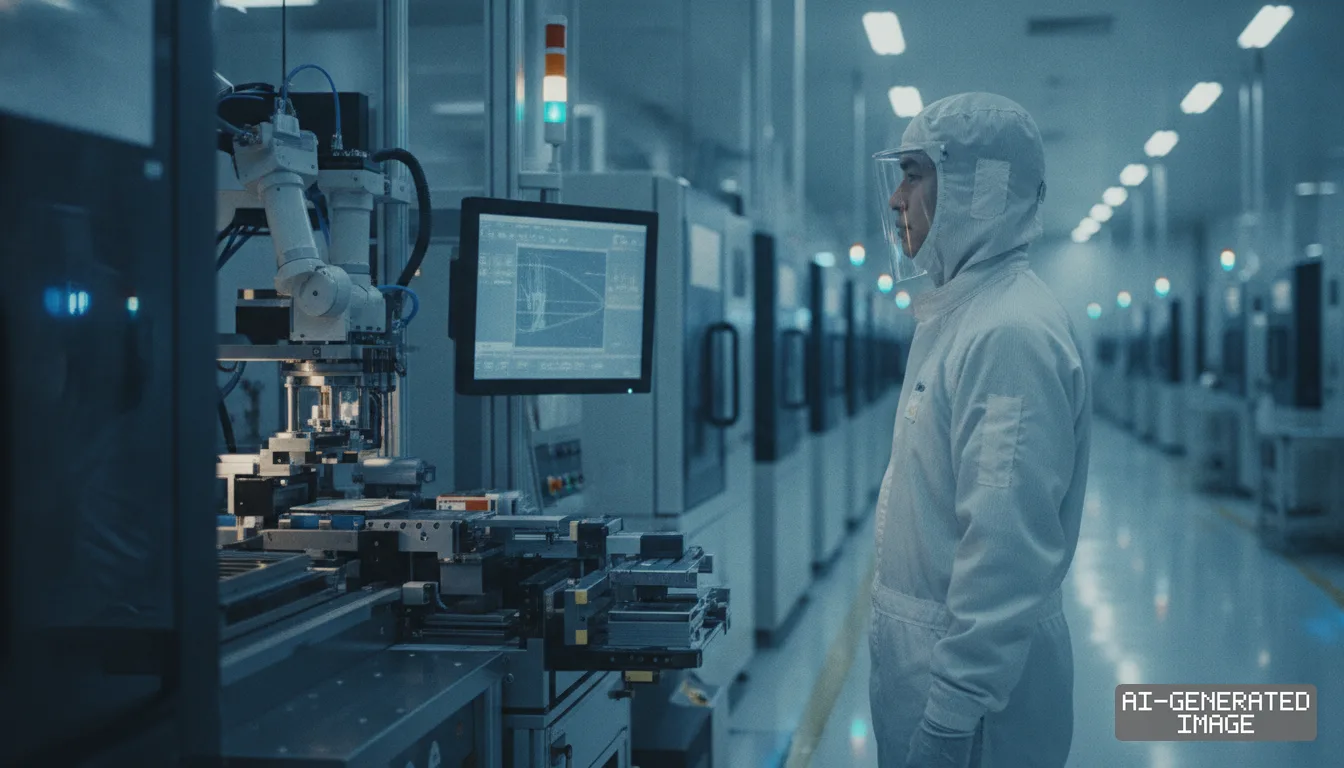
Kioxia Holdings filed its statutory securities report on Nov. 6, 2026, detailing the complete absorption of its Iwate manufacturing unit to consolidate enterprise flash operations ahead of expanding artificial intelligence server demand.
The internal transaction folds Kioxia Iwate Corporation, which accounted for ¥191.2 billion ($1.22 billion) or 8.5% of total group fabrication revenue last fiscal year, directly into the primary operating company.
The corporate restructuring follows an operating turnaround that generated ¥4.25 trillion ($27.0 billion) in six-month revenue, prompting the memory maker to approve its first interim cash dividend totaling ¥47.9 billion ($305 million).
Kioxia Corporation will assume all assets, cleanroom operations and workforce of the dissolving Iwate entity without issuing new shares or cash considerations, the company said in regulatory disclosures.
The board of directors approved the merger on Oct. 30, formalizing plans to eliminate operational layers between central product planning teams in Tokyo and regional fabrication lines in northern Japan.
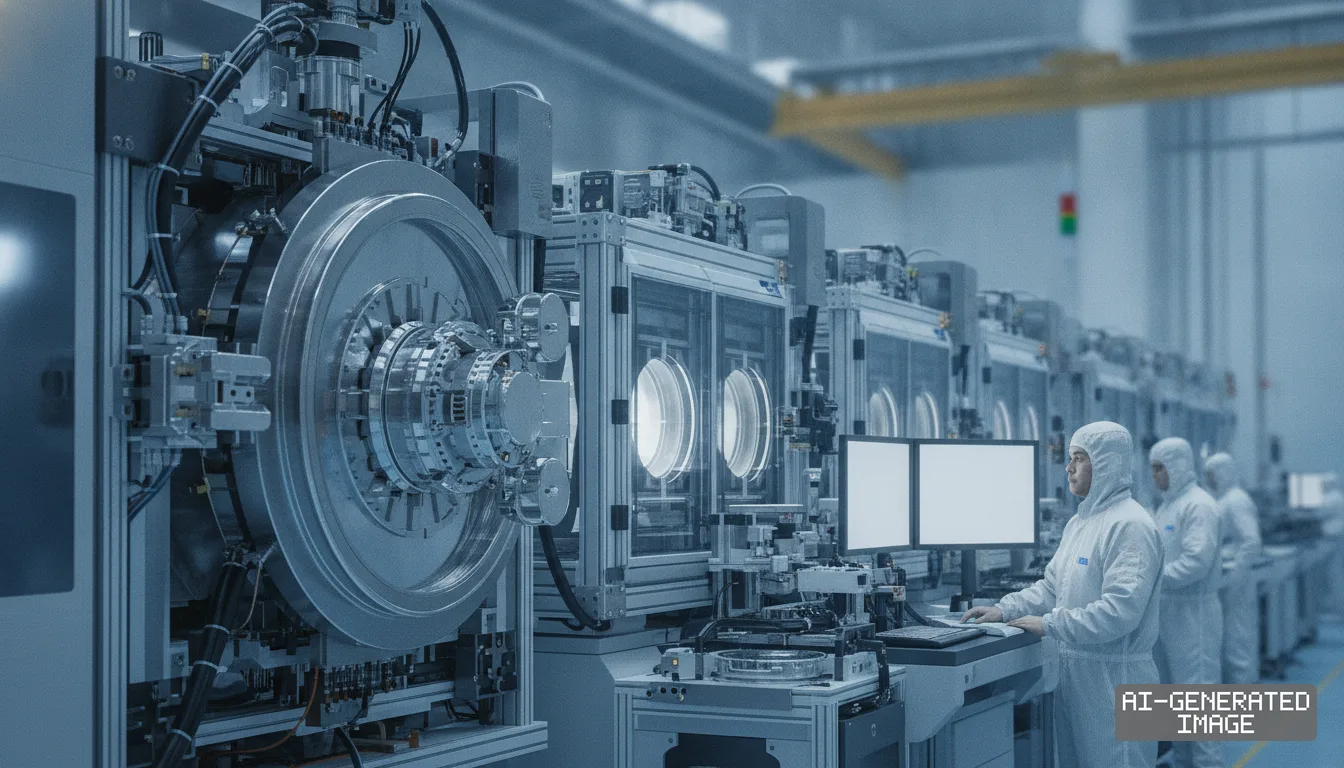
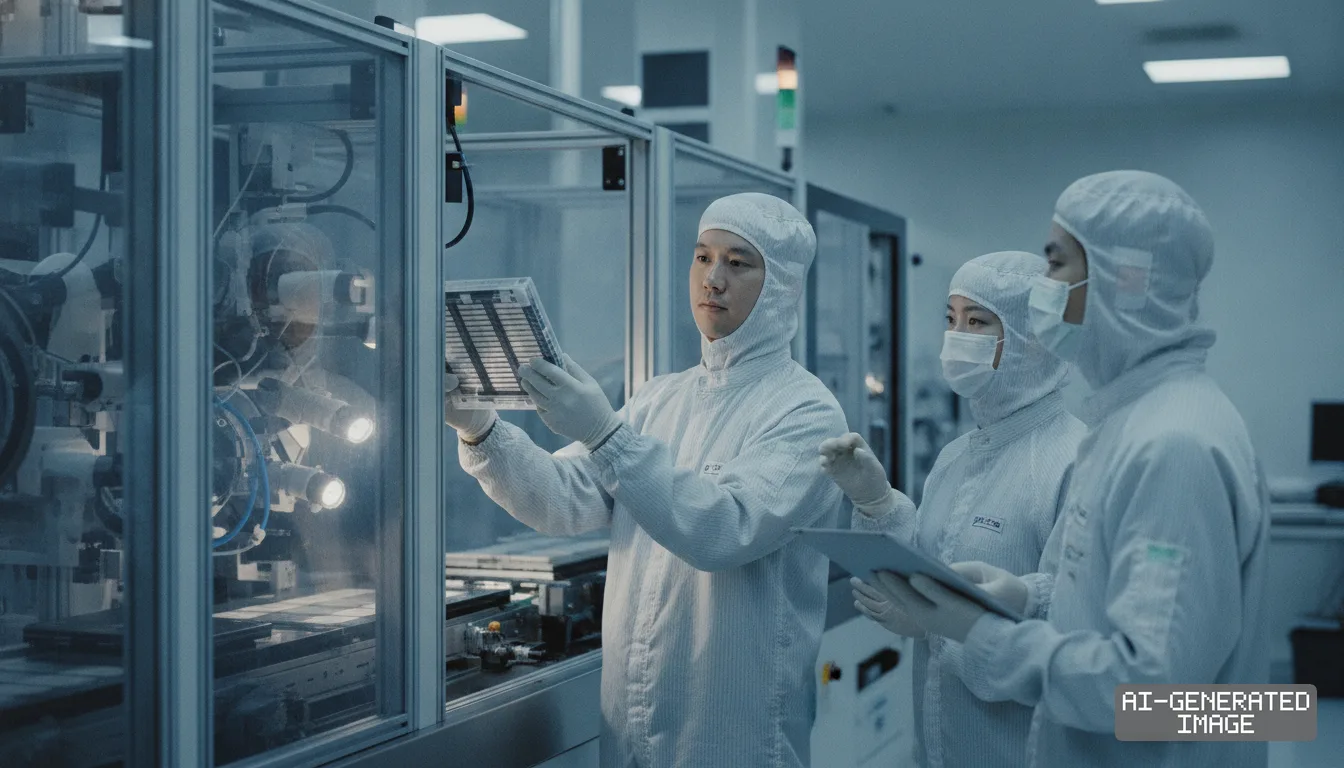
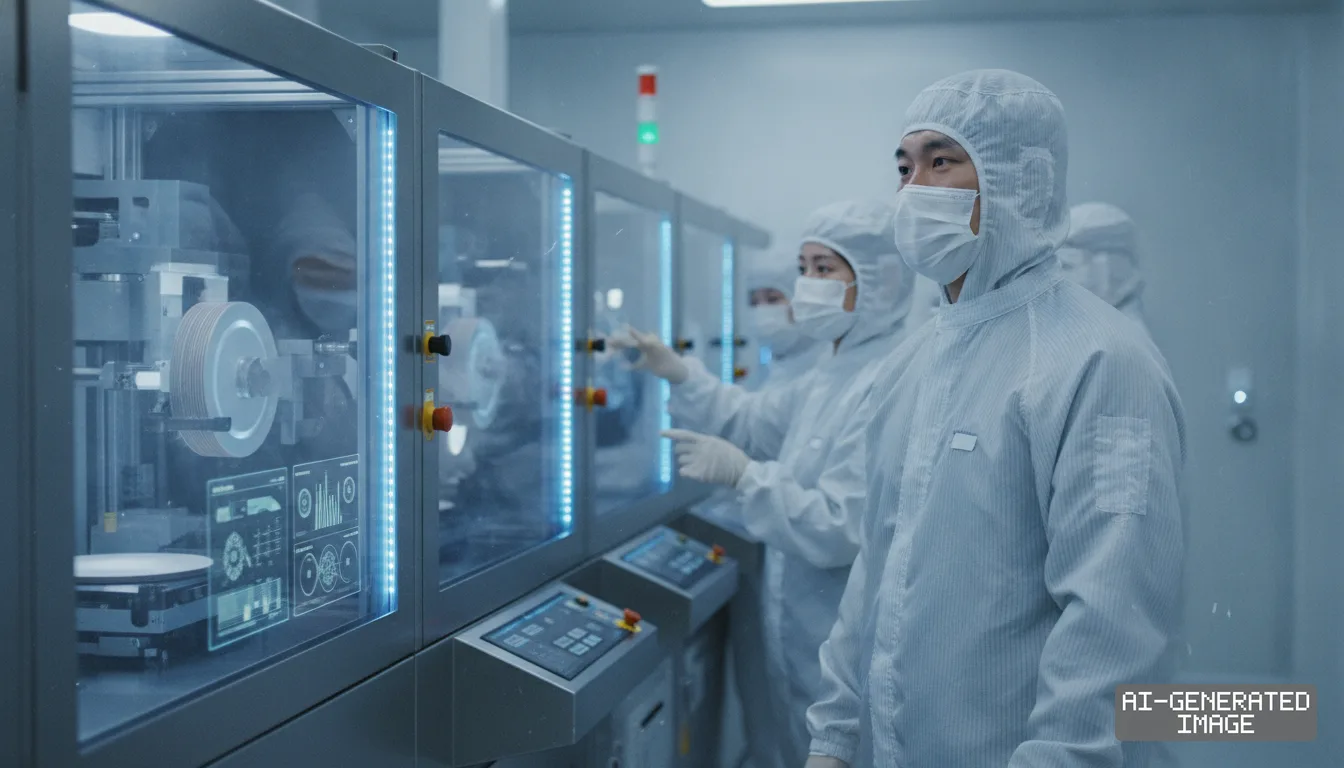
The Kitakami facility in Iwate Prefecture serves as a core fabrication hub alongside the flagship Yokkaichi complex in Mie Prefecture, producing high-layer three-dimensional flash memory for enterprise solid-state drives.
Joint venture partner SanDisk shares cleanroom capacity across both manufacturing sites, funding roughly half of the advanced equipment expenditure required to commercialize high-layer wafer processing lines.
Both partners began commercial manufacturing of 10th-generation flash memory in July at Kitakami Fab2, known as K2, targeting enterprise storage racks deployed by global hyperscale cloud operators.
The 10th-generation architecture increases bit density — the volume of data stored per square millimeter of silicon — by 59% compared with the previous production generation, the company said.
The upgraded cell structure achieves transfer speeds of 4.8 gigabits per second, lowering server power consumption during high-throughput machine learning workloads, according to the filing.
Cloud infrastructure providers are replacing mechanical hard disk drives with high-capacity enterprise solid-state drives built on quad-level cell technology, which stores four bits of data within a single memory cell.
Kioxia projects quad-level cell modules will account for 30% of its total bit shipments in calendar 2027 and expand to roughly 40% of shipments in calendar 2028.
Server customers have fully booked the company's production allocation through calendar 2027, while long-term supply agreements cover more than 50% of projected manufacturing output for calendar 2028, the company said.
The surge in data storage procurement has shielded operating margins from sluggish consumer electronics demand, as desktop personal computer and entry-level smartphone flash shipments remain subdued.
Toshiba Corporation holds an 11.8% equity stake in Kioxia Holdings after paring its position following the memory maker's initial public listing on the Tokyo Stock Exchange Prime Market.
Absorbing the Iwate entity eliminates a subsidiary board and allows executive directors to reallocate process engineers directly between research laboratories and regional cleanroom bays.
S&P Global Ratings upgraded Kioxia Holdings to BBB from BBB- in October, citing improved cash generation and rising shares of revenue secured under multiyear customer contracts.
Second-quarter operating cash flow reached ¥1.51 trillion ($9.6 billion), supported by average selling price gains in enterprise storage modules and favorable foreign exchange rates, the company said.
The cash accumulation allowed the manufacturer to complete an ¥800 billion ($5.1 billion) share repurchase program in August while establishing a long-term plan to return surplus cash to equity holders.
Annual capital expenditure will run between ¥500 billion and ¥600 billion ($3.2 billion to $3.8 billion), exceeding earlier budget guidance to support cleanroom expansions.
Ground preparation has commenced for a third manufacturing building, designated K3, at the Kitakami site, with commercial wafer processing scheduled to begin during fiscal 2029.
The statutory filing does not disclose the specific budget breakdown between the Kitakami K3 expansion and ongoing Yokkaichi tool conversions, and executives have not published equipment installation timetables.
The absorption-type merger takes effect April 1, 2027, while registered shareholders receive the ¥90 ($0.57) per share interim dividend payout on Dec. 8, 2026.
Japan's Ministry of Economy, Trade and Industry previously approved up to ¥150 billion ($955 million) in subsidies for group fabs, leaving ¥31.8 billion uncollected at the start of the fiscal year.
Impact map
How this development propagates across the region and out to global buyers.
| Event | Korea | China | Japan | Global impact |
|---|---|---|---|---|
| Kioxia fab restructuring | Samsung Electronics and SK hynix face unified Japanese manufacturing in enterprise QLC SSD lines | Hyperscale buyers face tightened allocation as Kioxia locks long-term contracts through 2027 | Kioxia removes duplicate corporate overhead and directly operates Kitakami wafer lines | Enterprise SSD procurement costs firm as AI datacenter demand absorbs capacity through 2028 |
In this story
- Companies
- Kioxia Holdings
- Tickers
- 285A.T
- Exposed
- SanDiskToshiba
- Impact
- CapexSupply ChainCost Structure
Related briefings
- Toshiba trims Kioxia stake below 13% in NAND governance shakeup Also on Toshiba, SanDisk, Kioxia Holdings
- Kioxia Rejects SK hynix Flash Alliance to Guard SanDisk Ties Also on Toshiba, SanDisk, Kioxia Holdings
- Kioxia warns NAND price rally will stall as PC demand slows Also on Sandisk, Kioxia Holdings
- Japan offers U.S. chip investment to win semiconductor tariff relief Also on Toshiba
Sources
Reporting
Confidence: medium — how we grade this
The documents behind this briefing are linked above. East Asia Brief produces its English text with AI assistance under human editorial review, and does not translate or republish other outlets' articles. See our methodology and AI policy. Spotted an error? Tell us.
The Morning Brief
What changed in Korean, Chinese and Japanese industry overnight — and what it means for your supply chain. One email, weekday mornings, US time. Free.
The Morning Brief is in preparation. Leave your address and we will write to you once — when the first issue is ready. Nothing before that.