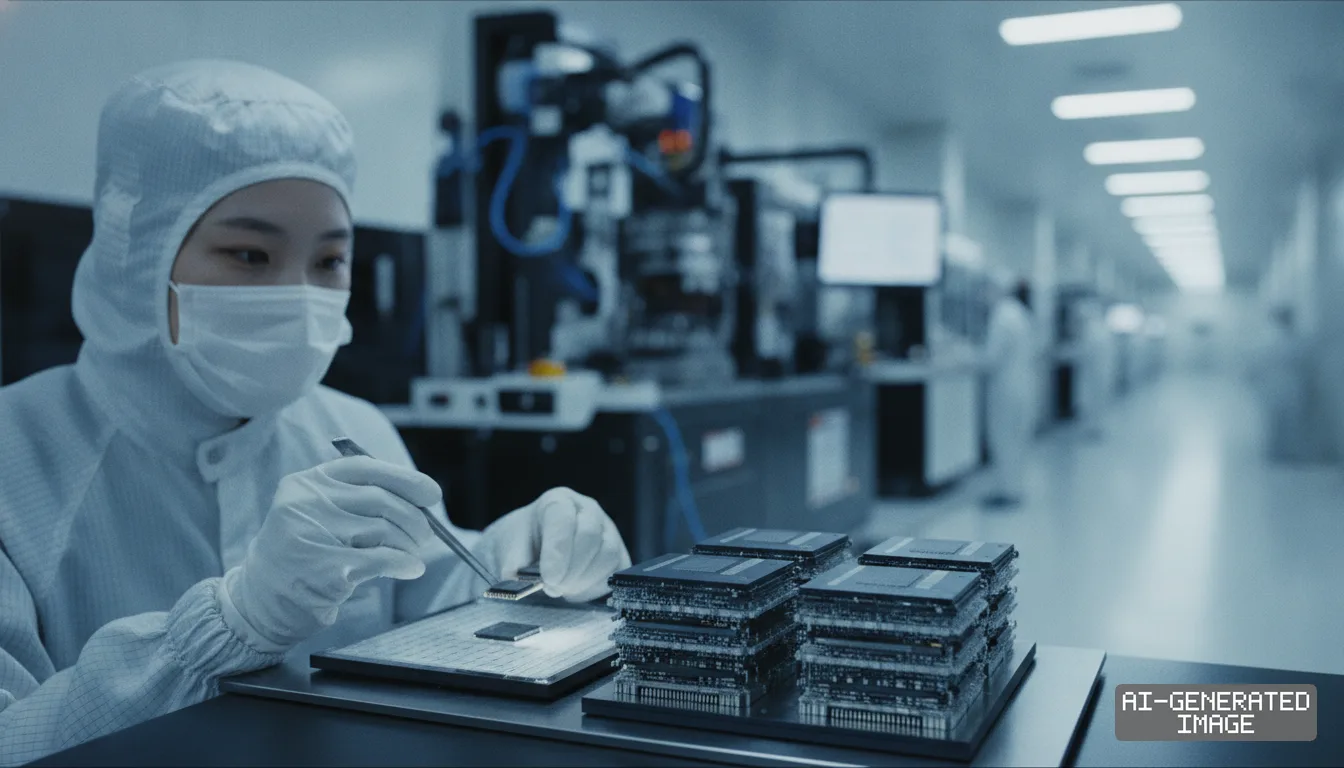
Kawasaki starts building Japan's largest hydrogen liquefier for 2028
The 50-ton-per-day facility forms the onshore anchor for a 300 billion yen commercial supply chain pairing 50,000-cubic-meter tanks with specialized deep-sea transport vessels.
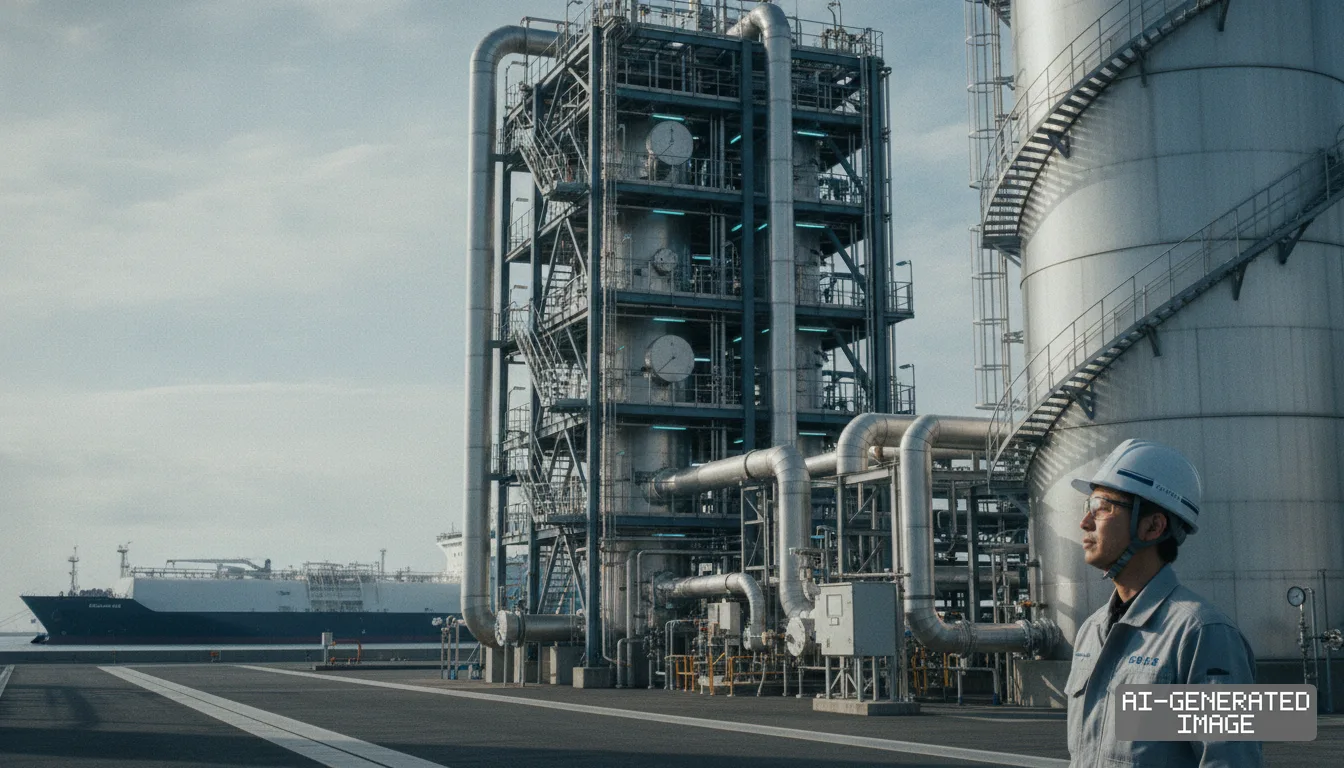
Kawasaki Heavy Industries broke ground Oct. 27, 2026 on Japan's largest commercial hydrogen liquefaction plant, a 50-metric-ton-per-day cryogenic installation at the Kawasaki LH2 Terminal in Kanagawa Prefecture.
The facility will process 50 metric tons of gaseous hydrogen daily into liquid form. That volume is more than three times the throughput of Japan's previous record liquefaction facility, which had a capacity of 15 metric tons per day.
The project forms part of a broader 300 billion yen ($1.97 billion) national supply chain demonstration backed by Japan's New Energy and Industrial Technology Development Organization (NEDO). Public grants cover roughly 220 billion yen ($1.45 billion) of that total through the state Green Innovation Fund.
Commercial operators must chill hydrogen to minus 253 degrees Celsius to condense the gas into liquid. That cryogenic transformation reduces fuel volume by a factor of 800, allowing tankers to move industrial quantities across maritime routes.
Japan Hydrogen Energy, a joint operating venture led by Kawasaki Heavy Industries, runs the terminal demonstration on the coastal Ogishima site. The parcel occupies redeveloped industrial land leased from steelmaker JFE Steel, a core operating subsidiary of JFE Holdings.
JFE Holdings allocated the waterfront property to capture downstream distribution traffic across the Keihin industrial belt. Industrial gas supplier Iwatani holds an equity stake in Japan Hydrogen Energy, supplying domestic distribution networks that consume roughly 40% of Japan's commercial hydrogen deliveries.
The liquefaction unit anchors an integrated coastal receiving and storage complex designed to test large-scale utility power generation. Engineers plan to link the liquefier directly to a 50,000-cubic-meter flat-bottom cylindrical storage tank situated inside the Kawasaki terminal perimeter.
That onshore tank connects to specialized marine berths built to discharge deep-sea liquid hydrogen carriers. Kawasaki Heavy Industries signed a construction contract on Jan. 6, 2026 to build a commercial 40,000-cubic-meter transport vessel designed to ferry liquefied fuel from overseas production hubs.
Heavy machinery builders are prioritizing hydrogen equipment contracts as conventional maritime orders plateau. Kawasaki Heavy Industries books maritime and energy infrastructure work inside its primary engineering division, which generated 362 billion yen ($2.38 billion) in segment revenue last fiscal year.
The group designated hydrogen systems as a core corporate growth vector under its long-term strategic plan. Corporate directors set a target to achieve 300 billion yen ($1.97 billion) in annual hydrogen equipment sales by 2030, rising to 500 billion yen by 2040.
Domestic power utilities are preparing combined-cycle gas turbines to burn co-fired blends of natural gas and hydrogen. Tokyo Electric Power Company and regional utilities operating in the Kanto grid project that imported hydrogen volumes must exceed 3 million metric tons annually by 2030 to fulfill state decarbonization mandates.
The demonstration tests whether cryogenic fuel can travel from overseas production points without excessive boil-off losses. Boil-off occurs when ambient heat penetrates insulation panels, causing a small fraction of liquefied cargo to revert back into gas during long ocean voyages.
The partnership previously completed pilot cargo deliveries using the Suiso Frontier, a 1,250-cubic-meter prototype transport ship. The new 40,000-cubic-meter commercial ship increases carrying capacity by more than thirtyfold, testing whether economies of scale reduce landed transportation costs.
Equipment suppliers in neighboring economies are tracking the Kawasaki buildout to benchmark competing export channels. Shipyards in South Korea, including HD Korea Shipbuilding & Offshore Engineering, are designing rival cryogenic insulation barriers to bid on future commercial hydrogen carriers.
Chinese industrial gas groups have prioritized domestic ammonia synthesis and localized pipeline networks over seaborne liquid hydrogen imports. That tactical divergence leaves Japanese industrial equipment manufacturers with an early operating monopoly in deep-sea liquid hydrogen handling systems.
Plant fabricators must still demonstrate that high-pressure centrifugal compressors and cold-box heat exchangers operate continuously without seal degradation. A single unplanned compressor stoppage can vent millions of dollars worth of purified hydrogen into flare stacks.
Subsidies granted under the Green Innovation Fund absorb early capital risks for private project sponsors. The Japanese government allocated 2 trillion yen across the fund to underwrite clean energy engineering and domestic industrial retooling.
Kawasaki Heavy Industries expects civil engineering work and heavy mechanical installations at the Ogishima terminal to finish in late 2028. Commissioning crews will begin cold-testing piping networks immediately after equipment turnover to prepare the complex for full commercial operation.
Integrated marine demonstration voyages connecting overseas export terminals to the Kawasaki liquefier and storage base are scheduled to begin in early 2030. That demonstration date governs the commercial availability of imported hydrogen quotas for Kanto utilities.
Kawasaki Heavy Industries published its initial construction filing on Oct. 19, 2026, and project documents do not confirm whether a separate local construction authorization was finalized on Oct. 27, 2026.
The Ministry of Economy, Trade and Industry has not published the terminal's target cost per kilogram of dispensed hydrogen, leaving long-term off-take pricing for power generators undetermined.
Impact map
How this development propagates across the region and out to global buyers.
| Event | Korea | China | Japan | Global impact |
|---|---|---|---|---|
| Commercial hydrogen liquefaction facility buildout | Shipyards track 40,000-cbm carrier specs to design rival cryogenic containment systems | Refiners maintain focus on coal gasification and pipeline grid over seaborne imports | Kawasaki Heavy secures onshore anchor for its targeted 300 billion yen hydrogen business | Liquefied hydrogen maritime transport standards advance toward 2030 commercial adoption |
In this story
- Companies
- Kawasaki Heavy Industries
- Tickers
- 7012.T
- Exposed
- IwataniJFE Holdings
- Policy
- Subsidies
- Impact
- Supply ChainCapexCost Structure
Track every Subsidies development →
Related briefings
- Imabari and JMU consolidate dry bulk engineering to standardize ammonia dual-fuel vessels Also on JFE Holdings, Cost Structure, Subsidies
- Japan nuclear restarts widen regional power cost gap for manufacturers Also on JFE Holdings, Cost Structure, Subsidies
- Asian Shipyard Heavy Plate Costs Diverge as Mills and Builders Clash Over Contract Pricing Also on JFE Holdings, Cost Structure
- India pushes local tunnel boring machines under China curbs Also on Kawasaki Heavy Industries, Cost Structure, Subsidies
Sources
Primary documents
Reporting
Confidence: high — how we grade this
The documents behind this briefing are linked above. East Asia Brief produces its English text with AI assistance under human editorial review, and does not translate or republish other outlets' articles. See our methodology and AI policy. Spotted an error? Tell us.
The Morning Brief
What changed in Korean, Chinese and Japanese industry overnight — and what it means for your supply chain. One email, weekday mornings, US time. Free.
The Morning Brief is in preparation. Leave your address and we will write to you once — when the first issue is ready. Nothing before that.