China rare earth imports jump 23% in October on Myanmar border intake
Unlisted oxide arrivals reached 5,021 metric tons, with 3,509 tons crossing the southwestern land border to supply three-quarters of domestic separation feedstock.
China's General Administration of Customs reported Nov. 20 that October rare earth imports jumped 23% from the previous month, as refiners accelerated raw mineral intake from conflict-hit northern Myanmar.
Unlisted rare earth oxide arrivals reached 5,021 metric tons during the month. Shipments across the southwestern land border accounted for 3,509 metric tons, or 70% of China's total unlisted oxide intake.
The border inflow represented roughly three-quarters of all heavy rare earth feedstock entering Chinese separation plants in October. The cumulative import volume reached 46,466 metric tons through the first 10 months of the year.
Heavy rare earths such as dysprosium and terbium are critical inputs for heat-resistant neodymium-iron-boron magnets. Those permanent magnets power traction motors in electric vehicles, industrial wind turbines and precision missile guidance systems.
China controls roughly 90% of global rare earth refining capacity. Domestic mining limits, however, cap local heavy rare earth production at 39,000 metric tons for the year under state quotas.
Decades of intensive surface mining largely exhausted domestic ionic adsorption clays in Jiangxi and Guangdong provinces. Environmental crackdowns by Beijing also shut hundreds of unregulated domestic leaching pits over the past decade.
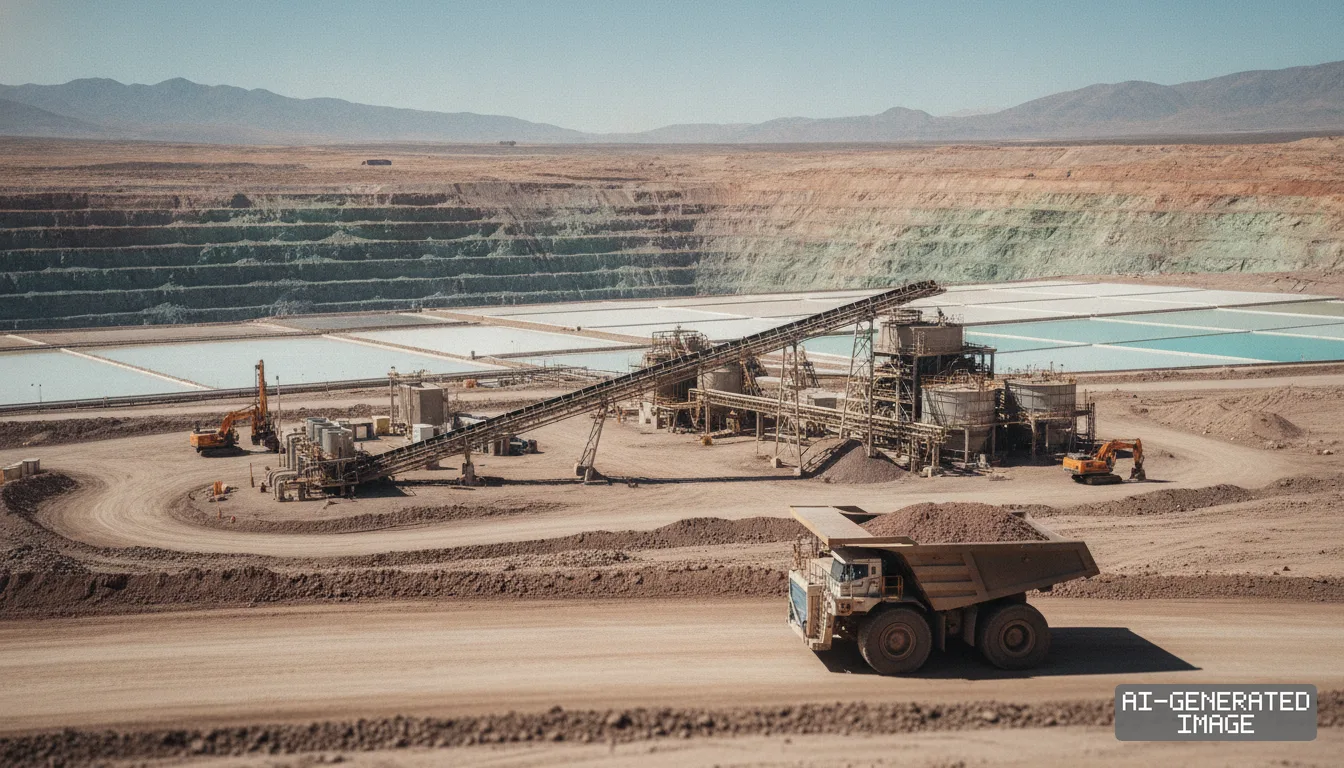
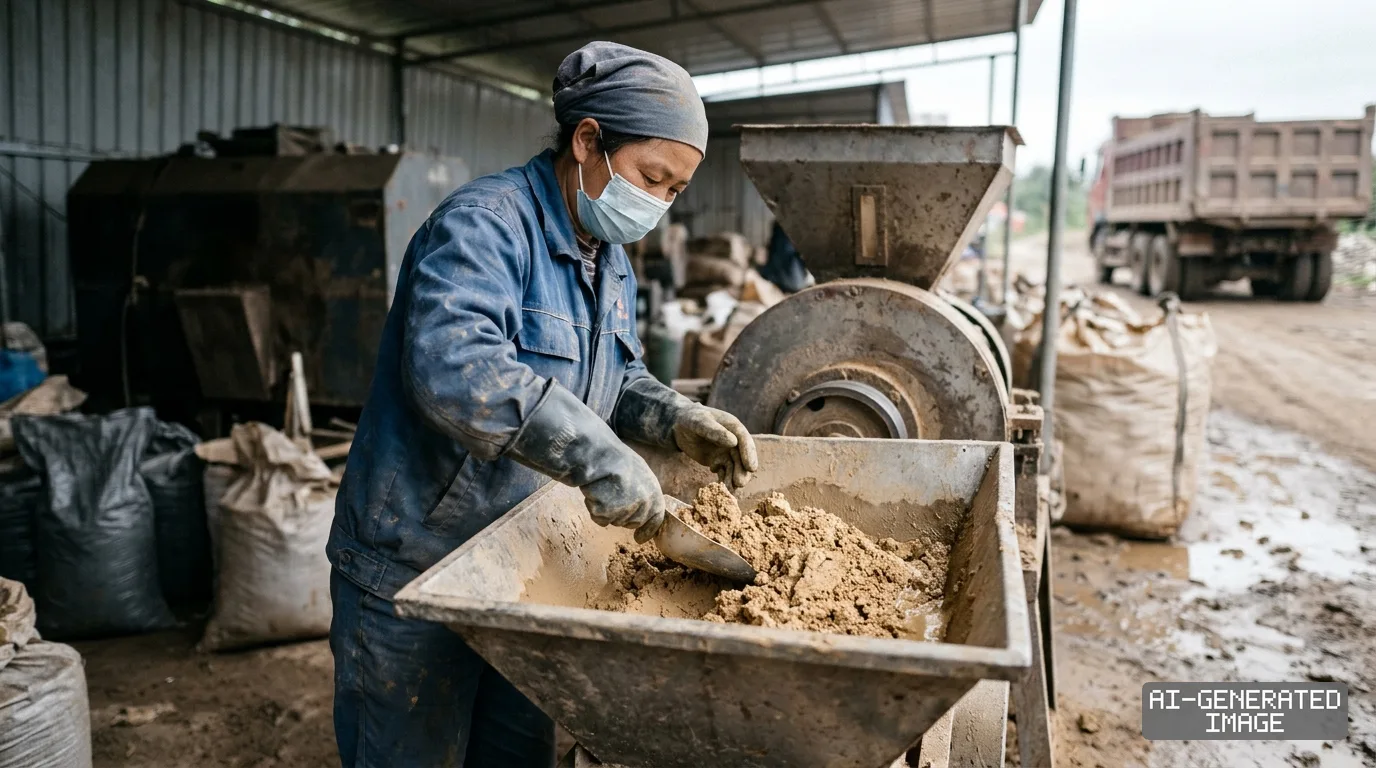
Chinese processors turned to the mountainous frontier of Myanmar's northern Kachin State to fill the feedstock gap. Unregulated leaching sites in Pangwa and Chipwi townships expanded rapidly after Myanmar's 2021 military coup.
State-owned China Rare Earth Group operates the majority of heavy rare earth separation facilities in southern China. The conglomerate depends on Myanmar mines for an estimated 45% of its raw ionic ore feedstock.
Rival producer China Northern Rare Earth Group High-Tech holds domestic light rare earth deposits in Inner Mongolia. The company draws only 2% heavy elements from its Baotou ores, limiting internal substitution.
Control over the border mines shifted late last year when the Kachin Independence Army seized territory from military-aligned militias. The territorial clash previously halted shipments through Yunnan border gates for several weeks.
Shipments resumed only after Chinese trade intermediaries negotiated crossing fees with local armed groups. Trade groups reported that regional authorities added a resource levy of approximately $4,800 per metric ton on raw ore transit.
Supply friction pushed domestic dysprosium oxide prices up 5.1% in early November to 1.54 million yuan ($214,000) per metric ton. Metallic dysprosium rose to 2.055 million yuan ($285,000) per metric ton.
The heavy reliance on Myanmar border trade complicates Beijing's broader trade policy. The Ministry of Commerce enforced strict export licensing on seven heavy rare earths, requiring foreign buyers to submit detailed end-user certificates before shipment.
Downstream magnet buyers in North America and Europe face stricter supply chain scrutiny. Western automotive procurement teams cannot verify labor and environmental practices at unmonitored leaching pits inside Myanmar's conflict zones.
Alternative refining capacity outside China remains constrained. Australia's Lynas Rare Earths and American processors lack commercial-scale separation units capable of processing heavy dysprosium and terbium at volumes matching Chinese plant throughput.
The customs data does not disclose specific element breakdowns for dysprosium and terbium within bulk oxide shipments. Customs officials also have not published figures tracking transit tax payments remitted to armed groups along the border.
Temporary border transit permits for mineral trucks in Yunnan face administrative review on Dec. 31. Beijing's bilateral export licensing suspension under its overseas trade arrangement runs through Jan. 10, 2027.
Separation plants in Jiangxi held approximately six weeks of unprocessed ionic clay inventory heading into the final quarter, according to regional materials exchange survey data.
Impact map
How this development propagates across the region and out to global buyers.
| Event | Korea | China | Japan | Global impact |
|---|---|---|---|---|
| Myanmar rare earth border flow | Automakers absorb cost increases as dysprosium oxide climbs past 1.5 million yuan per ton | China Rare Earth Group refiners remain exposed to Kachin armed factions for 45% of ionic clay feed | Magnet manufacturers Proterial and TDK face tighter export certification audits from Chinese suppliers | EV drive motor makers face supply volatility and unverified provenance from conflict border pits |
In this story
- Companies
- China Rare Earth GroupChina Northern Rare Earth Group High-Tech
- Tickers
- 600111.SS
- Exposed
- Lynas Rare Earths
- Policy
- Export Controls
- Impact
- Supply ChainCost StructureCompliance
Track every Export Controls development →
Related briefings
- China Sets Consolidated Late-2026 Light Rare Earth Mining Quota to Cap Northern Bastnasite Extraction Also on China Northern Rare Earth Group High-Tech, China Rare Earth Group, Lynas Rare Earths
- China puts rare earth duopoly under tighter state oversight Also on China Northern Rare Earth Group High-Tech, China Rare Earth Group, Export Controls
- China mandates digital tracking codes for heavy rare earth shipments to tighten export control Also on China Northern Rare Earth Group High-Tech, China Rare Earth Group, Export Controls
- Bessent presses China on $17B farm purchase pledge in trade talks Also on China Northern Rare Earth Group High-Tech, Export Controls, Compliance
Sources
Reporting
Confidence: medium — how we grade this
The documents behind this briefing are linked above. East Asia Brief produces its English text with AI assistance under human editorial review, and does not translate or republish other outlets' articles. See our methodology and AI policy. Spotted an error? Tell us.
The Morning Brief
What changed in Korean, Chinese and Japanese industry overnight — and what it means for your supply chain. One email, weekday mornings, US time. Free.
The Morning Brief is in preparation. Leave your address and we will write to you once — when the first issue is ready. Nothing before that.