Japan and Chile form critical minerals alliance for copper and lithium
Chilean President Jose Antonio Kast and Prime Minister Sanae Takaichi agreed in Tokyo to secure supply lines from a country producing 24% of the world's copper.
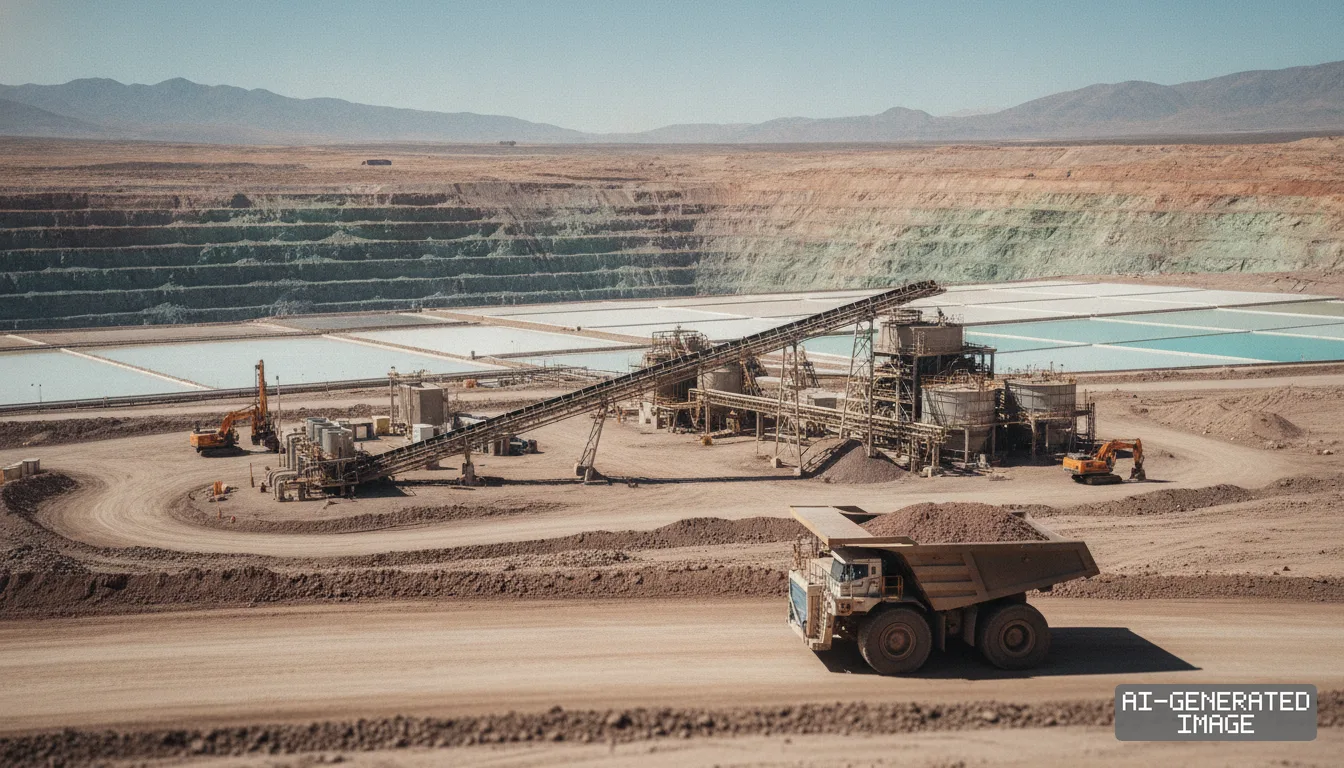
Chilean President Jose Antonio Kast and Japanese Prime Minister Sanae Takaichi agreed Nov. 20 to deepen bilateral cooperation on critical mineral supply chains, focusing on copper and lithium.
The agreement ties Japanese industrial technology to Chile, which supplies roughly 24% of the world's mined copper and ranks as the second-largest global producer of battery-grade lithium.
Meeting in Tokyo during an official working visit, the two leaders issued a joint statement pledging to reinforce supply chain resilience and ensure resource trade measures align with international rules.
The summit marked preparations for the 130th anniversary of bilateral diplomatic relations next year. Prime Minister Takaichi said Tokyo seeks closer economic security ties with Pacific maritime partners under its Indo-Pacific framework.
The meeting followed preparatory talks held Aug. 28 between Japanese and Chilean foreign ministers. Both sides had agreed to coordinate economic security policies and align mineral supply chain strategies ahead of the Tokyo summit.
Both leaders highlighted an ongoing operational trial at the El Teniente copper mine, run by Chilean state-owned mining corporation Corporación Nacional del Cobre de Chile, known as Codelco.
Under the project launched Aug. 6, NTT DOCOMO BUSINESS is testing an All-Photonics Network to connect the underground mine with a remote operations center located approximately 1,500 kilometers away.
The network pilot uses low-latency optical links to operate heavy mining equipment remotely. Japan's Ministry of Internal Affairs and Communications commissioned the research to improve worker safety and operational efficiency.
El Teniente is the world's largest underground copper mine and ranks sixth globally in reserve size. Remote automation aims to maintain production while lowering seismic and operational risks for underground personnel.
Codelco has sought foreign technical partnerships to address operational hazards at mature deposits. Recent seismic activity in deep underground sections has reinforced the urgency of removing workers from hazardous extraction faces.
Alongside the mineral declaration, Japanese and Chilean officials signed a Memorandum of Cooperation on information and communications technology Nov. 20 to formalize digital infrastructure and industrial automation partnerships.
The initiative builds on an expanded mining memorandum signed in June 2024 by Japan's Ministry of Economy, Trade and Industry and Chile's Ministry of Mining, which added lithium to bilateral resource cooperation.
Chile has pushed for greater state involvement in battery metals under its national lithium framework, requiring private miners to form operating partnerships with state entities like Codelco.
That policy prompted Codelco and private producer Sociedad Quimica y Minera de Chile, or SQM, to establish a joint venture in the Salar de Atacama, securing extraction rights through 2060.
International antitrust regulators, including competition authorities in Japan and South Korea, approved the Codelco-SQM joint partnership earlier in 2025, clearing regulatory hurdles for export contracts to Asian battery markets.
Chile serves as Japan's primary overseas source of unrefined copper concentrates and refined lithium compounds, while Japanese engineering firms supply heavy machinery, tires and processing equipment to Chilean mines.
State-backed Japan Organization for Metals and Energy Security, known as JOGMEC, has coordinated technical seminars with Chilean authorities to facilitate commercial engagement between Chilean mineral agencies and Japanese trading houses.
JOGMEC offers debt guarantees and technical assessments to Japanese resource firms operating in South America, reducing financial exposure to changing regulatory environments and volatile commodity cycles.
Japanese manufacturers face mounting pressure to diversify critical metal procurement away from single-source processing hubs, as regulatory mandates in the United States and Europe tighten domestic sourcing standards.
The joint statement explicitly endorsed a free and rules-based international trading order. Both administrations affirmed that future mineral trade mechanisms must remain nondiscriminatory and compliant with multilateral trade treaties.
President Kast invited Japanese industrial and trading executives to attend the Choose Chile Summit in Santiago in March 2027, where specific investment tenders will be presented.
The official summit releases did not disclose specific financial investment totals, nor did the governments confirm any equity acquisition agreements by Japanese firms in Chilean mining concessions.
Impact map
How this development propagates across the region and out to global buyers.
| Event | Korea | China | Japan | Global impact |
|---|---|---|---|---|
| Japan-Chile critical minerals pact | Battery refiners track lithium allocations as Japanese trading houses formalize Chilean supply ties | Codelco-SQM venture operates under SAMR clearance while Tokyo expands alternative copper access | NTT DOCOMO BUSINESS and trading houses gain preferred industrial footing in Chilean mines | Top copper and second lithium producer anchors trade flows to international treaty rules |
In this story
- Companies
- CodelcoNTT DOCOMO BUSINESSSQM
- Impact
- Supply Chain
Related briefings
Sources
Primary documents
Reporting
Confidence: high — how we grade this
The documents behind this briefing are linked above. East Asia Brief produces its English text with AI assistance under human editorial review, and does not translate or republish other outlets' articles. See our methodology and AI policy. Spotted an error? Tell us.
The Morning Brief
What changed in Korean, Chinese and Japanese industry overnight — and what it means for your supply chain. One email, weekday mornings, US time. Free.
The Morning Brief is in preparation. Leave your address and we will write to you once — when the first issue is ready. Nothing before that.