Tesla buys China actuator parts for US Optimus robot factory
Factory audits across Zhejiang province cover initial orders for 5,000 units, anchoring mechanical joint production in China despite federal pressure to reshore advanced robotics.
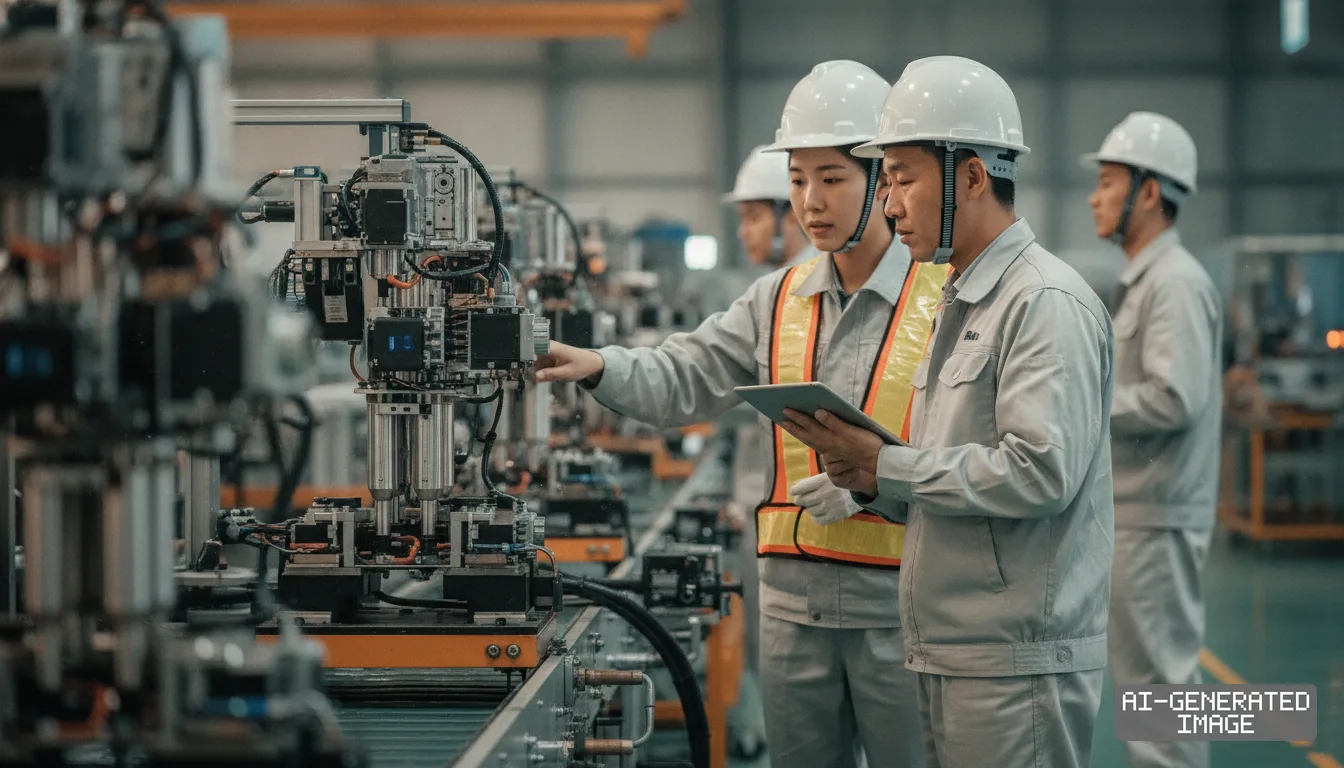
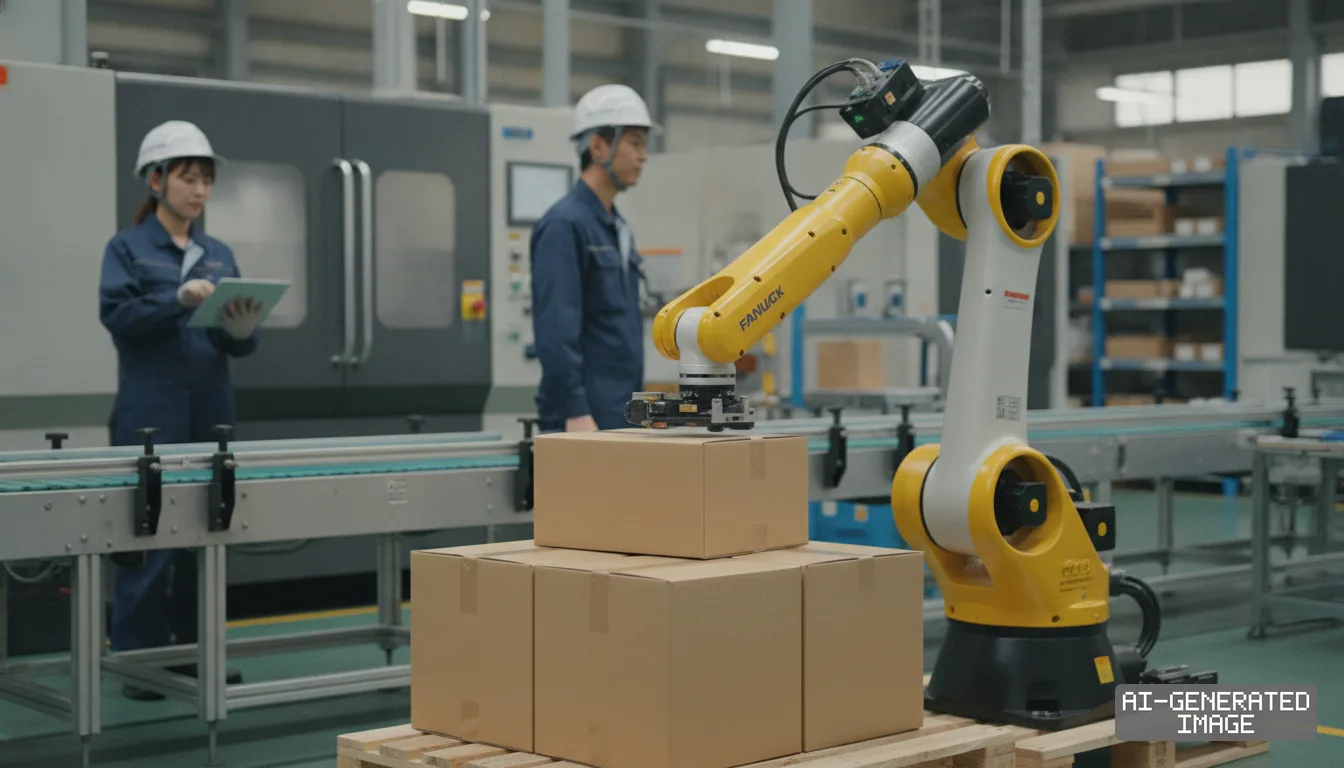
Tesla dispatched engineering teams across China's Yangtze River Delta on Sept. 23, 2026, advancing production audits for key actuator and joint hardware destined for its Fremont humanoid robot line.
Actuators account for roughly 35% of the humanoid robot's estimated $20,000 bill-of-materials target. The mechanical joints represent the single largest hardware expenditure in physical artificial intelligence systems.
Chinese suppliers currently control about 70% of the manufacturing supply chain for humanoid robot hardware. That concentration complicates Western efforts to localize the production of precision robotic components.
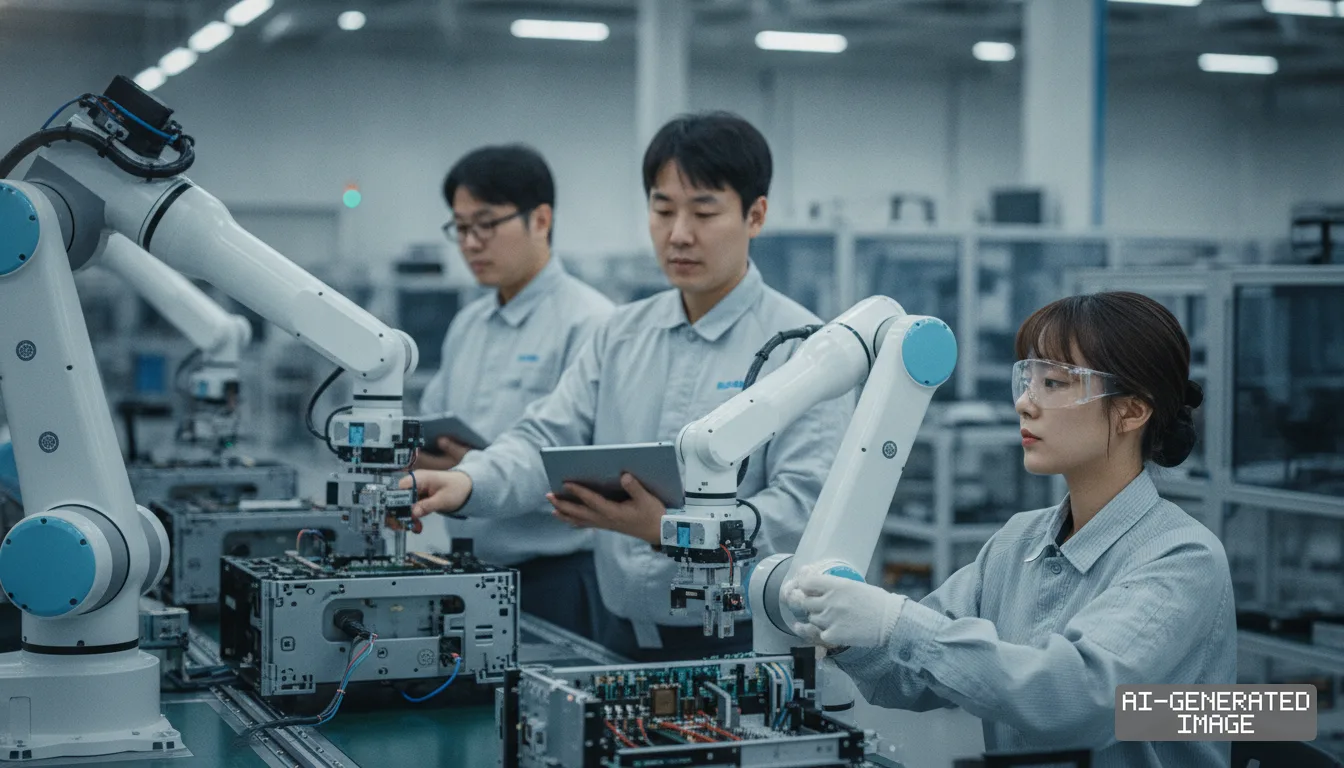
The audit rounds targeted established auto parts makers in Zhejiang province. Inspections verified mass production standards at Ningbo Tuopu Group and Zhejiang Sanhua Intelligent Controls, supply chain sources said.
Tuopu Group supplies rotary and linear actuators alongside dexterous-hand motor assemblies. The manufacturer has already processed an initial batch order of roughly 5,000 component sets for the Optimus program.
Zhejiang Sanhua manufactures thermal systems and joint drive modules for the platform. The supplier previously secured a $685 million component framework agreement for linear actuators tied to robotic assembly lines.
Ningbo Joyson Electronic also joined the production audit cohort in eastern China. The automotive electronics specialist delivers sensor arrays and electronic control units from its manufacturing facilities in Ningbo.
All three vendors already supply electric vehicle hardware to Tesla's Gigafactory Shanghai. Reusing automotive tier-one suppliers allows the automaker to bypass years of dedicated tooling development.
The inspections prepare hardware for Tesla's third-generation Optimus platform. The revised humanoid features sealed mechanical linkages and upgraded dexterous hands designed specifically for industrial factory tasks.
Tesla converted former Model S and Model X assembly floor space in Fremont, California. That plant targets an eventual annual capacity of one million humanoid units, according to regulatory filings.
Automotive engineers completed the Fremont production line reconfiguration over four months. The facility requires at least 40 specialized manufacturing sublines to assemble the multi-jointed humanoid machines.
Trade policy has complicated the hardware pipeline for American advanced manufacturing. Increasing tariffs and scrutiny over critical technologies create compliance hurdles for components imported from mainland China.
Federal industrial policy actively discourages heavy reliance on Chinese supply networks. Yet domestic alternatives for miniature high-torque planetary roller screws and harmonic drive reducers remain scarce outside East Asia.
Planetary roller screws convert rotational torque into linear thrust within robotic limbs. Chinese precision machining shops deliver these tight-tolerance parts at roughly half the procurement cost of Western peers.
Tesla surveyed alternative component suppliers in South Korea and Japan during September. Asian precision mechanical specialists offer high technical precision but struggle to match Chinese volume pricing, procurement sources said.
Japanese motion control firms maintain established harmonic drive patents. However, long delivery lead times and limited capacity expansion constrain rapid scaling for high-volume humanoid robotics.
South Korean precision gear manufacturers possess advanced machining infrastructure. Yet local suppliers remain hesitant to invest heavily in mass tooling without multi-year purchase guarantees from overseas buyers.
Chinese component makers built massive production scale by serving domestic electric car brands. Suppliers expanded into robotics by applying wire-controlled chassis braking systems directly to robotic joint actuation.
Tuopu Group leveraged electronic stability control and brake-by-wire engineering into compact motors. Those dual-use production lines allow rapid capacity switching without building greenfield facilities from scratch.
Zhejiang Sanhua transferred high-volume automotive heat-pump manufacturing into miniature robot thermal controls. The company reported active delivery of bionic robot electromechanical actuators in its August financial filing.
The supplier inspections mark a transition from lab prototyping to factory economics. Tesla executives aim to compress total manufacturing costs from $43,000 per unit down to $20,000 during volume scaling.
Tesla plans to initiate low-rate volume assembly in Fremont before Dec. 31, 2026. The initial batch will support internal factory logistics and material handling across Tesla automotive assembly plants.
Tesla and its suppliers have not published final purchase contract values or delivery volumes, citing commercial non-disclosure agreements.
Tuopu Group and Sanhua Intelligent Controls continue tooling adjustments across Ningbo. Component shipments from Zhejiang are scheduled to reach California assembly bays ahead of fourth-quarter calibration trials.
Impact map
How this development propagates across the region and out to global buyers.
| Event | Korea | China | Japan | Global impact |
|---|---|---|---|---|
| Optimus actuator qualification | local gear makers face tooling hurdles without multi-year purchase guarantees | Tuopu and Sanhua lock in primary actuator supply covering 70% of hardware value | precision motion leaders retain gear patents but face capacity constraints | US humanoid assembly remains structurally reliant on Yangtze River Delta hardware |
In this story
- Companies
- TeslaNingbo Tuopu GroupZhejiang Sanhua Intelligent Controls
- Tickers
- TSLA601689.SH002050.SZ
- Exposed
- Ningbo Joyson Electronic
- Policy
- TariffsEconomic Security
- Impact
- Supply ChainCost StructureCompliance
Track every Tariffs development → Track every Economic Security development →
Related briefings
- LG Energy Solution wins NVIDIA DSX Ready status for AI power backup Also on Tesla, Tariffs, Compliance
- Xi Jinping plans business delegation for Donald Trump summit Also on Tesla, Tariffs, Compliance
- LG Energy Solution details $4.3B Tesla battery supply for US energy storage Also on Tesla, Tariffs, Compliance
- Tesla sweeps Canada EV import quota as Chinese makers wait Also on Tesla, Tariffs, Compliance
Sources
Primary documents
Reporting
Confidence: high — how we grade this
The documents behind this briefing are linked above. East Asia Brief produces its English text with AI assistance under human editorial review, and does not translate or republish other outlets' articles. See our methodology and AI policy. Spotted an error? Tell us.
The Morning Brief
What changed in Korean, Chinese and Japanese industry overnight — and what it means for your supply chain. One email, weekday mornings, US time. Free.
The Morning Brief is in preparation. Leave your address and we will write to you once — when the first issue is ready. Nothing before that.