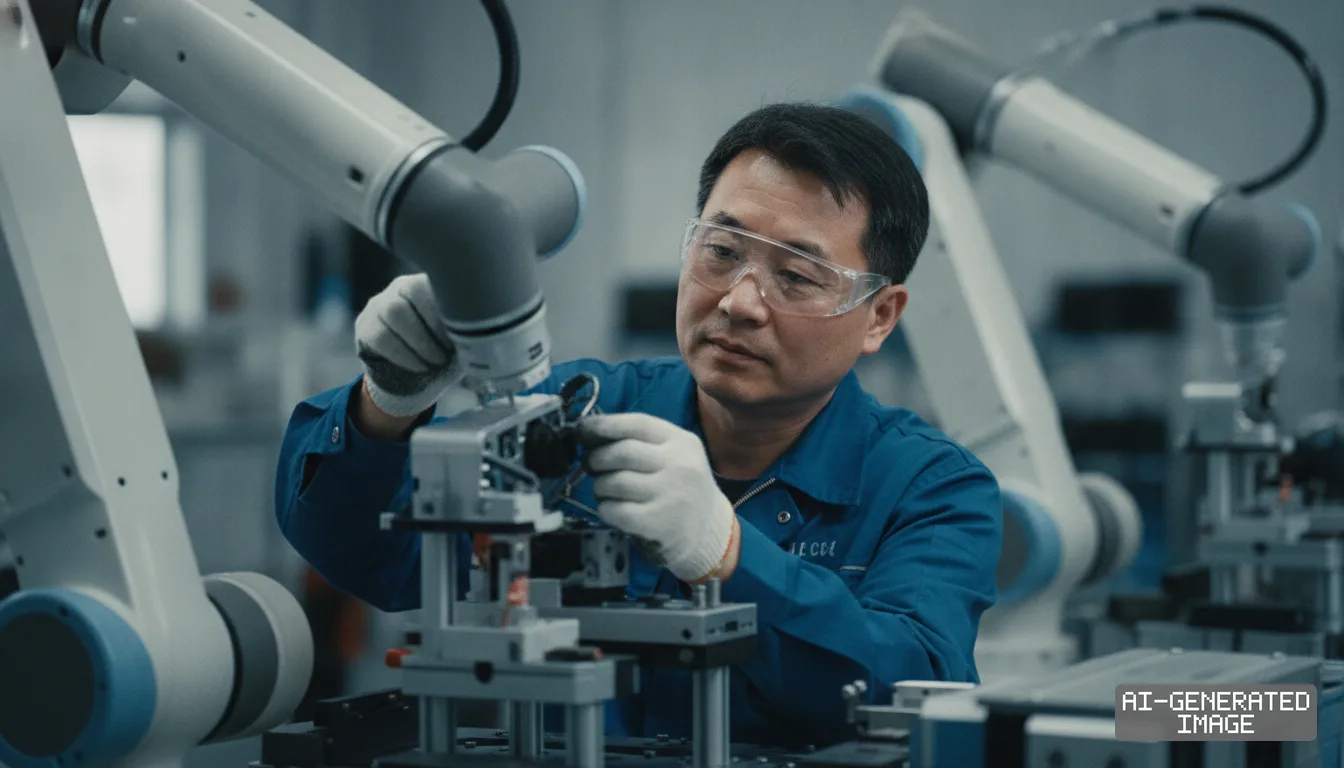
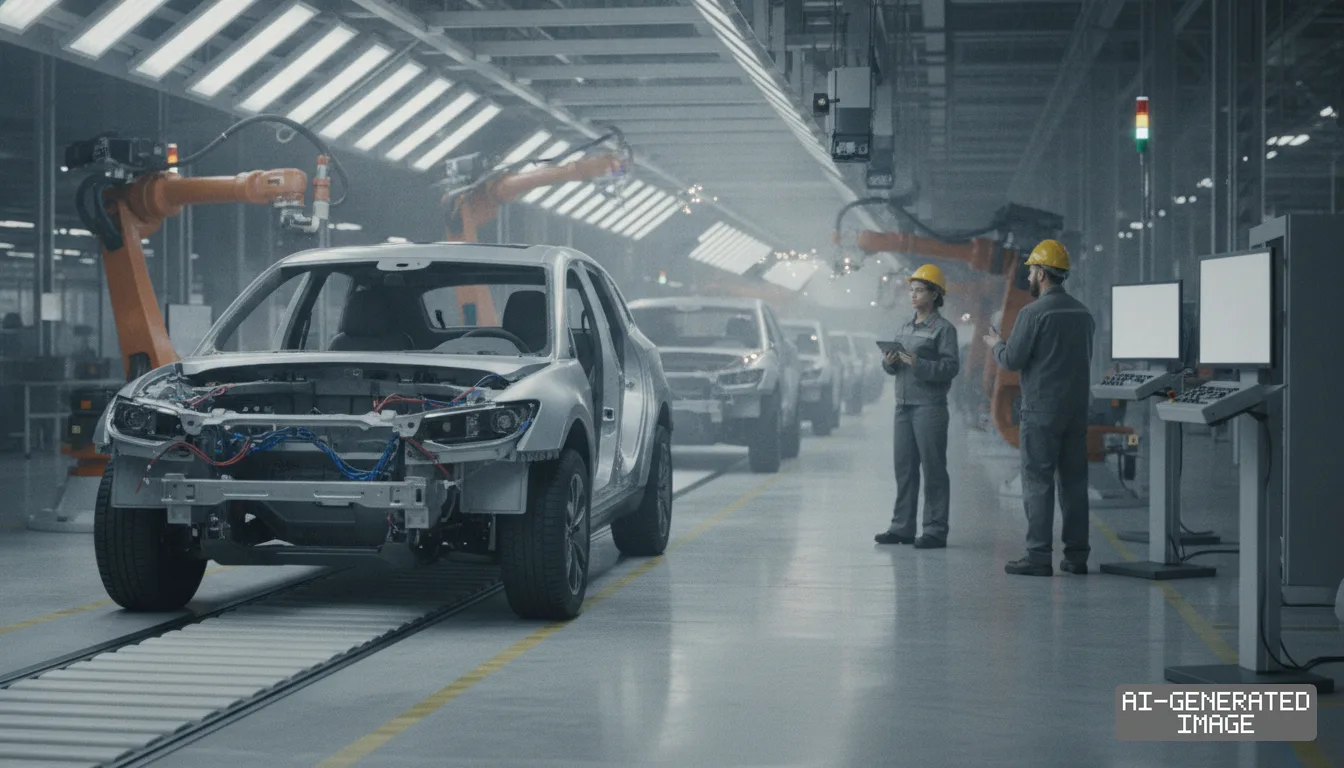
Tank Clinic cuts tanker welding to 8 hours using Yaskawa robot
An AR1440 robot on an eight-meter gantry replaces a five-day manual arc rotation on heavy aluminum transport vessels at the South African shop.
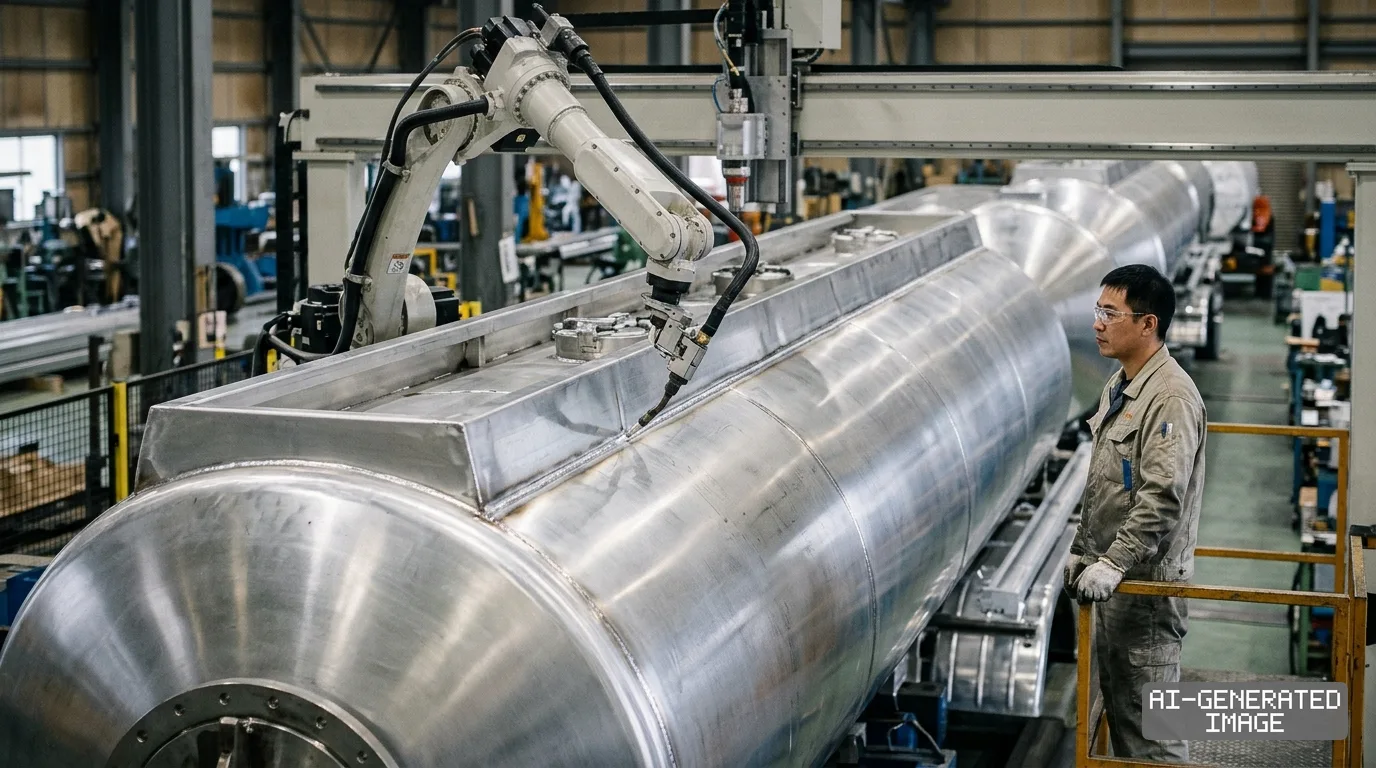
Tank Clinic confirmed Nov. 17 it has integrated a custom Yaskawa Electric robotic welding cell that reduces final assembly on heavy aluminum road tankers from one week to eight hours.
The system replaces manual arc passes on large liquid-transport trailers. Tank Clinic deployed the equipment at its manufacturing plant to expand throughput and eliminate human variation across long structural seams.
The eight-hour cycle cuts total welding time by more than 80%. Manual welding on identical vessel shells previously required a full five-day shop rotation by certified aluminum artisans.
Tank Clinic is a specialized South African road tanker fabricator that marked 50 years of operation this quarter. The builder produces specialized pressure and non-pressure transport vessels for fuel and industrial liquids.
Yaskawa Electric, headquartered in Kitakyushu, Japan, provided the six-axis arm and developed the central motion controller. The installation makes Tank Clinic one of only four production sites worldwide operating this specific gantry architecture.
The core arm is Yaskawa’s Motoman AR1440 robot, engineered specifically for arc welding. The manipulator carries a 12 kg payload and has a maximum reach of 1,440 mm.
The arm features a 50 mm hollow wrist structure. This profile routes the torch cable internally through the robotic forearm to eliminate mechanical snagging against fixtures and vessel baffles.
To span the full length of a commercial road tanker, Yaskawa mounted the AR1440 on an OTG-XYZ on-track gantry. The overhead mechanical rail extends eight meters along the workshop floor.
The automated workcell coordinates linear gantry movement with two rotating headstock positioners. The positioners rotate the cylindrical tanker shell while the overhead robot tracks the joint.
Synchronizing workpiece rotation with manipulator travel allows continuous welding without repositioning pauses. The single central controller governs the robot arm, the track and the external axes simultaneously.
Aluminum fabrication presents distinct metallurgy constraints. The material conducts heat rapidly and distorts easily under uncontrolled thermal input, creating high scrap risks during manual passes.
To prevent burn-through, the cell integrates Cold Metal Transfer technology from Austrian equipment maker Fronius. The process repeatedly retracts the wire electrode during short-circuiting to minimize heat input into the aluminum shell.
Seam tracking relies on an i-Cube optical camera manufactured by Servo Robot. The sensor feeds three-dimensional vision data into the robot controller in real time to locate joint offsets.
Thermal distortion can cause tanker joints to shift several millimeters during continuous welding. The vision module detects these gap changes dynamically and adjusts the torch vector without human intervention.
Heavy vehicle manufacturing faces acute shortages of certified aluminum welders. Training manual welders to execute defect-free x-ray grade passes on curved vessels typically requires several years of apprenticeship.
Tanker vessels undergo strict non-destructive radiographic testing before entering public roads. Automated seam tracking standardizes weld bead geometry to ensure tanks pass liquid-penetrant and pressure leak tests.
Automotive suppliers have deployed robotic welding for decades on standardized stamped components. Heavy vessel fabrication, by contrast, has relied on manual labor because of large physical tolerances and low unit volumes.
Combining high-speed vision with synchronized multi-axis positioners allows robotics suppliers to penetrate low-volume, heavy-structural manufacturing. The Tank Clinic installation demonstrates that large transport vessels can absorb automated arc cells.
The companies have not disclosed the capital cost of the workcell. Yaskawa Electric has not published separate financial disclosures regarding revenue generated from the individual project.
Tank Clinic has scheduled its commercial tanker deliveries for the first quarter of 2027 under the automated setup. Yaskawa will review operational runtime data from the four specialized gantry installations during the same period.
Impact map
How this development propagates across the region and out to global buyers.
| Event | Korea | China | Japan | Global impact |
|---|---|---|---|---|
| Heavy tanker robotic welding | HD Hyundai and Hanwha monitor automated aluminum gantry systems for fuel tank assembly | CIMC Vehicles evaluates multi-axis arc tracking to offset domestic welder shortages | Yaskawa Electric expands robotics from automotive spot welding into structural heavy fabrication | Commercial tanker fabricators lower production lead times by over 80% while tightening radiographic weld quality |
In this story
- Companies
- Yaskawa ElectricTank Clinic
- Tickers
- 6506.T
- Exposed
- Fronius InternationalServo Robot
- Policy
- Standards
- Impact
- Supply ChainOrder BookCost Structure
Track every Standards development →
Related briefings
- Estun vice chair spends 12 million yuan to lift robot maker stake Also on Yaskawa Electric, Standards, Cost Structure
- FANUC America taps Palladyne AI for factory robot autonomy Also on Yaskawa Electric, Cost Structure, Order Book
- Fanuc and Google launch AI welding robot to read blueprints Also on Yaskawa Electric, Cost Structure, Order Book
- Japan robot makers target logging and biology labs as domestic workforce shrinks Also on Yaskawa Electric, Cost Structure, Order Book
Sources
Reporting
Confidence: medium — how we grade this
The documents behind this briefing are linked above. East Asia Brief produces its English text with AI assistance under human editorial review, and does not translate or republish other outlets' articles. See our methodology and AI policy. Spotted an error? Tell us.
The Morning Brief
What changed in Korean, Chinese and Japanese industry overnight — and what it means for your supply chain. One email, weekday mornings, US time. Free.
The Morning Brief is in preparation. Leave your address and we will write to you once — when the first issue is ready. Nothing before that.