SafanDarley details compact robotic press brake for FABTECH
The turnkey 35-ton servo-electric system pairs with a FANUC robot arm to run unattended for eight hours, targeting small fabricators facing press brake operator shortages.
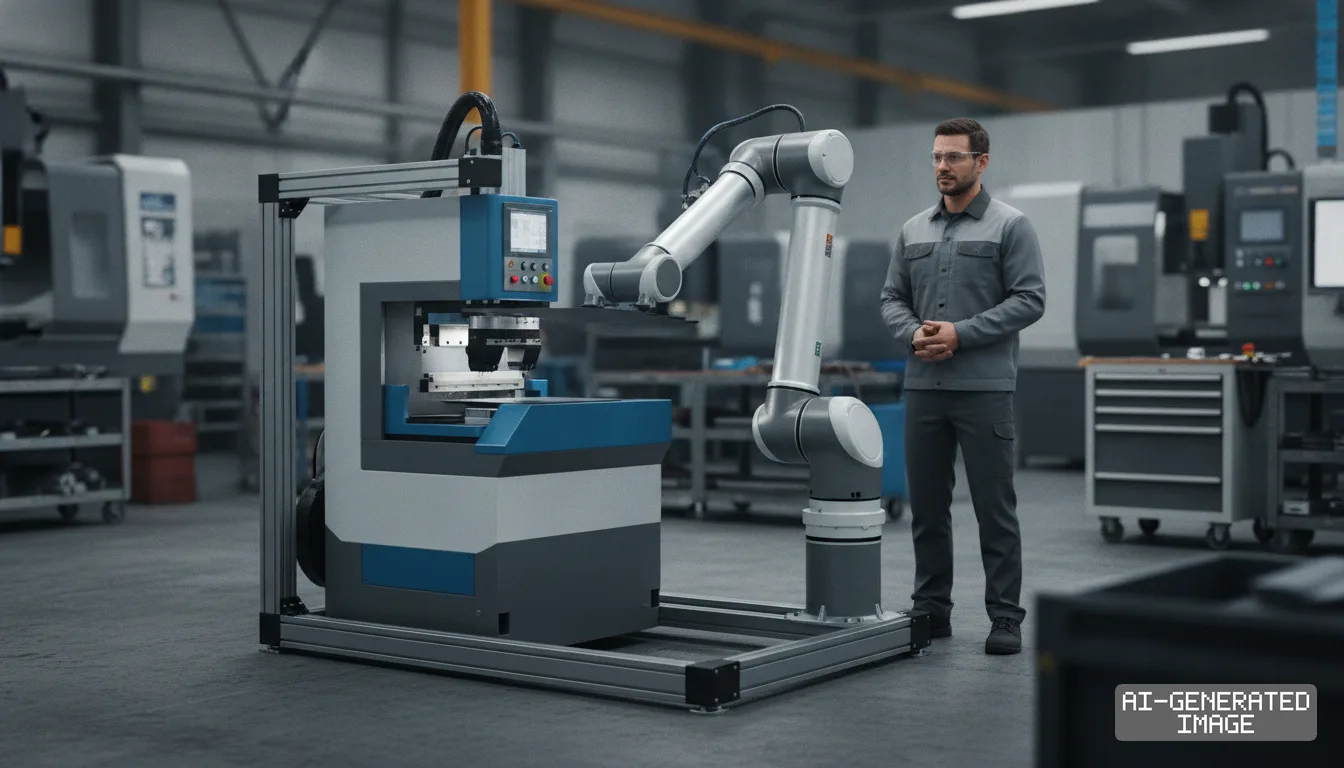
Industrial machinery builder SafanDarley detailed on Oct. 16, 2026, its compact robotic bending cell ahead of FABTECH 2026, targeting metal fabricators grappling with skilled press brake operator shortages.
The equipment integrates a servo-electric press brake and a robotic articulated arm on a single rigid frame. The layout operates without dedicated external safety fencing, allowing installation in tight machine shop floorplans.
The system delivers 35 tons of bending force while cutting electrical power use by up to 50% compared with hydraulic press brakes. Hydraulic machines still account for the majority of sheet metal bending equipment operating globally.
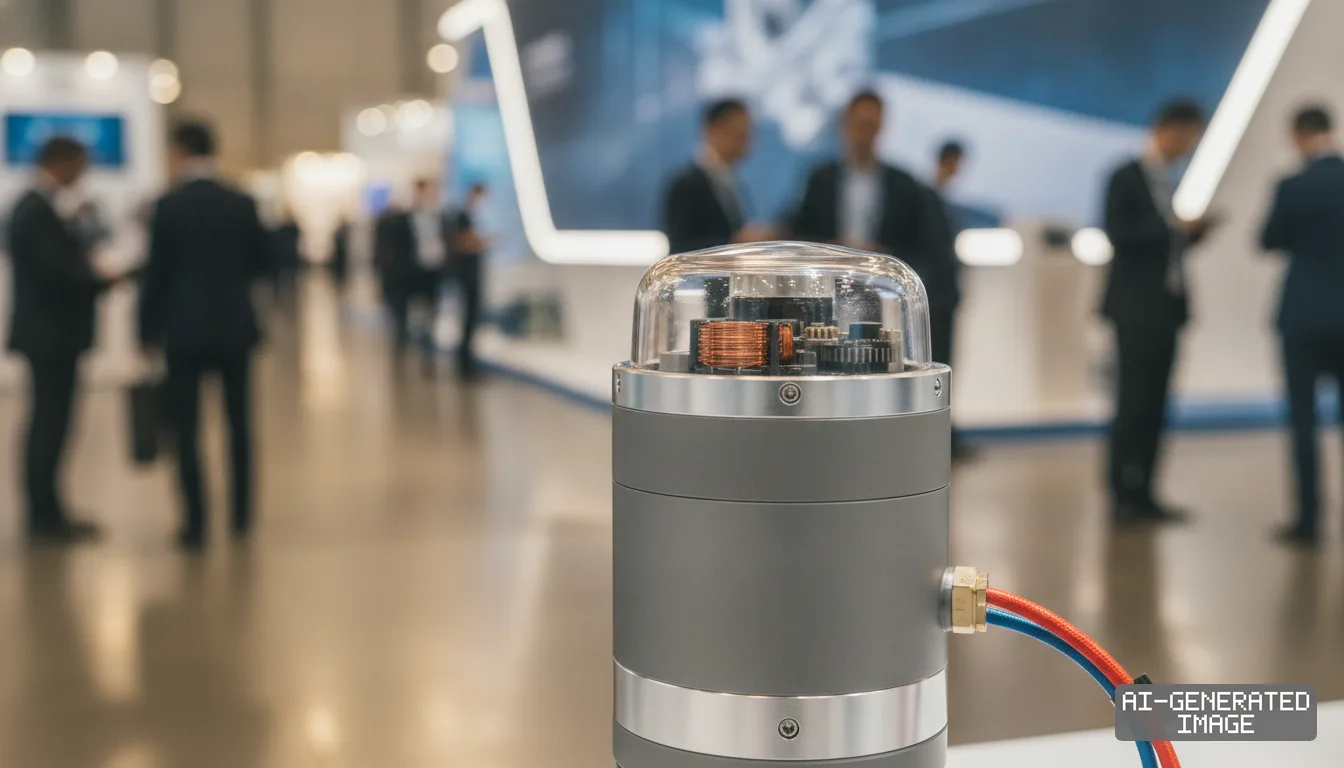
Production cycles accelerate by up to 30% against comparable hydraulic units, SafanDarley said in technical documentation. Dual electric servo drives eliminate hydraulic reservoirs, proportional valves and fluid filters that require scheduled mechanical maintenance.
The integrated cell runs unattended for more than eight continuous hours when configured with an optional double-door infeed enclosure. The machine forms sheet metal blanks measuring up to 600 millimeters by 800 millimeters across production runs.
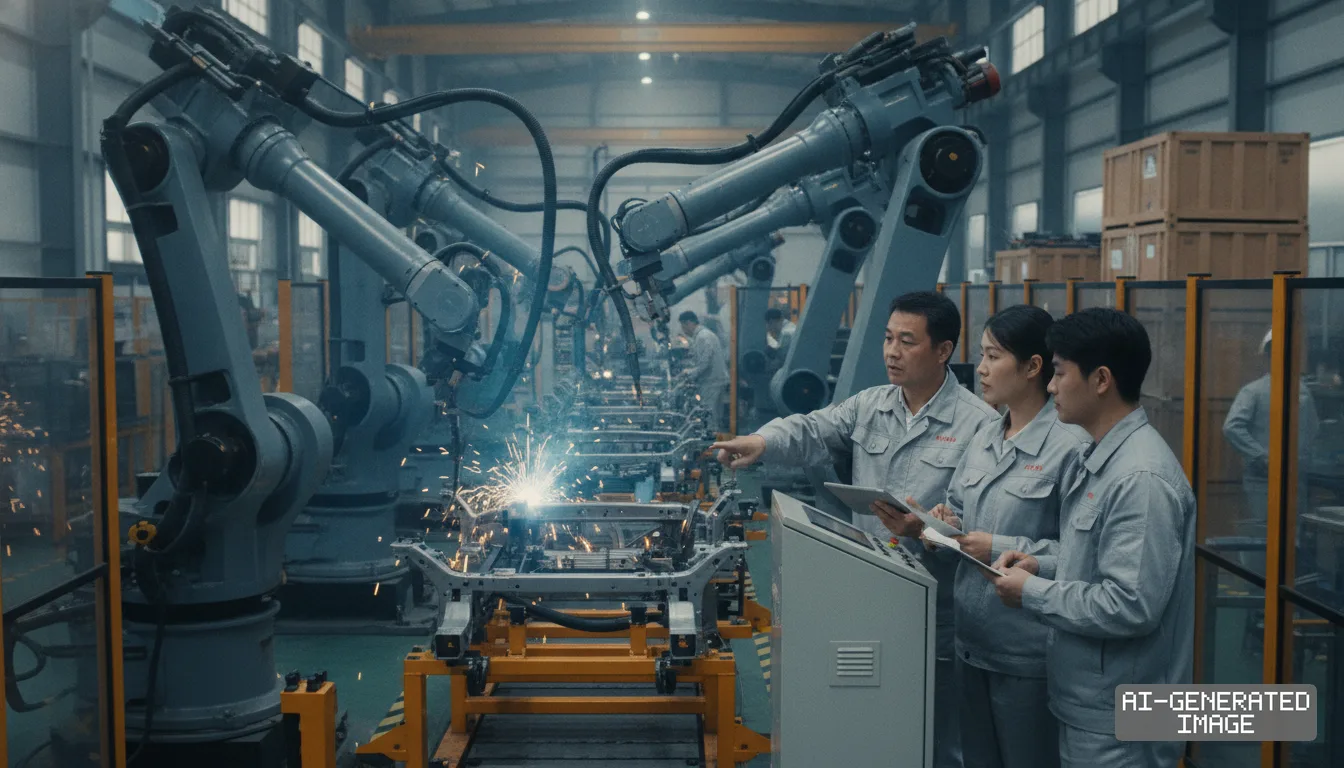
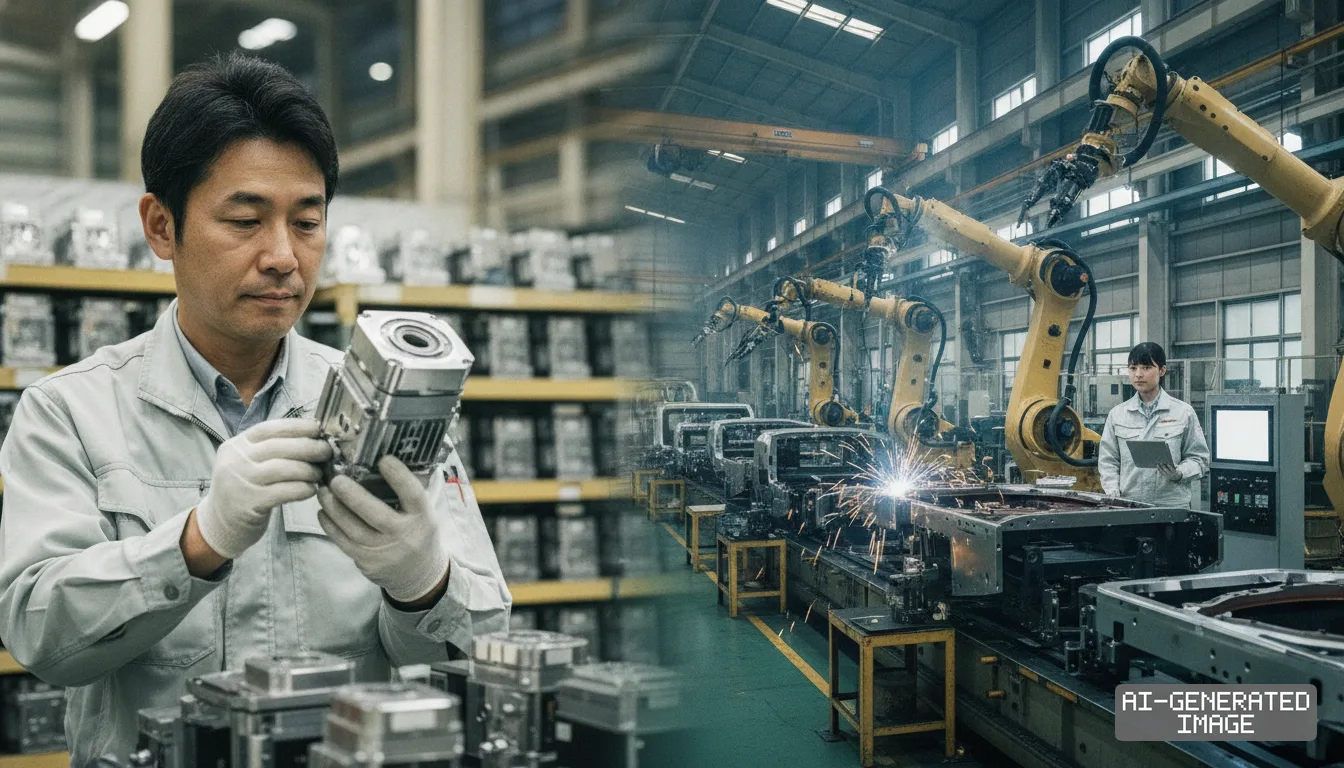
FANUC Corporation supplies the six-axis industrial robot arm that transfers metal blanks between the infeed stations and bending dies. The Japanese automation manufacturer configures the robot with a 25-kilogram handling capacity for the cell.
FANUC drew 44.1% of its consolidated net sales from its Robot Division in the fiscal year ended March 31, 2026. Division revenue reached 378.61 billion yen ($2.51 billion) out of group net sales totaling 857.83 billion yen ($5.69 billion).
The standard cell incorporates two variable infeed stations, a squaring table to align raw sheets, and an exit discharge chute. Integrated mechanical precision adapters lock table positions without requiring operators to reteach robot coordinates between batches.
Optical area scanners continuously monitor the material transfer perimeter outside the machine frame. That sensor layout allows automated guided vehicles to swap out sheet metal pallets without triggering emergency stops or interrupting active bending cycles.
An optional automatic tool and gripper changer swaps punches, dies and suction grippers between part geometries. A dedicated flipping station rotates narrow formed panels so the robot can complete reverse bends without manual part repositioning.
Software controls connect AutoPOL offline programming with RoboBend robotic simulation and SafanDarley's ASC-Control terminal. Programmers convert three-dimensional computer-aided design models into robot tool paths on remote personal computers rather than halting live production.
Offline code generation eliminates teach-pendant programming, a manual process that typically idles fabrication equipment for hours. Bending angles, backgauge stops and collision boundaries are calculated before operators load the metal sheet cart.
The underlying hardware represents an iterative update of an established platform rather than a freshly developed mechanical architecture. SafanDarley first introduced the 35-ton Mini Cell in 2019, adding the eight-hour double-door infeed enclosure in 2023.
Small and medium-sized job shops face an aging pool of experienced brake press operators across North America and Europe. Industry training programs have struggled to replace retiring craftspeople who know how to calculate metal bend deductions manually.
Sheet metal parts for commercial ventilation ducts, electrical cabinets and server chassis require repetitive bending operations. Those repetitive cycles are difficult to staff across second and third shifts, driving fabricators toward compact automated cells.
Capital equipment manufacturers have responded by packaging proven press brake frames with plug-and-play automation software. Lowering installation overhead and factory floor footprint allows equipment makers to address contract manufacturers with modest capital expenditure budgets.
Servo-electric machines also remove the thermal drift that alters bend angles on hydraulic systems as fluid temperatures rise during extended shifts. Eliminating temperature-driven hydraulic variance reduces scrap rates on tight-tolerance stainless steel and aluminum enclosures.
Matt Garbarino, President of SafanDarley North America, said equipment payback depends on total operating cost rather than purchase price alone. Reducing energy consumption and secondary maintenance shifts financial calculations for shops facing persistent skilled labor shortages.
SafanDarley will demonstrate the E-Brake 35T Premium Mini Cell at the FABTECH exposition in Las Vegas from Oct. 21 through Oct. 23. The machine builder will run live multi-part bending programs at booth C3444.
SafanDarley has not published unit pricing for the turnkey cell configuration, and public regulatory records do not show a newly registered utility patent tied to the 2026 exhibition display.
Impact map
How this development propagates across the region and out to global buyers.
| Event | Korea | China | Japan | Global impact |
|---|---|---|---|---|
| compact press brake robot cell deployment | parts makers see automated bending replace manual shop-floor shifts | domestic robotic cell makers face competition in electric press precision | FANUC expands machine tending robot arm deliveries to western machine builders | metal fabricators cut electric power use by 50% and overcome operator deficits |
In this story
- Companies
- SafanDarleyFANUC
- Tickers
- 6954.T
- Impact
- CapexSupply ChainCost Structure
Related briefings
- Inbolt raises $12.5 million for robot vision in auto plants Also on FANUC, Cost Structure
- FANUC India links industrial robots to Niral Networks private 5G Also on FANUC, Cost Structure
- ABB targets end-of-line palletizing with heavy-payload PoWa cobots Also on FANUC, Cost Structure
- FANUC debuts Physical AI robotics for flexible factory lines Also on FANUC, Cost Structure
Sources
Reporting
Confidence: medium — how we grade this
The documents behind this briefing are linked above. East Asia Brief produces its English text with AI assistance under human editorial review, and does not translate or republish other outlets' articles. See our methodology and AI policy. Spotted an error? Tell us.
The Morning Brief
What changed in Korean, Chinese and Japanese industry overnight — and what it means for your supply chain. One email, weekday mornings, US time. Free.
The Morning Brief is in preparation. Leave your address and we will write to you once — when the first issue is ready. Nothing before that.