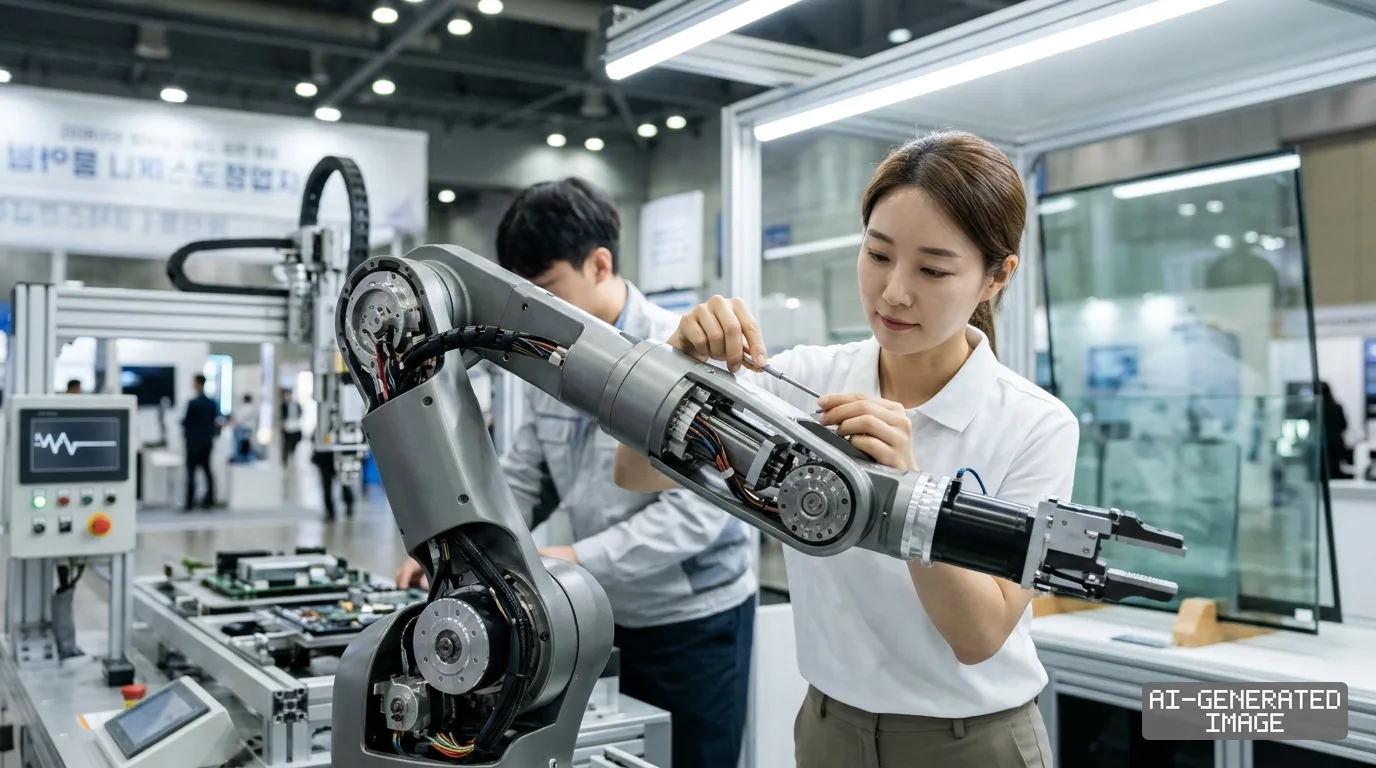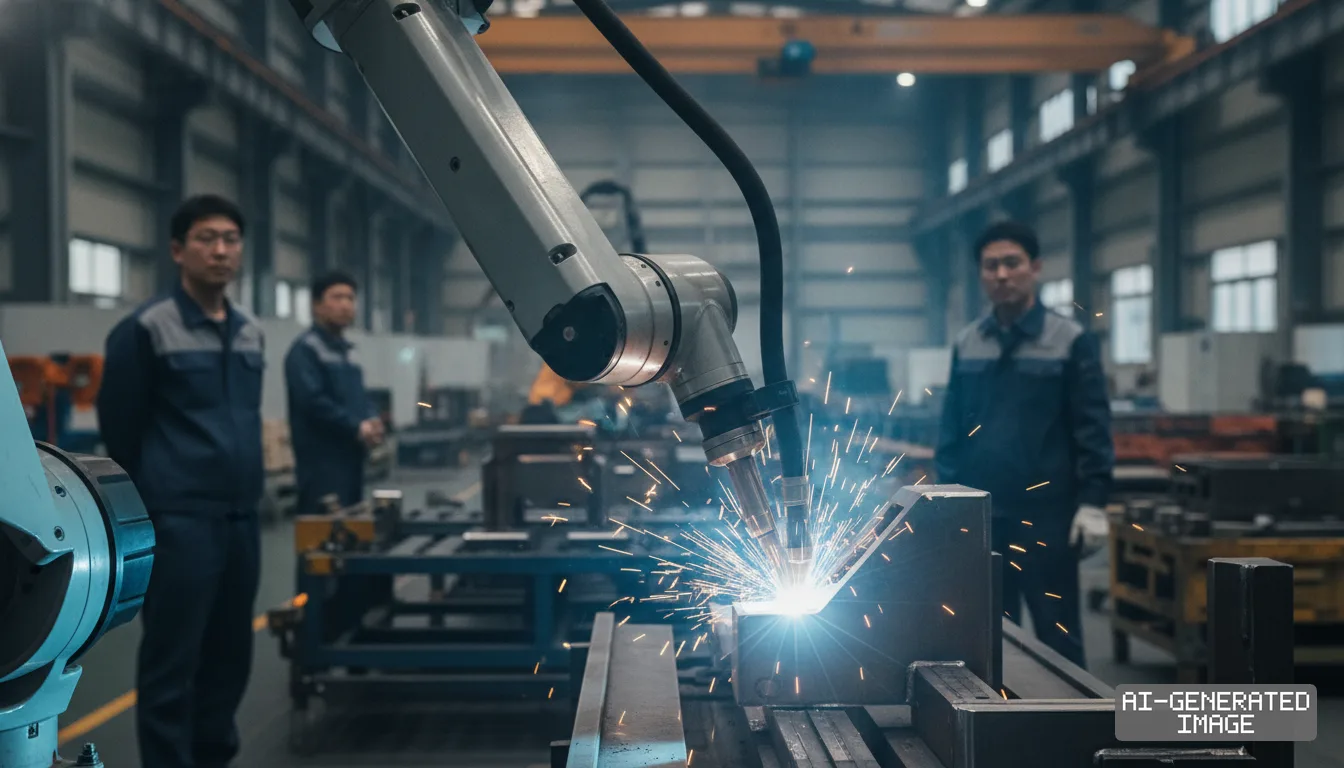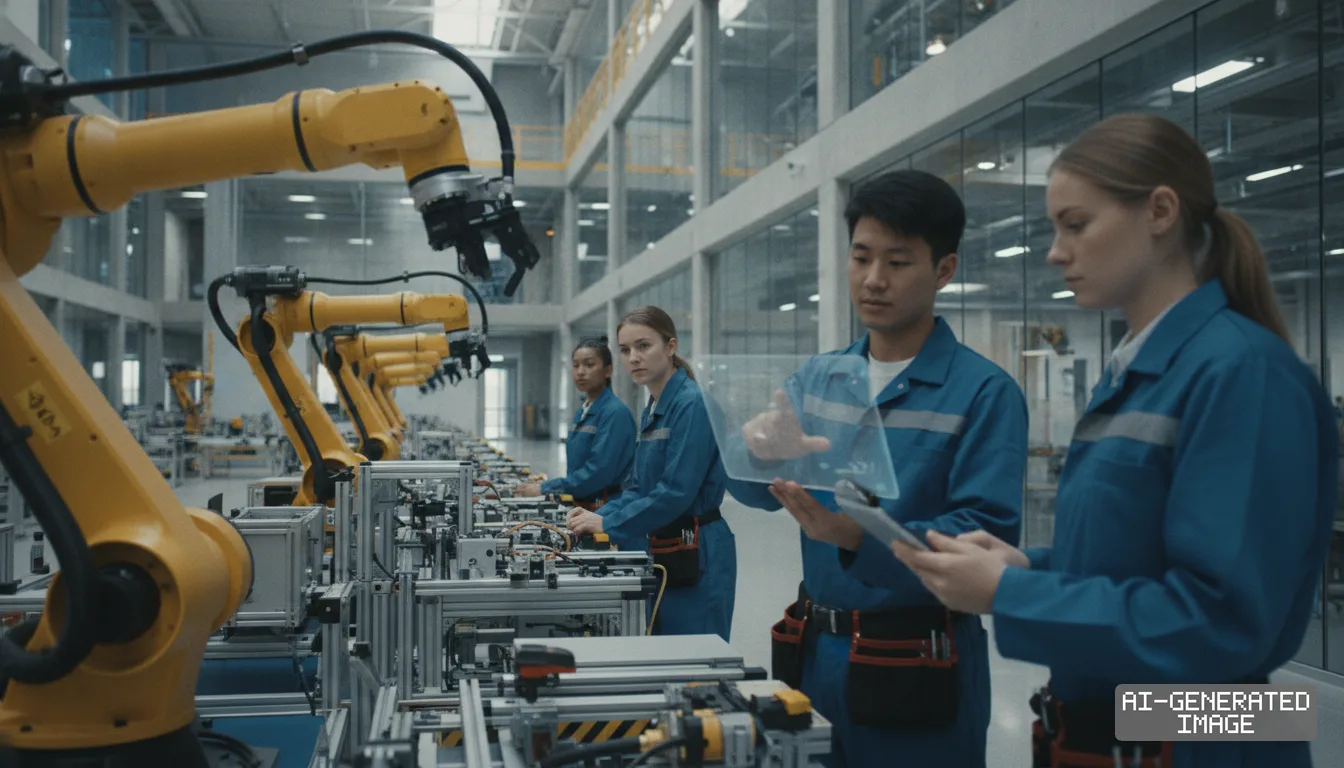
Korean battery equipment makers deploy vision robots to cut cell stacking time
Assembly lines adopt real-time optical alignment to eliminate electrode defects and lower unit cycle times across pouch cell plants.
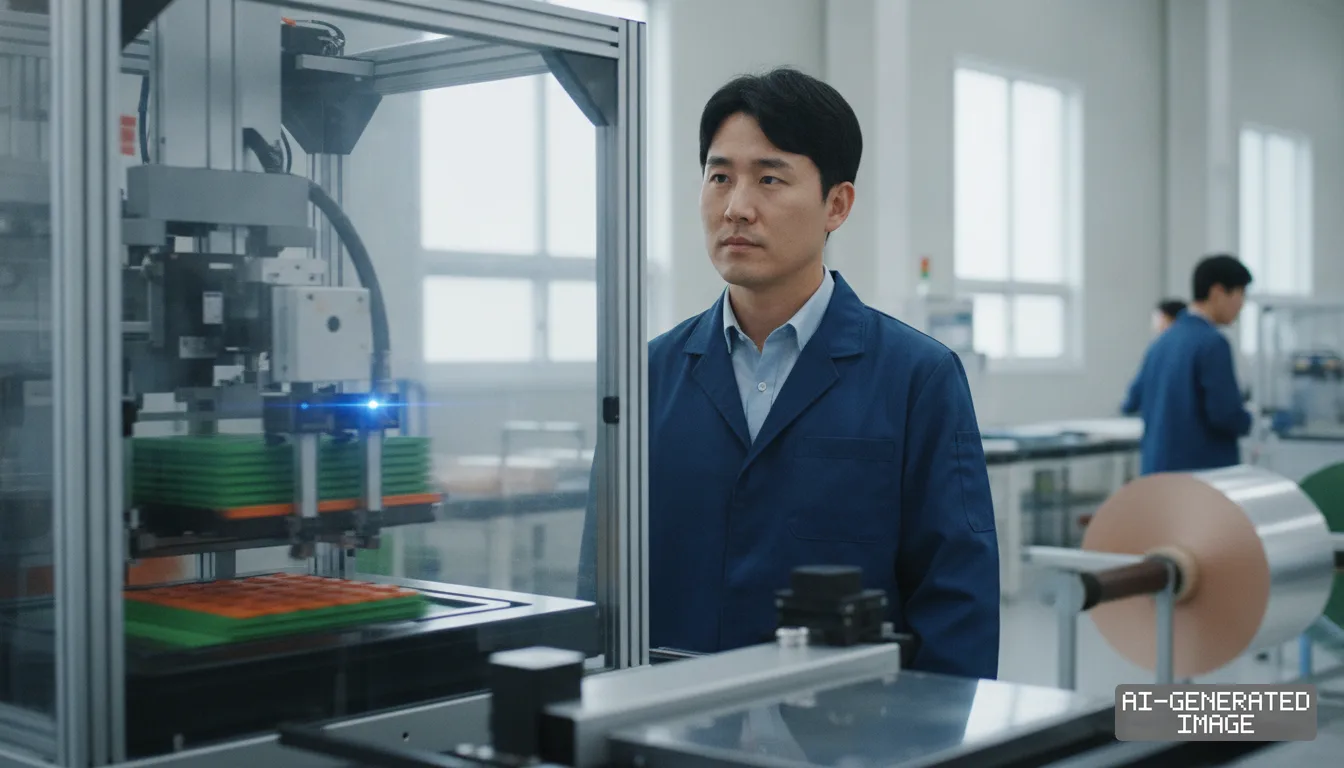
South Korean battery equipment makers accelerated the deployment of vision-guided high-speed stacking systems on July 3, 2026, targeting cycle times below 0.35 seconds per electrode sheet.
The shift addresses manufacturing bottlenecks in secondary battery assembly. Cell makers require faster production rates and zero-defect alignment to prevent thermal runaway risks in electric vehicle battery packs.
Electrode stacking serves as a core bottleneck in pouch cell assembly. The process places cathode plates, anode plates and separator sheets alternately to create the primary power-generating cell unit.
Traditional mechanical alignment fixtures rely on physical guides to square the sheets. High-speed mechanical stops often cause microscopic tears on fragile electrode edges, creating short-circuit risks during charging cycles.
South Korea's Ministry of SMEs and Startups established a technology roadmap targeting ultra-high-speed lithium-ion battery stacking systems. The program funds deep-learning vision alignment systems through 2027 to upgrade domestic equipment suppliers.
The state technology initiative identifies automated electrode packaging and inline optical inspection as strategic manufacturing priorities. The goal focuses on replacing human inspection stations with synchronized robotic handling units.
Equipment maker mPlus Corp. updated its assembly machinery specifications on July 3, 2026, confirming stacking speeds between 0.35 and 0.40 seconds per sheet. The system uses high-speed machine vision cameras.
The optical inspection module detects boundary discrepancies as electrodes move along the feeder track. Multi-axis servomotors adjust the gripper position during transit, correcting alignment errors before the sheet contacts the stack.
The company delivers assembly lines operating at up to 600 parts per minute, according to corporate technical disclosures. The integrated design combines continuous notching and vision stacking into a unified manufacturing platform.
Battery equipment builder PhilEnergy detailed the commercial supply of its vision-guided Z-stacking machinery in a quarterly regulatory filing submitted on May 15, 2025. The platform targets high-volume EV battery production lines.
Z-stacking folds a continuous separator film back and forth while inserting individual cathode and anode sheets into each fold. Precise optical feedback ensures the separator maintains uniform tension across every layer.
Equipment builder Woowon Technology announced on Aug. 29, 2024 that it completed development of an ultra-high-speed Z-stacking machine with a takt time of 0.30 seconds per sheet. The machine combines inline laser notching with automated stacking.
The platform eliminates manual transfer steps between notching dies and stacking fixtures. Automated pick-and-place arms position electrodes directly into folding guides using real-time positional data from overhead optical sensors.
Electrode overhang tolerances remain a strict quality metric for cell manufacturers. If an anode sheet does not fully cover the opposing cathode plate, lithium ions deposit as metallic dendrites on separator surfaces.
Metallic dendrites can penetrate the separator membrane over repeated charging cycles, causing catastrophic internal short circuits. Vision-guided motion controllers maintain electrode edge margins within tight dimensional limits to eliminate overhang errors.
South Korean cell producers LG Energy Solution, Samsung SDI and SK On require tighter alignment tolerances as battery capacities expand. Thicker cell stacks multiply the physical strain on mechanical alignment systems.
Cell makers install automated optical inspection systems at each stacking stage to capture multi-angle images of stacked electrode edges. Software algorithms compute edge margins and reject defective stacks before downstream tab welding.
The adoption of vision-guided robotics also lowers cleanroom operating costs. Automated material transfer reduces human intervention, minimizing airborne particulate contamination inside dry-room environments where cells are assembled.
Equipment makers are expanding vision integration into pouch cell packaging and folding steps. Synchronized robotic transfer modules feed stacked units into pre-formed aluminum pouch cases without shifting internal electrode alignment.
The transition from mechanical positioning to optical closed-loop control requires higher computing throughput on the factory floor. Machine vision controllers process high-resolution frame rates without slowing mechanical transfer lines.
Equipment suppliers are standardizing vision-guided robotic platforms across both domestic and overseas production sites. Standardized machine designs allow rapid commissioning when battery makers build plants in North America and Europe.
Domestic machinery developers continue testing synchronized multi-head stacking architectures to lower cycle times below 0.30 seconds. The Ministry of SMEs and Startups technology roadmap runs through December 2027.
Impact map
How this development propagates across the region and out to global buyers.
| Event | Korea | China | Japan | Global impact |
|---|---|---|---|---|
| Vision stacking robotics | equipment makers ship sub-0.35s tools | cost pressure on standard stackers | precision component supply | EV cell defect reduction |
In this story
- Companies
- mPlusPhilEnergyWoowon Technology
- Tickers
- 259630.KQ378340.KQ
- Exposed
- LG Energy SolutionSamsung SDISK On
- Policy
- SubsidiesEconomic Security
- Impact
- Supply ChainCapexCost Structure
Track every Subsidies development → Track every Economic Security development →
Related briefings
- GM vets Korean suppliers for prismatic LMR battery lines Also on Mplus, LG Energy Solution, Cost Structure
- Philenergy wins $62M battery tool order for US storage site Also on Philenergy, Samsung SDI
- South Korean battery makers prepare sodium-ion lines for energy storage Also on SK On, Samsung SDI, LG Energy Solution
- Sumitomo Chemical shifts aramid separator lines to Korea as battery thermal rules tighten Also on SK On, Samsung SDI, LG Energy Solution
Sources
Primary documents
Reporting
Confidence: high — how we grade this
The documents behind this briefing are linked above. East Asia Brief produces its English text with AI assistance under human editorial review, and does not translate or republish other outlets' articles. See our methodology and AI policy. Spotted an error? Tell us.
The Morning Brief
What changed in Korean, Chinese and Japanese industry overnight — and what it means for your supply chain. One email, weekday mornings, US time. Free.
The Morning Brief is in preparation. Leave your address and we will write to you once — when the first issue is ready. Nothing before that.