South Korean battery makers prepare sodium-ion lines for energy storage
Cell manufacturers limit early sodium-ion spending to pilot facilities while targeting 2027 prototype shipments to counter Chinese lithium iron phosphate dominance.
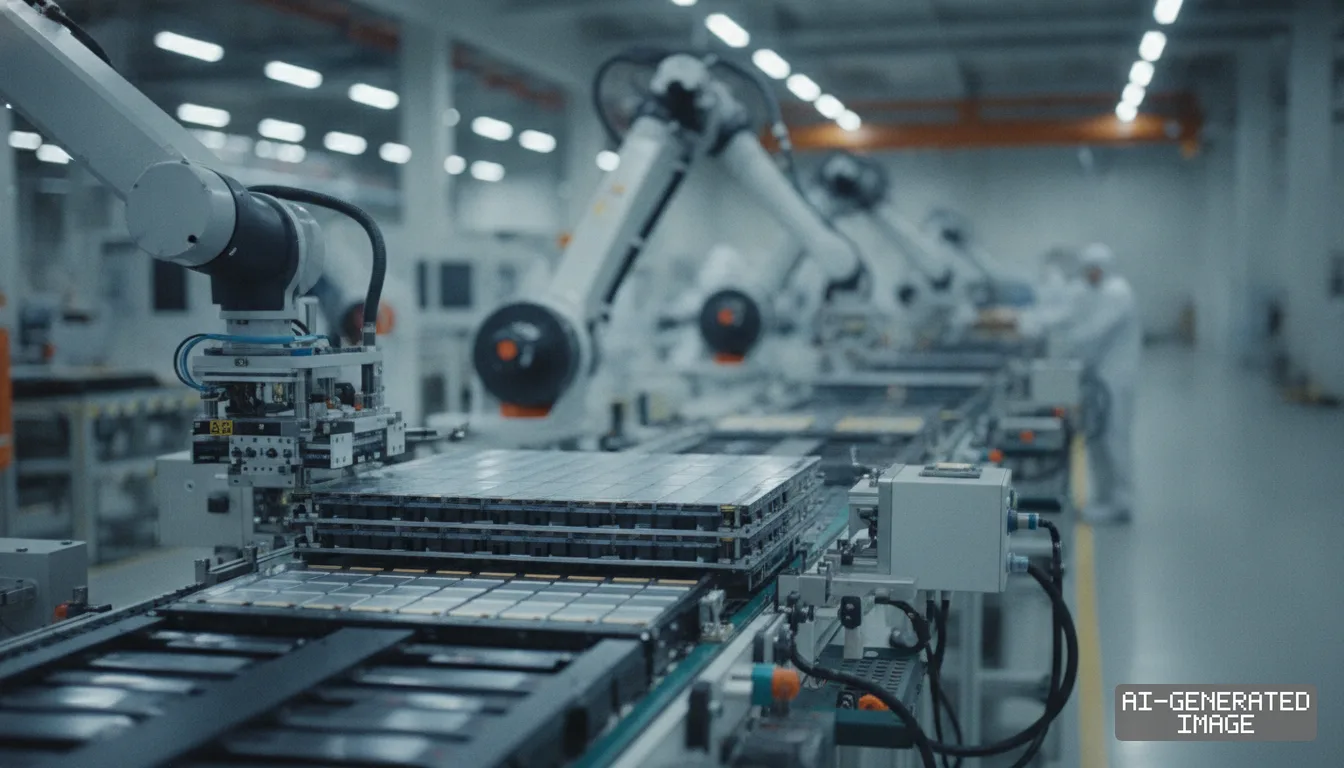
South Korean battery manufacturers reviewed commercial scale-up plans on Oct. 2, 2026, aligning factory timelines with a state roadmap to challenge Chinese dominance in low-cost energy storage systems.
The joint program commits 8.4 trillion won ($6.1 billion) in total spending through 2030. The Ministry of Trade, Industry and Energy provides 400 billion won ($290 million) in state research grants, representing 5% of the total envelope.
Private manufacturers pledge the remaining 8 trillion won ($5.8 billion) across pilot facilities and material synthesis. The capital targets energy storage units and low-speed electric vehicles rather than high-performance passenger cars.
The push responds to China's control of lithium iron phosphate chemistry. Chinese suppliers produce more than 85% of global iron-based cells, locking out South Korean producers on manufacturing cost in utility-scale storage.
Sodium-ion cells replace scarce lithium and nickel with abundant sodium salts and hard carbon. The switch lowers raw material expenses by roughly 30% per kilowatt-hour at cell level, the ministry said.
LG Energy Solution confirmed it will supply initial sodium-ion cell samples to prospective customers in 2027. The company is evaluating production tooling at its Ochang mother-line site in South Korea.
Samsung SDI disclosed in an Aug. 14 regulatory filing that it is evaluating its Ulsan factory complex for sodium-ion assembly. The initial target application focuses on uninterruptible power supply systems for commercial artificial intelligence data centers.
SK On scheduled completion of an energy storage prototype cell by 2027. The company set commercial deployment for 2028, allocating engineering resources to container-sized utility battery systems.
Material suppliers are sequencing their chemical processing lines in parallel. Upstream cathode synthesizers must establish stable sodium transition metal oxide flows before cell makers finish module qualification.
LG Chem said July 31 it will begin commercial production of high-power sodium-ion cathode materials in late 2027. The company plans to add long-life cathode formulations in 2029.
Hard carbon anode procurement remains a critical bottleneck for domestic producers. South Korea currently relies on overseas refiners for more than 90% of specialized precursor carbon.
Domestic component suppliers are designing specialized current collectors. Sodium chemistry allows aluminum foil on both positive and negative terminals, eliminating expensive copper foil entirely from the negative anode electrode.
Copper foil accounts for roughly 8% of cell bill-of-materials costs in standard lithium batteries. Replacing it with aluminum lowers baseline metal procurement overhead across pack assemblies.
Energy density remains the primary operational hurdle for the new chemistry. Current South Korean prototype pouch cells reach approximately 140 watt-hours per kilogram during laboratory cycling.
The government roadmap requires consortium members to deliver 160 watt-hours per kilogram by late 2027. The project sets a commercial milestone of 220 watt-hours per kilogram by 2030.
Chinese competitors already deploy 160 watt-hour sodium cells across domestic fleet pilots. CATL and HiNa Battery operate operational assembly lines delivering entry-grade two-wheel packs and grid cabinets.
For South Korean cell makers, sodium chemistry provides insurance against mineral export controls. Chinese authorities tightened permit rules on synthetic graphite and spherical battery feedstocks during recent regulatory reviews.
Sodium-ion supply chains do not require cobalt, nickel or mined natural flake graphite. The chemistry uses iron, manganese and organic resin precursors that refiners can synthesize domestically.
Regulatory filings do not confirm that any South Korean cell manufacturer commissioned a dedicated, full-scale commercial assembly line as of early October 2026. Current capital allocations remain restricted to pilot equipment and verification runs.
The Trade Ministry opens formal technical review sessions for the 400 billion won research fund in January 2027. Factory qualification reports on initial cell batches are due to regulators that December.
Impact map
How this development propagates across the region and out to global buyers.
| Event | Korea | China | Japan | Global impact |
|---|---|---|---|---|
| Sodium-ion battery roadmap | LG Energy Solution and Samsung SDI prepare 2027 pilot samples | CATL defends 85% share in entry chemistry with existing 160 Wh/kg lines | Panasonic holds LFP and sodium investment to research benchmarking | ESS system pack costs drop as cell makers eliminate copper foil |
In this story
- Companies
- LG Energy SolutionSamsung SDISK OnLG Chem
- Tickers
- 373220.KS006400.KS051910.KS
- Exposed
- CATL
- Policy
- SubsidiesEconomic Security
- Impact
- Supply ChainCapexCost Structure
Track every Subsidies development → Track every Economic Security development →
Related briefings
- Korean cathode makers automate single-crystal calcination lines to secure yields Also on LG Chem, LG Energy Solution, Cost Structure
- Korean cathode makers retool production lines for LMFP chemistry as price war spreads Also on LG Chem, Cost Structure
- Battery makers widen aerogel sheet adoption as EV thermal propagation rules tighten Also on LG Chem, Cost Structure
- Samsung SDI and LG Energy double ESS warranties to 20 years in US Also on CATL, SK On, Samsung SDI
Sources
Reporting
Confidence: medium — how we grade this
The documents behind this briefing are linked above. East Asia Brief produces its English text with AI assistance under human editorial review, and does not translate or republish other outlets' articles. See our methodology and AI policy. Spotted an error? Tell us.
The Morning Brief
What changed in Korean, Chinese and Japanese industry overnight — and what it means for your supply chain. One email, weekday mornings, US time. Free.
The Morning Brief is in preparation. Leave your address and we will write to you once — when the first issue is ready. Nothing before that.