Korea Food Plants Deploy Delta Robots to Counter Cold-Chain Labor Churn
Food manufacturers integrate vision-guided delta robotic arms into refrigerated packing lines as high worker turnover threatens throughput.
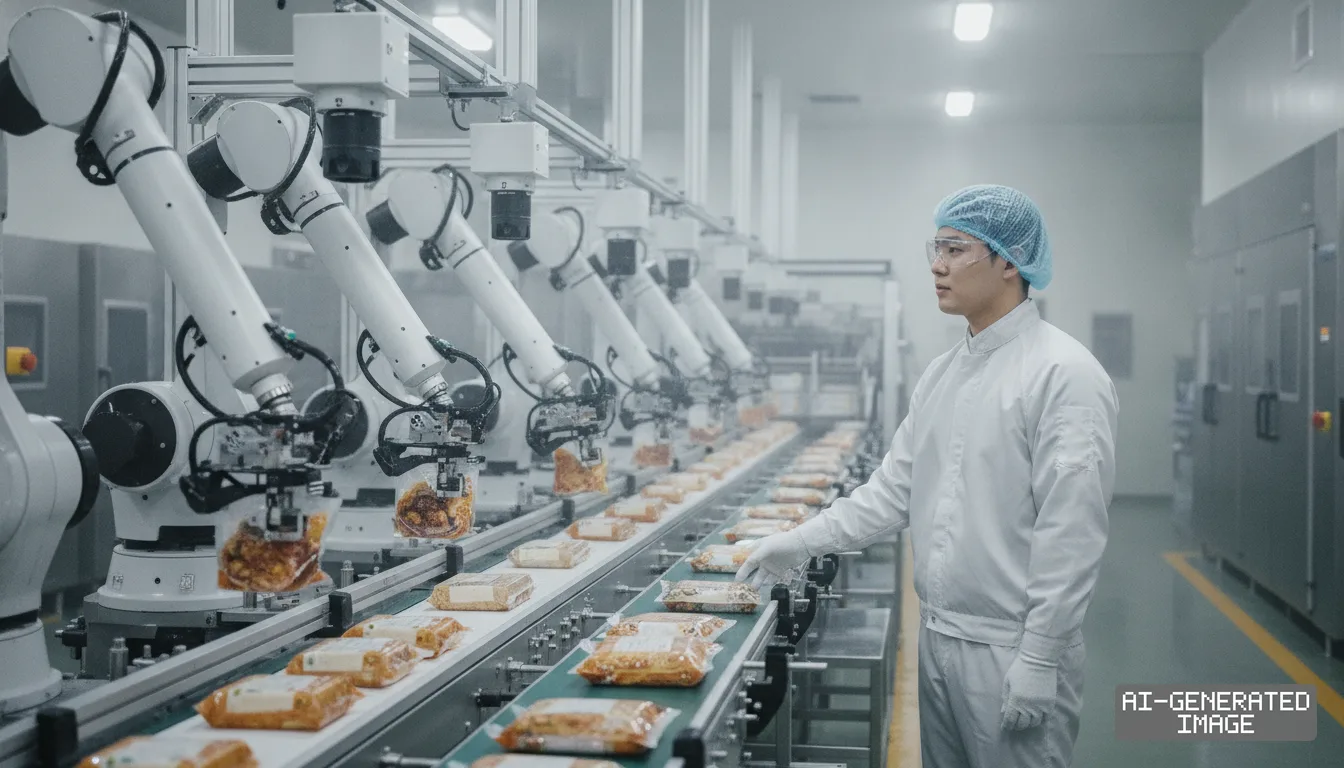
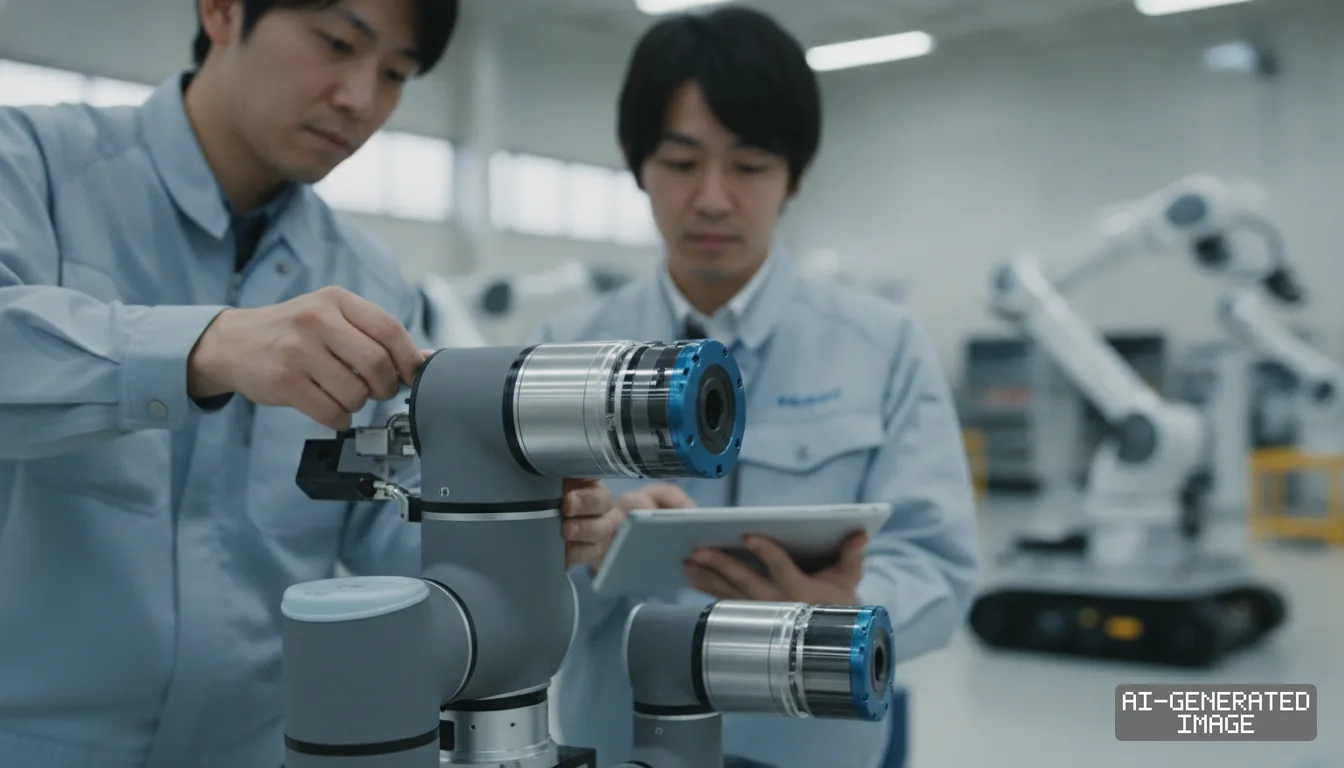
South Korean food processing conglomerates are accelerating the deployment of vision-guided delta sorting robots across refrigerated manufacturing and packaging facilities, replacing manual labor lines that face chronic staffing turnover in low-temperature environments.
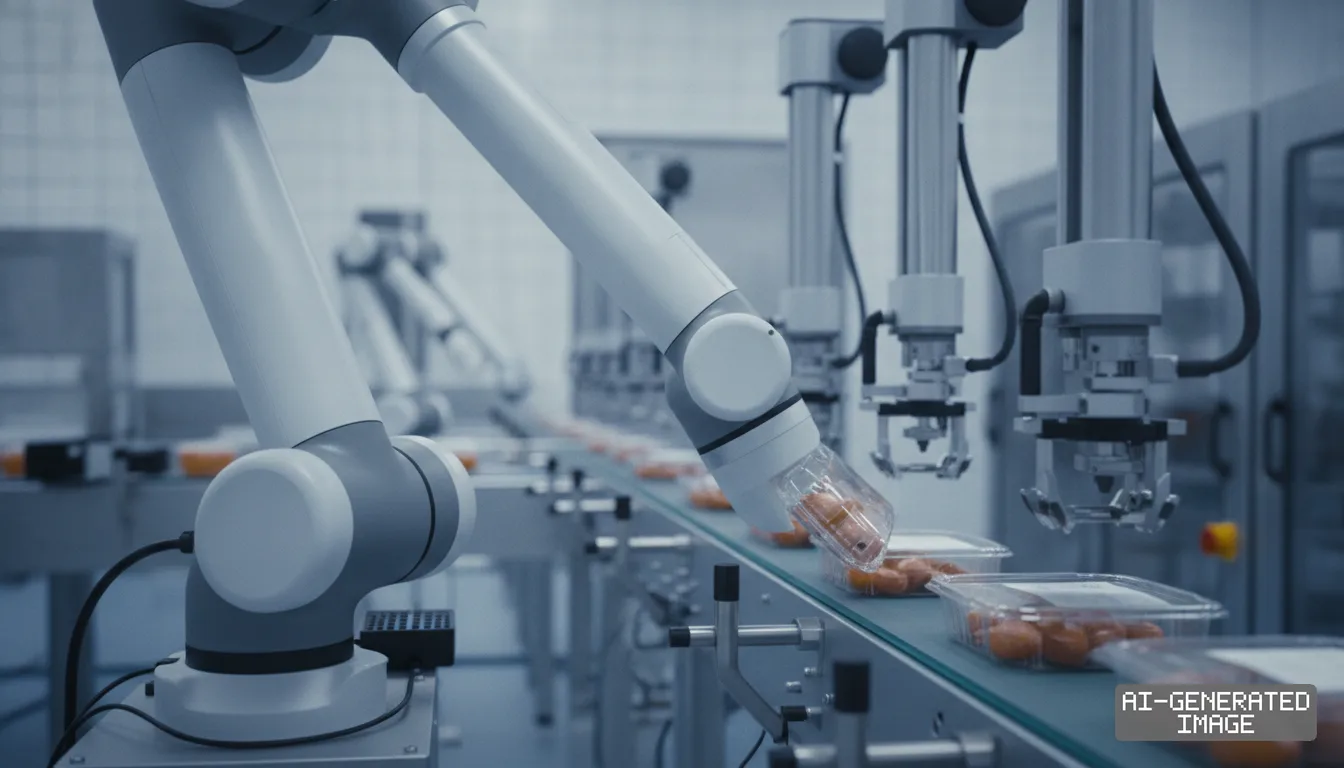
The operational shift addresses an acute labor bottleneck in cold-chain food processing, where working conditions maintained between 0 degrees Celsius and 5 degrees Celsius drive sustained attrition among sorting and secondary packaging workers. To maintain continuous shift output without relying on temporary labor pools, food producers are re-engineering end-of-line packaging architectures around high-speed parallel delta manipulators equipped with 2D and 3D industrial vision systems and washdown-rated pneumatic grippers.
The push is backed by national technical validation and state-supported automation initiatives. Research conducted by the Korea Food Research Institute (KFRI) on automated meal-kit packaging systems demonstrated that multi-arm delta robotic setups solve the throughput deficit that previously constrained robotic adoption on high-speed food lines. KFRI plant simulation benchmarks showed that while a single delta robot configuration achieved a throughput of 1,510 units per hour with a cycle time of 2.36 seconds operating at only 68.3 percent of the 2,112 units per hour achieved by manual sorting lines a dual-delta robotic cell achieved 2,568 units per hour at a cycle time of 1.42 seconds. The dual-arm configuration surpassed manual line output by more than 21 percent while eliminating human handling variability under refrigerated conditions.
The commercialization of automated picking and sorting is unfolding across South Korea's largest food conglomerates, which are standardizing automated systems across their primary processing hubs. CJ CheilJedang operates automated palletizing lines, automated guided vehicles (AGVs), and smart sorting systems at its 330,000-square-meter Jincheon Blossom Campus. In August 2026, CJ CheilJedang selected physical artificial intelligence robotics developer Neubility under the sixth cohort of its Frontier Labs open innovation program to initiate joint Proof-of-Concept (PoC) testing for vision-guided handling robots, targeting high-accuracy picking performance across variable temperature zones and irregular packaging formats.
Simultaneously, Pulmuone operates automated cold-chain receiving, sorting, and dispatch lines at its 42,000-square-meter Eumseong Cold Logistics Center, which earned the Level-1 Smart Logistics Center certification from South Korea's Ministry of Land, Infrastructure and Transport (MOLIT). The Eumseong facility maintains product flows under continuous temperature regimes at or below 5 degrees Celsius and 2 degrees Celsius, utilizing automated electromagnetic sorters alongside 18 overhead gantry stacking robots to process fresh food shipments without thermal breaks.
Government industrial policy is expanding fiscal and technical support for these deployments. South Korea's Ministry of Trade, Industry and Energy (MOTIE) has established standard robot adoption models across 25 industrial sectors, including clean-manufacturing models specifically designed for food and beverage operations. Under the Fourth Intelligent Robot Basic Plan, MOTIE earmarked 436.56 billion won ($336 million) in 2026 for smart-factory and automation subsidies, aiming to deploy 1 million industrial robots across domestic manufacturing sectors by 2030. The ministry's standard models provide food processors with validated integration blueprints covering motion control, sanitary standards, and electrical safety, lowering engineering risks for mid-tier processors and contract packers.
The operational environment within refrigerated food plants imposes specific engineering demands on robotic hardware. Delta sorting cells installed in cold-chain facilities require IP65 to IP69K ingress protection ratings, stainless steel arm linkages, and food-grade lubricants capable of maintaining consistent viscosity without freezing or degrading during daily chemical washdowns. Condensation management represents a critical engineering hurdle; temperature swings during facility sanitation cycles can cause moisture accumulation inside internal motor housings and vision camera enclosures unless systems incorporate sealed positive-pressure air purges.
Domestic automation equipment manufacturers and system integrators are positioning their product portfolios to capture this demand. LS ELECTRIC supplies its LS QuickMaster XDR delta robot line alongside motion controllers and machine vision modules to domestic food and pharmaceutical packagers. These high-speed parallel kinematic manipulators deliver positioning repeatability within tenths of a millimeter at acceleration rates exceeding 10 Gs, allowing food lines to transfer fragile fresh products, vacuum-sealed pouches, and thermoformed plastic trays into carton loaders without damaging product seals.
For industrial robotics suppliers and component distributors, the cold-chain food sector represents an expanding demand base distinct from traditional automotive and electronics assembly lines. While semiconductor and battery facilities require cleanroom-certified six-axis articulated arms and automated material transport, food packaging lines require compact overhead-mounted delta architectures that maximize conveyor belt access while minimizing floor footprints in temperature-controlled spaces. System integrators are pairing these arms with edge-computing vision platforms capable of identifying product orientation, label defects, and seal integrity on high-speed moving belts.
The transition toward automated sorting in refrigerated food facilities is shifting operating cost structures across the sector. Food manufacturers face upfront capital expenditure requirements for delta robotic cells, vision sensors, and custom end-of-arm tooling, but the installations lower ongoing direct labor expenses, reduce workplace safety liabilities linked to cold exposure, and insulate production schedules from regional labor supply constraints.
Plant operators are structuring multi-year procurement schedules to expand robotic sorting beyond primary manufacturing centers into regional distribution hubs. As standard integration models mature and vision algorithms improve handling accuracy on flexible packaging, food processing companies are linking delta picking cells directly with automated case packers and autonomous mobile transport systems across low-temperature facilities nationwide.
Impact map
How this development propagates across the region and out to global buyers.
| Event | Korea | China | Japan | Global impact |
|---|---|---|---|---|
| Cold-Chain Food Robotics | food processors cut labor turnover | packaging machinery exports compete | precision component supply | automated cold-chain adoption |
In this story
- Companies
- CJ CheilJedangPulmuoneLS ELECTRIC
- Tickers
- 097950.KS017810.KS010120.KS
- Exposed
- Neubility
- Policy
- SubsidiesEconomic Security
- Impact
- CapexSupply ChainCost Structure
Track every Subsidies development → Track every Economic Security development →
Related briefings
- HD Hyundai Electric holds top US transformer market share at $8.5B Also on LS Electric
- LS Electric wins $133M US transformer deal for AI power grids Also on LS Electric
- Korean power gear makers book grid orders on US fab growth Also on LS ELECTRIC
- Shinko buys Japan Display plant to build advanced packaging hub Also on Cost Structure
Sources
Primary documents
Reporting
Confidence: high — how we grade this
The documents behind this briefing are linked above. East Asia Brief produces its English text with AI assistance under human editorial review, and does not translate or republish other outlets' articles. See our methodology and AI policy. Spotted an error? Tell us.
The Morning Brief
What changed in Korean, Chinese and Japanese industry overnight — and what it means for your supply chain. One email, weekday mornings, US time. Free.
The Morning Brief is in preparation. Leave your address and we will write to you once — when the first issue is ready. Nothing before that.