Fanuc and Yaskawa Expand US Robot Plants to Meet AI Factory Push
The Japanese automation leaders are committing over $270 million to new Michigan and Wisconsin campuses as North American semiconductor and automotive makers retool for physical AI.
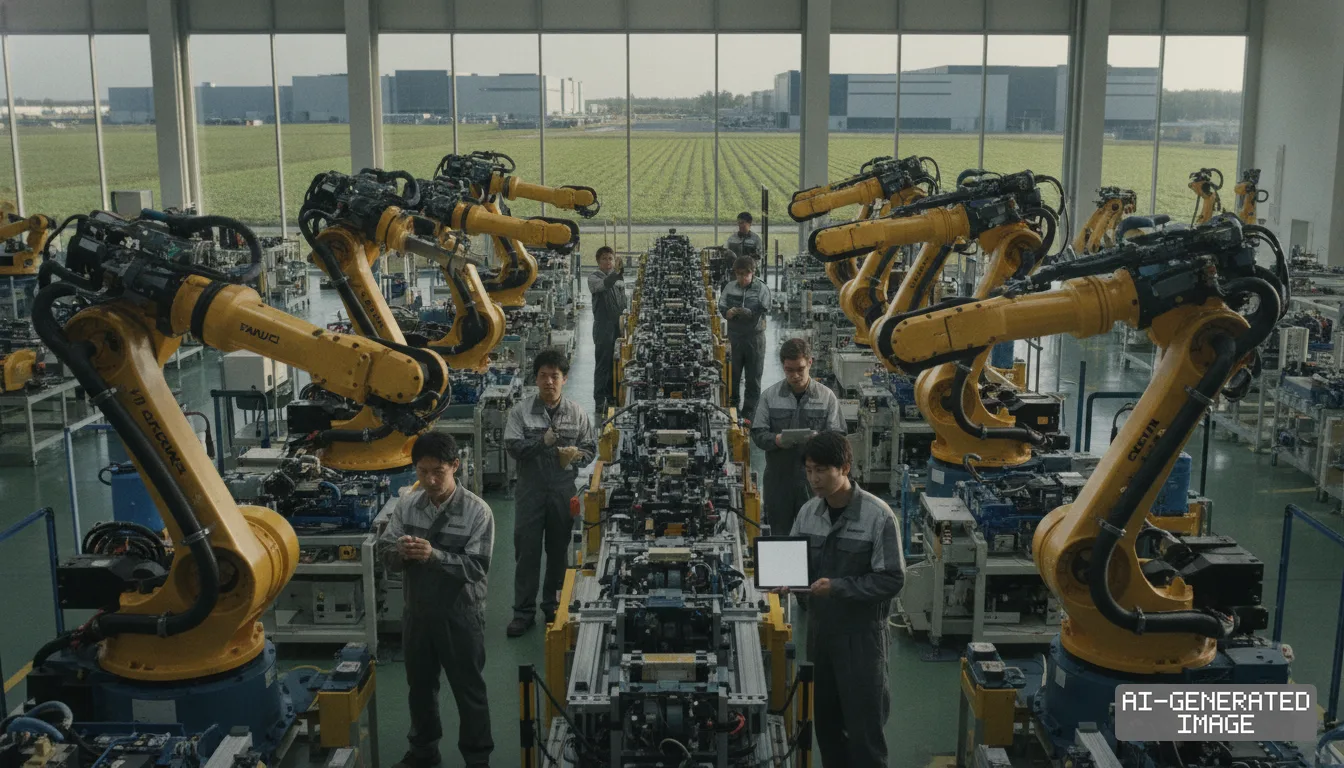
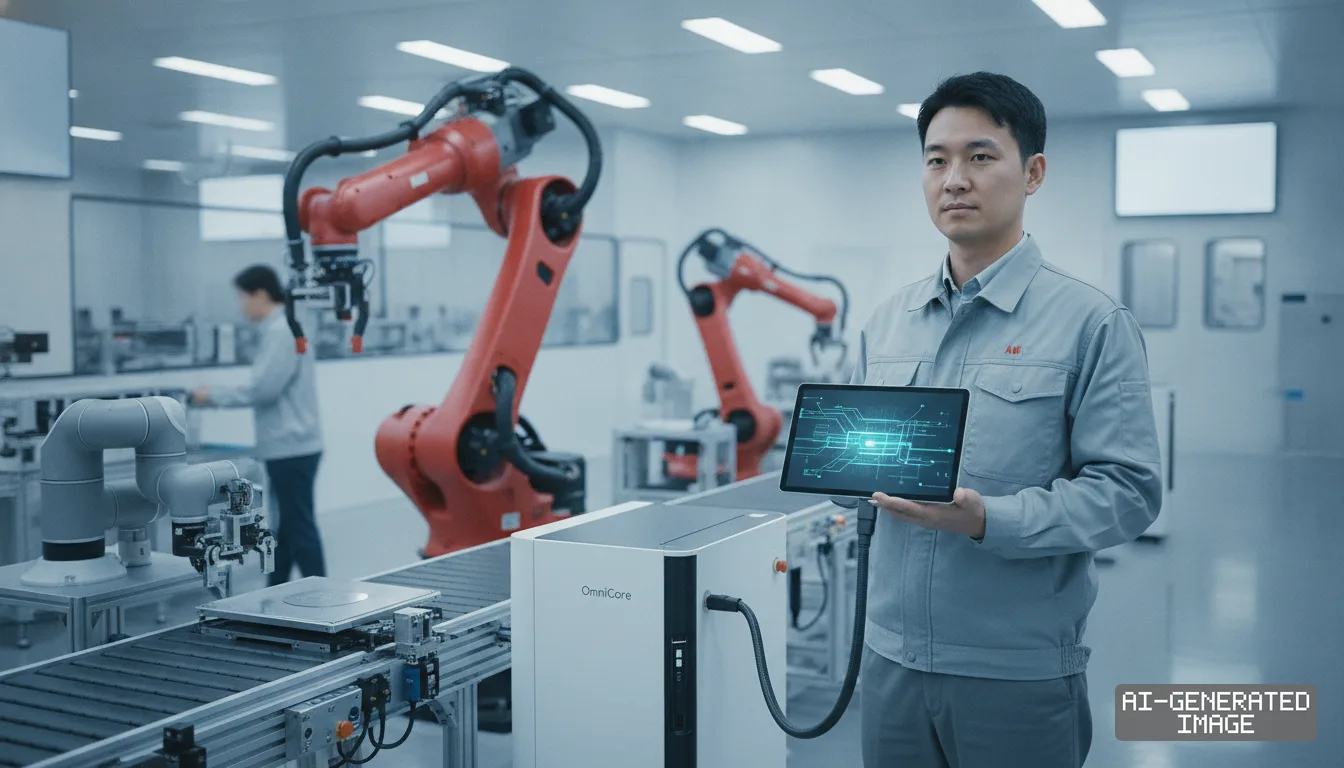
Fanuc Corporation and Yaskawa Electric Corporation advanced site execution for $270 million in combined US factory projects on Sept. 29, positioning industrial robot assembly closer to subsidized American fabs and automation hubs.
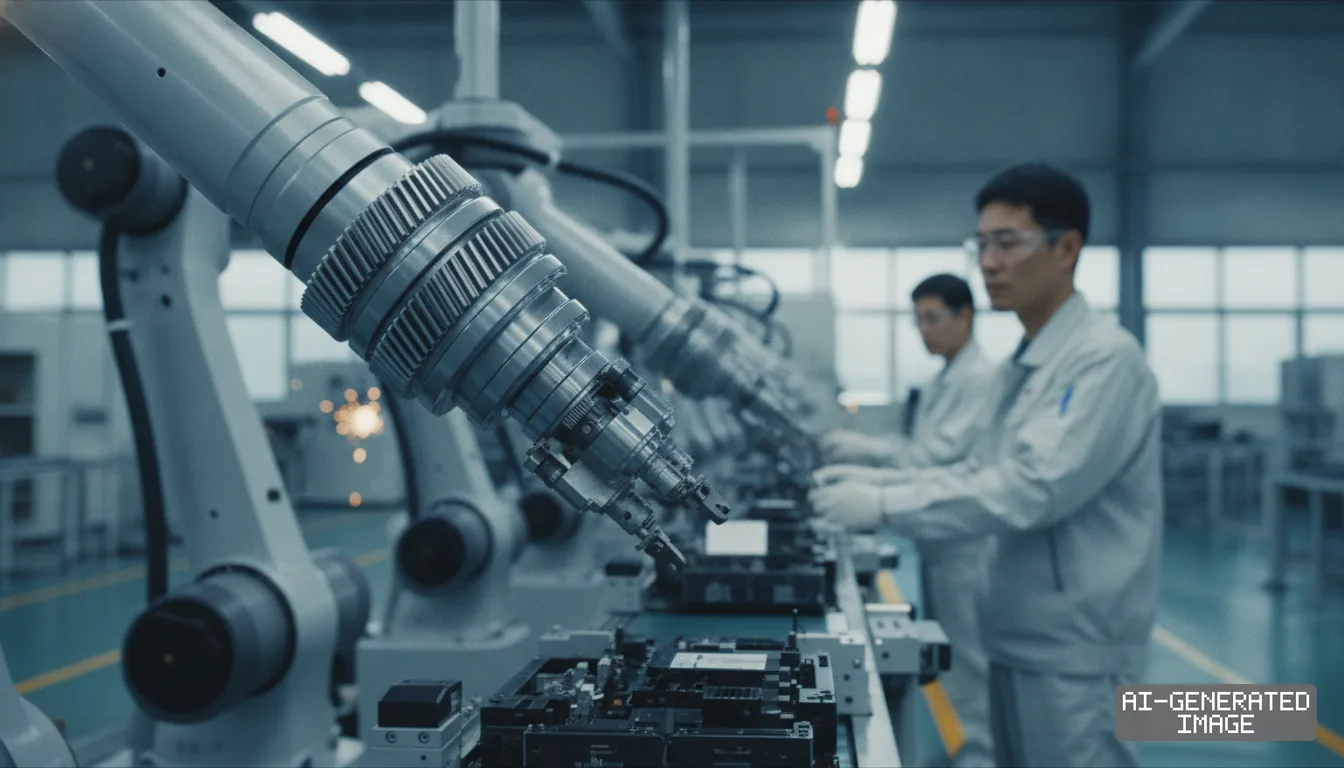
The two Japanese manufacturers supply roughly half of the precision automation hardware used across global assembly lines. Both companies are establishing direct robot manufacturing footprints inside the United States to serve domestic clean-energy, semiconductor and automotive buildouts.
The capital programs commit $270 million to new North American production floors. Fanuc generated ¥329.6 billion ($2.1 billion) from its robotics division in fiscal 2025, which represented 41.3% of its ¥797.1 billion in total net sales.
Yaskawa recorded ¥247.0 billion in robotics segment revenue during the same reporting period. The company also books heavy motion-control revenue from servo motors — electric actuators that control rotational and linear position — installed in chipmaking machinery.
Fanuc America is investing at least $90 million to build an 840,000-square-foot facility on a 40-acre parcel in Pontiac, Michigan. The plant will house robotics manufacturing, logistics operations and research and development.
The Michigan Strategic Fund approved a $1.575 million performance-based Michigan Business Development Program grant for the Pontiac facility. The expansion will create at least 225 jobs ranging from assembly technicians to advanced robotics engineers, state economic officials said.
Fanuc America already employs 1,497 workers across five locations in Michigan. The Pontiac addition expands the subsidiary's operational footprint beyond three million square feet, following nearly $300 million in domestic facility investments completed since 2019.
The investment will expand engineering and domestic manufacturing to support physical artificial intelligence — machine-learning models that control real-world robot mechanics, Fanuc America Chief Executive Mike Cicco said in an announcement. New industrial robot lines will be produced at the plant.
Yaskawa Electric is executing a $180 million capital investment over an eight-to-ten-year horizon in Franklin, Wisconsin. The planned 800,000-square-foot campus will mark the first time Yaskawa manufactures high-volume industrial robots on American soil.
The Franklin facility will consolidate Yaskawa America’s existing operations across Illinois and Wisconsin into six to seven new buildings. The corporate relocation will add 700 jobs, eventually lifting the campus workforce to 1,000 employees.
The Wisconsin Economic Development Corporation backed the consolidation with up to $18 million in performance-based Enterprise Zone tax credits. The site will produce low-voltage and medium-voltage inverters, solar string inverters, motion controllers and multi-axis industrial robots.
The Franklin campus will double Yaskawa America’s commercial business over the next decade, Yaskawa America Chief Executive Mike Knapek said. The subsidiary is moving its headquarters from Waukegan, Illinois, to establish contiguous production and testing space.
Surging automation demand across North American manufacturing is driving the capacity additions. United States industrial robot installations rose 11% year-on-year to 38,000 units in 2025, according to data from the International Federation of Robotics.
Non-automotive sectors led the increase, with food and consumer goods manufacturing installations rising 30%. Automotive installations reached 13,500 units, slipping 1% from 2024 levels while remaining the largest overall buyer of articulated industrial arms.
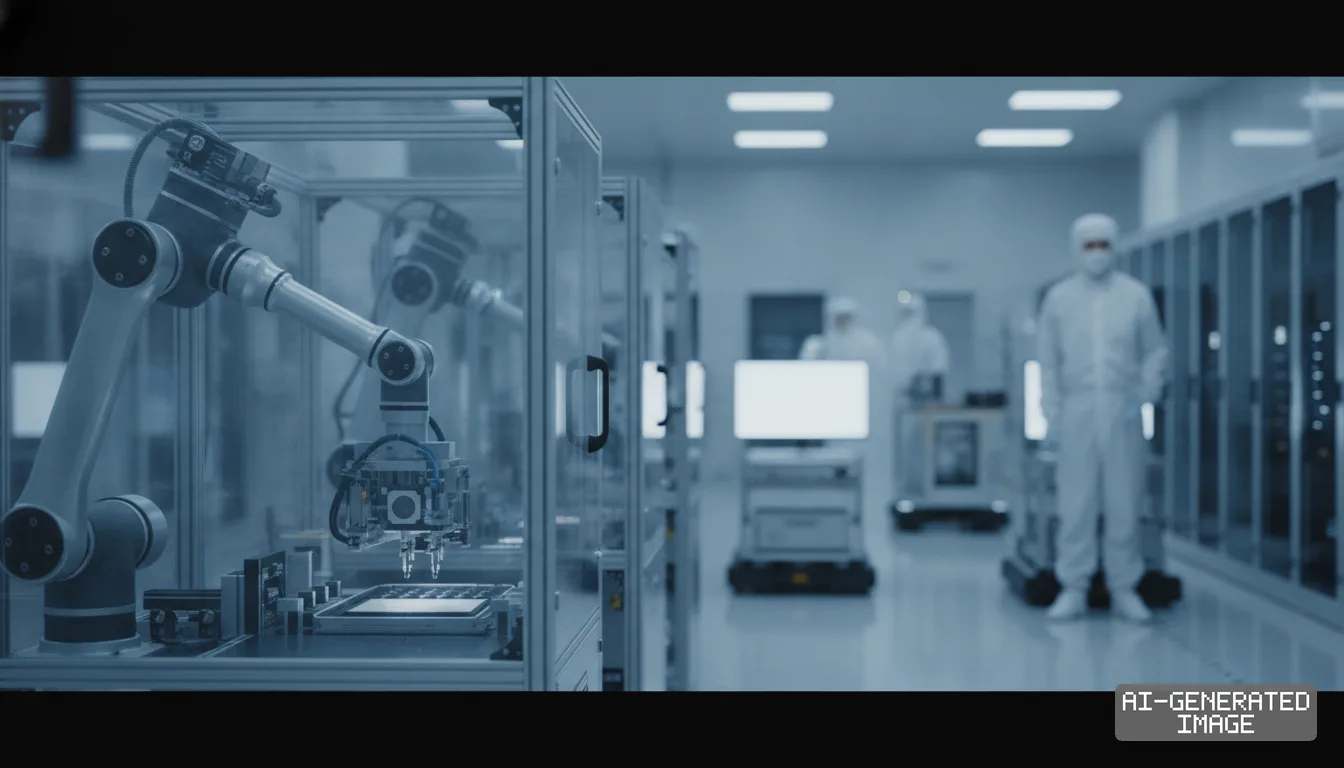
Federal subsidies from the CHIPS and Science Act and the Inflation Reduction Act have accelerated American construction of wafer fabs and electric-vehicle battery plants. Those facilities require cleanroom-rated articulated arms and high-precision servo systems delivered against strict production schedules.
Transporting heavy industrial robots from assembly plants in Japan and China creates maritime freight delays and exposes machine deliveries to tariff risks. Operating assembly floors in Michigan and Wisconsin cuts fulfillment lead times for North American plant integrators.
Factory operators are also adopting digital twins — software simulations that mirror physical hardware — to configure automated cells prior to installation. Localized robot assembly allows Japanese engineering teams to integrate control software directly with American enterprise software stacks.
Both Japanese suppliers previously established extensive manufacturing capacity across China to serve automotive and electronics assemblers. Slower Chinese capital expenditures and growing trade restrictions have pushed both firms to diversify their manufacturing footprint toward North America.
Regulatory disclosures and company notices dated Sept. 29 do not show a coordinated factory pullout from China, and neither manufacturer has published line-by-line transfer schedules for Chinese production tooling. Both corporations officially classify their US projects as localized capacity additions rather than direct factory relocations.
The filings do not settle whether any operational capacity in China will be shuttered or downsized as the American plants ramp up. Both companies continue to list their East Asian operating divisions as core business segments in regulatory reports to the Tokyo Stock Exchange.
Fanuc plans to bring the 840,000-square-foot Pontiac facility into commercial operation in late 2027. Yaskawa’s Franklin campus follows a phased consolidation schedule over eight to 10 years, with initial equipment commissioning expected across 2027 and 2028.
Impact map
How this development propagates across the region and out to global buyers.
| Event | Korea | China | Japan | Global impact |
|---|---|---|---|---|
| US robotics manufacturing buildout | South Korean EV battery plants in US secure domestic industrial robot supply | Domestic Chinese robot builders gain share as Japanese capex pivots to US | Fanuc and Yaskawa localize US assembly while keeping precision parts in Japan | Tier-1 auto and semiconductor makers trim automation delivery lead times |
In this story
- Companies
- Fanuc CorporationYaskawa Electric Corporation
- Tickers
- 6954.T6506.T
- Policy
- SubsidiesTariffs
- Impact
- CapexSupply Chain
Track every Subsidies development → Track every Tariffs development →
Related briefings
- Fanuc and Yaskawa Expand China Motion Control Plants to Meet Local Content Rules Also on Yaskawa Electric Corporation, Fanuc Corporation
- Chip fab expansion drives cleanroom SCARA robot demand globally Also on Fanuc Corporation
- IndexBox projects delta robot market will double by 2035 Also on Fanuc Corporation
- FANUC UK restructures sales leadership to target aerospace and defense Also on FANUC Corporation
Sources
Reporting
Confidence: medium — how we grade this
The documents behind this briefing are linked above. East Asia Brief produces its English text with AI assistance under human editorial review, and does not translate or republish other outlets' articles. See our methodology and AI policy. Spotted an error? Tell us.
The Morning Brief
What changed in Korean, Chinese and Japanese industry overnight — and what it means for your supply chain. One email, weekday mornings, US time. Free.
The Morning Brief is in preparation. Leave your address and we will write to you once — when the first issue is ready. Nothing before that.