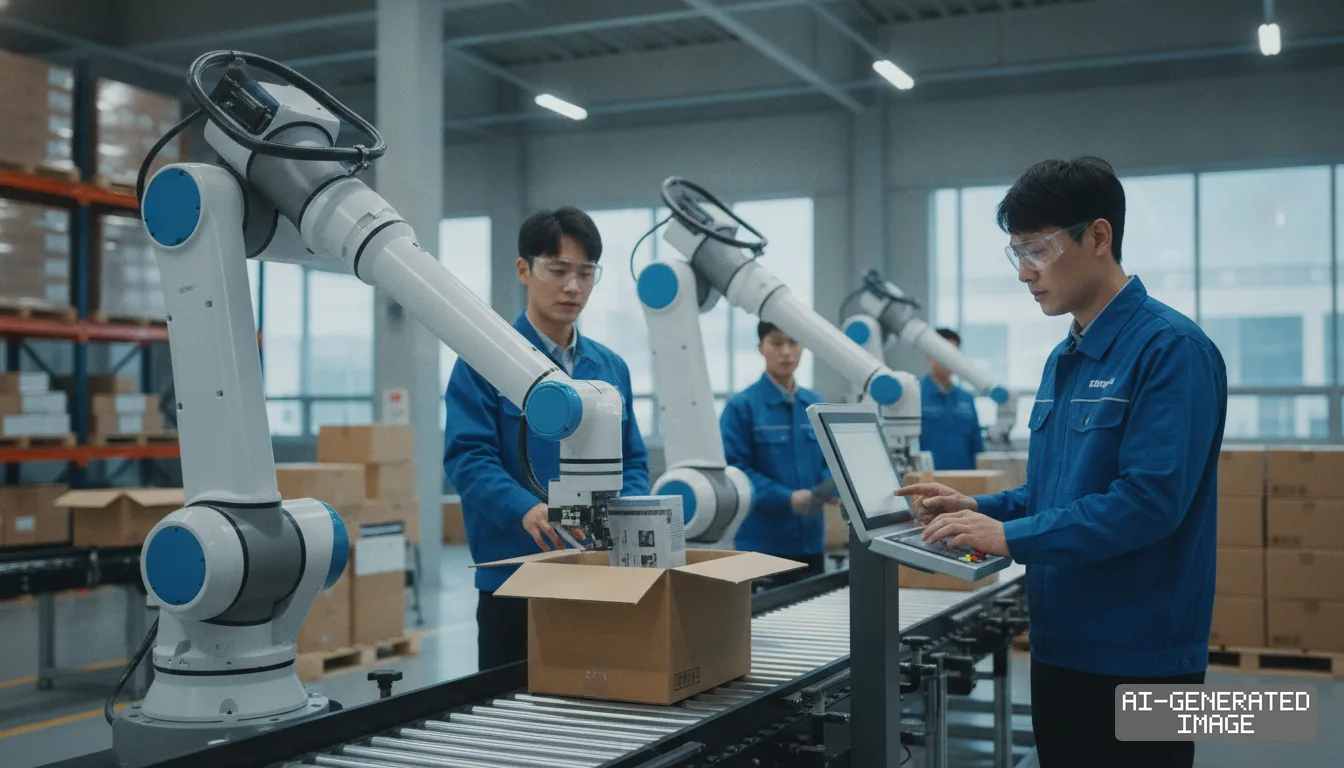
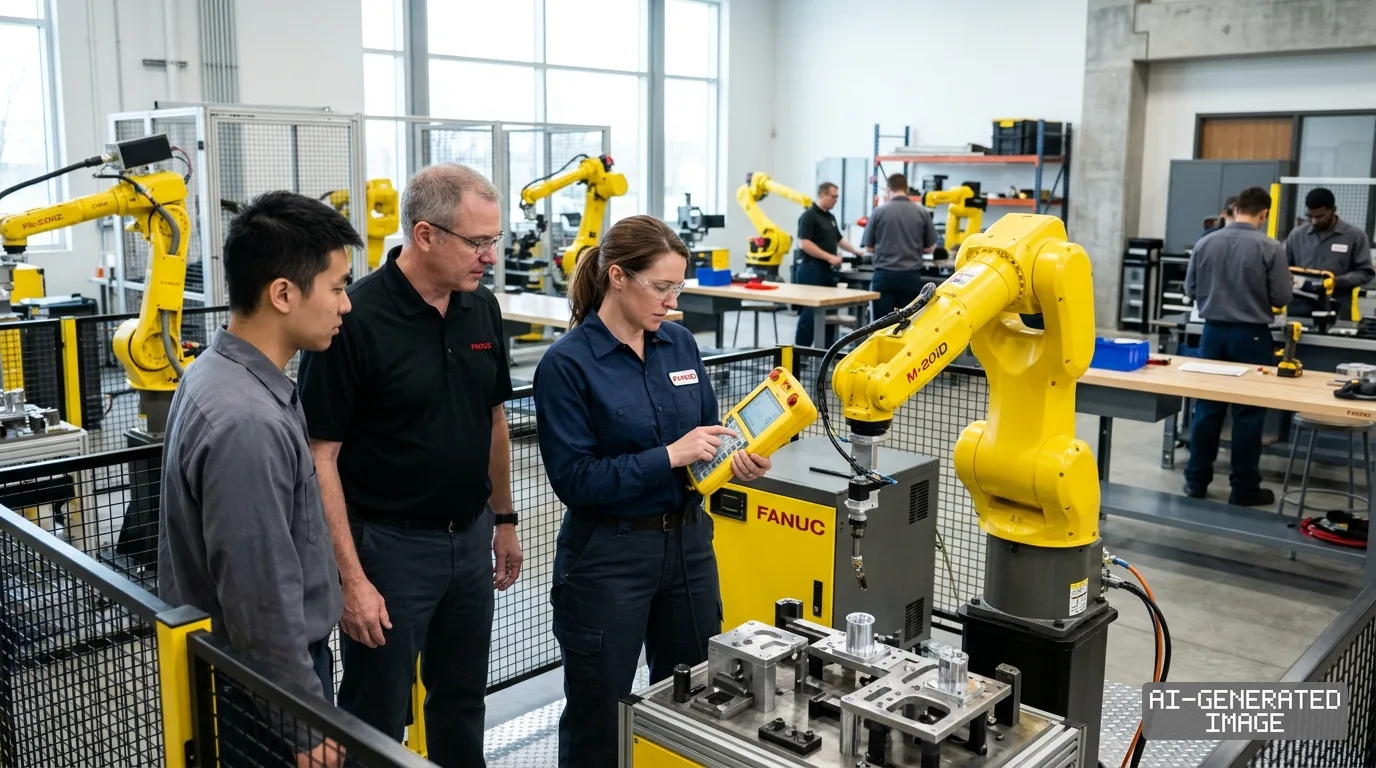
Fanuc maintains SCARA robot fleet as digital controls expand
The Japanese robotics manufacturer posted a 12.6% rise in half-year robot sales to ¥194.3 billion, relying on control software rather than new mechanical arms to support assembly lines.
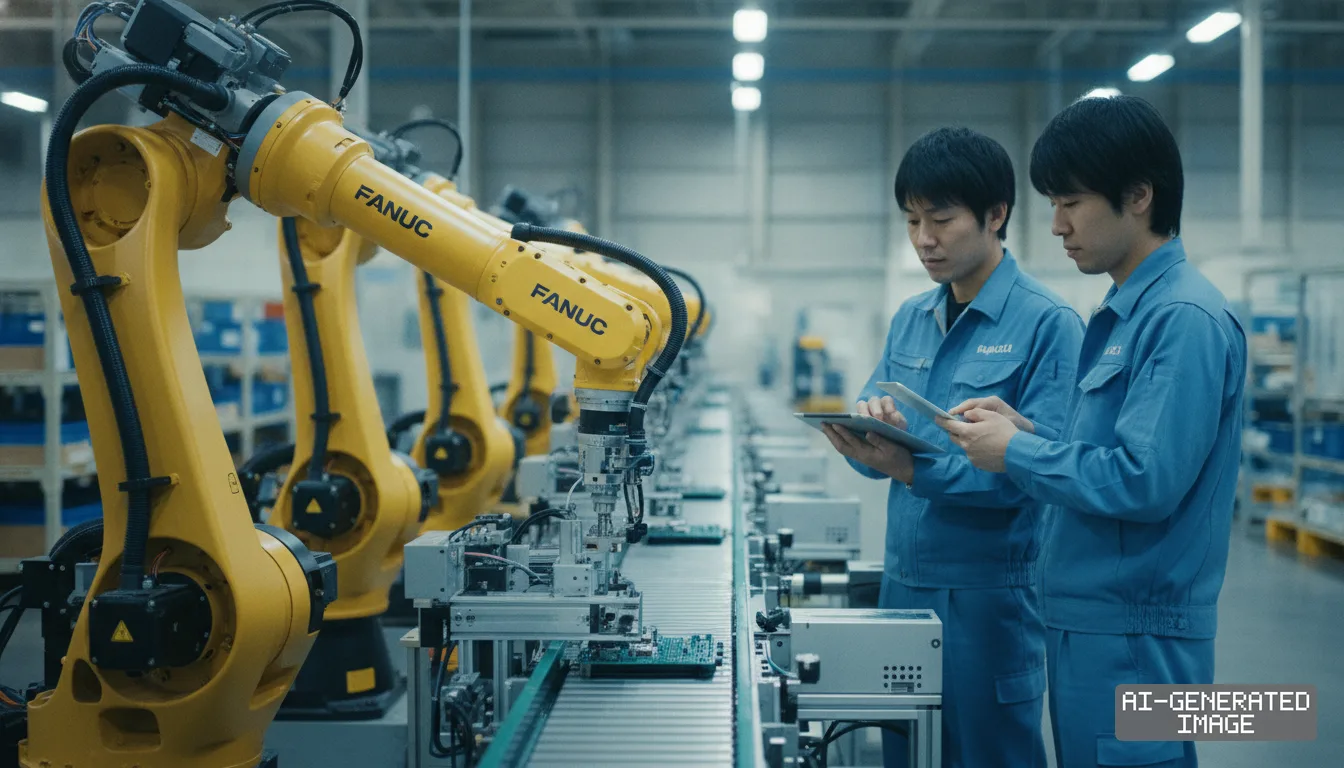
Fanuc Corporation logged no new SCARA assembly robot lineup in its commercial product registry on Oct. 28, countering market speculation that the Japanese automation maker had expanded its high-speed electronics arm portfolio.
The Yamanashi-based manufacturer supplies roughly one-fifth of the world's industrial robots and computer numerical control systems. Electronics contract assemblers across East Asia rely on its equipment to run high-speed component packaging and sorting lines.
Fanuc's robot division generated ¥194.3 billion ($1.24 billion) in net sales during the six months ended Sept. 30. That division represented 41% of the group's ¥473.7 billion in consolidated revenue, which gained 16.2% year on year.
Group operating income climbed 35.7% to ¥116.7 billion ($744 million) during the half-year period. Operating margins widened by 3.5 percentage points to 24.6%, supported by increased plant utilization across domestic facilities in Oshino-mura.
Trade reports on Oct. 30 confirmed that rumors alleging an Oct. 28 mechanical SCARA hardware launch were inaccurate. Market observers confused earlier automation control announcements with a redesign of the selective compliance articulated robot arm series.
Fanuc instead unveiled three modular automation control and software systems on Oct. 27 ahead of the JIMTOF 2026 industrial exhibition in Tokyo. The products target operational bottlenecks in factory transport, safety integration and workpiece vision.
The first release is AI Masterless Vision, a machine-vision module that eliminates workpiece teaching for parts picking and machine tending. Plant operators position raw materials before the robot without programming individual coordinate paths, reducing line setup delays.
Contract electronics assemblers spend significant engineering hours recalibrating camera recognition systems whenever printed circuit designs change. Eliminating visual teaching allows facilities running short product lifecycles to switch assembly batches without idling machinery.
The company also launched the R-50iA Compact DC controller on Oct. 27 to connect collaborative arms to mobile machinery. Running on direct current, the controller mounts onto autonomous mobile robots and automated guided vehicles without supplementary power convertors.
Mobile manipulation allows factory operators to dispatch robotic arms between separate electronics testing stations. Integrating the controller directly into the vehicle chassis frees physical floor space in cramped cleanrooms and automated test facilities.
The third release, Safety Software PLC, embeds safety logic directly into the R-50iA robot controller architecture. The integrated module removes the need for standalone safety programmable logic controllers, lowering hardware costs and cabling complexity for automation integrators.
The software works with Fanuc's Dual Check Safety system to control operating speed and work zones when personnel enter shared factory areas. Integrators can verify safety sequences inside the company's Roboguide simulation software prior to physical installation.
Selective compliance articulated robot arms use two horizontal rotary joints to deliver high speed in flat planes alongside vertical Z-axis rigidity. These kinematics make SCARA arms standard equipment for picking, inserting and packaging micro-components on circuit boards.
Fanuc's commercial SCARA catalog remains anchored by earlier hardware releases under the SR series. The most recent model is the SR-9iA/R, a rack-mounted unit engineered for high-speed conveyor transport with a 9-kilogram payload capacity and a 620-millimeter horizontal reach.
Commercial shipments of the SR-9iA/R began in April 2025 following a catalog update in August 2025. Fanuc previously introduced the ceiling-mounted SR-3iA/U in June 2023, the heavy-payload SR-20iA in November 2020, and the baseline SR-3iA and SR-6iA arms in November 2017.
Electronics contract manufacturers face rising assembly wages in coastal China and Southeast Asia, pushing line engineers to cut milliseconds from transfer cycles. Faster arm kinematics and cycle-time compression allow production lines to maintain yields without adding assembly staff.
Rather than modifying arm castings or servomotor configurations, Fanuc is addressing cycle times through intelligent software and peripheral controller optimization. Upgraded vision sensors and lighter controllers accelerate material handover speeds using existing kinematic hardware.
Regional order trends underline this capital allocation. Demand across China remained solid in the first half, driven by server fabrication for artificial intelligence data centers, semiconductor handling and new energy vehicle components, according to Fanuc's investor presentation.
China's industrial demand showed marked divergence. While general automation spending increased, Chinese automotive robotics sales dropped 14.3% year on year during the July-September quarter, encouraging automation vendors to focus on broader electronics and precision equipment sectors.
Reflecting demand momentum, Fanuc raised its full-year sales forecast to ¥1.01 trillion on Oct. 23, up from ¥948.1 billion projected in July. Full-year operating profit projections rose 10.4% to ¥240.7 billion, while net income guidance reached ¥228.3 billion.
Commercial shipments of the R-50iA Compact DC controller begin in November, while the Safety Software PLC rolls out in January 2027. Fanuc will file its semi-annual financial report on Nov. 11, ahead of interim dividend payments on Dec. 1.
Company filings do not state when Fanuc intends to update its mechanical SCARA arm hardware, and management has not published engineering specifications for prospective micro-assembly robot models.
Impact map
How this development propagates across the region and out to global buyers.
| Event | Korea | China | Japan | Global impact |
|---|---|---|---|---|
| Fanuc software and controller rollout | electronics assembly plants deploy vision updates to reduce retooling downtime | general industry robot uptake offsets 14.3% automotive robot drop | Fanuc raises full-year sales outlook 6.9% to ¥1.01 trillion on control demand | contract manufacturers limit capital spending by updating controllers over mechanical arms |
In this story
- Companies
- Fanuc Corporation
- Tickers
- 6954.T
- Impact
- CapexCost StructureOrder Book
Related briefings
- Fanuc tests robot order bottom as factory tooling steadies Also on FANUC Corporation, Cost Structure, Order Book
- FANUC debuts welding and painting robots for FABTECH 2026 Also on FANUC CORPORATION, Cost Structure, Order Book
- FANUC opens $18M robotics academy to solve factory labor gap Also on FANUC Corporation, Cost Structure
- FANUC America unveils packaging robotics for PACK EXPO 2026 Also on FANUC Corporation, Cost Structure
Sources
Primary documents
Reporting
Confidence: high — how we grade this
The documents behind this briefing are linked above. East Asia Brief produces its English text with AI assistance under human editorial review, and does not translate or republish other outlets' articles. See our methodology and AI policy. Spotted an error? Tell us.
The Morning Brief
What changed in Korean, Chinese and Japanese industry overnight — and what it means for your supply chain. One email, weekday mornings, US time. Free.
The Morning Brief is in preparation. Leave your address and we will write to you once — when the first issue is ready. Nothing before that.