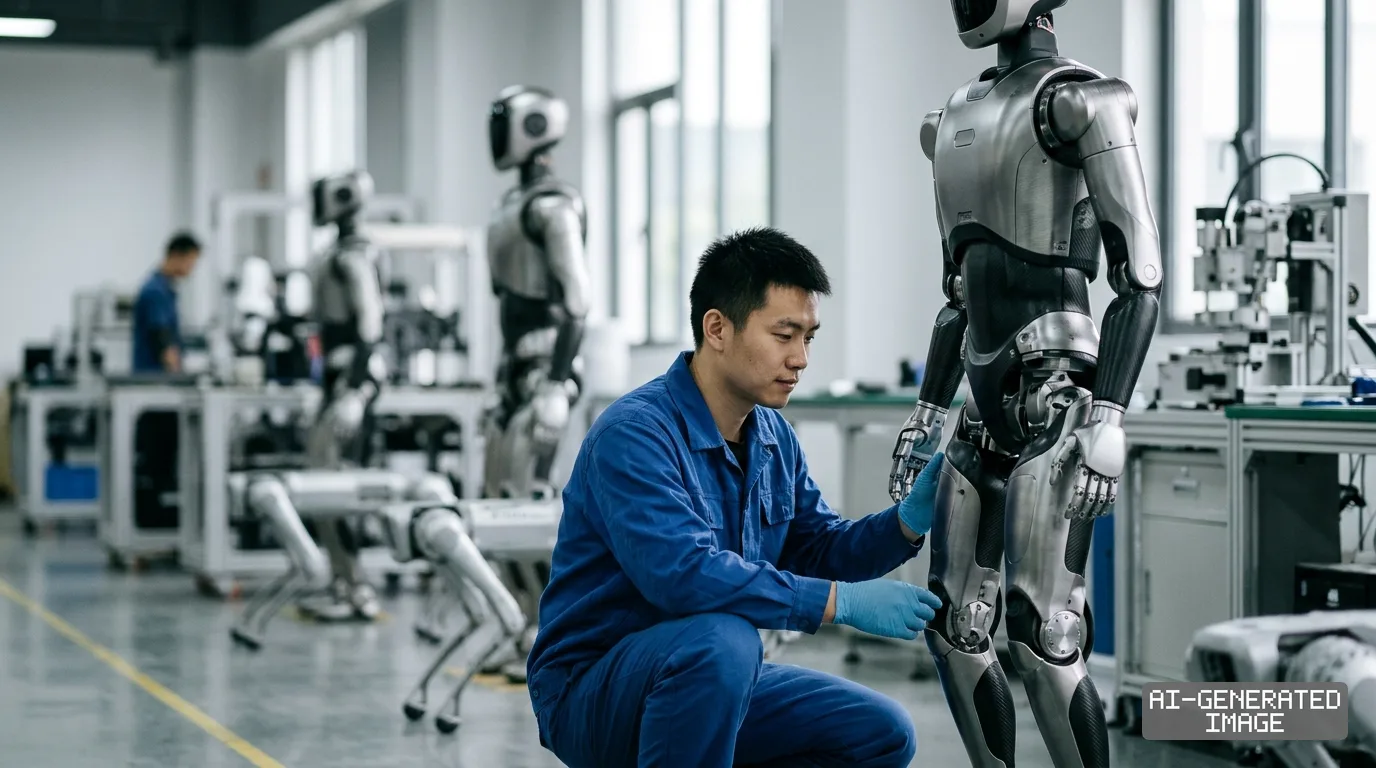
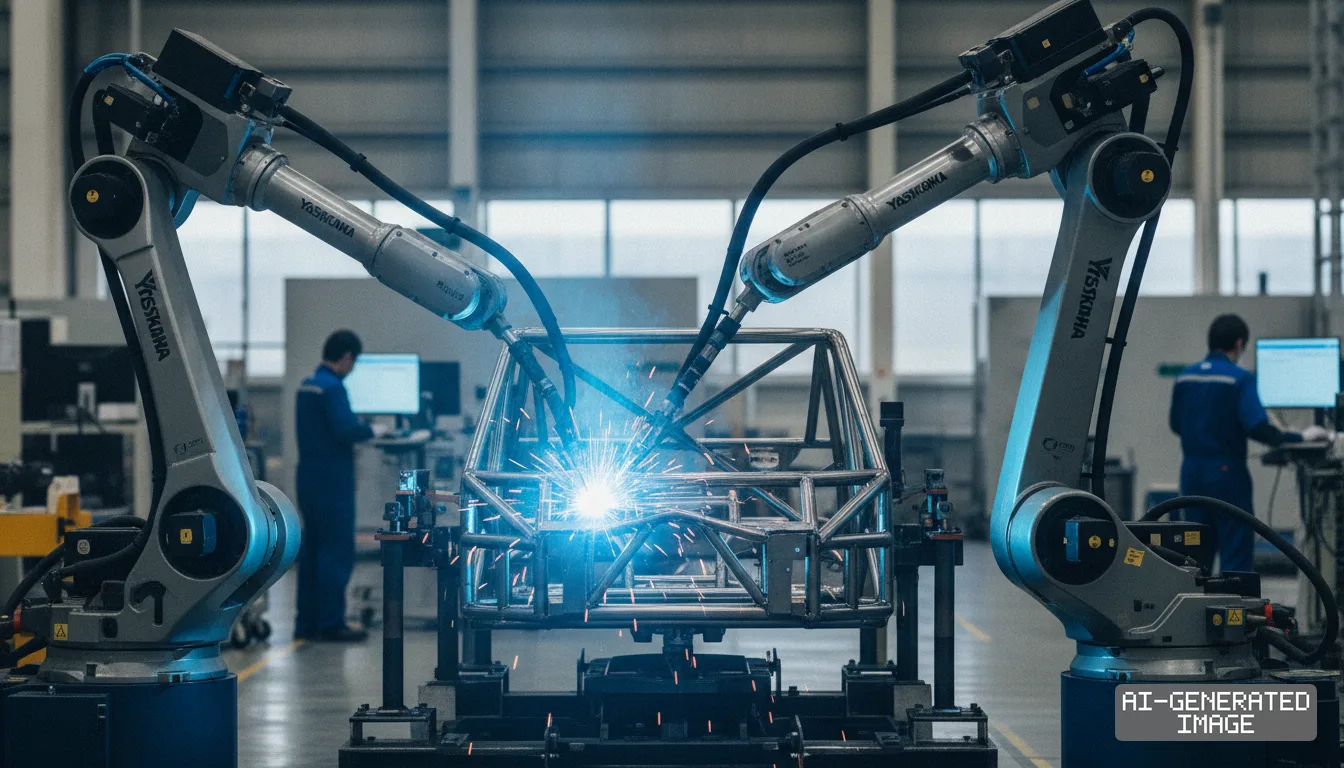
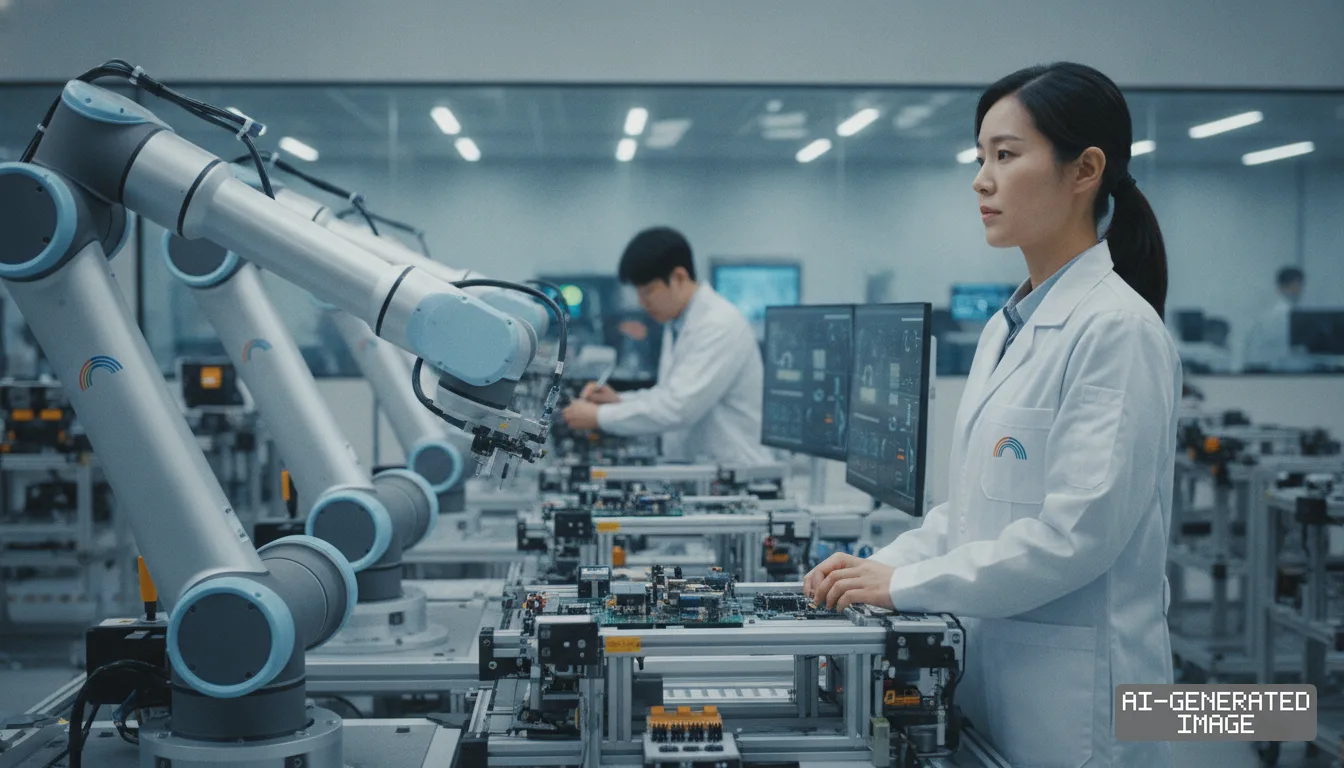
FANUC opens $18M robotics academy to solve factory labor gap
The 132,000-square-foot Michigan facility doubles classroom capacity to 28 suites and provides annual instruction for up to 17,500 technicians across North America.
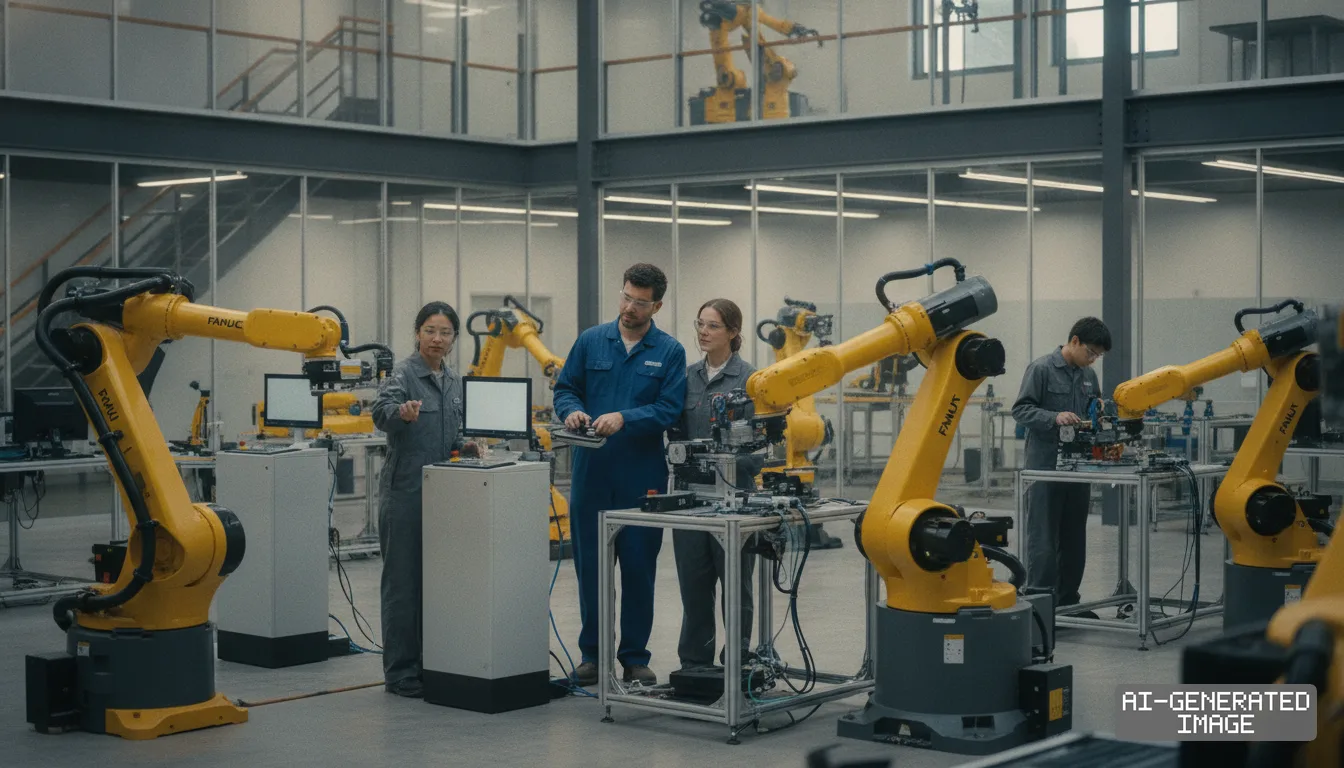
FANUC completed the operational rollout of its $18 million robotics training academy in Auburn Hills, Michigan on Oct. 27, 2026, moving to resolve industrial labor shortages that stall factory automation.
The three-story facility spans 132,000 square feet on the company West Campus. The investment accounts for roughly 17% of the Japanese robotics builder's combined $108 million Michigan expansion pipeline announced this year.
Dedicated technical training occupies 56,300 square feet inside the structure. The complex provides hands-on instruction for plant technicians, systems engineers, educators and trade apprentices across advanced manufacturing sectors.
The Auburn Hills instructional floors house more than 160 operational industrial robots. Trainees also work on over 40 computer numerical control simulators, which replicate automated multi-axis precision machining tools.
The facility doubles available instructional rooms, expanding classroom suites from 13 to 28. The site replaces an older workforce education center previously housed within the company North American headquarters in Rochester Hills, Michigan.
Across North America, the Auburn Hills hub anchors an instructional network comprising nine corporate training centers. The unified system holds capacity to train approximately 17,500 participants each year.
North American manufacturing investments have surged since 2022 following federal domestic content subsidies. Industrial companies identify the scarcity of qualified robot programmers and maintenance staff as their primary operational bottleneck.
Factory operators routinely take delivery of automated machinery but face multi-month commissioning backlogs. The installation delays stem directly from a severe domestic deficit in trained system integrators and electrical technicians.
Unplanned robotic cell stoppages and sluggish tooling adjustments generate costly factory downtime. When assembly line workers cannot diagnose controller faults, production yields tumble while third-party integration expenses climb.
Skilled worker availability remains one of the greatest hurdles facing industrial automation, FANUC America President and Chief Executive Officer Mike Cicco said. The dedicated academy aims to narrow that operational deficit through direct machine instruction, Cicco said.
Robot hardware vendors now tie commercial success directly to field competency at customer plants. Automation builders increasingly package hardware deliveries with technical workforce pipelines to protect machine reliability and retain client accounts.
Beyond corporate customer training, the group coordinates its Certified Education Training program across the continent. The academic network supports more than 1,700 educational institutions and reaches roughly 60,000 students annually.
Secondary schools, community colleges and trade institutes use the curriculum to prepare young technicians for factory employment. Students learn foundational motion programming, robotic work cell safety and automated tooling integration.
General contractor Frank Rewold & Sons managed the building conversion on the 67-acre property. The structure formerly housed the Thomas M. Cooley Law School before FANUC acquired the site for operational expansion.
The $18 million academy complements a $90 million manufacturing facility expansion that FANUC announced in March. Combined investments lift the company operational footprint in Oakland County, Michigan to nearly two million square feet.
Automotive component plants across Michigan, Ohio and Indiana form the primary user base for the training suites. Assembly plants shifting toward electric vehicle battery assembly and automated chassis welding require immediate work cell retooling.
Tier-1 automotive suppliers often lose production days when reprogrammed articulated arms produce stamping errors or misaligned welds. Factory managers prioritize suppliers whose technicians can handle rapid line changeovers without waiting for dispatch engineers.
Packaging, warehousing and consumer goods producers also dispatch staff to the Michigan campus. Rapid growth in automated depalletizing and sorting lines has spread robotic hardware far beyond traditional metal fabrication shops.
Instructional modules cover preventative maintenance, offline simulation software and vision-guided part identification. Technicians receive practical guidance on synchronizing multi-axis articulated robots with peripheral conveyors and programmable logic controllers.
The training investment signals a broader strategic pivot among Japanese automation manufacturers. Leading robotics producers must now deliver operating competence alongside physical machinery to protect their installation base against low-cost international competitors.
Classroom courses operate year-round with weekly cohorts rotating through machine bays. Company instructors conduct structured competency evaluations before issuing technical certifications recognized across North American manufacturing hubs.
Construction teams will complete an integrated customer support call center inside the Auburn Hills academy building in 2027. That construction project marks the next physical milestone for the West Campus development schedule.
FANUC Corporation has not published a separate filing on the Tokyo Stock Exchange detailing parent-level operating expenditures for the facility. The company has not published annual maintenance budgets for the training robot inventory.
Course registration schedules and hands-on laboratory sessions across the 28 new classrooms opened immediately following the operational rollout.
Impact map
How this development propagates across the region and out to global buyers.
| Event | Korea | China | Japan | Global impact |
|---|---|---|---|---|
| Industrial robotics training expansion | domestic robot integrators face higher talent competition in US export plants | domestic robot builders lack overseas technical training networks to match Japanese support | FANUC secures machine uptime and customer lock-in across North American automotive hubs | automated manufacturing plants shorten commissioning delays and lower unplanned cell downtime |
| Industrial robotics training expansion | domestic robot integrators face higher talent competition in US export plants | domestic robot builders lack overseas technical training networks to match Japanese support | FANUC secures machine uptime and customer lock-in across North American automotive hubs | automated manufacturing plants shorten commissioning delays and lower unplanned cell downtime |
In this story
- Companies
- FANUC Corporation
- Tickers
- 6954.T
- Policy
- Subsidies
- Impact
- Supply ChainCapexCost Structure
Track every Subsidies development →
Related briefings
- Fanuc and Yaskawa Expand China Motion Control Plants to Meet Local Content Rules Also on Fanuc Corporation, Cost Structure, Subsidies
- FANUC America unveils packaging robotics for PACK EXPO 2026 Also on FANUC Corporation, Cost Structure
- IndexBox projects delta robot market will double by 2035 Also on Fanuc Corporation, Cost Structure
- Fanuc and Yaskawa Expand US Robot Plants to Meet AI Factory Push Also on Fanuc Corporation, Subsidies
Sources
Reporting
Confidence: medium — how we grade this
The documents behind this briefing are linked above. East Asia Brief produces its English text with AI assistance under human editorial review, and does not translate or republish other outlets' articles. See our methodology and AI policy. Spotted an error? Tell us.
The Morning Brief
What changed in Korean, Chinese and Japanese industry overnight — and what it means for your supply chain. One email, weekday mornings, US time. Free.
The Morning Brief is in preparation. Leave your address and we will write to you once — when the first issue is ready. Nothing before that.