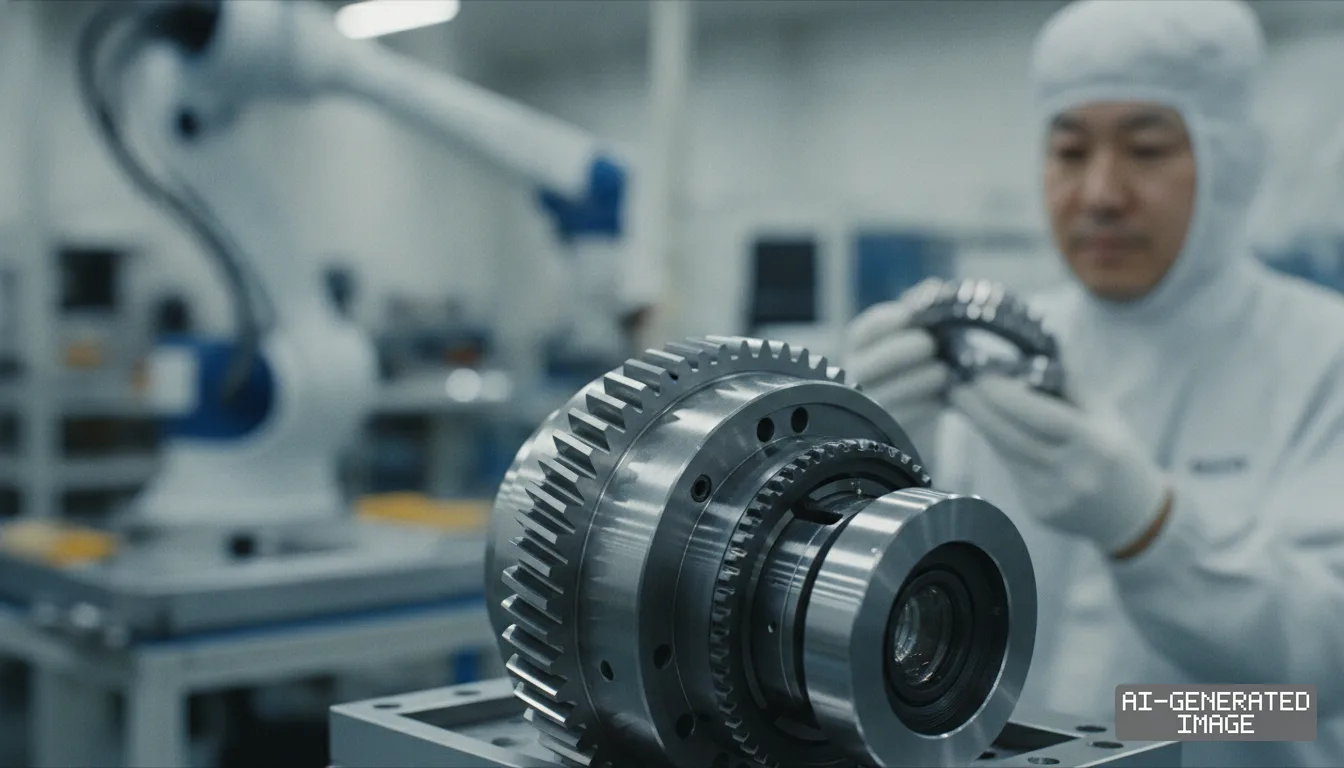
DMG MORI cuts series machining costs 47% using hybrid 3D printing
The second-generation LASERTEC 65 DED hybrid expands workpiece capacity by 170% and accelerates deposition build rates by 35% for industrial parts.
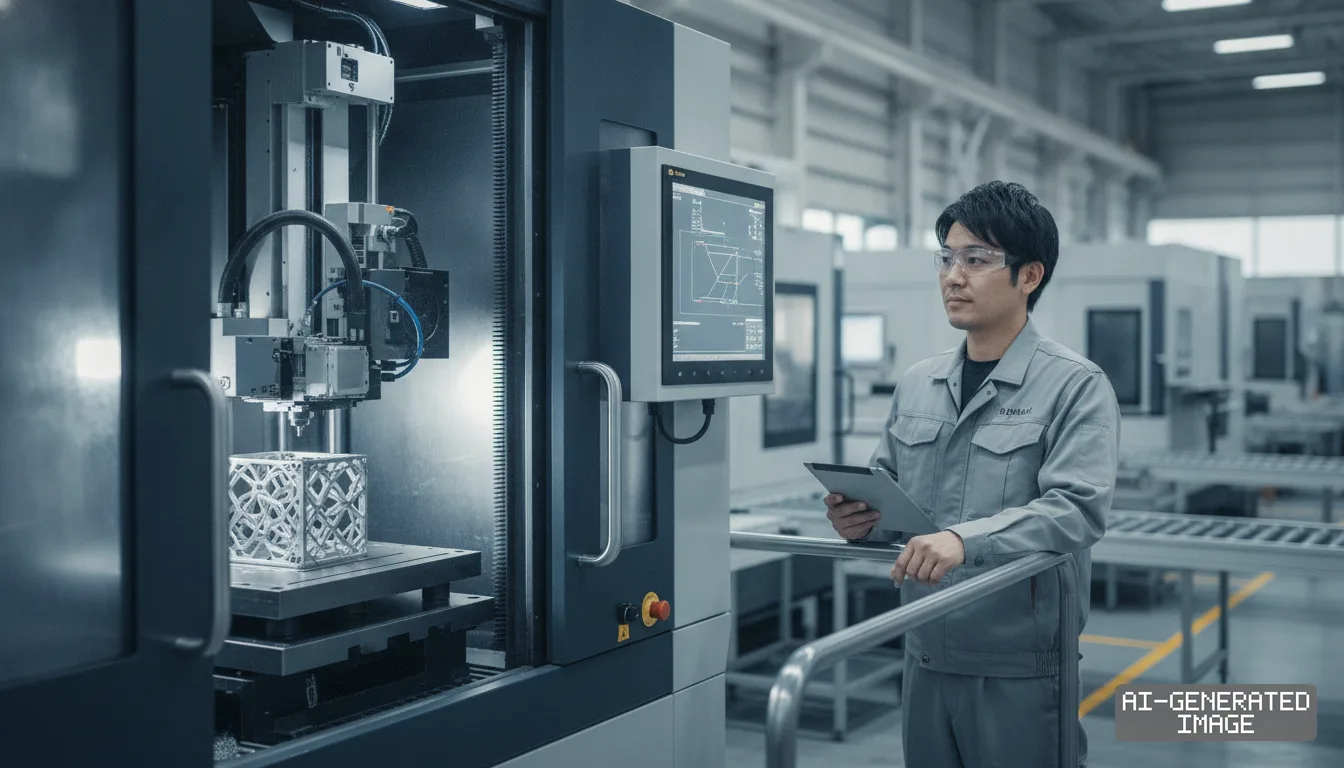
DMG MORI released operational performance data on Nov. 26, 2026 for its integrated metal additive manufacturing systems, showing a 47% cut in unit production costs for series industrial machining.
The Tokyo-headquartered machine tool builder, which trades under ticker 6141 on the Tokyo Stock Exchange, generates roughly ¥515 billion ($3.3 billion) in annual revenue across automotive, aerospace and semiconductor equipment markets.
The operational update centers on the second-generation LASERTEC 65 DED hybrid, which expands maximum workpiece capacity by 170% to Ø840 by 350 millimeters while accelerating material deposition build rates by 35%.
Directed energy deposition — a process that sprays metal powder through a coaxial nozzle into a focused laser melt pool — has historically served prototyping or specialized component repair.
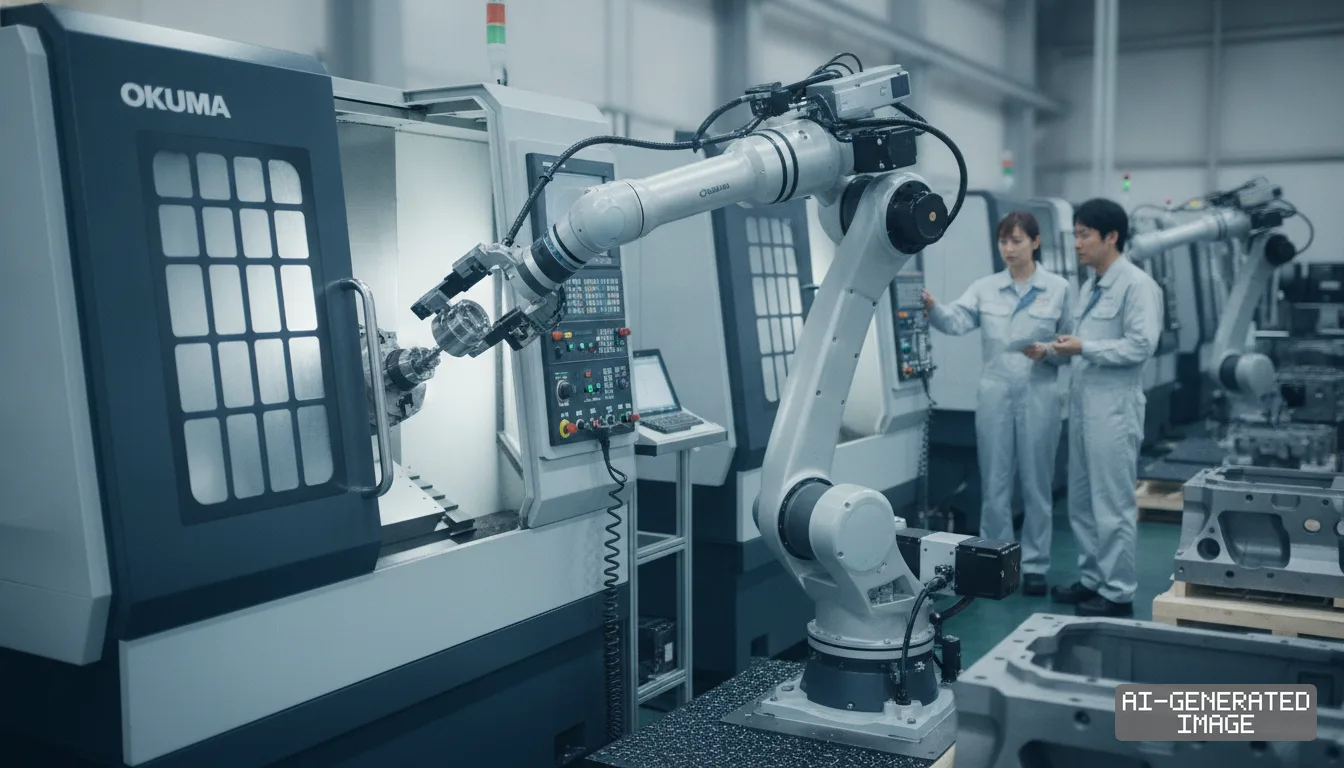
DMG MORI integrated that deposition method directly with five-axis milling, turning and grinding inside a single monoBLOCK machine enclosure.
The consolidation eliminates transfer times between separate casting, machining and finishing cells, said the manufacturer. Combining additive and subtractive tools lowers per-part workpiece production costs by 71% per cubic decimeter.
The machine builder pairs the hybrid system with the third-generation LASERTEC 30 SLM, a selective laser melting unit that fuses metal powder beds using four overlapping 1,000-watt lasers.
That powder bed machine uses an interchangeable build container with a 325 by 325 by 400 millimeter volume. The swap mechanism permits continuous cycle runs without waiting for internal chamber cooling.
Capital expenditure exposure falls directly on precision component subcontractors in aerospace engines, defense equipment and semiconductor wafer-handling apparatus.
DMG MORI reported machine tool orders climbed 34.8% during the first half of 2026, driven primarily by procurement orders from commercial aviation and chipmaking tool fabricators.
Subcontractors buying the hybrid machines gain the ability to deposit wear-resistant coatings or internal cooling channels without re-clamping raw forgings across multiple stations.
The shift addresses bottleneck constraints in aerospace supply chains, where casting foundry lead times often exceed nine months for nickel superalloy housings and turbine cases.
DMG MORI already uses the combined process inside its own factories, producing more than 3,000 structural machine tool components annually through its Additive Manufacturing Reference Factory.
The company runs an internal consulting unit called ADDITIVE INTELLIGENCE to help external machine shops qualify parameter sets and redesign legacy cast parts for additive fabrication.
The unit deploys optical scanners directly inside the machine workspace, validating part tolerances before automated five-axis milling heads begin subtractive surface finishing.
Integrating in-machine metrology cuts rework scrap, which remains a primary cost barrier for high-volume automotive and energy suppliers testing additive technology.
DMG MORI has not published base prices for the second-generation hybrid units, nor has it disclosed the total volume of customer delivery slots booked for 2027.
Commercial delivery slots for customer installations of the second-generation LASERTEC 65 DED hybrid are scheduled to commence in March 2027.
Impact map
How this development propagates across the region and out to global buyers.
| Event | Korea | China | Japan | Global impact |
|---|---|---|---|---|
| Industrial metal AM series integration | Precision mold and semiconductor equipment builders evaluate hybrid deposition to replace imported cast blanks | Domestic machine tool makers face wider technology gaps in six-in-one multi-process CNC enclosures | DMG MORI leverages domestic machine tool design to capture high-margin aerospace and chip tool supply chains | Aerospace tier-one suppliers cut machining cycle times and reduce raw material scrap by up to 47% |
In this story
- Companies
- DMG MORI CO.
- Tickers
- 6141.T
- Policy
- Standards
- Impact
- CapexSupply ChainCost Structure
Track every Standards development →
Related briefings
- DMG MORI net profit drops 58.7% on component supply delays Also on DMG MORI CO., Cost Structure
- Factory automation shifts to linear tracks in $559 million market Also on Standards, Cost Structure
- Micron secures $32B in HBM prepayments as thermal limits test yields Also on Standards, Cost Structure
- LG Energy Solution pairs sodium batteries with SST for AI grids Also on Standards, Cost Structure
Sources
Reporting
Confidence: high — how we grade this
The documents behind this briefing are linked above. East Asia Brief produces its English text with AI assistance under human editorial review, and does not translate or republish other outlets' articles. See our methodology and AI policy. Spotted an error? Tell us.
The Morning Brief
What changed in Korean, Chinese and Japanese industry overnight — and what it means for your supply chain. One email, weekday mornings, US time. Free.
The Morning Brief is in preparation. Leave your address and we will write to you once — when the first issue is ready. Nothing before that.