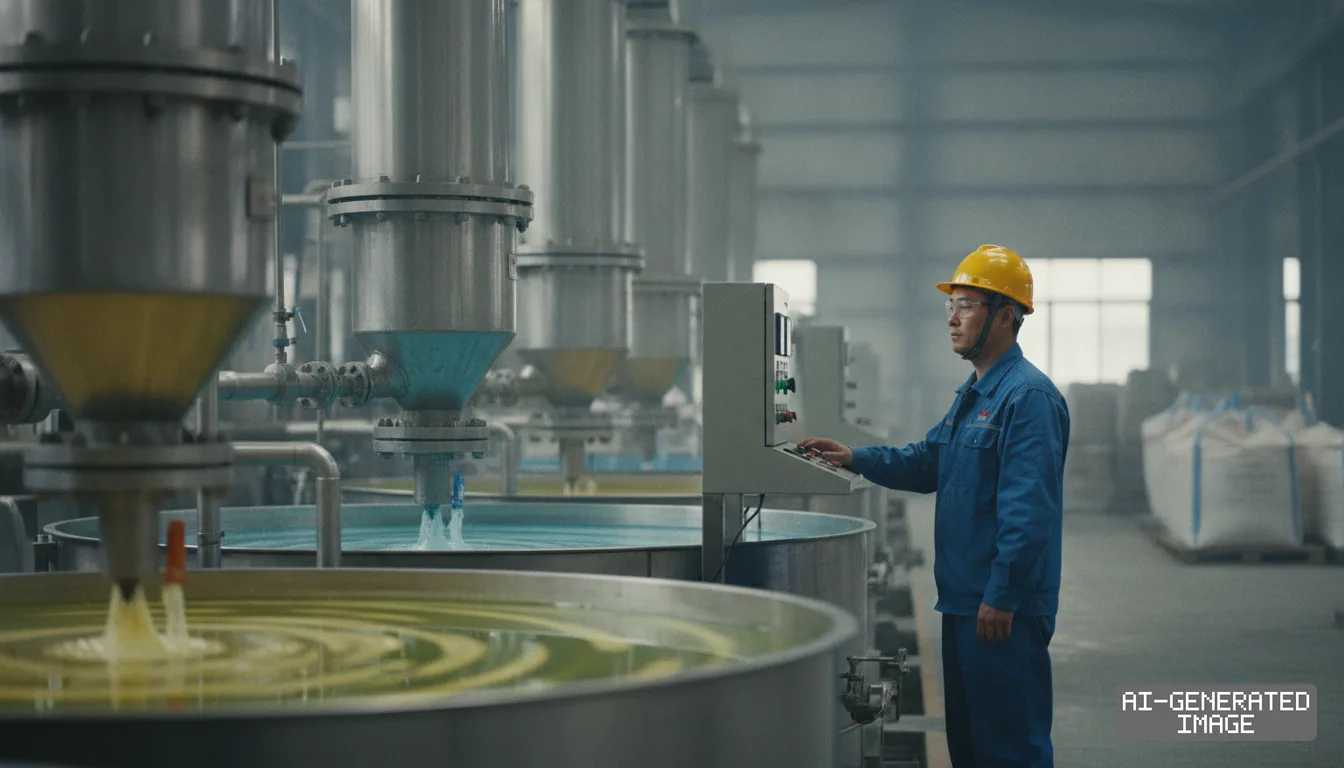
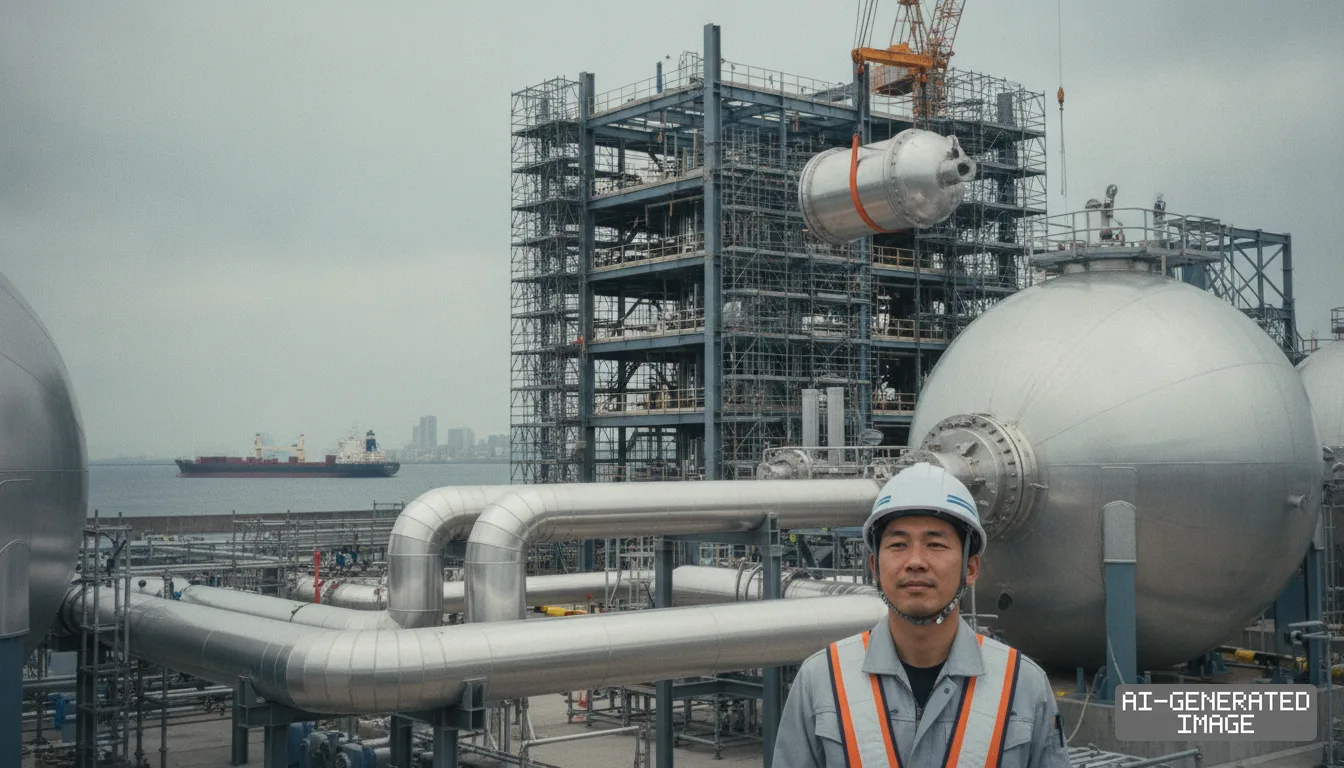
Northern Rare Earth widens profit 137% on tight magnet rules
A nine-month earnings surge and 41 standard revisions show China moving past raw oxide separation to dominate the metallization and alloy stages Western refiners cannot match.
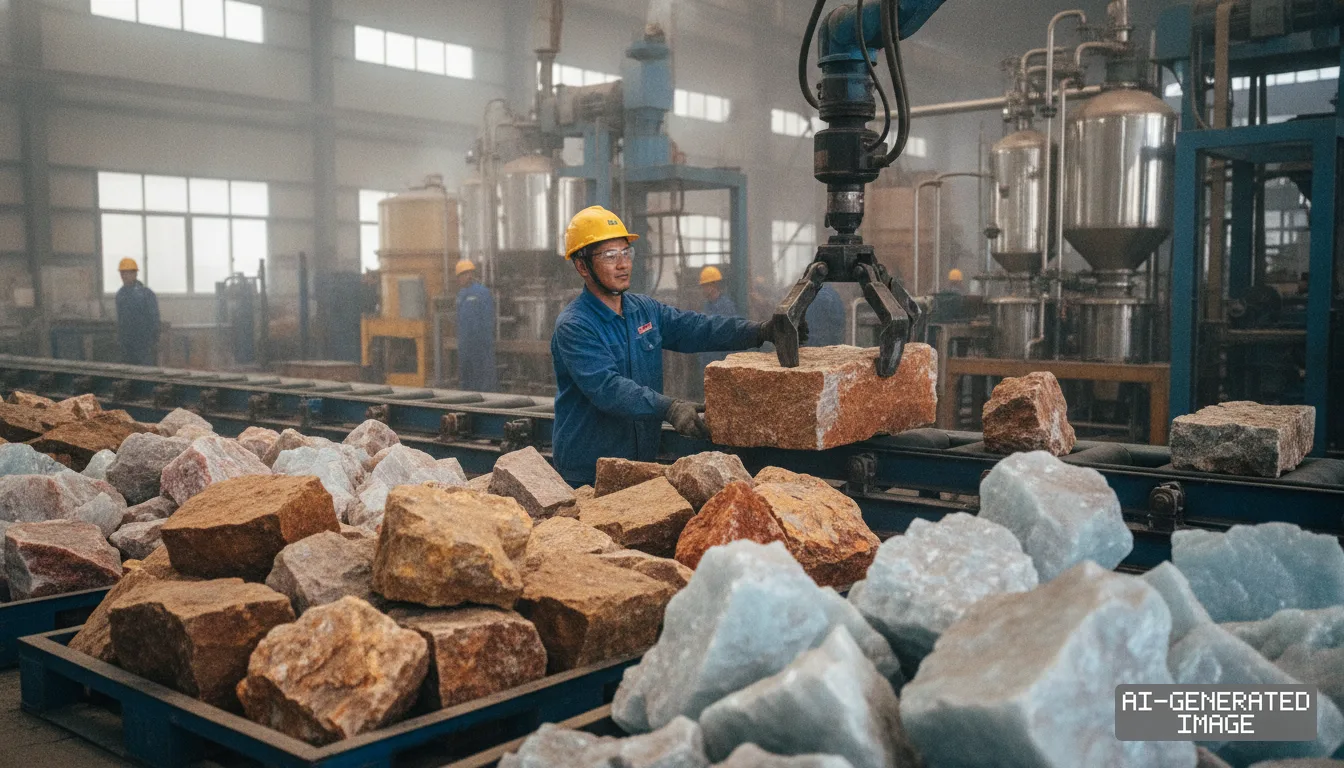
China Northern Rare Earth posted a 136.55% jump in nine-month net profit on Oct. 23, 2026, driven by rising prices and tighter control over downstream magnet alloys.
The state-owned group reported net profit of 3.646 billion yuan ($515 million) on revenue of 41.333 billion yuan ($5.84 billion). Both figures marked record highs for the January-to-September period.
The result shows how Beijing's dominance has moved beyond mine extraction into higher-value processing. China controls 91% of global rare earth refining capacity and 94% of sintered permanent magnet production, according to the International Energy Agency.
Western mining projects have failed to break that bottleneck. Non-Chinese mines will supply roughly half of global ore by 2035, but planned processing plants outside China will meet less than one-fifth of magnet demand, the agency said.
The central barrier for Western rivals is metallization — the conversion of separated chemical oxides into pure metals and engineered magnetic alloys. While Western refiners can separate light rare earths, they lack commercial furnaces to make neodymium-iron-boron alloys.
China Northern Rare Earth anchored that advantage by participating in 41 national and industrial technical standard revisions, the company said in its financial disclosure. Those specifications govern alloy compositions, particle sizes and magnetic tolerances.
By setting the chemical and physical criteria for downstream materials, Chinese state producers force component makers worldwide to align their supply chains with domestic Chinese specifications. Foreign competitors without scale struggle to meet the certified thresholds.
The technical moat directly isolates Western processing startups. MP Materials, which operates the Mountain Pass mine in California, produced 42,200 metric tons of rare earth concentrate in 2023 but relies on overseas plants for advanced metal reduction and alloy casting.
Australian producer Lynas Rare Earths operates separation facilities in Malaysia and Texas. However, Lynas directs the vast majority of its separated neodymium-praseodymium oxide to Asian contract manufacturers for conversion into metal and finished magnets.
China's domestic regulatory framework reinforces this commercial barrier. The State Council enacted Decree No. 785 on Oct. 1, 2024, imposing strict digital tracking from mining through oxide separation to metal smelting and permanent magnets.
That statute followed export prohibitions enacted on Dec. 21, 2023. The Ministry of Commerce and the Ministry of Science and Technology banned the transfer of neodymium-iron-boron and samarium-cobalt magnet manufacturing technologies overseas.
Beijing widened that net in April 2025 by requiring individual export licences for seven heavy rare earths, including dysprosium and terbium. Those elements are essential additives that keep electric vehicle motor magnets from demagnetizing at high operating temperatures.
The Chinese government has not published any comprehensive revision of metallization standards on Oct. 23, 2026, and agencies like the Ministry of Industry and Information Technology released no regulatory notices that day.
Instead, the operational moat expands through ongoing factory additions and corporate standard-setting. China Northern Rare Earth brought the first phase of its green smelting modernization into production earlier this year, cutting per-unit transformation costs.
The group also expanded joint ventures in rare-earth metal alloys and cerium-doped permanent magnets, according to company filings. Those downstream units capture higher margins while consuming raw oxides produced at its Inner Mongolian extraction hub.
Western buyers now face a market where raw oxide prices diverge from finished magnet costs. While unrefined material trades in surplus, finished magnets carry high premiums dictated by licensed Chinese alloy fabricators.
New national technical rules will formalize that advantage further. The State Administration for Market Regulation published standards GB/T 47880-2026 and 47881-2026 for rare-earth hydrogen storage alloys, which take effect on Feb. 1, 2027.
China Northern Rare Earth scheduled an investor briefing on Oct. 26 to detail third-quarter operating margins and downstream alloy capacity.
Impact map
How this development propagates across the region and out to global buyers.
| Event | Korea | China | Japan | Global impact |
|---|---|---|---|---|
| downstream rare earth processing standards | motor makers face 94% reliance on Chinese alloy specifications | Northern Rare Earth widens margins by anchoring 41 industrial standards | magnet producers maintain alloy supply but lack cost parity on heavy rare earths | Western refiners stall at oxide separation without domestic metallization capacity |
In this story
- Companies
- China Northern Rare Earth
- Tickers
- 600111.SS
- Exposed
- Lynas Rare EarthsMP Materials
- Policy
- Standards
- Impact
- Supply ChainCost Structure
Track every Standards development →
Related briefings
- China Northern Rare Earth lifts net profit 137% on higher volume Also on China Northern Rare Earth, MP Materials, Lynas Rare Earths
- China Northern Rare Earth fixes fourth-quarter concentrate supply price Also on China Northern Rare Earth, Cost Structure
- China Customs logs 6.7% rise in September rare earth exports Also on China Northern Rare Earth
- China ties rare earth permits to European trade concessions Also on China Northern Rare Earth
Sources
Primary documents
Reporting
Confidence: high — how we grade this
The documents behind this briefing are linked above. East Asia Brief produces its English text with AI assistance under human editorial review, and does not translate or republish other outlets' articles. See our methodology and AI policy. Spotted an error? Tell us.
The Morning Brief
What changed in Korean, Chinese and Japanese industry overnight — and what it means for your supply chain. One email, weekday mornings, US time. Free.
The Morning Brief is in preparation. Leave your address and we will write to you once — when the first issue is ready. Nothing before that.