Kawasaki Heavy starts building Japan's largest hydrogen liquefier
The 50-ton-a-day plant at Kawasaki LH2 Terminal triples domestic capacity under a state-backed program to commercialize maritime cryogenic supply chains by 2030.
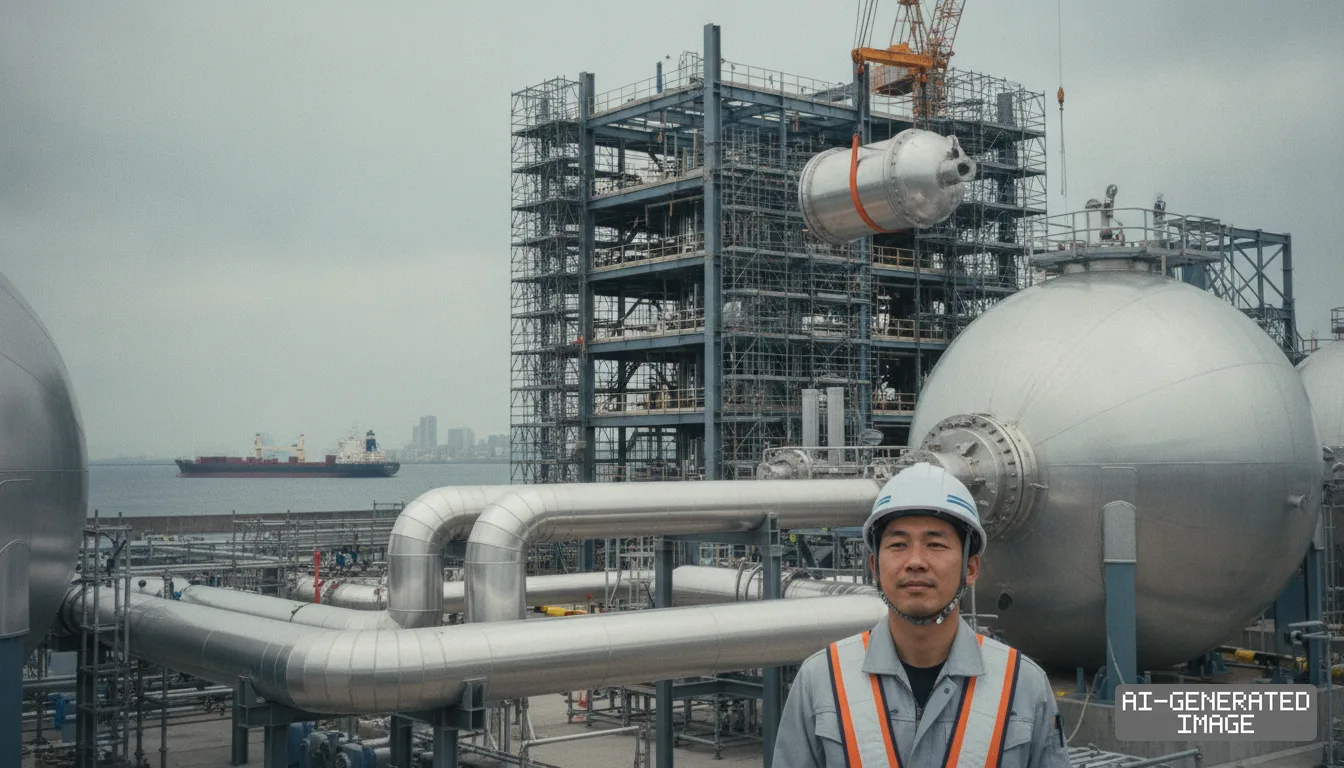
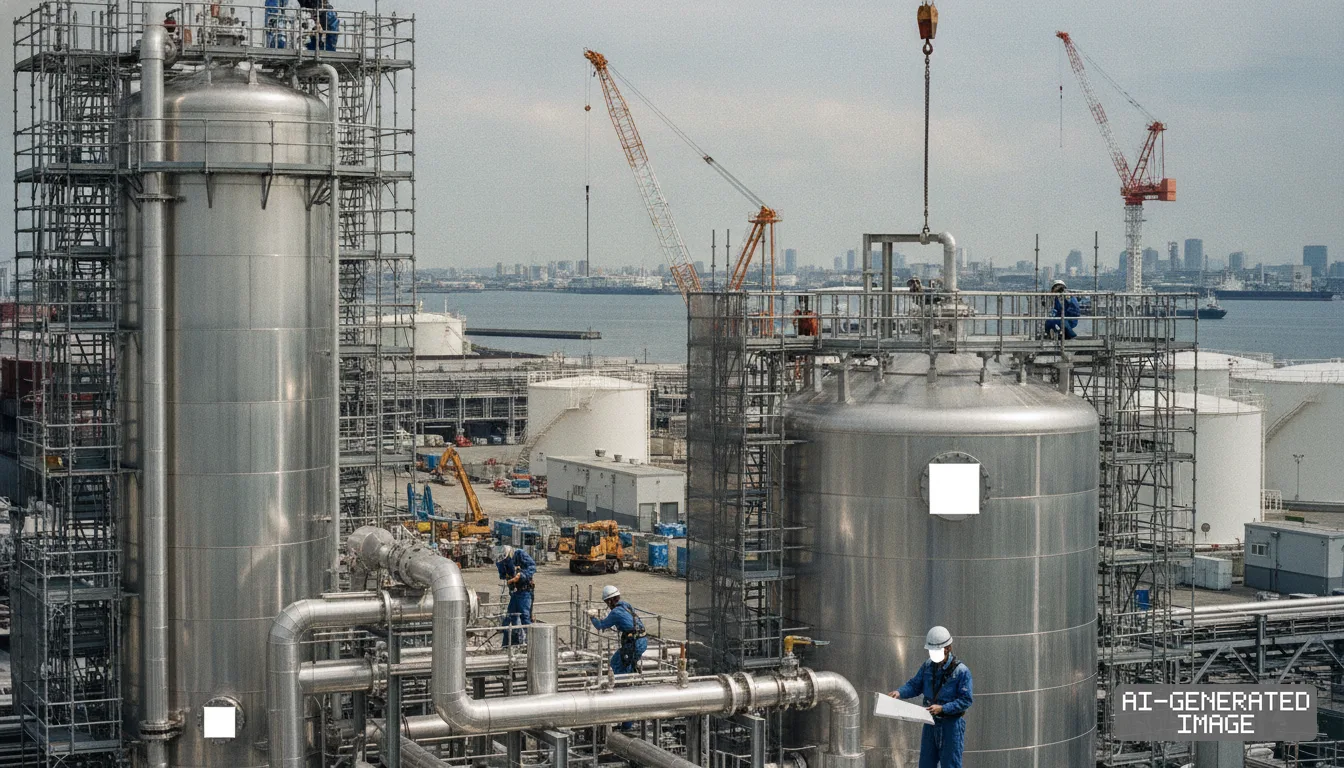
Kawasaki Heavy Industries confirmed Oct. 22 that construction was underway on a 50-metric-ton-per-day hydrogen liquefaction plant in Kanagawa Prefecture, marking Japan's largest commercial cryogenic facility to date.
The coastal plant at Ogishima in Kawasaki City triples Japan's previous domestic liquefaction record of 15 metric tons per day. That processing capacity provides the volume required to anchor incoming maritime carrier shipments.
The New Energy and Industrial Technology Development Organization backs the project through its Green Innovation Fund. The state agency designated hydrogen liquefaction equipment as a strategic national asset to secure commercial supply lines.
The facility will operate inside the Kawasaki LH2 Terminal now under development by Japan Suiso Energy. Japan Suiso Energy runs the terminal venture jointly established by Kawasaki Heavy and industrial gas distributor Iwatani Corporation.
Iwatani Corporation manages Japan's only operational liquid hydrogen distribution network, controlling six domestic production units. The new terminal integrates that distribution base directly into deepwater offloading berths.
Power generator Electric Power Development, known as J-Power, and energy refiner ENEOS Holdings also participate in the supply chain consortium. The group coordinates off-take pipelines across Tokyo Bay's coastal manufacturing cluster.
Hydrogen gas contracts to one-eight-hundredth of its original volume when liquefied at minus 253 degrees Celsius. That thermal density allows long-distance oceanic carriers to move bulk cargoes between global export hubs and Japanese ports.
Kawasaki Heavy is building the core liquefaction unit, termed a cold box, using internal engineering designs. The equipment houses cryogenic plate-fin heat exchangers, high-speed expansion turbines and insulated flow-control valves.
The company developed the turbine components to operate stably under extreme cryogenic strain without gas leakage. High thermal insulation efficiency inside the liquefier determines the ultimate operating cost of bulk hydrogen imports.
Tokyo's Ministry of Economy, Trade and Industry targets three million metric tons of hydrogen fuel supply annually by 2030. Achieving that quota requires dedicated maritime receiving terminals capable of rapid offloading and cryogenic regasification.
The 50-ton plant provides processing fuel equivalent to roughly 215,000 passenger fuel-cell vehicles per year. Alternatively, that daily volume can fuel more than 1,000 heavy-duty long-haul transport trucks across Tokyo freight corridors.
Kawasaki Heavy already tested the maritime transport link using its Suiso Frontier carrier between Victoria, Australia, and Kobe. That pilot project transported coal-derived hydrogen to prove international carrier safety guidelines under maritime treaties.
The new Kawasaki City plant scales those transport trials into an industrial-grade commercial logistics chain. Terminal engineers will test ship-to-shore transfer pumps, boil-off gas reliquefaction loops and automated bunkering arms.
Japanese heavy industrials are standardizing proprietary cryogenic equipment before European and Chinese competitors deploy commercial liquid fleets. Securing technical patents for sub-zero components gives Japanese machinery builders a lead in export yard design.
South Korean shipbuilders and Chinese industrial plant operators continue to prioritize ammonia and organic chemical carriers over liquid hydrogen. Kawasaki Heavy is betting direct cryogenic liquefaction will deliver higher purity for industrial turbines and fuel cells.
Terminal construction is scheduled for structural completion by the end of 2028. Commercial demonstration operations alongside incoming import carriers will begin in 2030 following statutory system commissioning.
The company has not disclosed the total capital expenditure for the 50-ton plant, and official filings do not state whether the initial feedstock will be exclusively green hydrogen.
Impact map
How this development propagates across the region and out to global buyers.
| Event | Korea | China | Japan | Global impact |
|---|---|---|---|---|
| Japan LH2 liquefaction expansion | shipbuilders track cryogenic carrier standards while prioritizing ammonia tech | domestic suppliers expand alkaline electrolyzers without marine liquefiers | Kawasaki Heavy locks in national equipment patents and port terminal capacity | deepens commercial maritime logistics for bulk cryogenic clean fuel trade |
In this story
- Companies
- Kawasaki Heavy Industries
- Tickers
- 7012.T
- Exposed
- Iwatani CorporationENEOS HoldingsElectric Power Development
- Policy
- Subsidies
- Impact
- CapexSupply Chain
Track every Subsidies development →
Related briefings
- Iwatani and Cosmo approve 50 billion yen Chiba hydrogen hub Also on Iwatani Corporation, Subsidies
- Japanese trading houses expand cobalt refining ties to counter supply risk Also on Iwatani Corporation, Subsidies
- Kawasaki Heavy builds Japan's largest hydrogen liquefier unit Also on Kawasaki Heavy Industries, Subsidies
- Kawasaki Heavy unveils quadruped AI robot for shipyards in 2026 Also on Kawasaki Heavy Industries, Subsidies
Sources
Primary documents
Reporting
Confidence: high — how we grade this
The documents behind this briefing are linked above. East Asia Brief produces its English text with AI assistance under human editorial review, and does not translate or republish other outlets' articles. See our methodology and AI policy. Spotted an error? Tell us.
The Morning Brief
What changed in Korean, Chinese and Japanese industry overnight — and what it means for your supply chain. One email, weekday mornings, US time. Free.
The Morning Brief is in preparation. Leave your address and we will write to you once — when the first issue is ready. Nothing before that.