ECB finds Chinese rare earth curbs trim US output by up to 0.6%
Automotive assembly and advanced electronics face concentrated disruptions because China controls roughly 90% of downstream permanent magnet refining.
The European Central Bank found in modeling reviewed on Nov. 14, 2026, that an 18-month Chinese rare earth export restriction cuts United States manufacturing output by 0.3% to 0.6%.
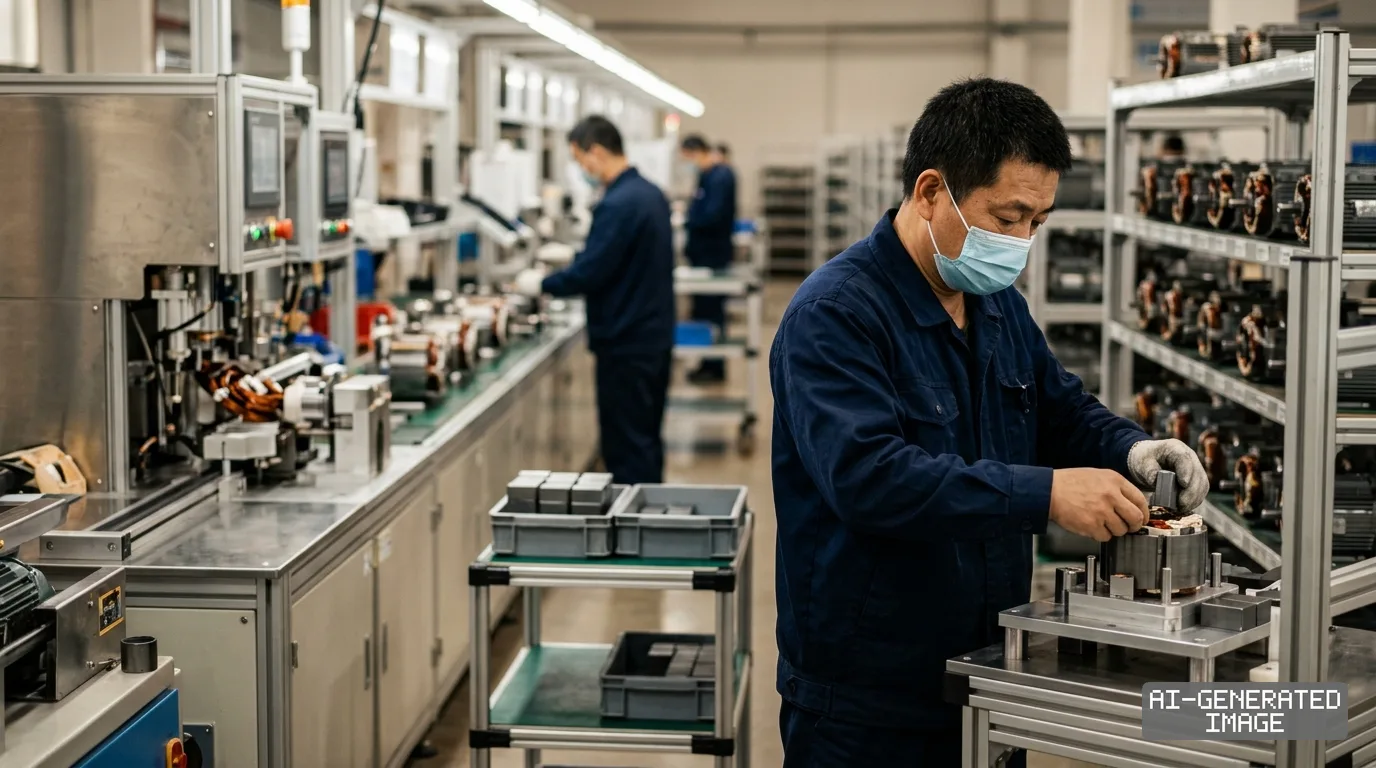
The output loss concentrates heavily in automotive assembly and advanced electronics manufacturing. Those two sectors rely on specialized permanent magnets where non-Chinese supply remains limited, the central bank said.
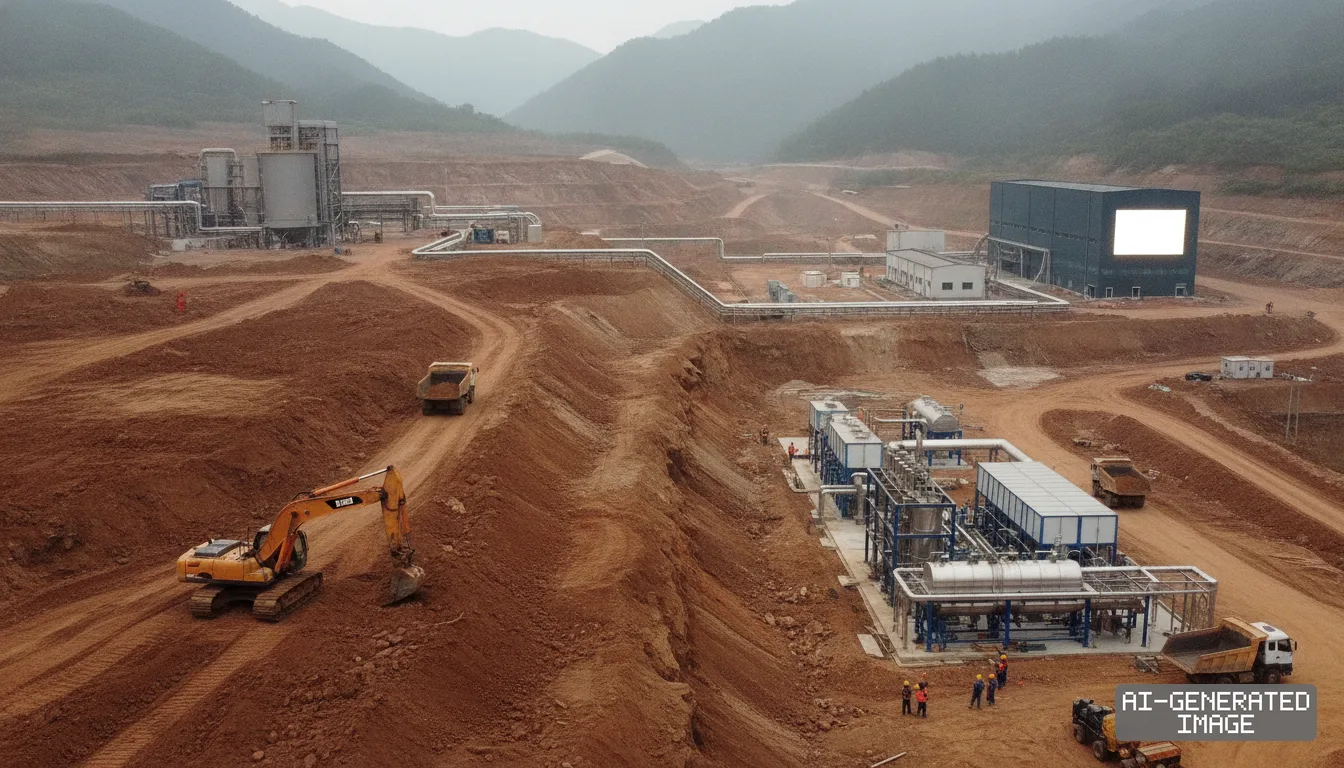
China accounts for 58% of global rare earth extraction but controls roughly 90% of downstream refining and permanent magnet production capacity. The Bank for International Settlements published that data in October.
The concentration in intermediate processing creates the vulnerability rather than raw mine extraction. Opening new mines outside China fails to resolve the bottleneck without chemical separation facilities, the bank said.
Trade economists at the Centre for Economic Policy Research modeled similar friction across international supply networks. Export restrictions drive downstream manufacturers to redirect research toward rare earth substitution, the researchers found.
That technological change cushions aggregate welfare losses over multi-year horizons. The transition requires extended lead time, leaving factory production exposed during the initial 18-month restriction window, the research found.
Historical precedent shows how factory supply chains adjust to mineral export curbs. Japan reduced China's share of its rare earth imports from 80% to 45% between 2012 and 2014, the central banking data showed.
Japanese manufacturers absorbed sharp price spikes before engineering alternatives and qualifying new suppliers. That adjustment eventually softened the macroeconomic shock to industrial output, the report said.
Downstream manufacturers face higher direct costs while redesigning motor components. Electric vehicle drivetrains and wind turbine generators consume the bulk of high-strength neodymium-iron-boron magnets manufactured today.
China also produced 99% of the world's low-purity primary gallium in 2025. A hypothetical one-year cutoff of gallium reduces United States gross domestic product by $3.1 billion, according to geological estimates.
Targeted countries encounter practical constraints when deploying direct trade countermeasures. Bilateral tariffs generate asymmetric welfare losses without immediately expanding domestic chemical refining capacity, researchers at the central bank found.
China faces structural limits when implementing export embargoes. Stringent bans accelerate buyer substitution and encourage alternative smuggling routes, which weakens long-term supplier leverage, the central bank said.
Permanent magnets made from neodymium, iron and boron present higher economic friction than unrefined mineral ores. Specialized fabrication and patent barriers restrict immediate non-Chinese output, the bank said.
The Bank for International Settlements compared the rare earth sector to hard disk drive manufacturing after the 2011 Thailand floods. Hard disk drive assembly recovered rapidly because manufacturers maintained supplier flexibility, the bank said.
Rare earth processing presents a persistent structural dependency rather than a temporary disruption. Alternative capacity and substitute technologies represent the only durable remedies for concentrated processing chokepoints, the authors wrote.
The output estimates remain sensitive to assumptions regarding material substitutability. When manufacturing engineers cannot substitute alternative magnet formulations, output contractions in exposed durable goods industries intensify, the European Central Bank said.
Commercial magnet buyers have accelerated long-term procurement contracts with non-Chinese processing ventures. Expanding commercial-scale refining plants outside China typically requires three to five years of capital development, industrial records show.
Factory stockpiles provide temporary operational protection for three to six months. Once warehouse inventories deplete, component shortages begin forcing line slowdowns in automotive plants, the central bank said.
The European Union and the United States have funded domestic refining pilots. High environmental compliance costs and depressed market prices continue to delay private investment decisions, the paper noted.
The Centre for Economic Policy Research published no record on Nov. 14 of a standalone macroeconomic modeling report. Circulating policy discussions have drawn instead on earlier findings from Frankfurt and Basel.
Those institutional papers examine how concentrated processing turns trade barriers into aggregate supply shocks. The modeling confirms that production disruptions peak during the second year before technical adaptation takes hold.
Export licences issued by China's Ministry of Commerce under the current critical mineral quota face statutory review on Dec. 31, 2026. Western manufacturers face revised critical mineral compliance schedules in early 2027.
Impact map
How this development propagates across the region and out to global buyers.
| Event | Korea | China | Japan | Global impact |
|---|---|---|---|---|
| Chinese rare earth export curbs | domestic magnet fabricators face higher feedstock costs on tight Chinese processing | controls 90% of magnet refining but faces long-term technological substitution | retains supply resilience after cutting Chinese import share to 45% | manufacturing output drops 0.3% to 0.6% in 18-month export curb scenario |
In this story
- Policy
- Export Controls
- Impact
- Supply ChainCost Structure
Track every Export Controls development →
Related briefings
- China dysprosium export curbs hold Western prices at $4,100 a kilo Also on Export Controls, Cost Structure
- India bans battery black mass exports under $180M recycling push Also on Export Controls, Cost Structure
- Japanese firms build tungsten scrap loops to counter Beijing Also on Export Controls, Cost Structure
- Japan builds Southeast Asian mineral route to bypass China export curbs Also on Export Controls, Cost Structure
Sources
Primary documents
Reporting
Confidence: high — how we grade this
The documents behind this briefing are linked above. East Asia Brief produces its English text with AI assistance under human editorial review, and does not translate or republish other outlets' articles. See our methodology and AI policy. Spotted an error? Tell us.
The Morning Brief
What changed in Korean, Chinese and Japanese industry overnight — and what it means for your supply chain. One email, weekday mornings, US time. Free.
The Morning Brief is in preparation. Leave your address and we will write to you once — when the first issue is ready. Nothing before that.