China Rare Earth Group faces feedstock curbs from Myanmar
Cross-border shipments of heavy rare earth feedstocks remain throttled after conflict in Kachin State cut Chinese imports under tariff code 284690 by over 80 percent.
China Rare Earth Group faced renewed feedstock constraints on Oct. 6, 2026, as persistent rebel control over Kachin State mines restricted cross-border shipments of heavy rare earth compounds.
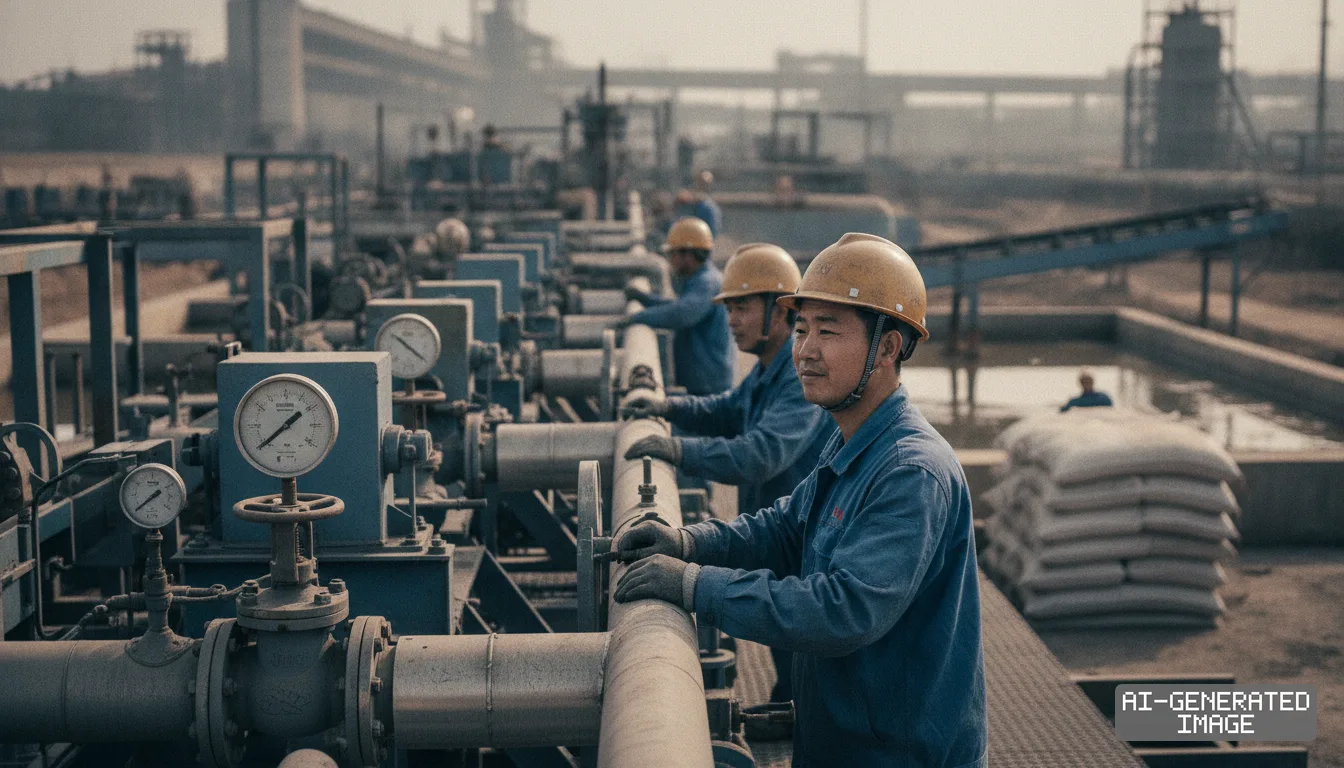
The state-owned refining conglomerate operates major ionic clay separation hubs in Ganzhou, Jiangxi Province. Those processing facilities depend heavily on raw ore imported through adjacent Yunnan Province checkpoints.
Myanmar supplied 41,700 metric tons of heavy rare earth oxides to China in 2023, according to customs data. That volume accounted for approximately 98% of total Chinese heavy rare earth oxide imports.
The cross-border corridor connects southern Chinese separation plants with mining clusters around Panwa and Chipwi in northern Myanmar. Those deposits yield dysprosium and terbium — heavy rare earth elements essential for heat-resistant permanent magnets.
The Kachin Independence Army seized control of the Panwa border mining center in mid-October 2024, displacing junta-affiliated border guard units. The military takeover severed administrative ties with mining regulators in Naypyidaw.
Chinese customs receipts reflect the resulting operational shock. Inflows of rare earth compounds under code 284690 fell from 2,800 metric tons in October 2024 to 726 metric tons in December.
Shipments contracted further to 311 metric tons in February 2025, according to the General Administration of Customs. That represented an 89% decline compared to the same month in the prior year.
The United States Geological Survey reported Myanmar mine output dropped from 27,000 metric tons in 2024 to 22,000 metric tons in 2025. Myanmar had generated 7.1% of global rare earth output in 2024.
Mining operations expanded rapidly following Myanmar’s February 2021 military coup. A report from the United Nations Office of the High Commissioner for Human Rights identified 302 new mining sites across Kachin State.
Myanmar delivered $4.2 billion in rare earths to China between 2017 and 2024, the United Nations report said. Deliveries after the 2021 coup accounted for $3.6 billion, or 84% of that seven-year total.
Rebel administrators permitted restricted stockpile exports after demanding a levy of 35,000 yuan ($4,800) per metric ton from border logistics operators, trading firms said. Fresh extraction remains heavily constrained by fuel shortages and chemical transport bans.
Separation plants managed by China Rare Earth Group have reduced kiln run-rates in Jiangxi to stretch domestic reserves. The company processes more than half of China’s heavy rare earth mining quota.
Downstream magnet producer JL MAG Rare-Earth relies on those refined heavy elements for high-grade products. The company allocates roughly 70% of its sintering capacity to automotive traction magnets that require dysprosium additives.
Terbium oxide prices rose 21.9% to 6,550 yuan ($902) per kilogram during the initial border closure, spot exchange records showed. Spot prices remain volatile because Chinese domestic ionic clay quotas cannot offset prolonged border deficits.
Alternative domestic mines in southern China face strict environmental restrictions. Regulatory authorities halted aggressive in-situ leaching methods across Guangdong and Jiangxi over concerns regarding ammonium runoff and soil contamination.
Electric vehicle drive motors require permanent magnets that endure temperatures above 150 degrees Celsius. Motor assemblers cannot substitute light rare earths like neodymium without sacrificing thermal resistance and operating torque.
Japanese magnet makers such as Proterial procure finished heavy rare earth metals through Chinese state channels. Tighter Chinese feedstocks leave Japanese component makers exposed to price surcharges and delivery delays.
The General Administration of Customs does not publish crossing-specific truck volumes for Yunnan overland points, leaving informal border transit volumes unconfirmed.
The Ministry of Commerce reviews annual rare earth export quotas and licensing regulations on Dec. 31, 2026.
Impact map
How this development propagates across the region and out to global buyers.
| Event | Korea | China | Japan | Global impact |
|---|---|---|---|---|
| Myanmar border bottleneck | Domestic magnet producers face higher dysprosium import prices from Chinese refiners | China Rare Earth Group cuts refinery run-rates as raw compound imports drop 89% | Proterial absorbs metal surcharges on automotive grade NdFeB magnets | Electric vehicle motor supply chains face higher BOM costs on dysprosium constraints |
In this story
- Companies
- China Rare Earth GroupJL MAG Rare-Earth
- Tickers
- 000831.SZ300748.SZ
- Exposed
- Proterial
- Policy
- Export ControlsEconomic Security
- Impact
- Supply ChainCost StructurePricing
Track every Export Controls development → Track every Economic Security development →
Related briefings
- China mandates digital tracking codes for heavy rare earth shipments to tighten export control Also on JL MAG Rare-Earth, China Rare Earth Group, Export Controls
- China Sets Consolidated Late-2026 Light Rare Earth Mining Quota to Cap Northern Bastnasite Extraction Also on Proterial, China Rare Earth Group, Cost Structure
- China magnet export controls near end of one-year suspension Also on JL MAG Rare-Earth, Export Controls, Pricing
- China permanent magnet controls squeeze motor supply as alloy research stalls Also on JL MAG Rare-Earth, Export Controls, Cost Structure
Sources
Primary documents
Reporting
Confidence: high — how we grade this
The documents behind this briefing are linked above. East Asia Brief produces its English text with AI assistance under human editorial review, and does not translate or republish other outlets' articles. See our methodology and AI policy. Spotted an error? Tell us.
The Morning Brief
What changed in Korean, Chinese and Japanese industry overnight — and what it means for your supply chain. One email, weekday mornings, US time. Free.
The Morning Brief is in preparation. Leave your address and we will write to you once — when the first issue is ready. Nothing before that.