China smelters lift Myanmar rare earth imports to 5,021 tons in fall
Myanmar and Laos supplied 97% of inbound feedstock last month, entrenching Chinese processing control over dysprosium and terbium despite conflict along the northern border.
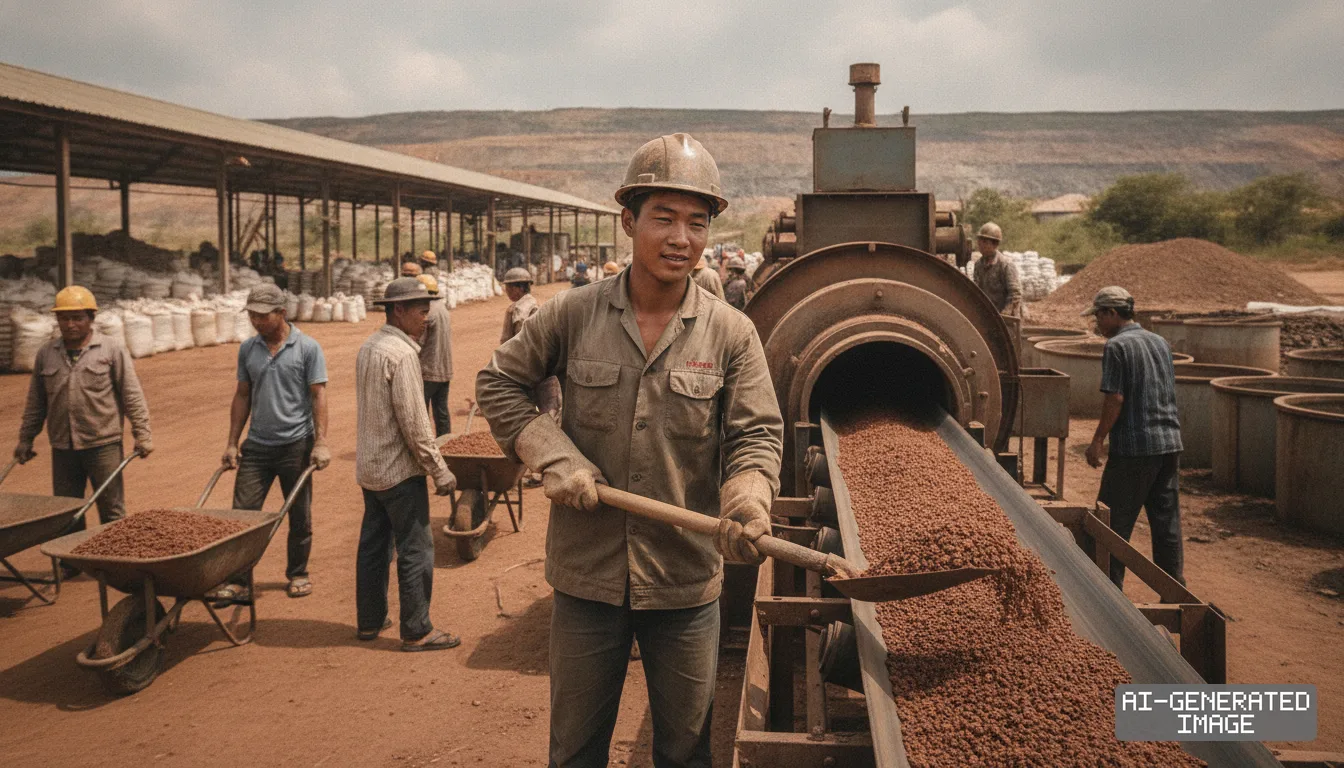
Chinese smelters expanded rare earth imports to 5,021 metric tons in September, trade data showed Oct. 23, 2026, drawing 70% of feedstock from rebel-held mines across northern Myanmar.
The inbound volume climbed 23% from August, according to transaction figures compiled by Shanghai Metals Market. Inflows from Myanmar and Laos together accounted for 97% of the total monthly shipments entering Chinese processing hubs.
Shipments from Laos reached 1,369 metric tons during September. Combined arrivals lifted China's cumulative nine-month rare earth imports to 46,466 metric tons, a 14% increase compared with the same period last year.
The import jump underscores Beijing's deepening grip on heavy rare earth processing. China controls more than 90% of global separation capacity for dysprosium and terbium, two elements that keep permanent magnets from demagnetizing under high operating heat.
These two critical additives go directly into neodymium-iron-boron magnets used in electric vehicle drive motors, wind turbine generators and guided missile actuators. Non-Chinese magnet manufacturers have found almost no commercial substitute outside Chinese solvent extraction plants.
China's domestic geology is heavily skewed toward light rare earth deposits such as bastnasite in Inner Mongolia. The country depends on ionic adsorption clays in northern Myanmar for roughly half of the raw heavy concentrates feeding its southern chemical separation circuits.
State-owned China Rare Earth Group Co. Ltd. sits directly in the path of this flow. Headquartered in Ganzhou, the conglomerate commands between 60% and 70% of China's heavy rare earth smelting quota through its industrial network.
The group's Shenzhen-listed vehicle, China Rare Earth Resources and Technology Co. Ltd., processes heavy ionic clays into high-purity oxides. The listed unit relies on uninterrupted deliveries from roughly 600 hillside leaching pits clustered in Myanmar's Kachin State.
These pits extract rare earth ions by injecting ammonium sulfate solution into mountain ridges. The chemical process strips heavy minerals from clay deposits near the border towns of Pangwa and Chipwi before truckers haul raw precipitates north into Yunnan Province.
Control of those mining districts changed hands two years ago. The Kachin Independence Army seized Pangwa and Chipwi in October 2024, displacing border militias loyal to the military junta in Naypyidaw and temporarily halting border traffic.
Shipments resumed after Chinese processors established direct tax and tolling protocols with the insurgent leadership. Truck convoys began clearing Yunnan border gates again, allowing refineries in Jiangxi and Guangdong to run without depleting domestic mineral stockpiles.
The resulting flow has widened the gap between China's raw intake and finished exports. The General Administration of Customs reported Oct. 14 that China exported 4,269.8 metric tons of rare earth products in September, an increase of 6.7% year-on-year.
Nine-month exports dropped 9.6% year-on-year to 43,711 metric tons, customs data showed. The cumulative decline follows export licensing restrictions that Beijing imposed on dysprosium, terbium and related heavy elements in April 2025.
Western buyers have committed billions of dollars to alternative light rare earth mines in North America and Australia. Yet those projects lack commercial facilities capable of separating heavy rare earths at industrial scale, leaving downstream supply chains exposed to Chinese refineries.
Chinese refiners have managed to insulate their separation units from Myanmar's battlefield volatility. By absorbing heavy ores from non-state actors across the border, state champions preserve their domestic deposits while dictating export allocations to international magnet makers.
The General Administration of Customs has not published disaggregated September trade entries by HS code for cross-border ionic clay shipments from Myanmar, leaving exact border gate clearing volumes unverified against Chinese state records.
Chinese authorities plan to issue fourth-quarter smelting and separation quota allocations in November, while cross-border freight routes face seasonal reviews before local border permits expire Dec. 31.
Impact map
How this development propagates across the region and out to global buyers.
| Event | Korea | China | Japan | Global impact |
|---|---|---|---|---|
| Myanmar rare earth import surge | Auto parts makers face heavy rare earth cost exposure through Chinese magnet imports | China Rare Earth Group secures 70% of import feedstock to maintain refining monopoly | Magnet producers remain tied to Chinese dysprosium and terbium separation plants | EV drive motor supply chains depend on rebel-held Kachin mines through Chinese refiners |
In this story
- Companies
- China Rare Earth GroupChina Rare Earth Resources and Technology
- Tickers
- 000831.SZ
- Policy
- Export Controls
- Impact
- Supply ChainPricingCompliance
Track every Export Controls development →
Related briefings
- China Customs logs 6.7% rise in September rare earth exports Also on China Rare Earth Group, Export Controls, Pricing
- Chinese rare earth suppliers halt shipments to US customers Also on China Rare Earth Group, Export Controls, Pricing
- China Rare Earth Group seeks control of Shenghe Resources Also on China Rare Earth Group, Export Controls, Pricing
- China scales dysprosium recovery from spent magnets as primary mining quotas tighten Also on China Rare Earth Group, Export Controls, Pricing
Sources
Reporting
Confidence: medium — how we grade this
The documents behind this briefing are linked above. East Asia Brief produces its English text with AI assistance under human editorial review, and does not translate or republish other outlets' articles. See our methodology and AI policy. Spotted an error? Tell us.
The Morning Brief
What changed in Korean, Chinese and Japanese industry overnight — and what it means for your supply chain. One email, weekday mornings, US time. Free.
The Morning Brief is in preparation. Leave your address and we will write to you once — when the first issue is ready. Nothing before that.